PVC Zipper Garment Bags custom sample cost is one of those sourcing questions that looks simple until the first quote arrives. A sample is not priced like a tiny version of a production run. It carries its own setup, handling, and inspection burden, and those costs can dominate the unit price when the order size is only one or two pieces.
That is especially true in garment packaging, where fit matters as much as appearance. A clear PVC bag can look ordinary on a screen and still fail in practice if the zipper drags, the shoulders pinch, or the film is too soft for repeated handling. Buyers in apparel, uniform programs, and retail packaging usually discover that the sample is less about finding the cheapest piece and more about confirming whether the spec will survive real use.
A useful sample should answer three questions: does the bag fit the garment, does it close cleanly, and does it still look presentable after handling?
If those answers are not clear before bulk production starts, the final order gets expensive in a different way. Rework, delays, and approval loops tend to cost more than a careful sample ever will.
Why a Small Sample Can Cost More Than the First Production Run
Buyers often expect a sample to be cheap because the quantity is small. In packaging, that logic usually breaks. The machine time may be short, but the human time is not. Cutting, sealing, zipper attachment, artwork alignment, and inspection all take nearly the same effort whether the job is one bag or one thousand.
That is why a custom PVC garment bag sample can look oddly expensive next to the eventual bulk unit price. A production run spreads setup across volume. A sample absorbs it almost alone. If the bag needs special dimensions, custom printing, or a nonstandard zipper pull, the fee reflects development work, not just materials.
For buyers, the cleanest way to think about sample cost is this: you are paying to avoid a larger mistake later. A weak seam, a crooked logo, or a closure that catches at the corners is far easier to fix on one sample than on a pallet of finished goods.
Standard sample pricing varies by region and spec, but the pattern is consistent. A plain proof may sit in the low tens of dollars. Once the order asks for thicker film, color matching, print setup, or a more complex closure, the sample can move into the low hundreds. A fully custom prototype can sit well above that if it requires fresh tooling or several correction rounds. Those numbers are not universal, yet they are close enough to help a buyer budget honestly.
Another trap is assuming MOQ will reduce sample cost. It usually does not. MOQ affects the economics of the production run. The sample has already been built with development labor attached, so the quote should be judged separately from the bulk order.
PVC Film, Zipper Style, and Garment Protection Basics
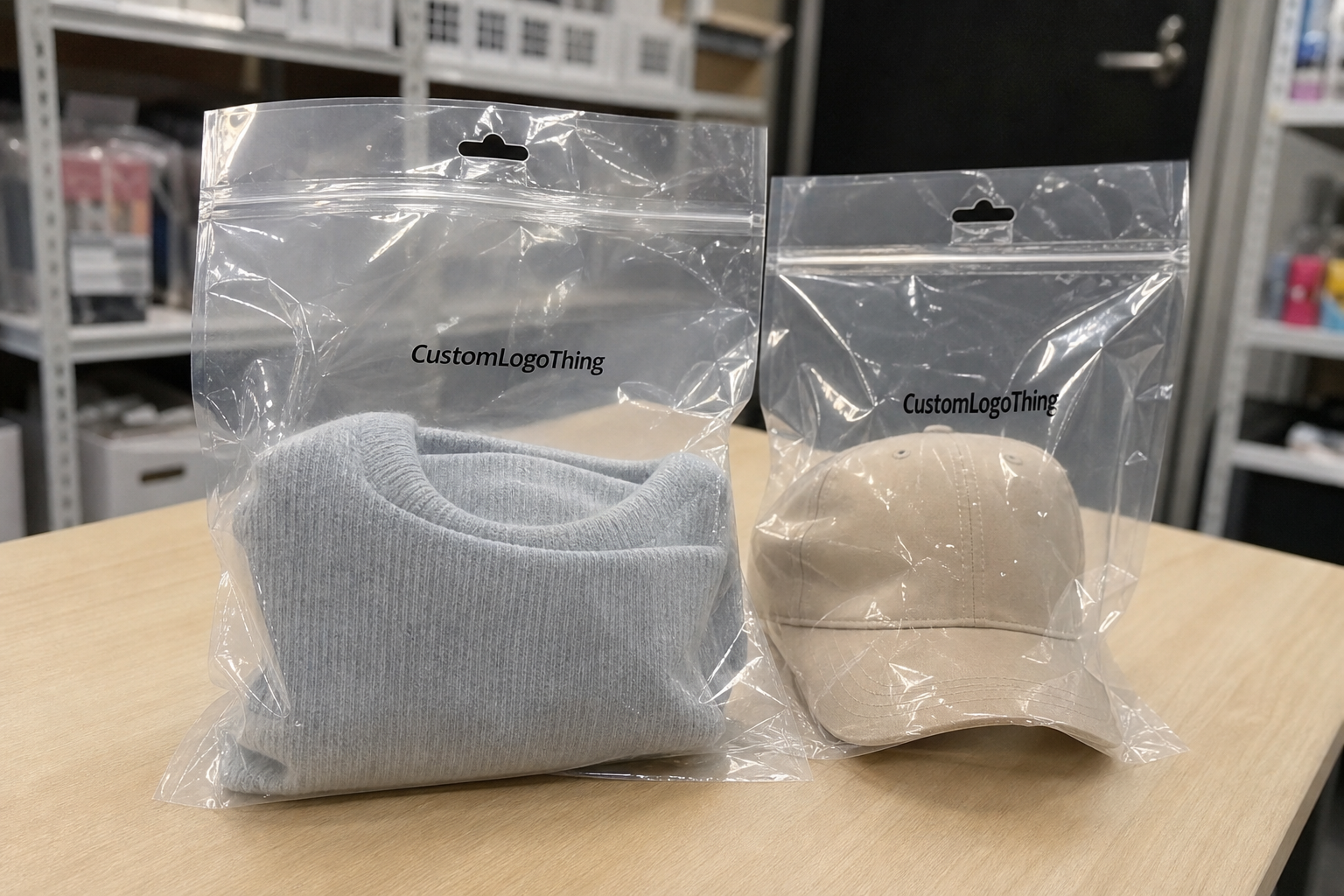
PVC remains popular for garment bags because it gives visibility and structure at the same time. Staff can see the contents without opening the bag, and the bag itself stays neat on a hanger rail or in storage. That is a practical advantage in retail backrooms, warehouse environments, and uniform programs where identification speed matters.
The film choice changes more than the look. Thin PVC around 0.10 mm can work for light presentation use, but it tends to feel softer and may crease more easily. A mid-range gauge around 0.15 mm usually gives a better balance of clarity and stiffness. Heavier options, often around 0.20 mm or above, are more suitable when the bag will be reused, handled often, or asked to support bulkier apparel.
Zipper style also changes the buyer's experience. A single-track zipper may be fine for lighter garments. A double-track or heavier-duty closure can feel more secure and usually holds its line better across a wider bag opening. The pull should move smoothly, without snagging at the ends or skipping teeth. If the zipper fights the user on the sample, it will not become more pleasant in bulk production.
Garment protection is not only about keeping dust out. Suits need shoulder room. Dresses need length and a clean drop so hems do not bunch. Outerwear may need extra depth or a gusset. Hardware, trims, and padded hangers can all change how the bag sits. A specification that ignores those details often leads to a sample that looks right on paper and wrong in hand.
For transit and storage, a useful mental model is real handling rather than showroom display. Packaging bodies such as ISTA keep reminding packagers to test against actual movement and stress. That mindset is just as useful for garment bags, even though they are not corrugated shippers.
Sizing, Thickness, and Finish Choices That Change the Spec
Most quote problems start with incomplete measurements. Finished width, finished height, zipper placement, opening style, and bag depth all matter. So does the garment itself. A slim dress on a narrow hanger needs a different profile than a broad-shouldered jacket or a winter coat with bulky lining. “Close enough” dimensions usually create extra rounds of correction.
A good brief includes the actual garment type and the hanger style together. That is the difference between a bag that fits and a bag that merely contains the item. A coat on a thick wooden hanger can demand more shoulder clearance than a lightweight piece on a wire hanger, and the difference changes the way the zipper lies across the top edge.
Thickness affects the hand feel, the stiffness, the clarity, and the shipping weight. Thinner material lowers material cost but can wrinkle more easily and feel less stable in frequent use. Thicker film supports a cleaner presentation and better durability, though it adds weight and can increase freight charges. Buyers who compare only material price miss part of the bill.
Finish is not cosmetic fluff. Clear PVC gives maximum visibility. Frosted film softens the look and hides small scratches. Tinted film may support brand presentation when the bag is part of a broader identity system. Printed logos, warning text, hang tags, and inserts all add value, but each element adds setup, proofing, and the risk of mismatched expectations if the sample does not include them.
The small details are where sample quality is won or lost:
- Finished dimensions should reflect actual sealed size, not a rough cut estimate.
- Film gauge should suit the garment's weight and how often the bag will be handled.
- Zipper profile should match the intended use, not just the photo in a catalog.
- Print coverage should show the real logo size, position, and any text.
- Use pattern should be stated clearly: display, storage, shipping, or repeated reuse.
When those factors are defined early, the sample becomes a useful measurement tool. When they are vague, the quote becomes an argument waiting to happen.
PVC Zipper Garment Bags Custom Sample Cost, MOQ, and Quote Drivers
This is the pricing question buyers ask first, and the answer is usually less tidy than they want. PVC Zipper Garment Bags Custom sample cost depends on whether the bag is built from standard components or whether the supplier has to source, set up, or print something new. A simple proof may need only material, cutting, zipper attachment, and inspection. A fuller prototype may also require artwork prep, print plates or digital proofing, and special handling for a nonstandard shape.
MOQ affects the production order, not the sample itself. If the sample uses a standard size and no print, the cost may stay modest. If the buyer wants an unusual width, a heavier gauge, a different zipper style, or custom branding, the quote moves upward because the job becomes a development piece rather than a routine item.
As a practical rule, buyers should expect three levels of cost behavior. Standard samples are the least expensive because the setup is simple. Pre-production samples cost more because they are closer to the final approved spec. Fully custom prototypes cost the most because they prove new structure, finish, or artwork. That progression is normal, not inflated.
| Sample Type | What It Proves | Typical Cost Profile | Best Use |
|---|---|---|---|
| Standard sample | Basic size, material, and zipper fit | Lowest setup burden; often the lowest price | Early review when the spec is already close to standard |
| Pre-production sample | Closer match to final art, finish, and dimensions | Moderate cost with more validation steps | Approval before bulk production |
| Fully custom prototype | New tooling, special print, or unusual structure | Highest development cost | New programs and highly branded retail packaging |
For a buyer trying to budget, the most useful question is not “How cheap can the sample be?” It is “What am I trying to prove with the sample?” If the answer is only basic size, the quote should be light. If the answer includes durability, branding, and repeated handling, the sample needs to show more, and the price should reflect that.
One caution: low sample pricing can hide thin support. A supplier that quotes quickly but avoids specifics may not be a bargain if the first revision reveals missing details. Clear sample pricing should explain what is included, what counts as a revision, and whether the sample fee can be credited against the first bulk order. That last point is common in packaging, but it should never be assumed.
For teams sourcing other branded packaging items, such as custom printed boxes or display cartons, the same discipline applies. Define the spec, separate setup from unit cost, and document what changes if the buyer revises the artwork or dimensions after approval.
Process, Timeline, and Sample Approval Steps
A clean sample process starts with a real spec review. The supplier should confirm dimensions, film thickness, zipper style, print requirements, garment type, and intended use before anything is made. That front-end check sounds bureaucratic until you compare it with the cost of remaking a sample because the first brief was incomplete.
Lead times are often longer than buyers expect. A simple proof from standard material can sometimes be turned around in about a week, though customs, print setup, and shipping can stretch that. Once the sample needs new artwork cleanup, special film sourcing, or a revised zipper system, the clock moves. If the job requires new tooling, the timeline can lengthen again.
Approval works best when feedback is specific. “Improve it” does not help. “Increase width by 1 inch,” “move the logo down,” or “switch to a smoother pull tab” does. Buyers who give precise notes tend to receive better second samples and fewer disputes later.
Here is a more realistic approval path:
- Confirm the spec in writing.
- Review the first sample against the garment and hanger.
- List corrections with measurements, not just opinions.
- Approve a revised sample if the changes are material.
- Lock the spec before bulk production begins.
That may sound straightforward, but many delays happen because teams skip the measurement step. Photos help. So do notes about shoulder width, zipper travel, and how the bag folds during packing. If the garment is valuable, share the real item rather than a description of it. A sample built around assumptions almost always costs more in the end.
For programs that also include sustainability documentation or branded inserts, the approval cycle may need a second layer of sign-off. If you are coordinating related packaging components, references from organizations like FSC can keep sourcing language precise, especially when paper-based inserts or certificates are part of the package.
How to Verify Quality Before You Place the Full Order
A sample should be tested as a working item, not displayed like a finish sample on a sales table. Start with the seams. Are they even? Do the corners hold? Does the sealing line stay consistent at stress points? Small defects in the sample rarely disappear later; they usually show up across the full run.
Next, test the zipper several times. It should move cleanly from end to end without snagging or drifting off line. Close the bag with the actual garment inside. Then hang it and watch where the load settles. If the shoulders distort or the bottom edge twists, the spec needs correction before bulk production.
Visual checks matter too. Look for haze, scratches, dust, trapped air, and odd odor. In retail presentation, those details affect how premium the bag feels. In warehouse use, they affect whether staff trust the packaging enough to handle it quickly. Either way, the sample is telling you something about the production line.
Functional checks worth doing every time:
- Open and close the zipper at least three times.
- Hang the bag with the actual garment or matched weight.
- Inspect the seal line under bright light.
- Check print placement against the approved proof.
- Confirm that the film thickness feels right for the intended use.
There is also a consistency question. One perfect sample means little if the next fifty pieces drift in size or finish. A good supplier should be able to hold dimensions, zipper feel, and print position across a run. That consistency matters more than a polished one-off, especially in programs where the bag becomes part of the brand presentation.
In practice, the most expensive mistake is not a slightly high sample cost. It is approving a bag that looks acceptable but behaves poorly in daily use. A sample that catches the problem early is doing its job.
What Makes a Reliable Supplier for Repeat Garment Programs
Repeat programs need documentation. That sounds basic, but it is one of the clearest ways to separate a useful supplier from a risky one. The exact film thickness should be recorded. The zipper source should be named. The print position should be fixed in writing. If the same buyer reorders six months later, those details should still be available without a scavenger hunt.
Communication quality is another practical filter. Fast answers matter, but so does the ability to say “no” when a revision changes the cost or the lead time. Vague replies are often more expensive than slow ones. A supplier who cannot explain what changed in the sample is unlikely to keep a repeat order stable.
Ask how revision cycles are handled. Some suppliers will build one round into the sample fee, while others charge again if the buyer changes dimensions, film gauge, or print artwork. That is not unusual. What matters is transparency. A clear process protects both sides from a messy approval trail.
For buyers sourcing beyond garment bags, the same standard should apply across a broader packaging program. Whether the item is a bag, a hanger cover, or a set of Custom Packaging Products, the supplier should be able to maintain the spec, repeat the finish, and explain the practical cost of changes before production begins.
The best partners tend to be the ones that talk like production people, not brochure writers. They ask about the garment, the hanger, the fold, the shipping method, and the shelf display. Those questions are not small details. They are the difference between a bag that only passes inspection and a bag that works in the field.
What to Send for a Fast Quote and Next Steps
If the goal is an accurate quote, send finished dimensions, garment type, film thickness, zipper style, print details, and estimated volume. Add the intended use too. A bag for seasonal outerwear should not be quoted like a lightweight dress cover. The more clearly the use case is described, the fewer revisions the sample will need.
Reference photos help more than most buyers expect. A front view, a side view, and a note about the hanger shape can prevent a bad assumption early in the process. If you already have a sketch, dieline, or logo file, include it. If the garment has an unusual shoulder width or a bulky trim, say so. Those little facts often explain the price more than the headline description does.
For higher-value apparel, request the sample before committing to production. That keeps the discussion tied to the actual product rather than a rough guess. It also helps the team decide whether the bag is simply acceptable or actually fit for the way it will be used.
At a practical level, the best outcome comes from three habits: define the spec tightly, inspect the sample like a working item, and require the supplier to explain any change in cost before the bulk order is approved. That is how buyers keep pvc zipper garment bags Custom Sample Cost under control without sacrificing fit or quality.
FAQ
What does pvc zipper garment bags custom sample cost usually include?
It usually covers material, cutting, zipper attachment, sealing, and basic hand inspection for the sample piece or small batch. Artwork setup, special printing, new tooling, and expedited handling may be charged separately depending on the spec.
Can I order a custom sample before meeting MOQ?
Yes. Most buyers request a sample first so they can confirm size, zipper function, and finish before placing the full run. The sample is usually priced separately from MOQ production, especially when the spec is highly custom.
How does film thickness affect sample pricing?
Thicker film usually costs more because it uses more material and can require more careful sealing and handling. A thicker sample is useful when the final bags need better stiffness, durability, or longer reuse.
What details should I send for an accurate quote?
Send finished dimensions, garment type, zipper style, film thickness, print requirements, and estimated quantity. Reference photos or a sketch help avoid delays and reduce the chance of revision charges.
How long does a custom sample take to make?
Lead time depends on material availability, print setup, and whether the sample uses existing or new tooling. A complete spec and a quick approval cycle usually shorten the timeline more than any other single factor.