The phrase pvc zipper garment Bags Custom Sample Cost sounds narrow, but the quote rarely comes down to one part. Material thickness, zipper grade, print setup, and even the way the top edge is finished can change the number more than the logo itself. A buyer who sends a loose brief usually gets a loose quote, and loose quotes have a habit of turning into revisions.
That is where many projects slow down. The factory needs dimensions, film type, closure style, artwork details, and the intended use before the first sample makes sense. A garment bag for retail display is not built the same way as one meant for warehouse storage or travel protection. If those uses are blurred together, the sample may look acceptable in a photo and still fail in the hands of the people who have to use it.
The fastest path is to separate what affects cost from what can wait. Size, film thickness, zipper construction, and print coverage are the first decisions that matter. Decorative choices can follow, but only after the structure is fixed. That order saves time, and it usually saves money too.
Why sample quotes jump on simple zipper garment bags
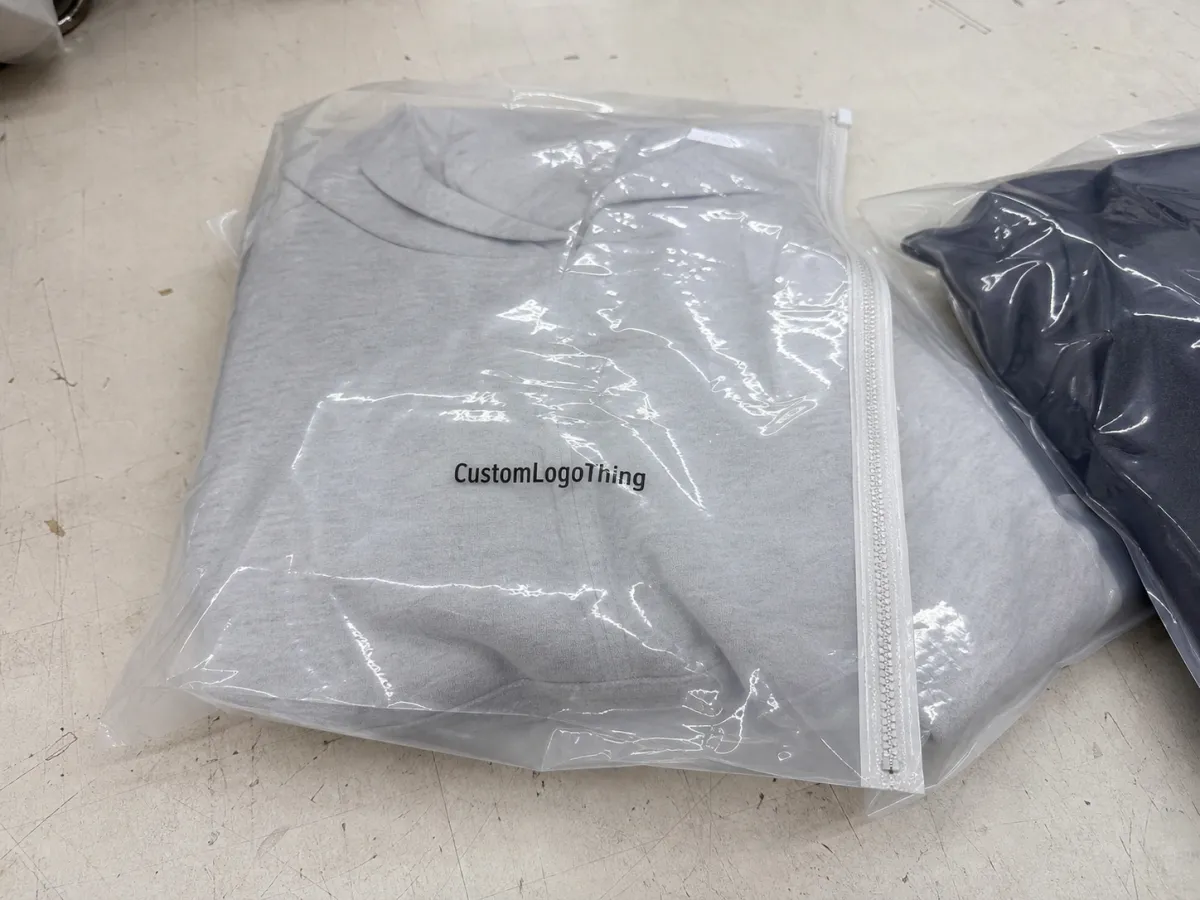
A clear PVC zipper garment bag looks straightforward until someone asks for a sample. Then the details start multiplying. The difference between a simple build and a custom build is often just a few small choices: hanger hole or no hanger hole, handle or no handle, single-zipper opening or a wider front access, fully clear film or tinted film. Each one affects material usage and assembly time.
The biggest source of quote inflation is ambiguity. A request that says “clear garment bag with zipper and logo” leaves too much open. The supplier has to guess at dimensions, top reinforcement, and whether the print should sit on one panel or across the full front. Guessing takes time, and time shows up in the sample fee. When a bag needs to be designed from a rough image rather than a proper spec, the quote often includes a cushion for possible changes.
Buyers also underestimate how expensive rework can be. If the first sample is made too small, or the zipper lands in the wrong position, the next round is not a small correction. It is another sample, another inspection, and another wait. A slightly higher quote for a clearer brief is usually cheaper than a lower quote that depends on repeated fixes.
The cheapest sample is the one that does not need to be remade.
That sounds blunt because it is. A sample should answer a question, not create a new one. If the goal is brand approval, the bag needs to reflect the final look. If the goal is functional testing, the structure has to be honest about weight, opening size, and how the zipper behaves under repeated use. Those are different jobs, and they should not be priced as if they are the same.
It also helps to think about performance beyond the bench. If the bags will be stacked, shipped, or repeatedly opened in distribution, ask what level of stress the material and closure can handle. Transit-testing references from ISTA are useful when a sample has to survive more than one handling cycle, and general packaging standards can help buyers ask better questions before they approve the first build.
PVC film, zipper, and hanger options that change performance
PVC film sets the tone for the whole bag. Thin film looks lighter and costs less, but it can wrinkle more easily and feel soft when the bag is hanging on a rack. Thicker film costs more, weighs more, and usually holds its shape better. For garment storage and retail use, buyers often look somewhere around 0.15 mm to 0.30 mm, though the right thickness depends on garment weight, expected handling, and whether the bag is meant to be seen up close.
Clear PVC is not the only route. Frosted film hides scuffs and handling marks better. Tinted film can feel more premium, but it reduces visibility. Printed film makes the bag part of the brand presentation, yet it also increases setup work and can obscure the garment inside. Those choices are not only about appearance. They affect how much the bag supports the product and how much it hides it.
The zipper deserves more attention than it usually gets. A basic zipper is enough for some storage uses, but daily handling changes the equation. If the bag will be opened often, a smoother track, stronger end stops, and a pull tab that does not twist awkwardly can prevent the kind of failure that drives complaints later. Zippers are rarely the largest cost item. They are often the most noticeable weak point when the bag is in use.
Hanger holes, handles, and reinforcement strips each solve a specific problem, and each one adds a little more complexity:
- Hanger hole keeps the garment vertical for display and storage.
- Handle helps when the bag is carried between locations, but it adds hardware or extra fabrication.
- Reinforcement strip strengthens the top edge where tearing usually starts.
- Bottom gusset gives room for coats, layered garments, or folded sets that need more depth.
Not every bag needs every feature. In warehouse storage, a clean build with the right thickness and a reliable zipper may be enough. In retail, a reinforced edge and a neat printed panel can be worth the extra cost because the bag becomes part of the presentation. The wrong choice is adding features because they sound better in a quote. The right choice is matching the build to the actual use.
For buyers comparing apparel packaging formats, it helps to look at the bag against other Custom Packaging Products rather than forcing every project into the same cost logic. A zippered garment bag, a poly sleeve, and a hanger box all protect clothing, but they do so in very different ways.
Sizing, thickness, and print specs buyers need to lock first
Good quoting starts with exact dimensions. “Medium” or “standard” is not enough. The supplier needs bag length, width, and gusset depth, plus the actual garment profile the bag needs to hold. A blazer with structured shoulders needs different clearance than a knit sweater. A long coat needs a different opening and a different sense of balance when it hangs.
Print details matter just as much. A single-color logo on a clear panel is simple. Full-front print, reverse print, white ink underlay, or metallic effects all change the setup. Color matching also matters. Some buyers want a close visual match; others need the brand tone to stay tight across a product line. Those expectations should be clear before the sample is made, not after the proof lands in the inbox.
Seam style and zipper placement affect the final fit more than many buyers expect. A top-zip opening behaves differently from a front-zip layout. Side seams can alter the way the bag hangs and how pressure spreads along the zipper track. If the bag arrives and the garment sits awkwardly inside it, the problem is usually not the factory’s effort. It is a spec that was left too open.
What to send with the first inquiry
A complete request does not need to be long. It just needs enough detail to quote accurately.
- Bag length, width, and gusset depth
- PVC thickness target
- Clear, frosted, tinted, or printed film
- Zipper style and pull tab preference
- Hanger hole, handle, or reinforcement strip
- Artwork file, logo position, and print colors
- Sample quantity and estimated bulk run
- Shipping destination and target approval date
If the artwork is not ready, say so. A factory can still quote the structure and materials, but it should separate sample cost from print setup so the numbers stay honest. If the request begins with a reference photo, that helps too, but a photo is not a drawing. A dieline or even a measured sketch is far more useful when the project has tight dimensions or multiple panels.
File quality matters more than most buyers expect. Editable artwork in AI, PDF, or EPS format reduces back-and-forth. A low-resolution logo copied from a website usually creates an extra proof cycle, and every extra cycle adds time. That is a small problem only until it becomes three small problems in a row.
PVC zipper garment bags custom sample cost: what drives the quote
PVC Zipper Garment Bags custom sample cost usually comes from five parts: sample labor, material usage, setup work, special components, and shipping. A plain clear bag stays on the lower end because it does not ask for much beyond basic cutting, sealing, and assembly. Once the project adds custom print, reinforced edges, unusual zipper hardware, or a nonstandard hanger detail, the quote rises quickly.
| Sample type | Typical cost range | What is included | Best for |
|---|---|---|---|
| Plain clear PVC zipper bag | $40-$90 | Basic materials, standard assembly, simple proof | Shape, size, and zipper check |
| Printed custom sample | $80-$180 | Artwork setup, print test, sample build | Brand approval and retail presentation |
| Reinforced or feature-heavy sample | $120-$250+ | Extra parts, special zipper, handle, hanger, or gusset | Durability testing and final sign-off |
The ranges above are practical, not universal. Factories price sample work differently. Some credit the sample fee against the bulk order. Some do not. Some include local courier charges. Others separate shipping, packaging, and proofing into distinct lines. The only useful quote is one that spells out what is included and what is not.
MOQ is another term buyers should understand clearly. It is the minimum quantity a supplier wants for production. It does not change the sample fee directly, but it does affect what the finished bag will cost after approval. A lower MOQ usually means a higher unit price because setup, waste, and labor get spread across fewer pieces. If the order uses custom print or a specialized zipper, that effect becomes more visible.
The biggest mistakes are predictable. Vague dimensions. Artwork changes after the proof is already underway. Asking for three different zipper options in one sample round. Requesting a production-like sample while refusing to confirm the final material grade. Each one creates confusion, and confusion adds cost in places that are hard to see until the invoice arrives.
A stronger approach is to ask for one sample that matches the intended bulk build as closely as possible. If you need to compare two film grades, ask for two samples and accept that both have a price. It is better to pay for two clear decisions than to pay for one uncertain one followed by a remake.
Process, approval, and lead time from file check to sample
The best sample process is plain and orderly. The fewer surprises in the chain, the fewer surprises in the product.
- Inquiry - Buyer sends size, film spec, zipper style, print details, and shipping address.
- Spec review - Supplier checks whether the build is workable and flags missing details.
- Quote confirmation - Sample fee, lead time, and shipping terms are written down.
- Artwork check - Logo placement, colors, and file quality are reviewed.
- Sample making - Factory produces the prototype or pre-production sample.
- Photo approval - Buyer reviews photos or video before shipment, if offered.
- Shipping - Sample is packed and sent by courier or express service.
For standard work, a realistic sample lead time is often 7-12 business days after file approval, plus transit time. That range shifts with complexity and factory load. If the sample needs a special zipper component, nonstandard film sourcing, or extra proofing for print alignment, more time is normal. Rush requests can move faster, but the tradeoff is usually fewer revision rounds and a higher fee.
Most delays come from the same few places: the buyer keeps changing the dimensions, the artwork is not final, or a needed approval is missing when production should have started. None of that is mysterious. The fix is to lock the critical details before the sample begins and respond quickly when the factory asks for confirmation. A sample schedule is rarely ruined by one big problem. It is usually slowed by a few small ones that never got settled.
Approval checkpoints deserve attention. Ask the supplier to confirm the size, material, zipper, print layout, and shipping terms before the bag is made. If a pre-shipment photo is available, compare it directly against the approved spec. That small habit catches mistakes while they are still cheap to correct.
For projects that cross borders or go into larger retail programs, basic testing awareness helps. Packaging and transit references from ISTA are useful when a bag has to handle repeated movement through distribution. If the program includes paper inserts, hang tags, or other paper-based components, FSC guidance can help keep claims specific and defensible. Not every order needs that level of documentation, but some do, especially when sustainability language is part of the brief.
What a dependable supplier does before production starts
A dependable supplier does more than send a number. They check whether the dimensions make sense, confirm that the requested materials are available, and call out weak spots in the brief before anyone starts cutting film. That kind of response is worth more than a low quote that hides the risk. Most buyers would rather hear a direct answer early than discover a problem after the sample arrives.
Good suppliers also put the terms in writing. Sample fee, MOQ, Lead Time, revision limits, and whether the sample fee can be credited against a bulk order should all be visible in the quote. If those details are scattered across email threads and voice notes, the project is already more fragile than it needs to be. Clear paperwork is not a formality. It is part of quality control.
Consistency is the real test. A sample should be close enough to the production build that the buyer can approve with confidence. If the sample uses one film grade, one zipper component, and the bulk order quietly switches to something cheaper, the sample was not very useful. It looked right, but it did not predict the product. That gap causes more trouble than a slightly higher sample fee ever will.
There is also the fit-and-finish side of the job. A supplier should know whether the bag needs dimensional tolerance control, clean sealing at the edges, and print registration that stays stable across the surface. If the bag is part of a larger apparel packaging set, the sample should sit naturally beside hang tags, inserts, and any other branded elements. A garment bag that feels improvised can weaken the rest of the package.
Environmental claims deserve the same discipline. If the project includes recycled content, paper inserts, or sustainability statements, ask for documentation and keep the language precise. Vague claims invite trouble later. General recycling guidance from the EPA can help buyers frame questions, but the supplier still needs to support whatever is printed on the final packaging.
The most trustworthy supplier is not the one that promises everything. It is the one that says which parts are straightforward, which parts need confirmation, and which changes will alter the price. That is what real quoting looks like.
Next steps to get an accurate sample quote and order
If the goal is a clean quote, the brief has to be clean too. Start with the bag size, film thickness, zipper type, hanger or handle choice, print colors, quantity, shipping destination, and the date the sample needs to be approved. Then ask for the sample fee, MOQ, lead time, and any credit or refund policy in writing before payment moves.
A simple checklist helps keep comparisons honest:
- Exact bag dimensions, including gusset depth
- PVC film type and thickness target
- Zipper style and pull tab preference
- Print count, logo position, and file format
- Sample fee and whether it is deductible
- MOQ and projected bulk unit cost
- Courier cost and destination region
- Approval deadline and revision limits
If you are comparing suppliers, compare the same spec set. A quote can look cheaper simply because it omits shipping or print setup. Another can look expensive because it includes those items up front. Those numbers are not useful unless they are being measured against the same brief. Price comparison only helps when the parts being priced are actually the same.
For a smoother sourcing process, keep the use case in view. Is the bag for retail display, storage, or travel? Does it need to sit inside a broader branded packaging program? Will it accompany other apparel packaging elements during launch? Those questions usually matter more than a generic request for the lowest number. They shape the bag, the sample, and the final quote.
If the next step is to request pricing, send the exact specs and ask for pvc zipper garment bags custom sample cost with landed shipping included. That gives you a quote that can actually be compared, instead of a stack of partial numbers that look useful until the missing details surface.
What is the usual pvc zipper garment bag sample cost?
Expect a separate sample fee plus shipping. Simple clear bags usually cost less than printed, reinforced, or special-zipper versions. Some suppliers credit the sample fee toward a bulk order, but that policy needs to be confirmed before payment.
How does MOQ affect custom sample pricing for zipper garment bags?
MOQ is separate from the sample quote, but it affects the bulk unit price after approval. Lower-volume orders usually cost more per bag because setup, material waste, and labor are spread across fewer pieces.
How long does a custom sample take for PVC garment bags?
Allow time for file review, sample making, and transit. A common window is 7-12 business days after artwork approval, though complex builds or special components can extend that timeline.
What specs do you need for an accurate quote on zipper garment bags?
Send bag size, PVC thickness, zipper style, hanger or handle details, print colors, quantity, and destination ZIP or postal code. Editable artwork files help, and so does a clear note about any color tolerance or finish requirement.
Can sample cost be deducted from the first bulk order?
Often yes, but not always. The credit usually depends on minimum order quantity, and it may exclude shipping or extra tooling. Get the terms in writing so there is no confusion later.

