Frosted Zipper Bags custom sample cost is easiest to judge after you decide what the sample is supposed to prove. A sample that only checks appearance can be inexpensive, but a sample that confirms sealing behavior, zipper feel, print registration, and shelf presence asks for more material and more setup. That difference is not cosmetic. It changes whether the bag will perform in actual packing, shipping, and retail use.
For cosmetics, apparel, supplements, and small hardware, the bag is part of the product experience as much as it is packaging. Buyers often focus on the artwork first, then discover later that the zipper feels flimsy, the frosted surface scuffs too easily, or the film looks cloudy in a way that dulls the brand. A solid sample prevents that kind of surprise before bulk money is committed.
In practice, the most useful sample is a production-intent sample. It should use the same or very close film structure, the same zipper type, and the same printing method you plan to run in volume. If the sample only looks similar, it does not tell you much about how the final order will pack, seal, and hold up after transit.
A sample should answer practical questions, not just create a good first impression.
Frosted Finish, Zipper Type, and Material Choices That Affect Fit
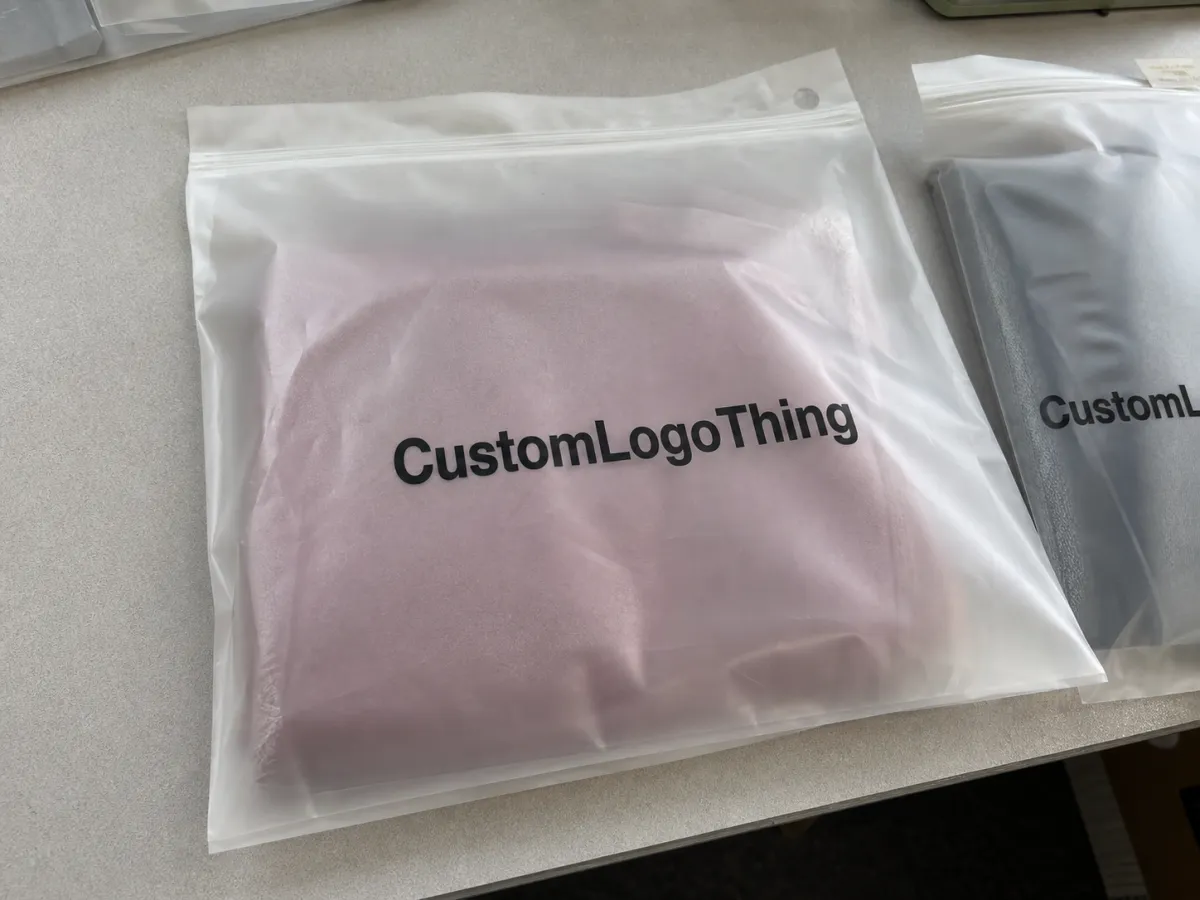
The frosted effect usually comes from the film itself or from a surface treatment that softens transparency. That subtle haze can make a package look cleaner and more premium, but the level of opacity matters. Too much visibility and the contents can look uneven; too little and the bag loses the product show-through that helps shoppers understand what they are buying.
Material construction matters just as much as appearance. A thinner film can feel lighter and more flexible, which is useful for small or low-weight items. A thicker film usually gives better puncture resistance and a firmer hand feel, which helps when the contents have corners, edges, or a heavier fill. The right choice depends on the product, not on a general rule of thumb.
Zipper style changes the customer experience more than many buyers expect. A single-track zipper often works for light-duty packaging and lower-cost programs. A double-track zipper feels more substantial and may give a stronger sense of closure security. If the zipper is overly stiff, users may think the bag is difficult to open. If it is loose, they may assume the seal is weak. Either problem hurts confidence.
Other build features shape both function and cost:
- Gussets add capacity and help the bag stand more reliably on shelf.
- Hang holes support peg display and retail presentation.
- Tear notches improve first-open convenience for end users.
- Writable panels help with lot coding, labeling, or warehouse notes.
- Rounded corners can reduce edge wear and improve the finished look.
Extra features are only helpful if they serve the product. Buyers sometimes add them because they sound premium, then discover they raise cost without improving performance. Packaging works best when the design stays tied to the product’s actual use, storage, and display needs.
Size, Thickness, Printing, and Build Specs to Lock Before Sampling
Before a sample request goes out, the supplier should have exact dimensions: width, length, gusset depth if there is one, and the usable opening after zipper and seal placement. Those numbers sound basic, but they are what determine whether the product fits properly or only fits in theory. A sample that misses on size can be visually appealing and still unusable.
Thickness should be stated clearly in mils or microns, depending on the supplier’s working unit. That detail affects stiffness, puncture resistance, and how the bag feels in hand. A 3 mil structure and a 5 mil structure can look similar on a screen, yet behave very differently once filled. For sharp or fragile contents, that gap matters a lot.
Printing should be specified with equal care. Send the artwork file, number of colors, ink coverage expectations, and whether the design sits on one side or both. Dense ink coverage can change the look of frosted material, especially if the brand wants a lighter, cleaner package branding style. If the logo contains fine type or small registration marks, mention that early; those details are where printing issues tend to show up first.
Tolerances also need to be discussed before approval. No production run lands on one exact number forever. Width, seal placement, and zipper position always vary within a controlled range. A practical sample should be judged against a realistic tolerance window, not against a perfect drawing that no production line can hold consistently.
A useful spec sheet usually includes:
- Target size in inches or millimeters
- Film thickness
- Frosted or matte finish preference
- Zipper style and any tamper-feel requirement
- Print colors, artwork file type, and ink coverage
- Quantity range and expected MOQ
- Hang hole, tear notch, or retail-display needs
If the packaging program includes custom printed boxes or inserts, align the bag spec with those pieces early. Consistent color tone and finish across the full packaging set make the product line feel planned rather than patched together. For broader packaging comparisons, our Custom Packaging Products page can help you see how different formats fit into one system.
For transit-heavy products, ask whether the sample or production plan reflects common package testing practices such as seal strength checks under ASTM F88 or distribution testing in the ISTA family of standards. The ISTA site is a useful reference if a supplier talks about shipping performance rather than appearance alone. If the project uses paper inserts or carton components, FSC sourcing is worth asking about as well; the FSC standard remains one of the clearer references for responsible fiber sourcing.
Sample Cost, Pricing Tiers, MOQ, and Unit Cost Drivers
Frosted Zipper Bags custom sample cost depends on how closely the sample matches the final bag. A plain, unprinted sample costs less because it skips artwork setup, color management, and proof review. A printed proof costs more because the supplier has to prepare the decoration and inspect the result. A production-intent sample costs the most when the buyer wants the exact film, closure, and print method that will be used in the full order.
Several factors push the price up or down in predictable ways. Larger sizes use more film. Thicker materials use more resin and often more handling time. Heavy print coverage adds setup and inspection work. Special features such as gussets, hang holes, shaped cuts, or multiple closure styles can add labor. Freight can become a meaningful part of the total too, especially if the sample needs to arrive quickly or cross borders.
Here is a practical way to read common sample tiers:
| Sample Type | Typical Use | Common Sample Cost Range | Main Cost Drivers |
|---|---|---|---|
| Plain, unprinted sample | Basic fit and zipper check | $20-$60 | Size, film thickness, shipping |
| Printed proof sample | Artwork, color, and layout review | $60-$150 | Print coverage, proof setup, revisions |
| Production-intent sample | Final approval before bulk order | $80-$250+ | Exact materials, closure style, custom build |
| Rush sample with expedited freight | Launch or trade show deadline | $100-$300+ | Rush labor, carrier upgrade, handling |
Those numbers are starting points, not promises. Two quotes can look similar while hiding different assumptions about zipper type, film grade, or the amount of finishing work included. That is why a low price only means something if the build spec is actually the same. A cheaper sample may simply be a less complete one.
MOQ matters because setup costs have to be spread somewhere. Small runs carry a higher unit cost because the one-time work is divided across fewer pieces. Larger runs usually reduce the per-bag price because the setup is distributed more broadly. A sample quote and a production quote should never be read as the same kind of pricing, even if the bag looks identical in photos.
The cleanest comparison is simple: compare only when the material, zipper, dimensions, print method, and packing assumptions match. If one quote is for a 4 mil frosted bag with a single-track zipper and another is for a 6 mil bag with a double-track closure and retail-ready packing, the numbers do not represent the same package.
Sample Process, Timeline, and Lead Time From Proof to Delivery
A normal sample workflow starts with the RFQ, moves into spec review, then quote confirmation, artwork proofing, sample build, inspection, approval, and shipment. The sequence may sound formal, but each step keeps the buyer and supplier aligned. The buyer gets a sample that matches the request. The supplier gets a written reference for what was approved.
Lead time depends on how much work the sample requires. Plain samples move faster because they skip color matching and proof revision. Printed samples take longer because the artwork has to be prepared and reviewed carefully. If the first proof comes back with corrections, the timeline extends a bit, and that is normal. A rushed revision usually costs more time later than a careful review costs upfront.
Typical timing looks like this:
- Spec review: 1-2 business days if the information is complete.
- Proofing: 1-3 business days depending on art complexity.
- Sample build: 3-7 business days for most common constructions.
- Approval and shipout: 1-2 business days after sign-off.
- Freight: varies by carrier, customs, and destination.
Freight is often the hidden variable. A supplier may finish the sample on time and still miss a launch window because the shipping method is slow or the ship-to details were incomplete. Buyers who send the full address, deadline, and contact name from the start avoid a surprising amount of delay.
Sample timing should not be confused with production timing. A sample can arrive in a week, but a bulk order may need additional scheduling for materials, print coordination, and line capacity. That is one reason frosted zipper Bags Custom Sample cost should always be paired with a question about full-run timing, not just proof turnaround.
If the order supports a launch, seasonal reset, or trade show, say so early. Accurate deadlines help a supplier choose the right path between speed and cost. Late information causes more problems than the bag itself usually does.
How to Compare Suppliers on Quality Control and Repeat Orders
The first sample is useful, but repeatability is where a supplier really proves value. A bag that looks right once is encouraging. A bag that looks right on the first order and again on the fourth order is what protects the brand. For product packaging and retail packaging alike, consistency matters because buyers notice changes in opacity, zipper feel, or print alignment quickly.
Ask direct quality control questions. What seal strength checks are used? Is the zipper cycled, and for how many open-close uses? How is film thickness checked? What happens if print registration drifts or the frosted surface shows scuffing? Clear answers matter more than polished selling language.
Documentation matters too. A good supplier should retain the approved sample, the dimensional tolerance, the material spec, and any special notes about print or closure behavior. That record becomes important when the next reorder comes in and someone new is handling procurement. Without that reference, the second run can drift from the first even if nobody intended it to.
Responsiveness is another useful signal. Suppliers that answer in plain language, confirm technical details, and admit when a spec needs adjustment are usually easier to work with over time. That matters in branded packaging programs because package branding is a repeat process, not a one-time transaction.
These comparison points usually help:
- Good sign: a detailed quote with exact size, thickness, and zipper notes
- Good sign: a sample tied to a written spec sheet
- Good sign: realistic lead times with a clear freight option
- Risk: vague promises with no measured tolerance
- Risk: prices that change after the proof is approved
- Risk: no clear answer on whether the sample matches production
If a supplier can discuss ASTM-style checks, transit expectations, and reorder control without avoiding the question, that is usually more useful than the lowest quote on the page. Buyers comparing Frosted Zipper Bags custom sample cost across multiple vendors tend to get the best result from clarity and repeatability, not from a short-lived discount that disappears on the second order.
What to Send for an Accurate Quote and the Next Step
The cleanest quote request removes guesswork. Send the target size, thickness, film preference, zipper style, print colors, quantity range, and whether the order starts with a sample or goes straight to production. If a supplier has to chase basic details, the quote will be slower and less reliable.
Artwork files and brand color references help as well. So do any packaging notes tied to the customer experience. If the bag has to sit beside custom printed boxes or fit a specific display tray, say that plainly. If it belongs to a broader package branding system, that should be part of the spec because the finish should match the rest of the line rather than feel disconnected from it.
For a practical quote request, include these items:
- Exact dimensions and gusset depth if needed
- Target film thickness and finish
- Zipper style and any special opening features
- Artwork file and print color count
- Quantity estimate and likely MOQ
- Ship-to address and deadline
- Retail display or storage notes
It also helps to ask for two views of the pricing: the sample price and the production price at one or two likely volume levels. That makes the unit cost easier to read and helps separate setup from material cost. For buyers comparing suppliers, that step usually reveals whether the quote is actually useful or only looks low at first glance.
After the quote arrives, the approval sequence should stay straightforward: review the proof, inspect the sample in hand, confirm the final spec sheet, and release production only after the bag meets the standard. That discipline saves time later and keeps the finished product packaging aligned with the brand promise from the start.
Frequently Asked Questions
How much do frosted zipper bag custom samples usually cost?
The cost depends on size, print method, material grade, and whether the sample is plain or production-intent. In many cases, Frosted Zipper Bags custom sample cost starts lower for unprinted samples and rises when the sample matches the final order more closely. Setup, tooling, and freight may be separate line items, so the quote should identify each one clearly.
What details do you need to quote frosted zipper bags with samples?
Send dimensions, thickness, zipper style, print colors, quantity, and the final use case. Artwork files and packaging notes help too, especially if the bag needs to fit retail packaging or display requirements. Include the ship-to address and delivery date so timing and freight are realistic.
Can I get a production-intent sample before I meet MOQ?
Yes, in many cases you can order a single sample or a small proof run before the full MOQ. Ask whether the sample uses the same film, zipper, and print process as the final order. It is also smart to confirm whether frosted zipper bags custom sample cost is credited later or billed separately from the production run.
How long does a frosted zipper bag sample take to make?
Plain samples usually move faster than printed samples because they skip color setup and proofing. Revisions, special features, and shipping method can add time, so a complete spec sheet shortens the timeline. If the supplier has to guess on size or artwork, turnaround usually stretches.
What changes the final unit cost after the sample is approved?
Volume, material thickness, print coverage, zipper style, and special features all affect the unit cost. Higher quantities usually reduce the per-bag price because setup is spread across more pieces. The most accurate comparison is always between quotes with matching specs, not between bags that only look similar on paper.
If you want a fast, accurate read on frosted zipper bags custom sample cost, start with a full spec sheet, confirm what the sample is meant to prove, and compare the production quote only after the physical bag clears fit, print, and handling checks.

