A boutique apparel brand may need 300 branded garment bags for a trade show, not 10,000 pieces sitting in a stockroom until the logo changes. That is why buyers search for a get PVC Zipper Garment Bags low moq quote guide. They need usable pricing, realistic minimums, artwork rules, production timing, and a supplier who will not treat a small run like an administrative punishment.
Small packaging orders are not small decisions. Over-ordering garment bags ties up cash, eats storage space, and can leave a buyer stuck with packaging that no longer fits the product line. Under-spec the bag and the problem moves to torn seams, zipper failures, cloudy presentation, or repacking work. Cute.
Why PVC Zipper Garment Bags Solve a Real Retail Problem
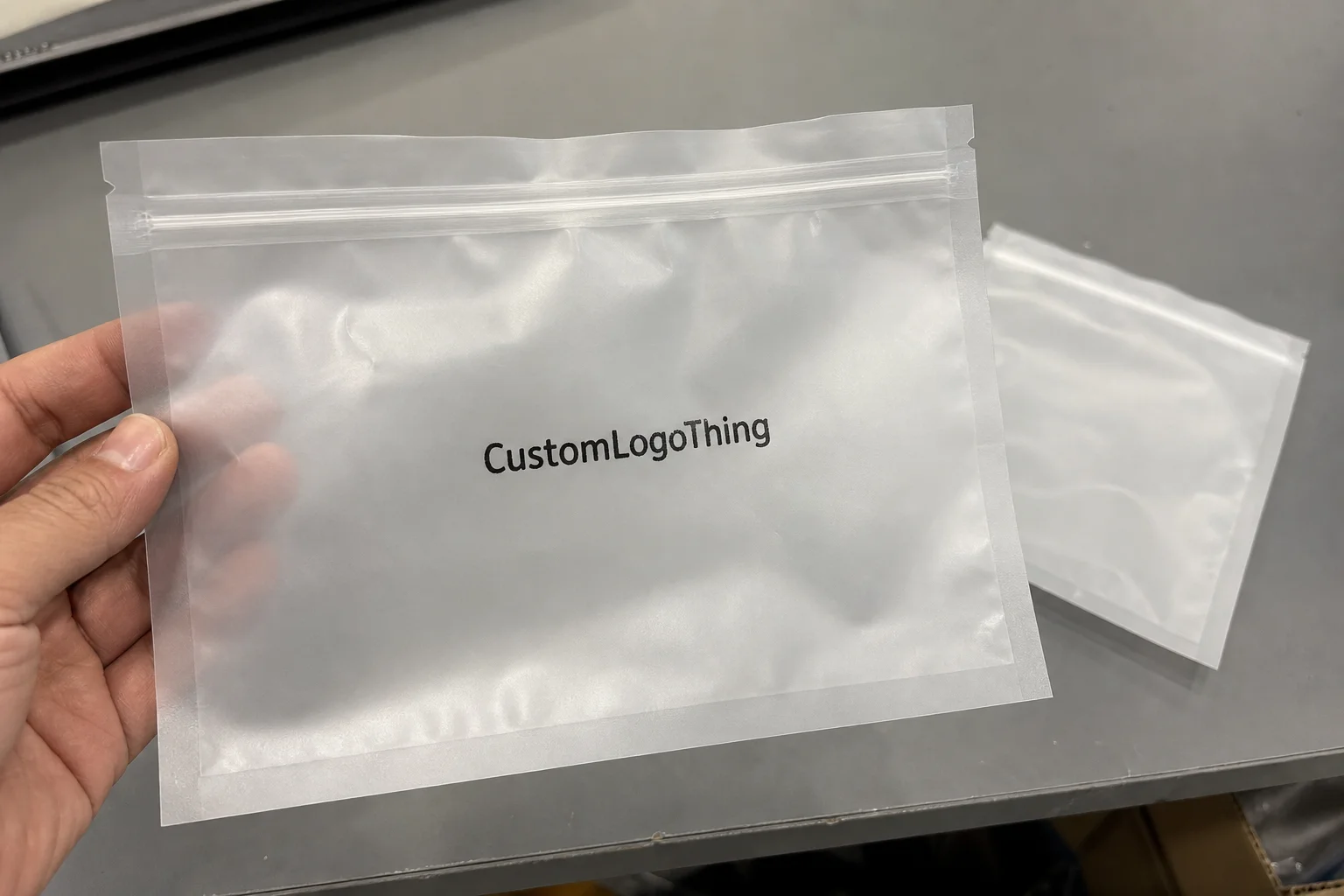
PVC Zipper Garment bags sit in a practical middle ground between disposable covers and premium textile garment carriers. They protect apparel from dust, light moisture exposure, handling marks, and transit scuffs while keeping the garment visible. That visibility matters for suits, dresses, uniforms, costumes, bridalwear, jackets, and sample collections because staff can identify the item without opening every bag.
Paper sleeves look tidy at first, but they hide the product and can crease or tear during repeated handling. Nonwoven covers feel softer and may work well for reusable closet storage, yet they do not show the garment inside. Poly mailers are useful for shipping. They are not great for showroom display, fitting-room handoff, or sample organization.
A transparent PVC garment bag with a zipper gives a retail team three things at once: protection, presentation, and repeat access. The zipper matters because garments often move through several hands before they reach the customer. A bag that must be ripped open or peeled apart is already working against the sales process.
The bigger advantage is control. Buyers can match the bag to the garment value instead of forcing one generic cover across every product. A dry cleaner may need a clear lightweight cover with ventilation. A bridal shop may need heavier PVC, a full-length zipper, reinforced hanger opening, carry handles, and a logo that still reads over white fabric.
Procurement teams, apparel startups, uniform suppliers, dry cleaners, bridal shops, costume companies, and promotional apparel sellers usually need the same thing: quick clarity before they commit. Not vague “premium quality” language. Actual specs, cost drivers, and caveats.
Buyer reality check: A low MOQ only helps if the bag still performs. A cheap garment bag with a weak zipper can cost more than a better bag once returns, repacking, and missed launch dates are counted.
Product Details Buyers Should Confirm Before Ordering
A PVC Zipper Garment bag is usually a transparent or semi-transparent PVC storage and presentation bag with a zipper closure, hanger opening, reinforced seams, and optional branding. The concept sounds simple. The quote gets messy when the buyer does not define the details.
Start with the garment. A suit bag often needs a different length and shoulder width than a gown bag. Choir robes, dance costumes, school uniforms, sample garments, winter coats, and children’s apparel all create different stress points. A long dress may need a 60-inch bag. A short jacket may work in a 40-inch format. Folded samples may need a rectangular pouch instead of a hanging cover.
Measure before asking for pricing. Photos help with style direction, but they do not replace dimensions. Suppliers need width, length, hanger opening style, zipper length, and any handle placement. If the garment has bulky shoulders, a wide skirt, heavy beadwork, or accessories stored inside the same bag, say so early.
Zipper construction is one of the fastest ways to change cost per piece. Common options include a standard nylon zipper, full-length front zipper, side zipper, colored zipper tape, and upgraded pullers for a more polished retail look. A decorative puller looks tiny on a spec sheet, but it may add sourcing time, assembly steps, and tooling fees if the shape is custom.
Hanger openings deserve attention too. A simple slit is economical. A reinforced hanger patch improves durability. Metal eyelets can add structure, though they are not always necessary for lightweight garments. A sealed top design helps dust control, but buyers should confirm whether it still works for closet storage and quick staff handling.
Handles are not automatic. No handle may be fine for closet storage or backroom organization. Soft loop handles help with customer carryout. Reinforced handles make sense for heavier garments, especially if customers will transport gowns, coats, uniforms, or event apparel. If the bag is expected to carry weight, handle stitching and attachment points matter more than the handle material alone.
Branding options include one-color logo print, multi-color printing, frosted panels, insert cards, woven labels, zipper pull branding, and sticker seals. Direct printing is often efficient for clean logos and repeat orders. Insert cards can work well when the artwork changes by collection. Labels may be useful when the buyer wants branding but does not want to print directly on PVC.
Buyers often underestimate labor more than material. A small reinforcement patch, an added handle seam, or a custom puller can shift production time enough to affect unit cost. Before requesting a quote, separate functional requirements from branding preferences. It saves everyone from the beloved ritual of requoting the same bag six times.
Specifications That Change Protection, Feel, and Shelf Life
Thickness changes stiffness, durability, folding behavior, carton weight, and perceived value. PVC garment bags are often described in microns, gauge, or millimeters depending on the supplier. Lightweight storage bags may sit around 80–120 microns. Mid-range retail bags often land around 150–200 microns. Heavier premium bags may use 250 microns or more, depending on size and construction.
Thicker is not automatically better. A heavy PVC bag can feel more substantial, but it may fold less neatly, increase freight weight, and take more carton space. A lightweight bag can be cost-efficient for dry-cleaning, short-term storage, or event use, but it may not survive repeated zipper pulls, heavy coats, or customer reuse.
Size formats vary by garment category. Short garment bags suit shirts and jackets. Suit-length bags usually cover jackets and trousers. Coat bags need extra room for bulk. Gown and wedding dress bags need length, shoulder width, and sometimes gusset space. Children’s apparel bags and folded sample pouches use smaller formats, but they still need correct zipper placement and clean seams.
A typical suit cover might be near 24 inches wide by 40 to 44 inches long. A gown bag may run 24 to 28 inches wide by 60 to 72 inches long. Those are reference points, not rules. The exact measurement should follow the garment, the hanger, and the storage method.
Clear PVC supports product visibility and inventory control. Frosted PVC gives a more private or premium look while still hinting at what is inside. Frosted material can also make a printed logo stand out more consistently than a logo printed over fully transparent PVC, especially when the garment underneath changes from white to black to patterned fabric.
Seam construction matters because garment bags usually fail at stress points, not in the center of a flat panel. Ask about heat-sealed seams, stitched reinforcement, binding tape, zipper-end reinforcement, and construction around hanger openings. For long or heavy garments, weak zipper ends are a predictable failure point.
Ventilation is worth discussing for dry-cleaned apparel, uniforms, costumes, and bridalwear. Small vent holes or breathable sections may reduce trapped moisture and odor risk. They also change the look of the bag, so do not add them casually if the bag is for retail presentation.
Compliance belongs in the conversation before production. Depending on the market and retailer, buyers may need phthalate-free PVC options, suffocation warning printing, odor control standards, recycling marks, or packaging statements. For transit performance, buyers can review test thinking from ISTA, especially if garments ship through parcel networks instead of being handed over in-store.
Request samples when matching existing packaging. At minimum, ask for close material photos and production references. Online descriptions can hide major tactile differences. Two “clear PVC 180 micron” bags can feel different if plasticizer content, surface finish, zipper quality, or seam construction changes.
| Specification Choice | Typical Use | Cost Impact | Buyer Watch-Out |
|---|---|---|---|
| 80–120 micron PVC | Short-term storage, dry-cleaner covers, event use | Lower material cost and lighter cartons | May feel too thin for repeated retail handling |
| 150–200 micron PVC | Retail garment bags, uniforms, suits, jackets | Moderate unit cost with better structure | Confirm zipper strength for heavier garments |
| 250 micron or heavier PVC | Premium gowns, bridalwear, coats, reusable packaging | Higher material cost and freight volume | Can become stiff and bulkier to pack |
| Frosted PVC panel | Premium presentation and privacy | May add material or setup charges | Logo contrast should be proofed carefully |
Get PVC Zipper Garment Bags Low MOQ Quote Guide
Low MOQ is not a magic number stamped on every custom garment bag order. It depends on size, material, printing method, zipper type, handle construction, packing method, and whether the supplier already has matching tooling. A plain standard-size bag with one-color printing may be realistic at a lower quantity. A custom-size frosted bag with special handles, branded zipper pulls, and four-color artwork will push the minimum and the unit price upward.
For a clean quote, provide the bag size, PVC thickness, quantity, logo colors, zipper style, handle requirements, packing method, delivery address, and deadline. If you do not know the thickness, describe the garment weight and use case. “Lightweight dance costume for event giveaway” is a different brief from “premium bridal gown bag for customer handoff.” Suppliers price those jobs differently because they are different.
Cost drivers become easier to see once the bag is broken into parts. Material area drives PVC consumption. Zipper length affects component cost. Reinforcement affects labor time. Printing requires screens, plates, or digital setup depending on the method. Custom components may add tooling fees. Inspection requirements add handling time.
Freight can be a larger share of landed cost than buyers expect. Garment bags are broad, and thicker versions do not compress like thin poly mailers. A 60-inch gown bag with handles can create bulky export cartons. Ask for carton dimensions, gross weight, and packing quantity per carton before comparing quotes. Otherwise, the lowest product price may lose once shipping is added.
Typical pricing varies widely, but a simple custom PVC Zipper Garment bag might fall around $0.80–$1.80 per piece at several hundred units, depending on size, thickness, and print. Larger bags, heavier PVC, reinforced handles, and premium branding can move above that range. At higher quantities, setup charges spread across more pieces, so unit cost usually drops. That is the practical math behind bulk pricing.
The cheapest quote is not always the lowest-cost decision. Cloudy PVC can make a retail garment look tired. Weak seams can split during packing. A rough zipper can irritate customers before they even see the product. Late delivery can turn a good-looking quote into an expensive scramble.
Ask whether pricing includes artwork setup, sample fees, inner packing, export cartons, duties, and shipping. If a supplier gives only an ex-factory unit price, landed cost is still incomplete. A useful quote should separate product price, sampling, freight, and optional upgrades so the decision is visible.
For commercial buyers, two quote paths work better than one: a value build and an upgraded build. The value build protects cash flow. The upgraded build shows exactly what better PVC, stronger reinforcement, or premium branding adds to the order. That comparison turns a vague purchasing debate into a costed decision.
Production Process, Lead Time, and Approval Steps
A disciplined order process usually follows a clear sequence: inquiry, spec review, quote, artwork proof, sample or pre-production photo, production, quality control, packing, and shipping. Skip one step and the risk moves somewhere else. Usually into cost, timing, or quality.
Lead time depends on artwork complexity, approval speed, material availability, order size, and shipping method. A simple repeat order can move faster than a first-time custom build. A physical sample can add several business days, but it may prevent a much larger mistake if the bag is for premium apparel, bridalwear, or retail-ready packaging.
Artwork proofing should confirm logo placement, print size, print color, zipper tape color, bag dimensions, and orientation. Pantone references help if color accuracy matters. Vector files such as AI, EPS, SVG, or editable PDF formats usually reduce artwork setup delays. If only a PNG or JPG is available, expect extra review time and possible redraw charges.
Physical samples are most useful when hand feel matters. Bridal shops, luxury boutiques, uniform programs, and promotional apparel sellers often benefit from touching the material before production. A digital mockup may be enough for a basic clear bag with one logo, but it cannot show zipper glide, PVC smell, edge softness, or true stiffness.
Quality control should cover zipper glide, seam strength, hanger opening alignment, print registration, PVC clarity, odor level, carton labeling, and count accuracy. For a small order, buyers sometimes skip inspection because the quantity feels manageable. That logic is backwards if the bags are needed for an event, launch, or customer-facing handoff.
For broader packaging performance and responsible waste thinking, buyers can also review guidance from the EPA Sustainable Materials Management program. PVC is chosen for protection and durability, so the order should be specified to avoid premature disposal.
Event deadlines need buffer. Trade shows, retail launches, school uniform rollouts, and bridal appointments do not care that a proof sat unapproved for three days. Build in time for artwork correction, freight delays, customs checks, and final counting. Clear approvals reduce rework, surprise charges, and the packaging version of a product recall.
Common Buying Mistakes That Raise Unit Cost
The first mistake is requesting a quote with only a product photo. A photo gives style direction, not dimensions. Suppliers then guess the length, width, thickness, zipper type, and print method. Every guess creates a slower quote and a higher chance of repricing later.
The second mistake is choosing the thinnest PVC without considering garment weight. A thin bag may work for a lightweight costume. It may fail on a wool coat, heavily beaded gown, or uniform set with accessories. Saving $0.15 per piece is poor economics if the zipper tears during customer handoff.
The third mistake is over-customizing a low MOQ order. Specialty zipper pulls, unusual sizes, multi-color prints, custom handles, frosted panels, and multiple label placements all add complexity. None of those features is wrong. Combining too many on a small order can make the minimum harder and setup charges harder to justify.
The fourth mistake is ignoring carton volume. Garment bags are not tiny labels. A long gown bag with handles and thicker PVC can create bulky cartons, and freight may become a surprising share of landed cost. Compare packed dimensions, not just unit price.
The fifth mistake is approving artwork without checking logo readability on transparent material. A black logo may disappear over a dark garment. A white logo may vanish over a wedding dress. Frosted panels, outline strokes, label patches, or insert cards can solve the problem, but they need to be specified before production.
The sixth mistake is treating “low MOQ” as the only purchasing goal. A very low order quantity can make sense for testing, seasonal launches, or small boutique programs. It may not make sense if setup fees dominate the order or if the buyer will reorder the same bag next month. Ask for at least two quantities, such as 300 and 1,000 pieces, to see the cost curve.
Prevent cost creep by dividing features into three groups: must-have, nice-to-have, and later. Must-have features might include correct size, durable zipper, and one-color logo. Nice-to-have features might include frosted panels or upgraded pulls. Later features can wait until reorder volume supports better pricing.
- Confirm size: Measure garment width, full length, and hanger clearance.
- Choose thickness: Match PVC gauge to garment weight and reuse expectations.
- Define quantity: Ask for one low MOQ price and one higher-volume comparison.
- Set artwork: Provide vector logo files and color references.
- Check delivery: Share the deadline, destination, and preferred shipping method.
- Name budget range: A target budget helps the supplier recommend realistic tradeoffs.
If you want a supplier to respond quickly, send a complete brief through Contact Us instead of asking for “best price” with no context. Better inputs produce sharper pricing. Revolutionary concept, apparently.
Practical Next Steps Before You Request Pricing
Start with the garment, not the bag. Measure the garment length from hanger top to hem, then add clearance so the fabric is not crushed. Select the bag length. Choose a PVC thickness range. Decide whether the zipper should run down the front or side. Confirm whether customers need handles.
Set a quantity range, such as 300, 500, and 1,000 pieces, so the supplier can show cost movement. This is especially useful for low MOQ orders because setup charges can distort the first price tier. The buyer may still choose the smaller run, but at least the tradeoff is visible.
Prepare your logo file in vector format when possible. Include Pantone or brand color references if print color matters. If the bag must match existing packaging, send photos of the current garment bag, including close-ups of the zipper, hanger opening, handle, seam, label area, and any printed warning text.
Define the business goal of the order. Retail packaging should look clean under store lighting. Storage protection should prioritize dust control and zipper durability. Event giveaways may need a lower cost per piece and faster approval. Dry-cleaner packaging may need ventilation. Premium garment presentation may justify thicker PVC, reinforced handles, and more controlled branding.
Ask for two quote options: a value build and an upgraded build. For example, the value build may use clear 150-micron PVC, standard zipper tape, no handle, and one-color logo printing. The upgraded build may use 200-micron PVC, reinforced hanger opening, soft loop handles, and a frosted logo panel. Seeing those options side by side makes the tradeoff concrete.
Custom Logo Things can help translate a rough idea into a workable specification, but the best quotes start with clear inputs. If you are comparing supplier answers, the FAQ page can help with common artwork, ordering, and production questions before the brief is finalized.
A strong PVC zipper garment bag quote should give realistic pricing, production timing, and tradeoffs. It should not bury the buyer in vague claims or hide freight until the last minute. Keep the brief tight, insist on specs that protect the garment, and leave enough time for proofing. That is how low MOQ custom packaging stays useful instead of becoming another box of almost-right inventory.
FAQs
What details do I need for a PVC zipper garment bags low MOQ quote?
Provide bag dimensions, garment type, PVC thickness, quantity, zipper style, logo artwork, print colors, delivery location, and deadline. If thickness or size is unclear, send garment photos and explain the use case so the supplier can recommend a practical specification.
What is considered low MOQ for custom PVC zipper garment bags?
Low MOQ depends on size, printing, material availability, and customization level. Standard sizes, one-color printing, and common zipper colors usually make small-batch production easier than unusual sizes or heavily customized builds.
How does PVC thickness affect zipper garment bag pricing?
Thicker PVC uses more material and can increase carton weight, but it usually improves durability, structure, and perceived quality. The right thickness depends on garment weight, reuse expectations, and whether the bag is for storage, transport, or retail presentation.
Can I get branded PVC garment bags with a low MOQ?
Yes, branded low MOQ orders are often possible when the design uses standard sizes, simple logo placement, and limited print colors. For premium branding, compare direct printing, labels, zipper pull branding, frosted panels, and insert cards before choosing the build.
How long does a custom PVC zipper garment bag order take?
Timing depends on artwork approval, sampling needs, material availability, order quantity, and shipping method. Buyers with fixed event or retail launch dates should confirm the production timeline before approving the order and build in buffer time for transit.


