Get PVC Zipper Garment Bags Material Comparison Guide: What You Are Really Choosing
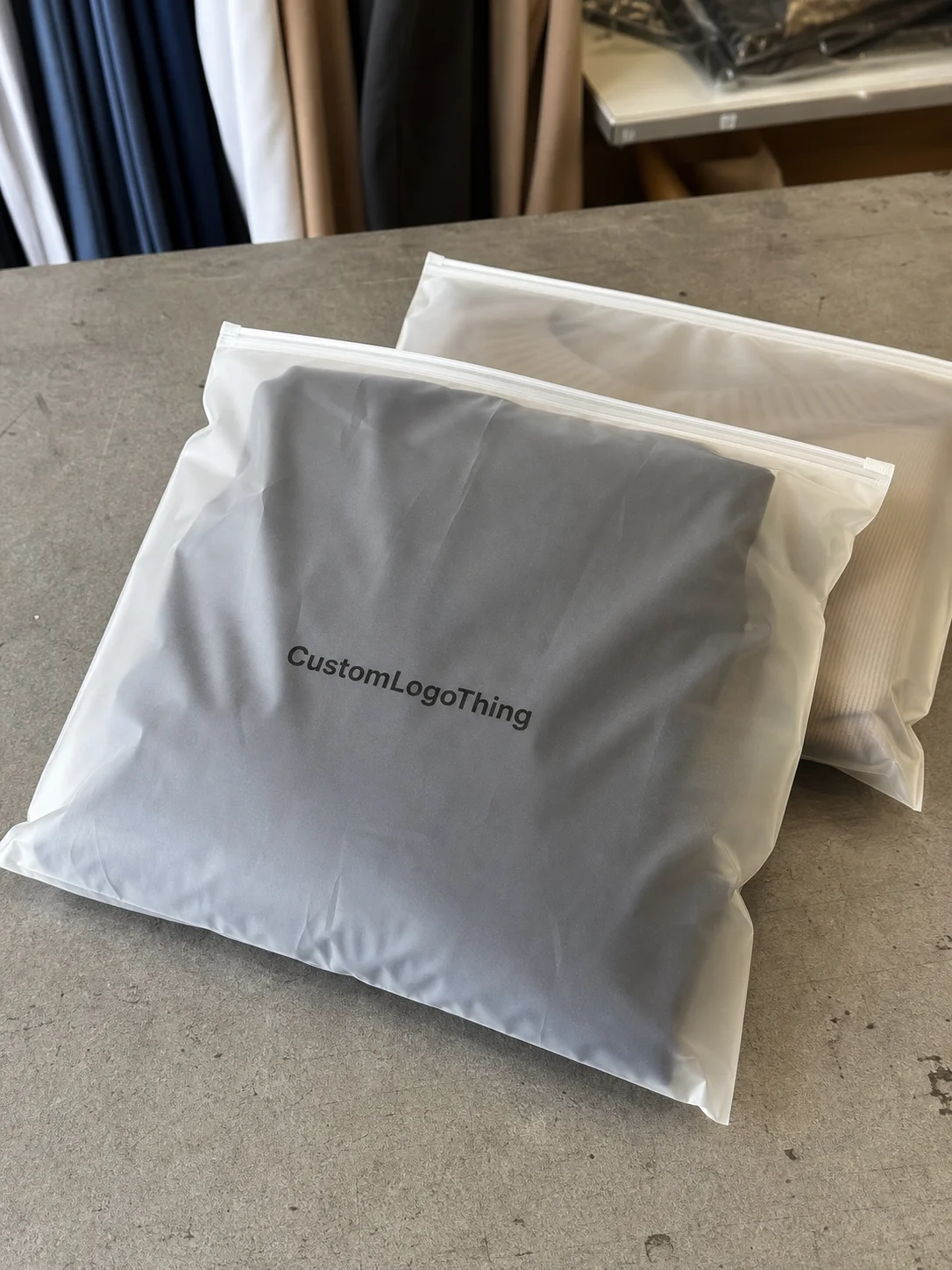
Two garment bags can look identical in a product photo. One cracks in cold storage. One fogs on the rack. One has a zipper that gives up before the dress reaches the customer. Glamorous, no. Expensive, yes.
PVC Zipper Garment bags are clear or semi-clear plastic covers with a zipper closure. Apparel brands use them for suits, dresses, uniforms, bridalwear, dance costumes, outerwear, sample collections, and retail storage. The product looks simple. The buying decisions are not.
The material affects clarity, hand feel, flexibility, odor, durability, print quality, freight weight, compliance exposure, and customer perception. A garment bag is not just a sleeve. It is the first packaging layer your buyer touches before they touch the garment. If it feels cloudy, brittle, sticky, or flimsy, the garment starts at a disadvantage.
The useful question is not “which material is best?” That question wastes time. Better question: which material fits the garment, selling price, storage conditions, compliance needs, and brand position?
This guide compares PVC, PEVA, EVA, LDPE, HDPE, non-woven polypropylene, and hybrid constructions. Thickness, zipper type, hanger opening, gusset depth, logo placement, MOQ, production lead time, and packing method all change the final unit cost. Cheap bags get expensive fast when they arrive undersized, wrinkled, smelly, or split along the zipper seam.
How PVC Zipper Garment Bags Work in Real Apparel Packaging
A standard PVC garment bag starts with front and back film panels. The panels are cut, heat sealed or stitched depending on construction, then finished with a zipper track, hanger opening, and sometimes edge binding. Add-ons can include handles, gussets, metal eyelets, snap buttons, card pockets, reinforced seams, and printed panels.
PVC stays popular because it is clear, structured, printable, and widely available. It gives apparel a cleaner retail look than thin poly covers, especially for suits, dresses, uniforms, costumes, and formalwear. A 0.10 mm clear PVC bag with a smooth zipper and centered one-color logo can look sharp without drifting into luxury packaging costs.
The zipper deserves more attention than it usually gets. Nylon coil zippers are common and flexible. Plastic zipper tracks can look cleaner on transparent bags. Slider closures are economical, but if the track is too light, the whole bag feels cheap. Because apparently the tiny moving part nobody tested gets to decide the customer experience.
Common formats include flat suit bags, long dress bags, gusseted bridal bags, foldable travel garment bags, short jacket bags, and heavy-duty closet storage bags. A short jacket bag may run around 24 inches wide by 40 inches long. A gown bag often needs 24 to 28 inches wide by 60 to 72 inches long, sometimes with a 3 to 8 inch gusset for volume.
PVC works well for showroom samples, retail packaging, uniforms, wedding apparel, dance costumes, promotional apparel kits, and closet storage. It is less ideal for eco-sensitive brands, baby products, markets with strict material restrictions, very cold storage, or soft-touch flexible packaging where a quieter hand feel matters.
Most PVC garment bags sit between 0.08 mm and 0.20 mm. Light-use bags may work at 0.08 mm. Reusable storage bags, bridal bags, and heavy coats usually need 0.15 mm or more. Match the construction to the job. One-week retail protection and five-year closet storage are not the same assignment.
PVC vs PEVA, EVA, LDPE, and Non-Woven Materials
Material choice controls the feel before the logo gets printed. PVC is usually the strongest option for clarity, structure, print visibility, and polished retail display. The tradeoffs are odor concerns, regulatory scrutiny in some markets, and a weaker sustainability story. If a brand sells premium apparel while talking heavily about recycled or low-impact packaging, a full PVC bag may feel off-message.
PEVA is softer and usually lower odor than PVC. It is often treated as a more acceptable vinyl alternative for brands avoiding traditional PVC. It can cost more depending on thickness and availability, and it may not look as rigid or crystal clear. For many apparel buyers, the softer hand feel is worth that trade.
EVA is flexible, durable, and common in higher-end reusable bags. It handles repeated use better than very light poly options, but it can push unit cost up. Transparency tends to be softer rather than glass-clear. If the customer will travel with the garment bag or reuse it frequently, EVA deserves a real quote, not a quick dismissal.
LDPE is economical, lightweight, and flexible. It works for simple garment covers where protection matters more than display. The downside is presentation. A $900 gown in a thin LDPE sleeve? Please don’t.
HDPE is crisp, inexpensive, and useful for basic protective covers. It has lower transparency, less softness, and limited upscale appeal. Non-woven polypropylene is breathable, reusable, and strong for suits, uniforms, promotional garment bags, and event apparel kits. The obvious tradeoff is visibility. Customers cannot see the garment unless you add a clear PVC or PEVA window.
| Material | Best Use | Typical Feel | Visibility | Average Price Level | Main Tradeoff |
|---|---|---|---|---|---|
| PVC | Retail display, suits, gowns, uniforms | Structured and smooth | High | Low to medium at volume | Odor and compliance perception |
| PEVA | Lower-odor garment storage | Soft and flexible | Medium to high | Medium | Less rigid than PVC |
| EVA | Reusable premium bags | Flexible and durable | Medium | Medium to high | Higher unit cost |
| LDPE | Basic protective covers | Light and flexible | Medium | Low | Disposable presentation |
| HDPE | Simple garment protection | Crisp and thin | Low to medium | Low | Not premium |
| Non-woven PP | Breathable reusable bags | Fabric-like | Low unless windowed | Low to medium | No garment visibility |
Hybrid designs solve several problems without turning packaging into a committee meeting. A non-woven bag with a clear window gives breathability, print area, structure, and garment visibility. Some brands pair fabric-like panels with kraft paper hang tags or FSC certified paper inserts to soften the plastic-heavy look. Not every choice has to be ideological warfare. Sometimes the practical mix wins.
Do not judge material only by a sample square. A small swatch tells you clarity and feel, but not zipper behavior, seam strength, odor after packing, or how the bag hangs with weight inside. Material selection should happen alongside construction decisions, not in isolation.
Key Specs That Matter Before You Request a Quote
Thickness is the first spec to lock. Thin bags reduce cost, but they wrinkle, tear, and feel cheap. Thick bags protect better and hang flatter, but they increase material cost and freight weight. Most quote confusion starts here.
- Light garment covers: around 0.05 mm to 0.08 mm, suitable for short-term dust protection.
- Standard zipper garment bags: around 0.08 mm to 0.12 mm, a practical range for suits, dresses, and uniforms.
- Premium reusable bags: around 0.15 mm to 0.20 mm or more, safer for bridalwear, coats, and repeated handling.
Size selection comes next. Short jackets, full suits, gowns, coats, dance costumes, and uniform sets need different lengths and widths. Guessing is how you get returns, rework, and colorful emails from customers. Measure the garment on a hanger, then add clearance for shoulders, hem length, sleeve shape, and fabric volume.
Gussets matter for bulky garments. A flat 24 inch by 60 inch bag may technically cover a gown, but it can crush beading, sleeves, or layered skirts. Side or bottom gussets from 2 to 8 inches create room for winter coats, bridal dresses, and multi-piece uniforms.
Zipper options affect both cost and failure rate. Nylon coil zippers are common and forgiving. Plastic zipper tracks can look cleaner on transparent bags. Reinforced zipper ends reduce splitting, especially on longer bags that customers open fully. If the zipper will be used more than 20 or 30 times, test it like it matters.
Hanger openings can be a basic top slit, reinforced hanger hole, metal eyelet, or flap-style closure. A top slit is cheap and fine for many retail bags. A reinforced hanger opening is smarter for heavier garments or repeated closet use. Metal eyelets add strength, but they also add cost and weight.
Print specs should be decided before quoting. Options include one-color logo printing, multi-color screen print, heat transfer, label patch, or full-panel artwork. A simple one-color logo on PVC is usually easier than full coverage graphics across zipper tape, folds, or textured non-woven panels.
Ask compliance questions early. For PVC, confirm phthalate-free options if needed. For children’s apparel, review CPSIA-related expectations. For European markets, ask about REACH documentation. Larger retailers may require test reports, material declarations, or packaging data aligned with internal vendor manuals. For distribution testing, ISTA procedures may also matter when cartons, bulk packing, and transit damage are part of the risk.
Cost, Pricing, MOQ, and Unit Cost Tradeoffs
Unit cost depends on material type, thickness, bag dimensions, zipper quality, gusset depth, print method, artwork coverage, reinforcement, packing method, and order quantity. “How much does a garment bag cost?” is not a serious quote request. It is a shrug with punctuation.
PVC is often cost-effective at volume because supply is broad and production is familiar. PEVA and EVA can cost more, especially at heavier gauges. Non-woven may be economical for opaque reusable bags, while hybrids often land in the middle. Add clear windows, handles, lamination, reinforced binding, custom zipper colors, or branded zipper pulls, and the unit cost moves quickly.
Custom printed Zipper Garment Bags usually have higher MOQs than plain stock bags. Film cutting, zipper setup, printing screens, special packing, and labor need enough units to make sense. Simple stock-size logo printed bags may start around 300 to 500 pieces. Fully custom sizes, special thicknesses, and custom zipper colors often make more sense at 1,000 pieces or above.
Price breaks are not always linear. Moving from 500 to 1,000 units may help a little. Bigger reductions often appear at 3,000, 5,000, or 10,000 units because setup costs shrink per unit and material purchasing improves. A standard 0.10 mm PVC Zipper Garment bag will not price like a 0.16 mm reinforced PEVA bag with gusset, handle, and two-color print. Shocking, I know.
If a supplier quote does not list material, thickness, size, print method, packing, MOQ, and sample cost, you do not have a quote. You have a mystery box with a price tag.
Freight deserves its own line in the budget. Thick PVC, metal eyelets, reinforced binding, and heavy cartons increase shipping weight. Flat packing can reduce volume, but poor folding can create permanent creases. Ocean freight is usually better for large-volume orders. Air freight can rescue a deadline, then punish the budget for its bravery.
Sampling may be charged separately. Custom samples often cost more when they include special dimensions, zipper colors, printed artwork, or branded hardware. That fee is not automatically a bad sign. A $75 to $250 sample charge can prevent thousands of dollars in bad production. One honest sample beats 5,000 unusable bags and a long email chain nobody enjoys.
Request itemized quote versions. Ask for budget, standard, and premium options. A capable supplier should show the difference between 0.08 mm PVC, 0.12 mm PVC, PEVA, EVA, and a non-woven hybrid option without making you decode vague adjectives like “nice quality” or “top grade.” Specs beat adjectives every time.
Process and Timeline From Sample to Finished Garment Bags
The buying process is clean if you do the homework first. Define the garment type, choose a material, confirm the finished size, select thickness, decide zipper and hanger details, submit vector artwork, approve the quote, review the sample, then approve production. Skip steps and the bag will find a way to embarrass you.
Stock-style bags with simple logo printing are faster because the base construction already matches common specs. A standard suit bag with a one-color logo may only need artwork setup and print approval. Fully custom bags take longer because cutting dies, material sourcing, sample making, print setup, and packing decisions all add time.
Realistic timing helps planning:
- Digital mockup: usually 1 to 3 business days after artwork and specs are received.
- Physical sample: often 5 to 12 business days, depending on customization.
- Bulk production: commonly 15 to 35 days, depending on quantity and complexity.
- Shipping: air may take days; ocean freight can add several weeks for volume orders.
Shipping time is separate. Buyers forget this constantly. Production complete does not mean cartons are at your warehouse. If you need bags for a uniform launch, bridal trunk show, sample sale, or seasonal retail drop, build in approval time, production time, transit time, and inspection time.
Sample review should be physical, not just visual. Put the actual garment inside the proposed bag. Check size fit, shoulder clearance, zipper smoothness, logo placement, material smell, clarity, seam strength, and carton packing. Hang it for a day if display matters. Open and close the zipper at least 20 times. Better to annoy a sample than disappoint a customer.
Artwork checkpoints are practical too. Send vector files, preferably AI, EPS, or editable PDF. Provide Pantone references if color matters. Confirm print size, logo placement from the top edge, and whether the mark must stay visible while the garment hangs. A logo hidden behind folded fabric is not branding. It is decoration for the inside of a closet.
Do not approve bulk production from a flat PDF if the bag must fit an expensive gown, structured coat, or multi-piece uniform set. A comparison chart can narrow the options. The real test is still a sample with the actual garment inside.
Common Material Selection Mistakes That Make Bags Fail
The first mistake is choosing the thinnest PVC because the unit price looks good. Thin material can crease, split at seams, and make premium apparel feel cheap. Saving $0.04 per unit means nothing if the customer thinks the whole product is low-grade.
The second mistake is ignoring garment bulk. A flat bag that works for shirts may crush a beaded gown, winter coat, or layered uniform. Bulk is not just width and length. Padding, lining, shoulder structure, embellishments, and hangers all steal space.
The third mistake is forgetting breathability. Fully sealed plastic can trap moisture if garments are not completely dry before packing. For long-term storage, non-woven polypropylene or hybrid bags may be safer. For boxed shipments, moisture control and carton quality matter too. Corrugated cardboard strength, carton compression, and warehouse humidity can affect how cleanly garment bags arrive.
The fourth mistake is using PVC where the market expects a softer or lower-odor alternative. Children’s apparel, luxury wellness brands, bridal accessories, and eco-positioned labels may get pushback from plastic-heavy packaging. If the brand already uses kraft paper tags, post-consumer waste mailers, or FSC certified inserts, a cloudy low-grade PVC bag can feel disconnected.
The fifth mistake is approving a zipper without repeated testing. Customers notice the zipper first because they have to use it. Check the slider, zipper tape, end stops, and stitching or sealing around the track. A zipper that catches on day one will not magically become charming at home.
The sixth mistake is printing too close to seams, folds, zipper tape, or hanger holes. Artwork can distort in high-stress zones, especially on flexible film. Leave practical margins. For many bags, keeping logos at least 1 to 2 inches away from seams and zipper paths reduces distortion and rub-off.
The seventh mistake is failing to confirm packing. Bags can arrive wrinkled if folded poorly, over-compressed, or packed in cartons that are too heavy. Ask how many pieces go per inner pack and master carton. Ask whether tissue, poly separators, or flat packing will be used for premium bags.
The eighth mistake is treating every quote as equal. If one quote is for 0.08 mm PVC and another is for 0.16 mm reinforced PEVA with gusset and custom zipper color, those are different products. Price shopping only works after the specs match.
Next Steps: Build a Spec Sheet Before You Buy
Before requesting quotes, build a one-page spec sheet. It does not need to be pretty. It needs to be clear. Include garment type, finished bag size, material preference, thickness range, zipper color, hanger opening, gusset depth, logo size, print color, quantity, packing method, destination, and deadline.
If you are choosing between PVC, PEVA, EVA, and non-woven options, request material swatches before committing. Photos lie. Clear film can look bright on a screen and feel stiff, sticky, or cloudy in person. Non-woven can look premium in a sample photo and feel scratchy if the GSM is too low.
Test one actual garment inside the proposed size before production. Measurements on paper help. Real garments help more because fabric volume lies. A structured coat and a silk dress can share the same length on paper and need very different bags.
Ask for three quote versions: budget, standard, and premium. This makes tradeoffs visible. You may find that moving from 0.08 mm to 0.12 mm adds a manageable amount, while adding a gusset, handle, and two-color print changes the project completely. Better to know that before approval.
Confirm compliance early if selling into retail chains, children’s apparel, Europe, or eco-sensitive markets. Ask for phthalate-free PVC documentation where needed, REACH information for Europe, and packaging data that supports retailer vendor requirements. For broader sustainability language, the EPA recycling resources can help buyers understand why claims around recycled materials and disposal need careful wording.
Send the manufacturer reference photos, logo files, target size, garment details, expected quantity, preferred material, delivery location, and any must-have certifications. If you already know the carton limits, retail display requirements, or warehouse packing rules, include those too. Packaging problems often start because the supplier had to guess.
A good garment bag spec protects the garment, supports the brand, and keeps production boring. Boring is underrated. It means the zipper works, the film hangs cleanly, the logo lands where it should, and the customer does not notice the packaging for the wrong reasons.
FAQs
What is the best material for PVC zipper garment bags used in retail apparel?
PVC is strong for clear retail presentation, structured storage, and visible branding. PEVA or EVA may be better if lower odor, softer feel, or eco-positioning matters more than rigid clarity. Non-woven polypropylene is better for breathable reusable bags, especially for suits, uniforms, and promotional apparel.
How thick should custom PVC zipper garment bags be?
For basic garment covers, 0.05 mm to 0.08 mm can work, but it may feel light. For standard Zipper Garment Bags, 0.08 mm to 0.12 mm is a common practical range. For premium reusable storage bags, bridal bags, or heavier garments, 0.15 mm to 0.20 mm or more is usually safer.
Are PVC garment bags more expensive than PEVA or non-woven bags?
PVC is often cost-effective for clear zipper garment bags at volume, but thickness changes pricing quickly. PEVA and EVA can cost more depending on grade, thickness, and availability. Non-woven bags can be economical, but clear windows, lamination, handles, and premium printing can raise the unit cost.
What MOQ should I expect for custom printed zipper garment bags?
Simple logo-printed stock-size bags may have lower MOQs than fully custom sizes. Custom material, thickness, zipper color, gusset, or large print areas usually increase MOQ. Ask for price breaks at multiple quantities so you can compare 500, 1,000, 3,000, and 5,000 units instead of guessing.
How long does production take for PVC zipper garment bags?
A digital proof may take 1 to 3 business days after specs and artwork are received. A physical sample often takes 5 to 12 business days, depending on customization. Bulk production commonly takes 15 to 35 days, with shipping time added separately.


