A $600 suit can lose its showroom feel in one shipment if it arrives dusty, wrinkled, or rubbed at the shoulder because the outer carton did all the protection work and the inner garment bag did almost none. If you are trying to shop PVC Zipper Garment Bags moq pricing plan options before asking for a factory quote, the goal is not just finding the lowest cost per piece. The real job is matching size, PVC thickness, zipper quality, logo print, packing method, and delivery plan to the garment being protected.
That is the buying reality apparel teams usually learn after a return, a rushed repack, or an unhappy wholesale account. A proper PVC Zipper Garment bag is a small line item compared with replacing a dress, steaming a wrinkled coat, reboxing a uniform order, or explaining scuffed samples to a retail buyer. Clear PVC keeps the garment visible. A zipper allows repeated access. A hanger opening supports retail handling and warehouse movement. A printed logo turns a plain cover into brand presentation, assuming the bag itself does not look cheap. Details matter. Annoying, but true.
When a Garment Bag Costs Less Than One Return
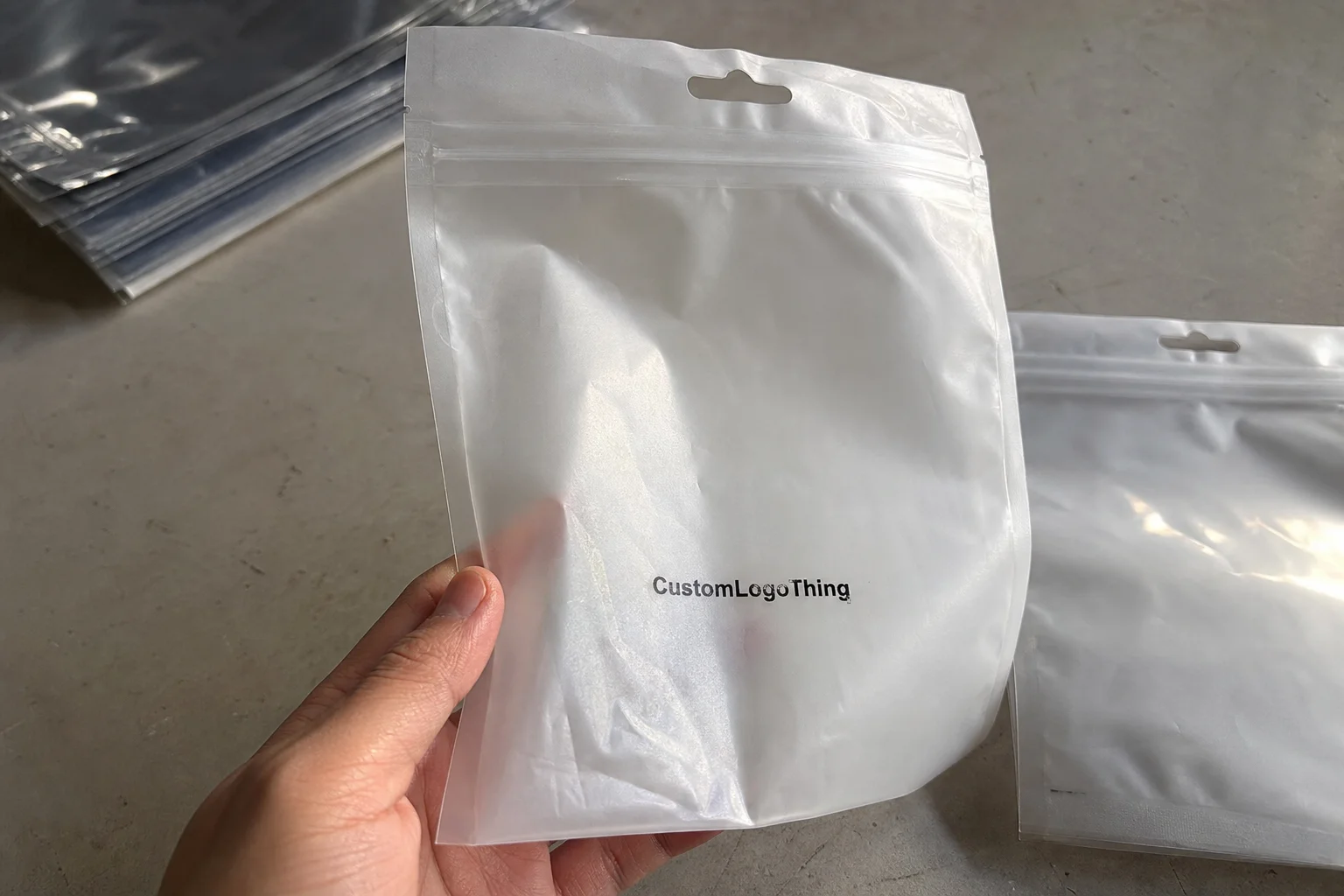
From a packaging buyer’s point of view, a garment bag is easy to underestimate because it looks simple: clear plastic, zipper, hanger hole, logo. In practice, small decisions change performance fast. A light dust cover may be fine for a shirt moving from stockroom to sales floor. That same bag can look tired after one trade show, bridal fitting, sample-room cycle, or uniform issue.
The cost math is blunt. If one returned coat requires inbound freight, inspection, cleaning, repacking labor, replacement packaging, and outbound reshipment, the recovery cost can pass $25 to $60 before anyone counts the buyer’s frustration. Against that, a custom PVC zipper garment bag may represent a modest unit cost, especially once a standard custom run spreads setup costs across enough pieces.
Different buyers care about different failures. A dry cleaner may prioritize economical clarity and basic zipper function. A bridal shop may need a longer bag, a wider gusset, and cleaner logo placement because the customer sees the bag as part of the purchase. A uniform supplier may care more about size grouping, carton labels, and repeatable pack counts. Outerwear brands need room at the shoulders and enough thickness to survive handling. Promotional programs often need a logo that reads well from a few feet away, not a tiny badge that disappears on clear plastic.
Practical callout: If the garment will be opened and closed more than a few times, price the zipper and edge construction seriously. The lowest unit cost is not cheap if sliders jam, seams split, or staff must replace bags before the garment reaches the buyer.
Shop PVC Zipper Garment Bags MOQ Pricing Plan Basics
A PVC zipper garment bag is a flexible garment cover made from clear, frosted, or tinted PVC film, usually with a zipper closure, a hanger slit or reinforced hanger opening, and sealed, stitched, or bound edges. Some bags are flat. Others include a side or center gusset so coats, gowns, uniforms, or multiple garments can sit inside without being squeezed flat.
Common uses include retail garment protection, showroom sample storage, travel presentation, wedding dress handling, seasonal coat packaging, employee uniform issue, event merchandise, and branded delivery from dry cleaners or alteration shops. Each use case has its own “good enough” point. A short-term dust cover can be lighter and more economical. A reusable retail bag needs better hand feel, stronger zipper function, and cleaner finishing.
MOQ and pricing get discussed together because the same variables drive both. Material purchasing, zipper sourcing, cutting setup, print screen preparation, line changeover, quality inspection, and export packing all create a minimum efficient run. A factory may be able to make a small pilot order, but the cost per piece often improves sharply once quantity rises and setup charges stop carrying the whole order.
Stock-style dimensions can work for common shirts, suits, and standard-length coats. Fully custom sizing is worth considering for long gowns, children’s apparel, bulky outerwear, sample-room sets, or any garment using a special hanger. The best quote starts with intended use, garment dimensions, order quantity, logo requirements, delivery location, and whether the bag must feel retail-grade or simply protective.
For broader packaging questions before submitting a quote request, Custom Logo Things also keeps a buyer-friendly FAQ that covers common ordering details.
Material, Zipper, and Logo Details Buyers Should Confirm
PVC thickness is one of the first technical details to settle. Light gauges are typically used for short-term dust protection, dry cleaner covers, and low-contact storage. Mid-weight material is more common for retail handling, showroom samples, and uniform programs. Heavier PVC is better suited for travel use, bridal gowns, coats, or bags expected to be reused repeatedly.
There is a tradeoff. Heavier film usually improves durability and hand feel, but it also increases material cost, carton weight, and sometimes freight cost. Overbuilding a bag for a one-way dust cover is wasted money. Underbuilding a bag for repeated handling is worse, because now the brand paid for custom packaging that fails in public. Great.
Clarity and hand feel deserve more attention than buyers usually give them. Clear PVC helps staff identify the garment without opening the bag. Frosted or tinted PVC can make the presentation look more finished, especially for boutique retail and event programs. Softer PVC feels more flexible in the hand. Stiffer economical material can work for basic storage, but it may crease more noticeably after folding and can feel less premium.
Zipper choices should be confirmed in writing. Common options include nylon zipper tape, a metal-look slider, full-length zipper, partial zipper, color-matched zipper tape, or a contrasting zipper for brand effect. A full-length zipper is convenient for suits, dresses, and coats. A shorter zipper can control cost for simpler covers. Repeated opening and closing puts stress on the slider, zipper tape, and the seam next to the zipper, so zipper quality is not a cosmetic detail.
Edge construction changes both performance and price. Heat sealing is efficient for many PVC bags. Stitching may be preferred for certain heavier constructions. Bound edges give a more finished appearance and can improve durability on reusable bags. Reinforced hanger holes, gussets, bottom openings, closed bottoms, and reinforced corners all need to be decided before pricing because they affect labor time and material usage.
Logo printing on PVC is often handled with silk screen printing, especially for bold one-color logos. One-color printing is usually the most cost-controlled choice. Multi-color logos can require additional screens, tighter registration, more setup time, and higher setup charges. Clean artwork helps: vector files, Pantone references, clear logo dimensions, and preferred print placement reduce back-and-forth and help prevent proofing delays.
Compliance questions should come early, not after the proof is approved. Requirements depend on the destination market, retailer rules, and how the bag will be used. Buyers may need to confirm PVC formulation, odor expectations, warning label requirements, or retailer packaging standards. For shipping performance guidance, the International Safe Transit Association is a useful authority on package testing concepts, especially when garment bags are part of a larger packed carton or e-commerce shipper.
| Specification Choice | Best Fit | Cost Impact | Buyer Note |
|---|---|---|---|
| Light PVC, flat construction | Dust covers, short-term storage | Lower unit cost | Good for light handling, not ideal for repeated travel use |
| Mid-weight PVC with full zipper | Retail garments, suits, uniforms | Moderate cost per piece | Often the practical balance for branded programs |
| Heavier PVC with gusset | Coats, gowns, multi-garment sets | Higher material and freight cost | Improves fit and reduces compression on bulky apparel |
| Multi-color logo print | Premium retail presentation | Higher tooling fees or setup charges | Requires better artwork control and proof review |
Size Specifications That Prevent Fit Problems
Measure the garment first, not a competitor’s bag. Shoulder width, total garment length, thickness at the widest point, hanger style, and whether the garment will be folded or kept hanging all affect final size. A copied bag may look close, but half an inch at the shoulder or two inches at the bottom can decide whether the garment hangs cleanly or bunches.
Common categories include shorter bags for shirts and blouses, mid-length bags for suits and uniforms, longer bags for dresses and coats, extra-long bags for gowns, and smaller covers for children’s apparel. Sample-room garments may need extra allowance because they are handled often and may carry tags, hangers, or accessory pieces. Final sizing should match the buyer’s own product, not a generic apparel category.
Gusset depth is one of the most useful fit tools. Flat bags pack tightly and work well for light apparel in cartons. A 2-inch to 4-inch gusset can help with coats, bridalwear, layered uniforms, and multiple garment sets. Oversizing the gusset can make the bag bulky and raise freight cost, so the better answer is not always “make it bigger.” The better answer is enough room for the garment to hang naturally.
Opening details deserve careful review. Zipper placement, hanger slit size, reinforced opening, bottom seam style, side gussets, and inspection access all change usability. A retail team may want a bag that opens wide enough to inspect fabric and labels without fully removing the garment. A warehouse team may care more about quick hanging, consistent folding, and carton counts that do not drift from shipment to shipment.
Packing specifications are often missed until late. Ask about individual polybagging, folded bag size, pieces per inner pack, master carton quantity, carton weight, barcode labels, pallet requirements, and sea freight loading. Flexible plastic bags can vary slightly after cutting, sealing, stitching, folding, and packing, so tolerance expectations should be reasonable and confirmed before bulk production. Industry resources from the Association for Packaging and Processing Technologies can also help buyers understand how packaging decisions connect to handling and distribution.
MOQ, Pricing, and Unit Cost Drivers
MOQ is not just a sales number. It reflects setup time, material purchasing, zipper sourcing, printing screen preparation, production line changeover, quality inspection, and export packing. If you compare suppliers on MOQ alone, the lowest minimum may not create the best landed value once setup charges, sample fees, carton dimensions, and freight are included.
The main unit cost drivers are PVC thickness, bag width and length, gusset depth, zipper length and quality, print colors, print coverage, reinforcement details, packing method, order quantity, and freight terms. Larger bags cost more even at the same gauge because they consume more film, take more sealing or stitching time, use more zipper, and occupy more carton space. Dimensional shipping cost can matter because garment bags are often bulky even when lightweight.
Logo printing affects price through screen charges, ink coverage, color count, print position, and artwork preparation. A simple one-color logo on the upper chest area of the bag is usually more efficient than a large multi-color print spanning most of the front panel. If artwork needs cleanup, vector conversion, or color matching, that work should be discussed before proofing.
Exact pricing requires actual specifications, but buyers can think in practical tiers. A sample order is useful for confirming size and feel but carries a high cost per piece. A low MOQ pilot run can work for launch testing, though setup costs remain concentrated. A standard custom run usually gives a better balance of unit cost and flexibility. A volume reorder often gets the cleanest bulk pricing because the dimensions, artwork, material, and packing method are already locked.
| Quote Tier | Typical Use | Pricing Behavior | What to Confirm |
|---|---|---|---|
| Sample or prototype | Fit check, logo placement, PVC feel | Highest cost per piece | Sample fee, proof timing, shipping method |
| Low MOQ pilot run | New apparel launch or first retail test | Setup charges spread over fewer units | Minimum quantity, print setup, carton count |
| Standard custom run | Regular retail, uniforms, showroom stock | Better unit cost and production efficiency | Material gauge, zipper spec, packing details |
| Volume reorder | Established program with known specs | Strongest bulk pricing potential | Repeat artwork, lead time, freight plan |
Ask for a line-item quote. Product cost, setup or plate fees, sample cost, freight estimate, and special packing charges should be separated. That makes comparisons fairer. A quote that hides freight or tooling fees can look attractive early and less attractive once the purchase order is ready.
Production Process, Timeline, and Lead Time
A practical order flow starts with specifications, artwork review, quote, invoice or purchase order approval, digital proof, optional sample, bulk production, inspection, packing, and shipping. For common custom PVC Zipper Garment Bags, bulk production often falls in the range of 12 to 25 business days after proof approval, depending on quantity, material availability, print complexity, and factory schedule. Sampling can add roughly 5 to 10 business days before bulk work begins, not counting transit.
Several issues slow timelines more than buyers expect. Incomplete measurements create rework. Low-resolution logos delay proofing. Late proof approval pushes the order back in the queue. Unusual zipper colors, special PVC thickness, multi-color printing, custom carton labels, or peak production periods can add days. None of these are dramatic by themselves. Together, they can turn a reasonable launch date into a scramble.
Quality checks should be built into the plan. Typical checkpoints include material thickness review, zipper function testing, print position checks, seam strength checks, hanger opening review, carton count verification, and final packing inspection. For shipping programs where the outer carton must protect retail-ready goods, buyers may also want carton drop and handling expectations reviewed using ISTA-style test thinking, especially for e-commerce or wholesale distribution.
Freight planning deserves the same attention as production. Air shipping can help urgent retail launches, photo shoots, events, or uniform rollouts, but it raises landed cost. Sea shipping is usually better for larger orders with flexible delivery windows. Carton dimensions matter because garment bags fold into wide stacks, and a shipment can cube out before it weighs out. Share the in-hands date, event date, retail launch date, or warehouse appointment date during quoting so production and shipping choices match the deadline.
How Custom Logo Things Builds a Practical Quote
Custom Logo Things builds custom packaging around clear specifications, realistic production guidance, and Bags That Fit the garment rather than forcing the garment into a generic cover. Most ordering mistakes start with a vague request for “a garment bag with logo” while the garment, hanger, zipper use, storage method, and freight plan are still undefined. That is not a quote request. That is a guessing contest with invoices.
The quote intake process focuses on the use case, target dimensions, PVC gauge, zipper type, print artwork, estimated quantity, packing needs, delivery address, and target arrival date. If you are trying to Shop PVC Zipper Garment Bags moq pricing plan options, those details let the quote compare real choices instead of rough guesses. A 24-inch by 40-inch flat suit bag and a 28-inch by 72-inch gusseted bridal bag are not small variations of the same item; they have different production and freight profiles.
Recommendations should be fact-based. A lighter gauge may be right for economical dust protection. A heavier gauge may be worth the spend for travel handling or premium retail presentation. Oversize freight concerns should be flagged before production. Gussets should be suggested only when the garment needs the space. Print choices that raise cost should be explained clearly, especially multi-color artwork, large print coverage, or unusual logo placement.
Proofing is a buyer-friendly control point. Before bulk work starts, confirm logo size, print position, print color, bag orientation, zipper side, hanger opening, and carton packing. On the production floor, the important details are consistent cutting, clean sealing or stitching, workable zipper function, readable branding, accurate counts, and packing that arrives ready for use. Repeat orders can often move faster once the dimensions, artwork, material, and packing specs are approved and kept on file.
Next Steps Before You Request a Quote
Before requesting a quote, gather the details that control fit, price, and timing. Measure the garment while it is on the hanger you actually use. Choose flat or gusseted construction. Decide the PVC thickness range if you have a preference. Select zipper color. Prepare logo artwork. Estimate order quantity. Confirm the delivery address and deadline.
- Measure: bag width, bag length, garment shoulder width, garment length, hanger type, and gusset depth if needed.
- Specify: clear, frosted, or tinted PVC; light, mid-weight, or heavier gauge; flat or gusseted construction.
- Print: send vector artwork, Pantone colors if available, logo size, print location, and number of print colors.
- Pack: confirm folded size, pieces per carton, individual bagging, barcode labels, or pallet needs.
- Price: ask for MOQ, unit cost by quantity tier, setup charges, sample option, lead time, carton dimensions, and freight estimate.
Photos or sketches help if you already use a similar bag, but include actual measurements so the order is not based on guesswork. If you need bags for suits, dresses, coats, and uniforms, group the sizes in one request. Shared artwork and coordinated production may simplify quoting, even if the bags require different lengths or gussets.
For basic ordering questions, review the Custom Logo Things FAQ or send the specifications directly with your quote request. The fastest path is simple: send size, quantity, logo, material preference, packing needs, delivery address, and deadline in one message. A better quote starts there.
Frequently Asked Questions
What is the typical MOQ for custom PVC zipper garment bags?
MOQ depends on bag size, PVC thickness, zipper choice, printing, and packing method. Low quantities may be possible, but unit cost usually improves as the run increases because setup time, material purchasing, printing preparation, inspection, and export packing are spread across more pieces. A reliable MOQ answer requires the intended dimensions, logo colors, and whether the bag is flat, gusseted, stitched, or heat sealed.
How is PVC zipper garment bag pricing calculated?
Pricing is driven by material usage, PVC gauge, zipper length, construction style, logo print setup, print color count, packing labor, order volume, and freight. Large or bulky garment bags may carry a higher landed cost because carton dimensions can affect shipping even when the bags are lightweight. Ask for product cost, setup charges, sample cost, packing charges, and freight estimate as separate lines.
Can I get a sample before placing a full PVC garment bag order?
Yes. Buyers can usually request a sample or pre-production sample to confirm size, PVC feel, zipper function, logo placement, and overall presentation. Sampling adds time and may include a sample fee, but it is useful for retail launches, premium garments, new bag dimensions, and orders where fit is critical.
What details should I send to get a fast quote for zipper garment bags?
Send bag width, length, gusset depth if needed, PVC thickness preference, zipper color, logo artwork, print colors, order quantity, packing requirements, delivery address, and deadline. If exact specs are not ready, send garment photos, hanger measurements, and the product use case so the quote can be built around a practical starting point.
What lead time should I expect for custom PVC zipper garment bags?
Lead time depends on sample approval, material availability, logo proof approval, production quantity, inspection, packing, and shipping method. Air freight can support urgent launches, while sea freight usually offers better cost control for larger orders with more flexible delivery windows. Share your in-hands date during quoting so the production and freight plan can be matched to the schedule.


