Buyer Fit Snapshot
| Best fit | Recyclable Packaging Labels Supplier projects where brand print, material claims, artwork control, MOQ, and repeat-order consistency need to be specified before quoting. |
|---|---|
| Quote inputs | Share finished size, material target, print colors, finish, packing count, annual reorder estimate, ship-to region, and any compliance wording. |
| Proofing check | Approve dieline scale, logo placement, barcode or warning zones, color tolerance, closure strength, and carton packing before bulk production. |
| Main risk | Vague material claims, crowded artwork, missing packing details, or unclear freight terms can make a low unit price expensive after revisions. |
Fast answer: Recyclable Packaging Labels Supplier: Material, Adhesive, Artwork, and MOQ should be specified like a repeatable production item. The safest quote records material, print method, finish, artwork proof, packing count, and reorder notes in one written spec.
Production checks before approval
Compare the actual filled-product size with the drawing, then confirm tolerance on folds, seals, hang holes, label areas, and retail display edges. Reserve space for logos, QR codes, warning copy, and material claims before decorative graphics fill the panel.
Quote comparison points
Review material grade, print process, finish, sampling route, tooling charges, carton quantity, and freight assumptions side by side. A quote is only useful when the supplier can repeat the same color, closure quality, and packing count on the next order.
A recyclable packaging labels supplier can sit low on a sourcing spreadsheet and still carry outsized weight in the real world. That choice affects whether a carton scans cleanly, whether a mailer survives damp storage, and whether a package still has a credible path into the recycling stream after it leaves your dock. The stakes live in the details: label stock, adhesive chemistry, liner choice, and print quality all have to work together once the pack hits a conveyor, a pallet, or a consumer's hands.
From a packaging buyer's perspective, the request sounds straightforward: keep the label on-brand, keep it compliant, and keep it recyclable. Those goals often pull against each other once production begins. A stronger adhesive may protect performance in cold storage but make recovery more difficult. A premium finish may improve shelf appeal but complicate the recycling story. A capable recyclable packaging labels supplier has to handle those tradeoffs with enough discipline to protect operations and claims at the same time.
Shipping teams, sustainability leads, quality managers, and procurement all end up involved for the same reason. Labels need to survive abrasion, temperature swings, humidity, stacking pressure, and automated scanning. They also have to fit neatly into the packaging system around them, whether that system includes Custom Packaging Products, retail-ready shippers, or a larger branded program built around Custom Labels & Tags.
The smallest part of the pack is often the one that creates the biggest headache. A weak label layer can trigger relabeling, rework, or a recycling claim that does not hold up under review.
I have seen programs stall over a label that looked fine in artwork review but started lifting after 48 hours in a cold dock. That kind of failure is frustrating because it is so easy to underestimate. The label seems minor until you are standing in a warehouse with a pallet of cartons that all need to be fixed by hand. A dependable recyclable packaging labels supplier helps avoid that kind of mess with the right substrate, the right adhesive, and the right documentation. The sections that follow cover the workflow, the cost drivers, the timeline, and the questions that separate a decent vendor from a packaging partner that can actually protect the launch.
Why a recyclable packaging labels supplier can make or break your pack
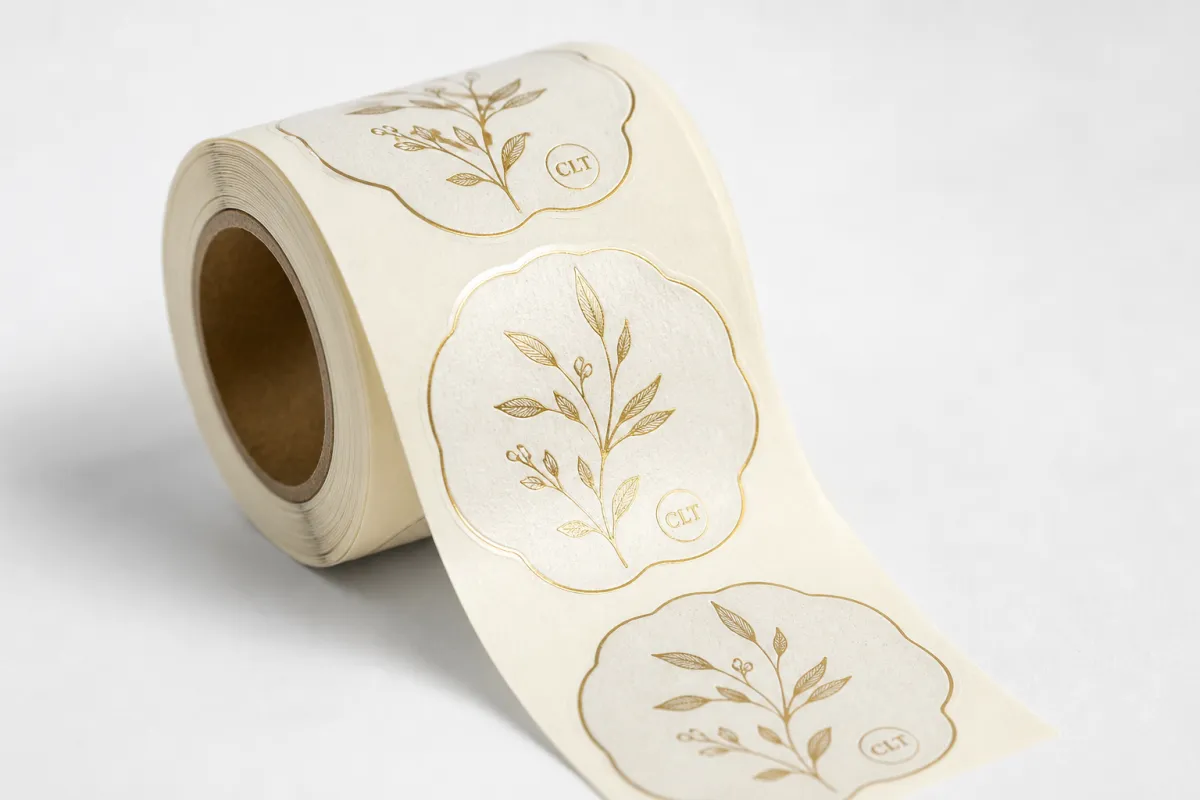
A recyclable packaging labels supplier matters because labels are not decorative extras. They are functional components that sit inside a recovery system with its own rules, equipment, and failure points. If a label peels at the wrong time, smears under condensation, or uses a liner that creates unnecessary waste, the issue can ripple across the supply chain. The label may be only a few square inches. The consequence is rarely that small.
A label can be the difference between a package being accepted for recycling or sorted elsewhere. Recovery lines are built for speed, not for decoding every branding choice that makes its way onto a package. A paper label with a coating that behaves poorly, or an adhesive that leaves residue behind, can create avoidable friction. A strong recyclable packaging labels supplier understands that compatibility matters as much as appearance.
That means the supplier is doing more than printing. Material selection comes first, then adhesive selection, then print execution, finishing, slitting, and documentation. If the package is intended for curbside recycling, the supplier should know which claim language is defensible and which wording should stay out of the artwork. If the pack ships across multiple climates, the supplier should consider whether the label needs cold-temperature tack, moisture resistance, or a tamper-evident format.
Shipping and logistics teams care for a reason. A label that looks fine on a sample sheet can fail after a few hours in a refrigerated dock, or after repeated contact with conveyor rails. In distribution, labels are expected to handle abrasion, condensation, and barcode scanning at speed. A recyclable packaging labels supplier should be able to explain how those demands affect face stock choices, adhesive load, and finish selection.
In operational terms, the challenge is simple to state and hard to solve: the label has to behave like a production component, not a brochure asset. That is why many buyers end up treating the label as part of the same sourcing conversation as product packaging, retail packaging, and package branding. If the label is wrong, the whole pack feels unfinished. If it is right, nobody notices it, which is usually the best sign of all.
A practical recyclable packaging labels supplier also helps with claims support. That can include material declarations, paper and adhesive specifications, and guidance on how the label interacts with the package structure. In some cases, FSC-certified paper stock may support a broader sustainability story. In others, the right answer is not a certificate but a clear statement that explains how the label should be used and what local recycling guidance says. The point is not to overstate; it is to document the materials and keep the claims honest.
For buyers, the real value is predictability. If a supplier can show repeatable performance, clear testing, and language that survives internal review, the sourcing process gets easier. If the supplier only offers generic green language, the risk moves back onto your team. That is usually where trouble starts.
How a recyclable packaging labels supplier fits into the packaging workflow
A good recyclable packaging labels supplier should enter the workflow early, not at the last minute. The process usually starts with a brief: package type, surface energy, shipping route, storage condition, application method, artwork needs, and sustainability target. If the label is going on corrugated cartons, the requirements look different than they do for pouches, bottles, or bins. A label for a frozen carton needs different behavior than one for a dry retail display pack.
The supplier should then recommend a system, not just a material. That system typically includes face stock, adhesive, liner, ink set, and finish. A paper label with a water-based adhesive may work well on a dry carton. A moisture-prone or chilled environment may need a different tack profile. A recyclable packaging labels supplier who asks about temperature, humidity, and stack pressure is doing the right kind of thinking. The one who asks only about quantity is not.
What the workflow should include
From brief to production, a disciplined label program usually moves through seven steps: discovery, material recommendation, quote, sample production, proof approval, production, finishing, and shipment. The best suppliers do not rush past the sample stage. They want to know whether the label survives the actual package surface, because a paperboard carton and a coated pouch do not behave the same way. That matters for branded packaging as much as it does for logistics.
Internal stakeholders should be involved early. Procurement will care about cost structure. Operations will care about dispenser performance and line speed. Quality assurance will care about consistency and barcode readability. Sustainability teams will care about the claim language. Compliance may need to review regional recyclability statements before anything goes to print. A recyclable packaging labels supplier that expects only one buyer in the room often creates delays later.
Documentation matters just as much as the physical label. Ask for material statements that identify the face stock, adhesive, and liner. Ask whether the label is recyclable by itself, or only in a specific packaging system. Ask what testing was done, and under what conditions. If the supplier references industry standards, that is a positive sign. For shipping performance, standards and test methods from ISTA can help frame the discussion. For general recycling guidance, the EPA recycling resources are a useful reference point.
That may sound technical, and it is, but it also protects the brand. A claim that is clear, limited, and documentable is easier to defend than a broad statement printed across a label without context. The point of a recyclable packaging labels supplier is to reduce guesswork before the print run starts.
Package type also matters. Corrugated cartons can tolerate one style of label. Mailers may need a different adhesive because of slick outer surfaces. Bottles and bins can demand better conformability. Cold chain shipments can bring condensation into the picture, and that changes the spec as well. A supplier should be able to talk through these conditions in concrete terms, not with a vague promise that the label will work “in most environments.”
One practical rule applies across programs: if the label is going on a package that has a high chance of being handled in transit, test it under transit-like conditions. Packaging design, quality control, and shipping reality meet right there. The label may belong to a clean retail presentation, yet it still has to endure the bumps of a real distribution lane. A recyclable packaging labels supplier should welcome that test, not avoid it.
That is also why the label conversation should sit beside broader pack decisions. If the outer shipper changes, the label spec may need to change. If the product moves from single-unit retail packaging to club-format cases, the adhesive and format may need to change too. Label sourcing does not happen in isolation; it sits inside the full packaging system, next to artwork, board grade, and fulfillment logic.
Pricing, MOQ, and quote drivers for a recyclable packaging labels supplier
A recyclable packaging labels supplier will rarely quote a price without asking a few detailed questions, and that is a good sign. The main cost drivers are face stock, adhesive performance, print method, finish, label dimensions, liner type, roll configuration, and the number of SKUs in the program. The more specialized the requirement, the more those variables matter. A label that is basic on paper can become expensive once you add cold-chain performance or premium print effects.
MOQ is another issue that often surprises buyers. The first order may carry setup charges, plate costs, tooling, or proofing fees that do not repeat on subsequent orders. That means the opening order can look disproportionately expensive compared with a reorder. A responsible recyclable packaging labels supplier should break those costs out clearly so you can separate one-time setup from recurring unit cost.
Unit cost is not total cost. That distinction matters. A quote that looks low can become expensive if labels arrive late, fail on the line, or force relabeling. Add the labor cost of fixing a batch, the freight premium for rush replacements, and the production time lost to rework, and the “cheaper” option may not be cheaper at all. In many packaging programs, total cost is the better metric because it includes waste, risk, and timing.
Here is a practical comparison of quote structures a buyer may see from a recyclable packaging labels supplier:
| Option | Typical use | Price behavior | Strengths | Watchouts |
|---|---|---|---|---|
| Standard paper label on roll | Dry cartons, simple shipping labels, short-run brand labels | Lower setup, lower unit cost at scale | Fast to spec, easy to source, familiar to most operations teams | May need careful adhesive choice; not every paper label behaves the same in recycling |
| Certified or specialty paper label | Brand-led product packaging, retail packaging, documented sustainability claims | Moderate setup, moderate unit cost | Better documentation, stronger claim support, cleaner presentation | MOQ can be higher; some finishes add cost without adding performance |
| Durable label for cold or humid lanes | Frozen, refrigerated, moisture-heavy, or high-abrasion shipments | Higher unit cost, especially on low volume | Improved hold, scan reliability, and transit survival | Must be tested on the actual surface; performance can vary by package coating |
| Multi-SKU program with custom artwork | Retail rollouts, branded packaging, promotional packs | Setup and proofing often outweigh the first run | Strong brand consistency across a wider packaging system | Artwork changes can trigger extra proof cycles and longer lead times |
A recyclable packaging labels supplier should be able to explain why one option costs more than another. If the supplier cannot show how adhesive chemistry, print coverage, or liner choice Affects the Quote, the pricing discussion is incomplete. Compare like with like. Otherwise, the lowest number may be missing the very feature you need most.
Freight is easy to overlook. Labels are small, yet roll form can create bulky shipping and storage needs, and warehousing those rolls has a cost. If your operation is spread across multiple sites, splitting inventory may add handling expense. If your runs are seasonal, you may need to think about storage and obsolescence. A capable recyclable packaging labels supplier should help estimate those indirect costs instead of pretending the label only exists at point of purchase.
For a buyer juggling Custom Printed Boxes, inserts, and shipping materials, that broader view matters. A label that saves two cents but creates a compliance issue is not a savings. It is a deferred problem.
Process and timeline: from brief to production steps
A recyclable packaging labels supplier should be able to describe the production path in plain terms. The standard flow starts with a discovery brief, moves into a material recommendation, then into quoting, sample production, proof approval, production, finishing, and shipment. That sounds linear. It rarely is. More often, one step loops back because artwork changes, a surface test fails, or the sustainability team wants clearer language on the claim.
Typical lead time depends on complexity. Straightforward label jobs can move in roughly 7 to 12 business days after proof approval, while custom materials, special adhesives, or sustainability testing can stretch that to 12 to 20 business days or more. A recyclable packaging labels supplier should state this up front. If the supplier is vague about timing, the delay usually lands on your calendar later.
Delays tend to appear in a few predictable places. Late approvals are one cause. Missing compliance language is another. Unclear die lines, unresolved artwork, and repeated sample revisions can all add days. If the label is part of a seasonal launch or a warehouse cutover, even a two-day slip can matter. Shipments are scheduled around dock windows, labor planning, and replenishment targets, not just print completion.
That is why scheduling buffers matter. The more custom the label, the more room you should build between proof approval and launch. A recyclable packaging labels supplier can usually point to the risk area, whether it sits in print complexity, ink drying, finishing, or sourcing a specific liner. Treat that advice as operational input, not as vendor theater.
There is another timing issue that buyers sometimes miss. If the label must coordinate with other packaging elements, like Branded Packaging Sleeves, shipping cartons, or retail-ready outer cases, the entire program can stall if one component is late. That is one reason many teams source labels in the same planning cycle as Custom Packaging Products. The packaging system works better when the pieces are designed together.
Good suppliers understand that production is only half the job. The other half is making sure the finished label reaches the right place in usable condition. That includes roll orientation, core size, slitting width, and packaging for transport. If the label line cannot load the roll efficiently, the project suffers even if the print itself is excellent. A recyclable packaging labels supplier should think like an operations partner, not just a print house.
For global or multi-warehouse brands, timing also includes local distribution realities. A label program may need staggered release dates, serialized lots, or region-specific claim language. None of that is exotic. It is ordinary complexity in packaging. The sooner it is discussed, the fewer surprises show up at the end.
Key factors to evaluate before you choose a supplier
The best recyclable packaging labels supplier is not always the cheapest or the fastest. It is the one that can prove the label system works under real conditions and support the claims behind it. Start with material science. Face stock, adhesive, liner, ink, and finish should be evaluated as one system, because one change in that stack can alter performance downstream. A paper face with the wrong adhesive can behave very differently from a similar paper face with a different coat weight or finish.
Durability is the next filter. Ask how the label performs in cold storage, humidity, friction, and stacking pressure. Ask whether the barcode or QR code remains readable after vibration and handling. Ask if the label has been tested on the actual package surface, not only on a lab panel. If the answer is vague, keep asking. A recyclable packaging labels supplier that knows its work should have specific test conditions in mind, not just broad confidence.
Claim support matters too. A label that is “eco-friendly” in a brochure and defensible in a compliance review are not the same thing. Buyers should ask for documentation that can back up the sustainability story, whether that means FSC paper, a material statement, or guidance on regional recycling acceptance. The supplier should be careful about absolute claims. So should you.
Quality control is another deal-breaker. A label program only works if it is consistent from one run to the next. Batch variation can create headaches that show up far from the sourcing desk: poor adhesion, shade drift, liner issues, or die-cut tolerance problems. A strong recyclable packaging labels supplier should explain how it controls repeatability, what inspection steps are built into the run, and how it handles exceptions.
Service depth also deserves attention. How fast do samples arrive? How clearly does the supplier answer technical questions? Will they test on your package, or only describe what they think should work? Can they coordinate with your packaging design team if artwork changes? Those details separate transactional printing from real partnership. In packaging, that difference shows up fast.
For many buyers, it helps to compare suppliers through a simple checklist:
- Material recommendations are specific to the package and shipping environment.
- Quotes clearly separate setup, unit price, MOQ, sampling, and freight.
- Testing is tied to actual packaging conditions, not generic assumptions.
- Documentation is clear enough for internal review and claim approval.
- Communication is fast enough to keep the project moving without guesswork.
That checklist may look basic, but it catches a lot of weak proposals. A recyclable packaging labels supplier that scores well here is usually worth a closer look.
Common mistakes when sourcing recyclable labels
The first mistake is assuming every paper label is automatically recyclable. It is not. Coatings, adhesives, inks, and liners all matter. A paper face stock may support a recyclable packaging story in one application and complicate it in another. A good recyclable packaging labels supplier will explain the full structure instead of reducing the conversation to “paper equals green.”
The second mistake is optimizing only for price. On the surface, a lower quote looks attractive. Then the label fails in transit, the barcode does not scan, or the pack has to be relabeled at the warehouse. Now the real cost includes labor, downtime, freight, and customer service fallout. A low unit price can be a false bargain if the program is unstable. That is especially true in retail packaging, where presentation and performance both matter.
The third mistake is approving artwork before the label is tested on the actual package surface. A sample sheet can be misleading. A carton with a dusting of recycled fiber behaves differently than a glossy pouch. A bottle with curvature and condensation behaves differently than a flat mailer. A recyclable packaging labels supplier that does not push for real-world testing is leaving risk on the table.
The fourth mistake is forgetting that recycling rules vary by market. What is accepted in one region may not be accepted in another. That is why region-specific guidance matters. If your operation ships across multiple states or countries, the wording on the label may need to be conservative and precise. Broad environmental claims are easy to print and hard to defend. That is a bad trade.
The fifth mistake is treating sustainability claims as an afterthought. Documentation should be part of sourcing, not a final cleanup task. The supplier should know what you plan to say, how you plan to say it, and where the evidence comes from. A recyclable packaging labels supplier can help with that, but only if the request is built into the brief.
Here is a blunt truth many buyers learn the hard way: the label problem is rarely a label problem alone. It is often a packaging design problem, a procurement problem, or a documentation problem wearing a label-shaped mask. The sooner those layers are separated, the easier the decision becomes.
Another common miss is not considering how labels interact with the rest of the brand system. If your custom printed boxes use a specific paper tone and the label stock does not match, the pack feels mismatched. If the label finish clashes with other package branding elements, the customer sees inconsistency before they see sustainability. A thoughtful recyclable packaging labels supplier will notice that. A purely transactional one will not.
One more issue shows up after approval: nobody checks how the labels are being applied on the line. Hand application, semi-automatic application, and high-speed automated dispense are not interchangeable. If the adhesive set was chosen for manual placement but the team later switches to automation, the label can misfeed or lift. That kind of change is easy to miss, kinda annoying to fix, and absolutely worth catching before the run starts.
Expert tips and next steps for working with a recyclable packaging labels supplier
Start with a one-page spec sheet. Keep it simple, but make it specific: package type, dimensions, application method, storage conditions, shipment environment, barcode requirements, and sustainability target. A recyclable packaging labels supplier can work faster and quote more accurately when the brief is structured. Ambiguity costs time, and in packaging, time often costs money.
Next, shortlist three suppliers and send each the same brief. That gives you a cleaner comparison. Look at the clarity of the quote, the quality of the questions they ask, and whether their material recommendation changes based on your conditions. If one supplier gives a generic answer while another asks about freezer dwell time, surface coating, and label dispense direction, the second supplier probably understands the job better.
Run a small pilot on one SKU or one shipping lane before a full rollout. That advice sounds modest, but it saves programs. Test the label on the actual packaging, in the actual handling conditions, and with the actual application method. If the pack will face humidity, cold chain, or high abrasion, make those conditions part of the test. A recyclable packaging labels supplier that encourages pilots is usually protecting your launch, not slowing it down.
Ask for samples on the real pack, not just a flat sheet. Then test them through the route your shipments actually take. If the label is for a distribution center, simulate the line handling. If it is for retail, inspect it under store lighting and against the package color. That sounds obvious, but many label failures start with a test that was too clean and too comfortable.
If the program touches compliance or sustainability reporting, keep the documentation in the same folder as the print files. That makes audits easier and keeps internal teams aligned. The better the recordkeeping, the less stress later. A recyclable packaging labels supplier should be able to support that process with clear technical documents and consistent repeat orders.
The final choice should be the supplier that proves both performance and documentation. If the label performs but the claims are thin, you still have a problem. If the documentation is excellent but the label fails in transit, you still have a problem. The right partner solves both. That is the standard worth holding.
For many companies, the label program sits right alongside the rest of the packaging stack: branded cartons, inserts, outer shippers, and product packaging all need to tell the same story. If you are coordinating a broader packaging refresh, it can help to look at the label alongside Custom Packaging Products and your broader Custom Labels & Tags program so the materials, artwork, and recycling claims stay aligned.
One more practical note: do not wait for the final design approval to ask the recycling question. Ask it at the brief stage. Ask it again at proof stage. Ask it again before launch. A careful recyclable packaging labels supplier should welcome that rhythm, because it reduces surprises and keeps shipments moving.
After years of watching label decisions ripple through warehousing, compliance, and brand presentation, the most reliable pattern is simple: define the package conditions first, then choose the label system that fits those conditions, and only then lock the artwork. That order keeps the sustainability story grounded in something real instead of something pretty on paper. If you do that, the label stops being an afterthought and starts doing the quiet work it was supposed to do all along.
FAQ
How do I know if recyclable packaging labels are truly recyclable?
Ask for written documentation that names the face stock, adhesive, and liner rather than a broad sustainability claim. Then test the label on the actual package and compare it with recycling guidance in your target market. A label may be recyclable in one system and less acceptable in another, so the details matter more than the headline.
What should I ask a recyclable packaging labels supplier before ordering?
Ask what materials they recommend for your exact package type, shipping environment, and application method. Request a quote that separates unit price, setup fees, MOQ, sampling, freight, and any testing charges. Also ask for a step-by-step timeline so you can match the label program to your launch or replenishment schedule.
Do recyclable labels cost more than standard labels?
They can, especially if you need specialty adhesives, certified paper, or lower-volume custom production. The better comparison is total cost, including waste, relabeling labor, freight damage, and production delay if the label fails. A carefully engineered label can reduce operating risk, which is often where the real savings live.
How long does it take to get recyclable packaging labels made?
Simple jobs can move quickly, but custom materials, testing, and proof approvals usually add time. Many programs land in the 7 to 12 business day range after proof approval, while more complex builds can run longer. Build extra buffer if the label must survive cold chain, moisture, or high abrasion.
Can recyclable packaging labels work on frozen or humid shipments?
Yes, if the adhesive and face stock are chosen for the temperature and moisture conditions your shipment will face. The label should be tested on the actual carton, pouch, or bottle before full rollout. A supplier with real shipping and logistics experience should be able to recommend options that stay legible and secure in transit.
Choosing a recyclable packaging labels supplier is less about picking a vendor and more about choosing a system that will survive the trip from press to warehouse to recycling stream. If the materials are right, the documentation is clear, and the testing reflects real handling conditions, the label can support both performance and sustainability. That is the standard worth aiming for, and it is usually the difference between a pack that merely looks recyclable and one that is treated that way in practice by a capable recyclable packaging labels supplier.


