If you need Recyclable Poly Bags Wholesale low moq, the real question is not whether a supplier can make them. It is whether the bag fits the product, the budget, and the timeline without forcing you to buy more inventory than you can actually use. That matters more than glossy marketing language or a too-good-to-be-true unit price.
Low-MOQ custom bags are often the practical choice for launches, seasonal items, test runs, and packaging swaps. They let you buy enough stock to cover the first sales cycle, then adjust after you see what works. That is useful. It is also how buyers avoid sitting on a warehouse full of bags that are the wrong size, the wrong print, or just the wrong idea.
Wholesale does not always mean huge volume. That old assumption is exactly why a lot of packaging budgets get bloated. You can source Custom Recyclable Poly bags in smaller runs, keep the unit cost reasonable, and still get a pack that looks professional on shelf or in transit. The catch is that you need to be specific. Vague requests usually produce vague quotes, and vague quotes are how mistakes get buried until production starts.
Why low-MOQ recyclable poly bags work for lean inventory
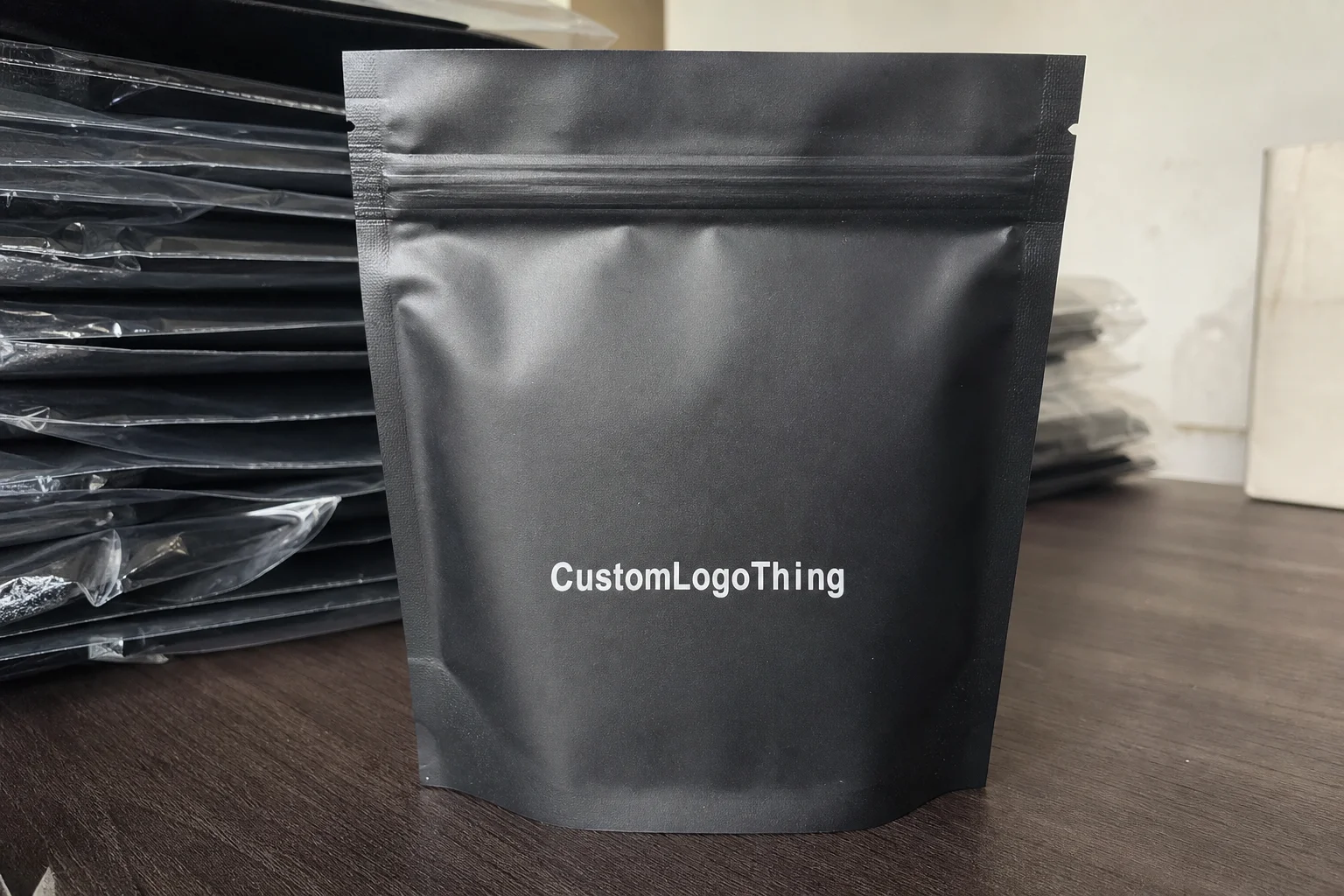
Most brands do not need 50,000 bags to test a product or refresh packaging. They need enough to move through the first sales cycle without tying up cash in inventory they may never reorder. That is where Recyclable Poly Bags Wholesale low moq makes sense.
From a procurement standpoint, low MOQ reduces risk. You can start with 500, 1,000, or 3,000 pieces, check how the bag performs, then make changes on the next run if the fit, print, or closure needs work. A slightly oversized bag, a logo that sits too close to the seal, or a film that feels too thin all show up fast once the bags are actually in use. Better to discover that early than after you have committed to a large batch.
Low MOQ also helps when product dimensions are still moving. Apparel size sets change. Subscription boxes change contents. Retail kits change inserts. Packaging has to keep up with the product, not the other way around. Buying smaller quantities gives you room to breathe while the SKU settles.
And lower MOQ does not automatically mean poor quality. It only means the production economics change. If the film gauge, seal strength, and print method are matched correctly, a smaller run can still deliver a clean, durable bag. The cheap-and-flimsy stereotype usually comes from bad specs, not from the order size itself.
Common buyer situations where low MOQ works well:
- Product launches where demand is still uncertain
- Seasonal retail with short selling windows
- Subscription boxes that change contents often
- Boutique stores needing branded packaging without overbuying
- Promotional kits and event packs with limited quantities
- Short-run SKUs that do not justify a large production batch
The tradeoff is simple. Smaller runs usually cost more per bag. That is normal. You are paying for setup, changeover, proofing, and the fact that the fixed costs are spread across fewer units. The upside is lower storage pressure, less waste, and fewer regrets. A lot of buyers would happily pay that premium if it kept them from buying the wrong thing in bulk.
If your packaging program already includes boxes, mailers, labels, or inserts, low-volume recyclable bags can slot into the same sourcing plan. They are not just for tiny brands. They are useful for any team that needs flexibility without abandoning consistency.
Material structures, closures, and print choices that actually matter
Recyclable poly bags are usually made from polyethylene (PE), which is the flexible plastic film family most commonly accepted in film recycling streams where those programs exist. That part matters. The recycling claim on the artwork does not make the bag recyclable in every market, and it does not override local collection rules.
Material structure is the first decision that affects performance. Plain PE film is the simplest option. Recycled-content PE can support broader sustainability goals if the supplier can document the content. Some buyers also look at mono-material constructions because they are easier to position for recycling than mixed-material laminates. The key is to ask what the bag is made from, not just what the sales sheet says it is made from.
Closure choice changes both function and cost. A strong heat seal works well when tamper resistance matters. A resealable zipper helps with repeat opening, sample packs, and retail items that the customer may use more than once. Adhesive flaps are common for apparel and lightweight ecommerce items. Wicketed bags work well in operations that need speed and repeatability. Pick the closure based on how the bag will be used, not on which option looks best in a mockup.
Print choices usually fall into a few practical tiers:
- Single-color print: simple, cost-effective, good for basic branding
- Two to three colors: stronger shelf impact, higher setup and print cost
- Full-coverage artwork: more visual impact, but tighter registration and higher ink usage
Useful features buyers should confirm before approving a quote:
- Thickness / gauge for puncture and handling strength
- Tear resistance for transport and repeated handling
- Clarity if the product needs to be visible
- Gusseting for extra volume
- Hanging holes for retail display
- Anti-static options for electronics or sensitive parts
For apparel, a flat or resealable PE bag with a clean one-color print is usually enough. For accessories or cosmetics samples, a smaller resealable pack may be more useful. For parts, inserts, or kitted items, clarity and seal strength often matter more than fancy graphics. A nice-looking bag that tears, fogs up, or seals poorly is still a bad package. The customer does not award points for effort.
“The right bag is the one that fits, protects, and survives the route from pack-out to customer. Everything else is decoration.”
Industry references such as ISTA and packaging guidance from The Packaging School / packaging.org are useful if you need a better read on transport stress or material structure. Not every order needs formal lab work, but the standards exist because bags fail in predictable ways.
Specifications to confirm before you request a quote
If you want accurate pricing on Recyclable Poly Bags Wholesale low moq, do not send a one-line request and hope the supplier fills in the blanks. That approach usually creates delays, revisions, and preventable misquotes. Give the actual specs up front.
The core details are straightforward:
- Width
- Length
- Gusset, if any
- Film gauge or thickness
- Seal type
- Print area
- Number of colors
- Quantity target
Measure the product first, then add clearance for insertion and sealing. A bag that matches the product exactly is often too tight in practice. You need room for folding, stacking, overlap at the seal, and any slight variance in the item itself. If the product is folded apparel, a sample kit, or a bundled accessory set, include the item dimensions and a photo. That is not overkill. It is basic risk control.
Ask about recycling language early. “Recyclable” means different things depending on the film, the collection stream, and the region where the bags will be sold or used. In some areas, PE film can go through store drop-off or dedicated film collection. In others, it cannot. If your market requires specific labeling or claim language, confirm it before artwork is finalized. Sustainability claims should be supported, not guessed at.
Performance specs matter just as much as recycling claims. If the bag will ship with heavier items, ask for puncture and seal-strength guidance. If the product needs visibility, clarify the clarity requirement. If the pack will hang on a peg, request hanging holes and enough header space for branding. A bag can be recyclable and still be a poor fit for the job. Those are separate decisions.
Artwork details also need to be locked down early:
- File format required
- Bleed and safe area
- One-sided or two-sided print
- Exact logo size
- Color matching expectations
Sampling is not a luxury item. It is the fastest way to catch a sizing issue, print problem, or closure mismatch before a full run is produced. A sample or proof costs far less than a batch of bags that do not fit the product. Somehow that still needs to be said.
Cost, pricing, and MOQ: what changes the unit price
Pricing for custom recyclable bags is driven by a few predictable variables: bag size, film thickness, print colors, order quantity, and added features like zippers, hang holes, or special closures. Bigger bags use more material. Thicker film costs more. More colors add setup and production work. Nothing magical here.
The key rule is that unit cost drops as quantity rises. That does not mean the largest order is the best order. Low MOQ exists because many brands need a controlled entry point. You may pay more per bag at 500 pieces than at 5,000, but you also reduce the risk of overbuying. That tradeoff is often worth it, especially for new SKUs or products with uncertain demand.
Here is a rough view of what changes price:
| Driver | Effect on Price | Buyer takeaway |
|---|---|---|
| Bag size | Higher material usage increases cost | Use the smallest size that still fits properly |
| Film gauge | Thicker film usually costs more | Choose strength based on actual product weight and handling |
| Print colors | More colors raise setup and production cost | Keep artwork simple if budget matters |
| MOQ | Lower quantities usually increase cost per piece | Ask for tiered pricing before you commit |
| Closures / special features | Zippers, flaps, and holes add cost | Only add features the end user will actually use |
Typical buyer guidance: ask for tiered pricing at 500, 1,000, 5,000, and 10,000 units if the supplier can quote those levels. That makes the price curve easier to read. Sometimes the move from 1,000 to 5,000 lowers the unit cost enough to justify the extra stock. Sometimes it barely moves. You will not know until the tiers are on paper.
Watch for hidden charges. Setup charges are common for custom print. Tooling fees may show up if the bag needs a custom closure, punching, or a special format. Artwork revisions can add cost if the file is not production-ready. Freight can be the biggest surprise of all. A low headline price can turn into an expensive landed cost once shipping, handling, and local delivery are included.
That is why landed cost is the number that matters. A slightly higher per-piece quote with cleaner artwork support, better freight terms, and fewer production surprises can be the smarter buy. Buyers who only compare unit price usually end up paying for that shortcut later.
For practical range-setting, many low-MOQ custom PE bag runs land somewhere in the neighborhood of a few cents to well over a dollar per bag depending on size, thickness, closure, and print complexity. Small plain bags are usually on the lower end. Larger printed or resealable formats climb quickly. That is not a pricing flaw. It is how material usage and setup work.
Process and timeline from artwork approval to delivery
The quote-to-delivery flow is predictable if the buyer sends the right information early. First comes the inquiry. Then spec review. Then artwork check. Then quote approval. After that comes proofing or sampling, production, inspection, and dispatch. That sounds basic because it is basic. The delays usually come from missing data, not from the production line being mysterious.
Common reasons orders slow down include unclear dimensions, incomplete artwork, no dieline, last-minute quantity changes, and unclear recycling language. Every one of those creates back-and-forth. Back-and-forth extends lead time. There is no technical mystery there.
For straightforward low-MOQ orders, production can move fairly quickly once proof approval is complete. More customized orders take longer, especially if they include multi-color printing, special closures, or sample approval before the main run. A realistic planning window is often 12–15 business days from proof approval for simple jobs, with more time required for complex builds or busy production periods. If shipping is international, freight may take longer than production.
The buyer controls more of the timeline than people like to admit. Fast responses shorten lead time. Clean final artwork shortens lead time. Quick payment approval shortens lead time. If you sit on a proof for several days and then request a font change, the schedule will stretch. That is not bad luck. That is a process problem.
Shipping choice matters too:
- Air freight: fastest, but expensive
- Ocean freight: lower cost for larger runs, slower overall
- Domestic shipping: often the simplest for smaller or urgent orders
Good communication milestones should be visible. You should know when the proof is due, whether a sample will be made, when production starts, and when the shipment leaves. Reliable suppliers keep that timeline clear. Better suppliers make the process boring. That is exactly what you want.
What makes a supplier reliable for low-volume wholesale orders
A supplier that can sell bags is not automatically a supplier that can handle low-volume custom work well. Small runs need more attention, not less. There is less room to hide defects when the order is only a few hundred or a few thousand pieces.
Reliability starts with transparency. You want a clear MOQ, a clean spec sheet, a proofing process that does not feel improvised, and honest lead-time estimates. If a supplier avoids basic questions about material structure, print method, or setup charges, that is a warning sign. The answer should be obvious before the artwork is sent.
Print registration and film consistency matter more on lower-volume jobs because defects stand out immediately. If the logo is off-center or the film varies noticeably from batch to batch, the issue shows up in the first cartons. A good supplier checks dimensions, seal integrity, and visual alignment before shipment. If they do not, you are the final quality-control step. That is a bad place to be.
Service also matters. Buyers usually need:
- Fast, clear quoting
- Artwork support
- Packaging advice on size and structure
- Reasonable correction handling
- Flexibility for repeat orders
Flexibility is underrated. A solid supplier can repeat the same order without forcing a complete redo every time. That matters if you are scaling gradually, adjusting SKU mixes, or reordering in smaller batches. You should not have to rebuild the entire package just because the next run is smaller.
It also helps when the supplier understands broader packaging workflows, not just one bag type. A vendor that handles other packaging formats, such as Custom Poly Mailers, may be better equipped to support artwork handoff, sizing consistency, and reorder logic. That is not a guarantee, but it usually beats a supplier who only knows how to say “yes” before the details are clear.
For sustainability programs, look for suppliers who can explain the material structure and the claim language without hand-waving. EPA recycling guidance and FSC resources are useful if your packaging program includes broader environmental requirements. Different materials, different rules. The paperwork does not care about optimism.
Next steps to place a low-MOQ wholesale order that fits
If you want an accurate quote for recyclable poly Bags Wholesale Low moq, get the basics together before you request pricing. That usually means fewer revisions, faster answers, and a cleaner order overall.
- Bag dimensions — width, length, and gusset if needed
- Product sample or carton size — so the supplier can confirm fit
- Print file — ideally production-ready artwork
- Quantity target — plus a backup tier for comparison
- Delivery address — for freight estimates
- Recycling language — to avoid claim issues later
Ask for two or three quote options if possible. For example: 500 units, 1,000 units, and 5,000 units. That shows you where the price curve settles. In some cases, a slightly higher MOQ lowers the unit cost enough to matter. In other cases, it just creates extra inventory. The numbers decide that, not guesswork.
If the bag is going to retail shelves or customer unboxing, request a sample or digital proof before production. Fit issues are easier to fix on one sample than on a full run. A weak seal, an awkward header, or a print size that looks too small can all hurt the final presentation.
Confirm the recycling statement and any required labeling before approving the artwork. That is the point where branding, compliance, and usability intersect. If your market has specific claim rules, follow them. Guessing is not a strategy, no matter how confident the draft email sounds.
The smartest buying path is usually the smallest order that covers launch demand, followed by a review after sell-through. That keeps inventory tight and gives you real data before the next run. If you need a quote, send the specifications first. That is still the fastest way to get a useful answer for recyclable poly bags wholesale low moq.
For more ordering support, the FAQ page can answer common setup and reorder questions if you are comparing bag styles, print options, or supplier requirements.
What is the typical MOQ for recyclable poly bags wholesale low MOQ orders?
MOQ varies by size, print complexity, and closure type. Low-MOQ programs often start in the hundreds rather than tens of thousands. Ask for tiered pricing so you can compare small and mid-volume runs before you commit.
Are recyclable poly bags actually recyclable in every market?
No. Recycling rules depend on local collection systems and accepted film streams. Confirm the material and any labeling requirements for your sales region, and avoid vague sustainability claims unless the bag and market alignment are verified.
How do I keep the cost down on custom recyclable poly bags?
Use standard dimensions when possible, keep print colors simple, and avoid special finishes unless they serve a real purpose. Order enough quantity to improve unit cost without creating excess inventory.
Can I order a sample before placing a wholesale order?
Yes, and you should if the bag size or print layout is new. A sample helps verify fit, seal performance, and visual appearance. It is cheaper to catch a sizing issue early than to scrap a full run.
How long does production usually take after artwork approval?
Timelines depend on customization level, quantity, and current production load. Simple orders move faster than multi-color or specialty builds. Fast artwork approval and clear specs are the easiest way to reduce lead time.


