Brands search for Recyclable Poly Bags Wholesale low moq when they need packaging they can test without overcommitting to inventory. That usually means a new SKU, a seasonal line, or a product that still needs real-world proof. The point is not to buy less for its own sake. The point is to avoid paying for packaging that becomes wrong before it is used.
Low-MOQ orders help buyers catch mistakes early, when they are still cheap to correct. A bag that is slightly too wide can increase filler, carton size, and freight. A film that is thicker than needed can raise unit cost without improving protection. The cheapest quote is not always the cheapest decision.
Why low MOQ beats overbuying in packaging
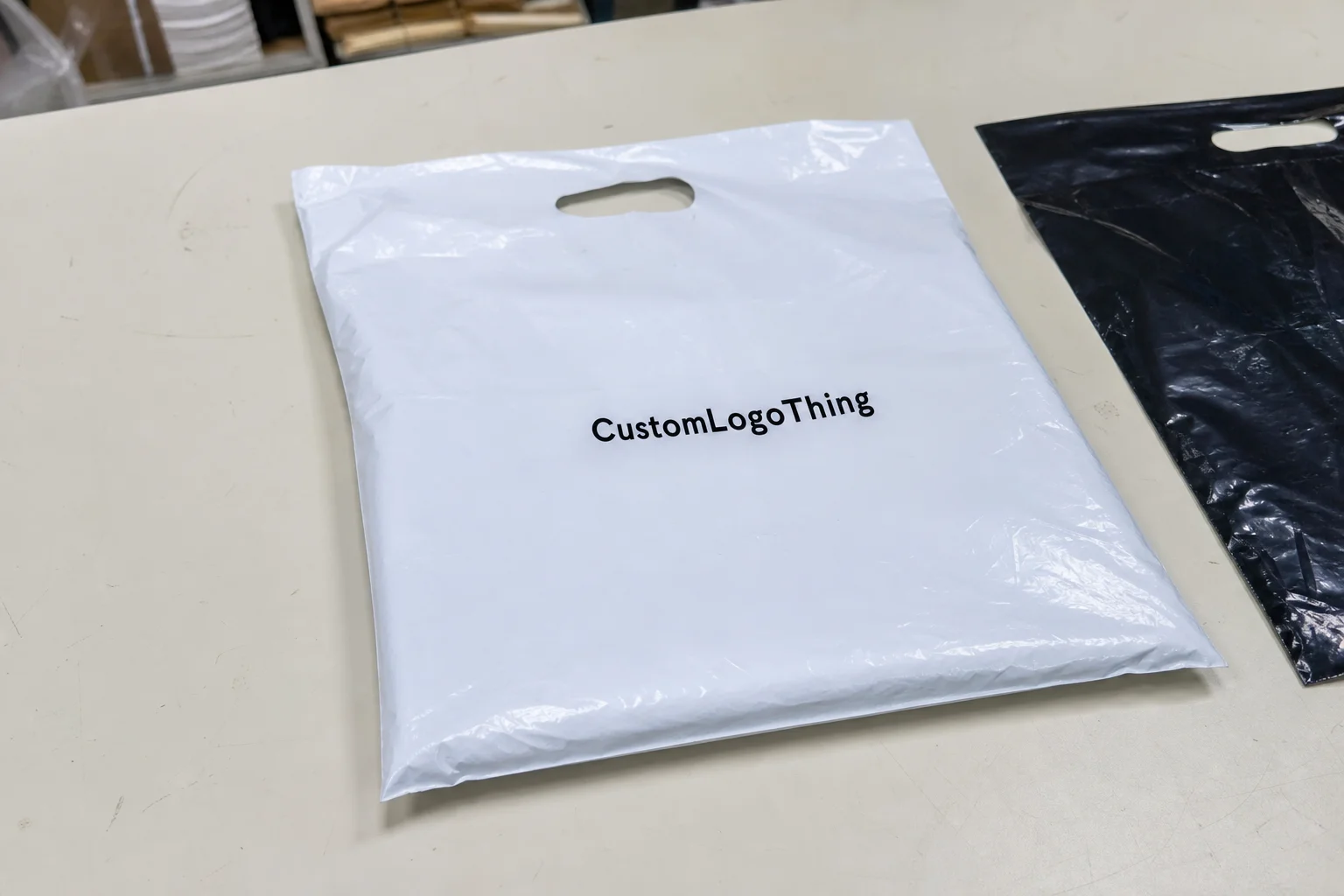
For launches, retailer resets, subscription inserts, and limited promotions, demand is usually uncertain. Low MOQ gives room to test size, print, and handling without committing to a quantity that assumes the market will behave exactly as planned.
The financial logic is straightforward. If a brand orders 20,000 bags too early and the product changes, the packaging becomes dead stock. If the order is 2,000 or 5,000 bags, the same mistake is easier to absorb and replace. Excess packaging also creates quiet costs: storage, damage, obsolescence, and the need to clear old stock before buying the new spec.
Low MOQ also helps teams that ship in waves. A seasonal apparel line may need one packaging spec in spring and a different one in fall. A beauty or wellness brand may change the outer carton, which changes the internal bag dimensions. A brand with recurring launches can keep the first order tight, measure how the bag performs, then scale only after the spec has been proven.
A bag that costs two cents less but slows packing by even a few seconds can erase the saving across a full run.
Buyers comparing options often look at other flexible formats at the same time. For broader packaging comparisons, the Custom Packaging Products page is a useful starting point. If the goal is recurring ordering instead of a one-off purchase, the Wholesale Programs structure may fit better. The right format depends on the product, the pack line, and how often the spec is likely to change.
Material options and bag styles that fit the product
Most buyers start with the word “recyclable,” but the more useful question is what the product actually needs. Soft apparel, folded print matter, accessories, and rigid parts all ask different things from a bag. Size, transparency, seal type, and stiffness matter as much as the sustainability label.
The most common recyclable structures are polyethylene-based films. In practice, that usually means mono-material PE bags that are clean, dry, and kept free of mixed-layer constructions. Some buyers ask for recycled-content film, which can be useful, but the tradeoff is usually clarity and cosmetic consistency. If shelf presentation matters, sample first.
Bag style changes the workflow. Flat bags are simple and economical. Resealable styles support reuse and cleaner presentation. Wicketed bags speed packing where teams insert product quickly by hand. Gusseted bags add depth for thicker goods or boxed items. Tear notches, euro slots, vent holes, and hang holes each add a production step and should be justified by how the bag will be used.
- Flat bags suit apparel, inserts, and small components.
- Resealable bags work well when the product may be opened again.
- Wicketed bags help where manual packing speed matters.
- Gusseted bags fit thicker or less compressible items.
Material choice and bag format should be tied to the packing environment. A bag that looks good on a render can still be wrong if it sticks too much, seals too aggressively, or collapses under a product with sharp corners. Ask whether the bag will still behave the same after a week in a warehouse, not just when it is first pulled from a sample pack.
Recyclable does not mean universal. Film recycling is still uneven by region, and local guidance matters more than optimistic labeling. For U.S. buyers, the EPA’s recycling resources at epa.gov/recycle are a better reference than a generic claim on a spec sheet. A supplier should be able to tell you what material is being used, how it is built, and what is and is not appropriate to print on it.
Specifications that affect performance, compliance, and shelf appeal
A clean quote starts with a clean spec. The essential inputs are width, length, thickness or gauge, closure type, print area, and any structural feature such as a hang hole or tear notch. If one of those is missing, the estimate may still come back quickly, but it will not be dependable.
Thickness is where many first-time buyers overcorrect. Heavier film is not automatically better. For lightweight apparel and accessories, thinner film can be enough if the bag is sized correctly and the seal is strong. For sharper or denser items, a heavier gauge may be needed to handle puncture and abrasion. A common working range is often 1.5 mil to 4 mil, but the right number depends on the product and the transport route. For many apparel programs, 2 mil to 3 mil is a practical starting point.
Seal quality matters more than appearance in fulfillment. A good-looking bag that pops open under pressure is a failed bag. So is a bag that traps too much air and creates poor carton efficiency. Stiffness matters if the bag must stand up visually. Clarity matters if the customer needs to see the product. Puncture resistance becomes critical once the contents have corners, edges, or movement during transport.
Compliance should be checked before proof approval. If the bag touches food or comes near regulated goods, the supplier needs the exact market and use case. If recycling guidance is printed on the bag, the text should match the material and the destination region. If a warning panel is required, it has to fit without crowding the brand mark or forcing tiny, unreadable type.
The best spec is usually the narrowest one that survives real handling. That takes sample checks, a realistic product fill, and at least one pass through the actual packing flow before anyone assumes the bag is finished.
Cost, pricing, and MOQ factors buyers should compare
Pricing for recyclable bags is driven by a few variables: film type, size, thickness, print colors, bag style, and packing configuration. Add a new size or a custom printed layout, and setup fees can appear before production even begins.
MOQ is tied to that setup burden. A shorter run spreads the same prep work across fewer pieces, so unit cost rises. That is normal. The mistake is comparing unit price alone and treating a low quantity as a bad deal by default. A buyer should compare the full cost of ownership: purchase price, freight, storage, risk of obsolescence, and the cost of reordering if the first spec is wrong.
Directional ranges help, but only as a frame of reference. For a simple unprinted clear bag, smaller orders may land in a lower cost band than a Custom Printed Resealable style. A one-color print can be economical at moderate quantities. Multi-color print, a custom size, or a format with added features like a hang hole or wicketing will move the price upward. The quote should show what changed and why.
| Option | Typical MOQ | Indicative unit cost | Best fit | Main tradeoff |
|---|---|---|---|---|
| Unprinted clear recyclable flat bag | 1,000 to 5,000 pcs | $0.05 to $0.10 | Launches, samples, simple fulfillment | Limited brand impact |
| 1-color printed resealable bag | 3,000 to 10,000 pcs | $0.10 to $0.22 | Apparel, accessories, retail kits | Higher setup charges |
| Gusseted or wicketed custom bag | 5,000 to 15,000 pcs | $0.14 to $0.30 | Packing speed and thicker goods | More spec variables |
| Printed custom size with hang feature | 5,000 to 20,000 pcs | $0.18 to $0.38 | Retail-ready presentation | Tooling and proofing can add time |
Those figures are directional only. Freight zone, artwork complexity, carton pack-out, and destination all matter. A quote without the exact dimensions, material build, print count, and delivery location is not yet a clean comparison.
Lower MOQ can still be the better business decision even when the unit price is higher. That is especially true for brands with uncertain demand, short selling windows, or frequent design refreshes. If the order prevents dead stock and lets the team validate the spec before scaling, it is usually doing its job.
Production steps, lead time, and approval checkpoints
Most orders follow the same path: request for quote, spec review, artwork check, proof approval, production, quality control, packing, and shipment. The process looks linear. In practice, delays usually come from missing detail, not from machine time.
- Spec review. Confirm dimensions, thickness, closure, print, and use case.
- Artwork check. Verify dielines, colors, and any compliance text.
- Proof approval. Check placement, spelling, and layout before the run starts.
- Production. Run the film, print, cut, and seal to spec.
- QC and packing. Inspect quantity, seals, print, and carton count.
- Shipment. Choose freight based on timeline and destination.
Lead time is not one number. A plain unprinted bag can move faster than a custom printed recyclable bag with a new size, a new print panel, and a compliance notice. Simple jobs often land around 10 to 15 business days after proof approval. More detailed custom orders may need 15 to 25 business days or more. Transit time sits on top of production time, which is why a factory completion date is not the same thing as a delivery date.
The usual delay points are incomplete artwork files, late proof feedback, spec changes after quoting, and vague print instructions. Those issues are small, but they can push a scheduled job back by days. If a launch date is fixed, those decisions need to be locked before production starts.
For recurring buyers, the fastest workflow is to save the spec, archive the approved artwork, and keep the approval loop short. That reduces back-and-forth on every reorder. It also makes it easier to compare the new quote against the previous one and see whether a cost change comes from material, freight, or a genuine spec change.
How to keep wholesale orders consistent across repeat runs
Repeat orders should feel boring. That is the point. Once the bag spec is locked, the next run should match the first one on size, seal performance, print placement, and pack format. If the bag drifts from run to run, the warehouse notices before the brand does.
Consistency depends on quality control that is concrete rather than decorative. The checks that matter are film thickness, seal strength, print registration, count verification, and random carton inspection before dispatch. A supplier can ship quickly without doing these checks. That speed is expensive if the order arrives with inconsistent seals or a quantity mismatch.
There is also a documentation layer that often gets ignored. Saved artwork files, proof records, spec sheets, and reorder notes save time later. They also prevent the kind of minor drift that happens when a new person opens an old email thread and rebuilds a job from memory. Packaging specs should not live in memory. They should live in records.
In repeated programs, packaging behaves like part of operations rather than part of design. The right bag improves warehouse rhythm. It reduces training time for new staff. It keeps presentation consistent across locations. And it gives planning teams a real base for forecasting because the packaging itself is no longer a moving target.
What to send for a clean quote and a low-risk first order
The fastest quote comes from a complete brief. Send the exact bag dimensions, material preference, thickness, print requirements, quantity range, product use case, and delivery location. If the order has a fixed launch date, say that early. Timeline and freight need to be quoted together because production finish and delivery are different things.
Artwork helps, even if it is rough. A sample bag, a reference photo, or a markup showing logo placement removes guesswork around print location and finish. That matters most when the buyer knows what the bag should feel like but has not yet created a full technical drawing. A clear reference can prevent a round of revisions that costs a week.
For the first order, the lowest-risk path is usually the simplest one:
- Start with the smallest quantity that proves fit and print quality.
- Test the bag in actual packing or retail conditions before scaling.
- Check whether the material and any recyclability claim fit the destination market.
- Reorder only after the sample run proves the spec is stable.
If the packaging is part of a wider rollout, the purchase should be mapped against the next few months, not only the next shipment. That is where low MOQ has real value. It gives the team room to fix the spec once, not three times.
For buyers balancing speed, presentation, and inventory control, Recyclable Poly Bags Wholesale low moq is a practical sourcing strategy. The best result is a bag that matches the product, survives the workflow, and can be reordered without introducing new risk.
FAQ
What is the minimum order for recyclable poly bags wholesale low MOQ?
Minimums vary by size, print complexity, and film type. Simple unprinted bags can usually be ordered in smaller quantities, while custom print, wicketing, gussets, or added features push the minimum higher. Ask for the trial quantity, standard reorder tier, and best price break so the quote is easier to compare.
Are recyclable poly bags actually accepted in curbside recycling?
Acceptance depends on local recycling rules, not just the material label. Some polyethylene film products are accepted in specific recovery streams, and some are not. The safest approach is to match the bag material and printed instructions to the destination market instead of assuming one label applies everywhere.
How do pricing and unit cost change with lower quantities?
Unit cost usually rises as order quantity drops because setup, proofing, and production time are spread across fewer bags. The main drivers are size, gauge, print colors, and bag style. A lower MOQ can still be the better choice if it prevents excess inventory or a reprint later.
What details should I send to get an accurate quote fast?
Send exact dimensions, quantity, material preference, thickness, print requirements, and destination zip code or address. Include artwork files or a clear reference image so layout and print constraints can be checked early. If the job has a deadline, state it up front.
How long does a low-MOQ custom poly bag order usually take?
Timing depends on proof approval, print setup, and production complexity. Simpler specs usually move faster, while new sizes and custom print panels take longer. A realistic schedule should separate production time from transit time so the delivery date is not mistaken for the factory finish date.


