Buyer Fit Snapshot
| Best fit | Recycled Folding Carton Supplier projects where brand print, material claims, artwork control, MOQ, and repeat-order consistency need to be specified before quoting. |
|---|---|
| Quote inputs | Share finished size, material target, print colors, finish, packing count, annual reorder estimate, ship-to region, and any compliance wording. |
| Proofing check | Approve dieline scale, logo placement, barcode or warning zones, color tolerance, closure strength, and carton packing before bulk production. |
| Main risk | Vague material claims, crowded artwork, missing packing details, or unclear freight terms can make a low unit price expensive after revisions. |
Fast answer: Recycled Folding Carton Supplier: Sustainable Packaging should be specified like a repeatable production item. The safest quote records material, print method, finish, artwork proof, packing count, and reorder notes in one written spec.
Production checks before approval
Compare the actual filled-product size with the drawing, then confirm tolerance on folds, seals, hang holes, label areas, and retail display edges. Reserve space for logos, QR codes, warning copy, and material claims before decorative graphics fill the panel.
Quote comparison points
Review material grade, print process, finish, sampling route, tooling charges, carton quantity, and freight assumptions side by side. A quote is only useful when the supplier can repeat the same color, closure quality, and packing count on the next order.
A recycled folding carton supplier does a lot more than source paperboard and turn it into a box. The right partner helps shape a carton that holds up in transit, folds cleanly on the line, carries print with clarity, and still uses recycled fiber in a way that feels substantial rather than flimsy.
That balance matters because buyers are rarely shopping for cardboard alone. They are buying shelf presence, shipping performance, and a sustainability story that can survive procurement review without falling apart under scrutiny. A recycled folding carton supplier sits in the middle of those demands, and the quality of that balance shows up in the first sample, the first production run, and the first time the cartons move through the pack line. I have seen projects look perfect in a PDF and then get humbled fast once the real board hits the folder-gluer.
If you are comparing vendors, the goal is not simply to find a box maker. The stronger recycled folding carton supplier will help you align board grade, print method, coating, structure, and budget so the carton acts like part of the product, not a last-minute accessory.
What a recycled folding carton supplier actually does
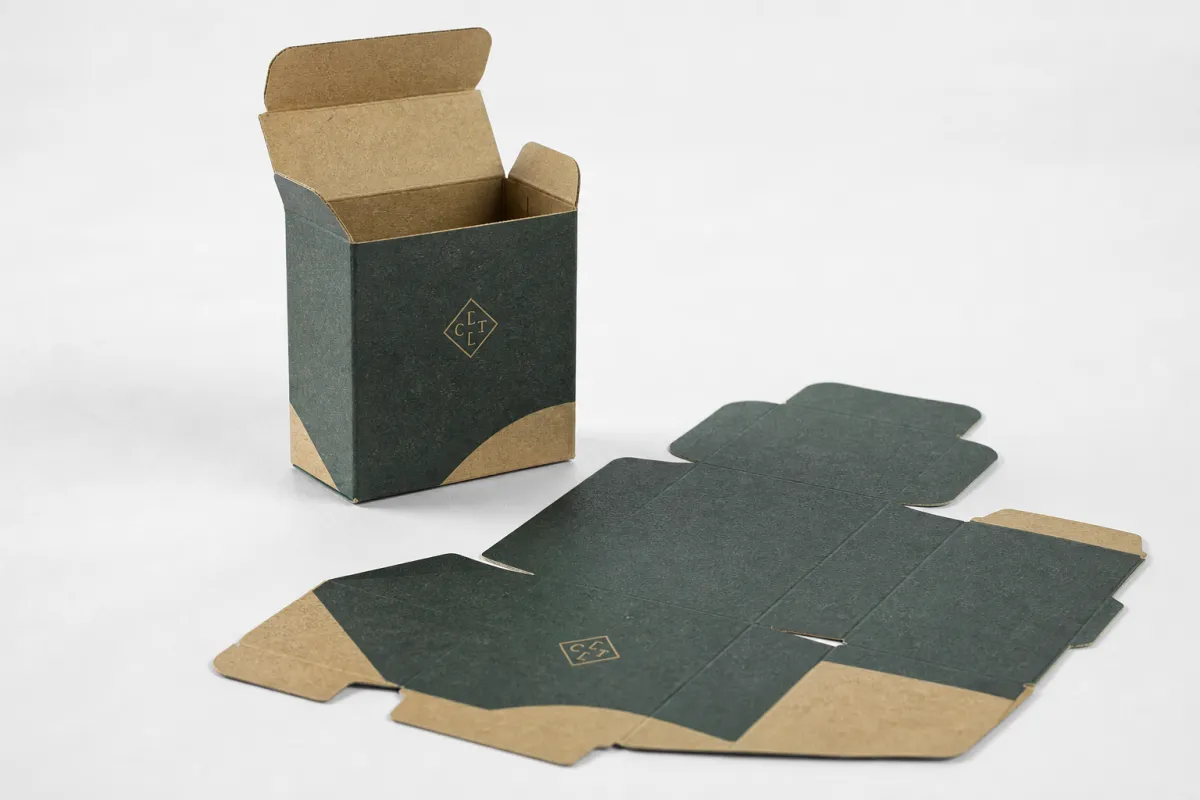
A recycled folding carton supplier takes recovered fiber, or board formed from recovered fiber, and turns it into a finished carton ready for retail, e-commerce, or secondary packaging. The work sounds straightforward until you follow the steps closely. Board sourcing comes first, then prepress review, die-line planning, print setup, cutting, scoring, folding, gluing, inspection, and packing for shipment.
What surprises many buyers is how premium a carton can look even when it is built with recycled content. A recycled folding carton supplier can produce clean graphics, tight folds, and a polished hand feel on substrates that include post-consumer recycled fiber. The real skill lies in knowing which board grades hold detail well and which need a more forgiving design approach.
There is also a meaningful difference between a carton that is recyclable and one that contains recycled fiber. A recyclable box can be designed so it may be collected and reprocessed after use. A recycled board has already used recovered fiber in its structure. A recycled folding carton supplier should be able to explain whether a board includes post-consumer recycled fiber, pre-consumer recovered fiber, or a blend of both, because those distinctions affect claims, certifications, and buyer expectations.
Folding cartons hold a useful place in sustainable packaging because they are light, efficient, and adaptable. A recycled folding carton supplier may build cartons for cosmetics, supplements, personal care, apparel inserts, food-safe secondary packaging, or retail-ready display boxes. In each case the box has to do more than sit on a shelf. It has to protect the product, carry print cleanly, and use fiber responsibly without creating waste through overbuilt structure or unnecessary material thickness.
From a buyer's point of view, the best recycled folding carton supplier is not the one making the loudest sustainability claim. It is the one balancing board performance, shelf appeal, Price, and Lead Time in a way that fits the real job of the carton. That usually means asking the right questions early instead of fixing problems after tooling is already cut.
A carton that looks premium on press but cracks on the folder-gluer is still a bad carton.
How a recycled folding carton supplier turns fiber into finished cartons
The path from recovered fiber to finished carton starts with board formation. Fiber is cleaned, refined, blended with other pulp components as needed, and pressed into paperboard sheets that carry a specific caliper, stiffness, and surface profile. A recycled folding carton supplier is not usually making board from scratch, but the supplier does choose board grades that match the carton’s purpose and printing needs.
Three properties matter right away: caliper, stiffness, and surface smoothness. Caliper is the thickness of the board, usually measured in points or mils depending on the market. Stiffness tells you how well the carton resists bending. Smoothness affects ink laydown, small type, and image sharpness. A recycled folding carton supplier has to weigh all three, because a very stiff board may print differently than a smoother but slightly lighter one.
Recycled fiber can behave a little differently from virgin fiber in print and finishing. The surface may show more visible fiber structure, which can soften high-gloss effects or deepen ink absorption. That does not automatically lower quality, but it does mean a recycled folding carton supplier often adjusts artwork, ink density, or coating choice before production starts. The substrate guides some of the design decisions, not the other way around.
After the board choice is locked, the workflow moves through printing, die-cutting, scoring, and converting. A recycled folding carton supplier may use offset lithography for rich graphics, flexo for certain utility cartons, or digital print for short runs and fast proofing. Common finishes include aqueous coating, aqueous matte, varnish, embossing, foil stamping, and clear window patches. Each finish interacts differently with recycled board, especially when the customer wants strong brand color, tactile detail, or a higher-end retail feel.
Not every carton design belongs on every board grade. Tight turn-in flaps, heavy ink coverage, deep embossing, and very thin reverse type can expose weak points in the substrate. A seasoned recycled folding carton supplier will usually flag those issues during structural review. That early feedback saves time, because changing a die-line after sampling is far easier than discovering a fold crack after production has already been approved.
For broader packaging guidance, the Sustainable Packaging Coalition at packaging.org is a useful reference point, and FSC documentation is available at fsc.org. Those resources do not replace supplier testing, but they help buyers separate claims from practical performance.
Choosing a recycled folding carton supplier for cost, MOQ, and quote accuracy
Pricing is where many packaging projects get misunderstood. A recycled folding carton supplier does not quote from a single number pulled out of thin air. Cost is built from board grade, sheet size, number of printed colors, coating choice, tooling, finishing steps, converting labor, order quantity, and freight. If any of those inputs change, the quote changes too, sometimes more than buyers expect.
MOQ, or minimum order quantity, matters because setup time has to be spread across the run. A recycled folding carton supplier may quote a 5,000-piece run at a much higher unit cost than a 25,000-piece run, even if the board is identical. The same pattern shows up with more complex finishing. Foil, embossing, soft-touch coating, and specialty windowing all add steps that can push the unit price upward. The question is not only "What is the cheapest box?" but "What delivers the best total value for this application?"
One of the easiest ways to compare quotes fairly is to make sure you are comparing the same thing. The carton size should match exactly. The board spec should match exactly. The print method, coatings, and delivery terms should match exactly. A recycled folding carton supplier may look more expensive on paper simply because the quote is more complete, while a lower quote may leave out tooling, freight, or a second proof cycle that shows up later. That is the kind of issue that can sneak up on you if the spec is kinda vague.
The table below gives a practical way to think about common packaging choices. These numbers are general ranges, not promises, but they help buyers ask better questions before they commit.
| Option | Typical setup | Estimated unit cost at 5,000 pcs | Best use case |
|---|---|---|---|
| Simple recycled board, 1-2 color print, aqueous coat | Basic die, standard fold and glue | $0.12-$0.22 | Utility cartons, inner packaging, lower-cost retail items |
| Mid-range recycled board, full-color print, matte or gloss aqueous | Standard tooling, moderate print coverage | $0.18-$0.32 | Most retail folding cartons with brand graphics |
| Premium recycled board, heavy coverage, foil or emboss | More press time, added finishing steps | $0.30-$0.60 | Higher-end beauty, gift, or specialty products |
| Short-run digital recycled carton | Lower tooling, higher per-piece print cost | $0.40-$0.90 | Launches, seasonal SKUs, test markets |
Those ranges move with size, art coverage, and region, but they show why the lowest quote is not always the smartest. A recycled folding carton supplier can trim cost by simplifying coatings, reducing special effects, consolidating carton sizes, or moving to a more efficient sheet size. Sometimes a small structural adjustment saves more money than shaving a fraction of a cent off the board.
I tend to think the best buying decisions happen when teams look at the carton through three lenses at once: shelf impression, production reality, and freight efficiency. If a recycled folding carton supplier can hit all three, that usually delivers more value than squeezing every penny out of the quote and paying for the mistake later.
Process and timeline: from brief to production steps
A recycled folding carton supplier usually works fastest when the brief is complete from the start. The minimum useful inputs are carton dimensions, product weight, filling method, artwork status, quantity, target recycled content, and any compliance requirements. If the carton will ship flat, erect by hand, or run through automated packing equipment, that also needs to be stated early. Those details shape the structure and the converting path.
The process often begins with a structural recommendation or design review. The recycled folding carton supplier checks whether the carton needs tuck ends, auto-lock bottoms, crash-lock bottoms, display features, or interior supports. Then comes sampling or prototyping, which may include a blank sample, a printed proof, or a finished prototype with coatings and special effects. If the carton is for a new product line, this stage matters more than buyers sometimes realize, because a small structural flaw can slow down packing across an entire run.
After sample approval, the project moves into prepress, plate or file preparation, tooling confirmation, and production scheduling. A recycled folding carton supplier will often lock in press setup, run the sheets, inspect color and registration, then move to die-cutting, stripping, folding, gluing, counting, and carton packing. Lead time depends on a few predictable drivers: whether a new die is needed, how many colors are on the sheet, whether the order includes foil or embossing, and whether the board is readily available in the required grade.
As a practical range, a simple reorder can move in roughly 10 to 15 business days after proof approval, while a new custom structure with special finishes may take 3 to 6 weeks or more depending on sampling, tooling, and material lead times. A recycled folding carton supplier can often speed things up, but only if the buyer responds quickly to questions and gives accurate artwork files. Slow approvals are one of the biggest reasons a schedule slips.
The workflow also benefits from clear communication around tolerances. If the carton needs a very precise inside dimension, say to fit a rigid bottle or a molded insert, the recycled folding carton supplier should know that before sampling begins. A difference of just 1/32 inch can matter on the line. Packaging looks simple from the outside, but the tolerances behind a clean pack-out are usually tighter than people expect.
Key factors that affect print quality, sustainability, and performance
A recycled folding carton supplier has to balance print quality with material realities, and that balance changes from project to project. Solid brand colors can look beautiful on recycled board, but heavy coverage may reveal surface variation if the substrate is too porous or the coating is not matched well. Fine type, reverse type, and small iconography deserve attention too, because they can fill in or lose edge clarity if the board is not smooth enough.
Color consistency is one of the first things teams notice. Recycled fiber board can be highly usable for premium packaging, but the base tone may affect how whites, pastels, and light neutrals appear. A recycled folding carton supplier may suggest a brighter grade, a different ink system, or a proof print if exact color matching is critical. That becomes especially true for brands with strict visual identity standards, where even a slight shift in color temperature can make the packaging feel off.
Performance matters just as much. Score quality affects how the carton folds. Fold memory affects how well the panel stays closed after forming. Tear resistance affects whether the carton survives assembly and transit. A recycled folding carton supplier should understand how all of those properties play against the product load and the packing method. A carton that looks fine on a sample table may buckle under speed if the scores are too deep or the board is too soft.
Finishes influence both sustainability and functionality. Water-based aqueous coatings are common because they provide scuff resistance and a practical visual finish without the heavier feel of some plastic laminations. Varnish can add specific gloss or protection. Foil and emboss can create strong shelf impact, but they also add complexity and may affect recyclability depending on the total structure and local recovery systems. A recycled folding carton supplier should be transparent about those tradeoffs instead of treating every finish as equally green.
Documentation matters too. Buyers may need recycled content declarations, FSC chain-of-custody documents, food-contact statements, or custom sustainability language for retail and procurement teams. A recycled folding carton supplier that works regularly with these requests usually has a cleaner path to supporting audits and customer questionnaires. For broader industry context on materials and sustainability, EPA packaging guidance at epa.gov can be useful, especially when teams are evaluating waste reduction or end-of-life claims.
The best outcome is rarely the fanciest finish. It is the carton that prints well, folds cleanly, meets the brand’s sustainability target, and does not force production to babysit every case. That is where a good recycled folding carton supplier earns its keep.
Common mistakes when buying recycled folding cartons
The first mistake is asking for recycled content without stating the performance goal. A recycled folding carton supplier can source a high-recycled board, but if the carton also needs crisp graphics, tight shelf fit, and strong crease memory, the board choice may need to shift. Too many teams start with the sustainability claim and only later realize they have not defined the mechanical job the carton must do.
The second mistake is approving artwork before the substrate is confirmed. Recycled board surfaces can change ink density, contrast, and fine-detail readability, especially on light colors or very small type. A recycled folding carton supplier can often catch this during prepress, but not if the buyer has already locked the design with no room for adjustment. A carton that looks perfect on a glossy monitor may print quite differently on a recycled surface.
The third mistake is skipping prototypes. That is one of the fastest ways to discover that a carton is hard to erect, hard to fill, or awkward to close after the run has already started. A recycled folding carton supplier may recommend a structural mock-up even for a straightforward design, because a few minutes of testing can expose issues that are far more expensive to fix after tooling. If the project involves inserts, automation, or a tight product fit, prototype approval is money well spent.
Another common problem is mismatched expectations on price and timing. Buyers sometimes compare a stock folding carton to a fully custom converted carton and assume the numbers should line up. They should not. A recycled folding carton supplier quotes based on material, setup, finishing, and run complexity, so the final number needs to be judged against the full spec, not a rough guess.
Vague sustainability language can create trouble later too. "Eco-friendly" does not tell a procurement team what the board actually contains, and it does not prove a recycled content claim. A recycled folding carton supplier should be able to support the story with documentation, not just marketing copy. That is better for retail, better for compliance, and better for trust.
Expert tips and next steps with a recycled folding carton supplier
If you want a cleaner project, start with a spec sheet that does the heavy lifting. List product dimensions, weight, fill method, shipping environment, print goals, target quantity, and the recycled content level you are aiming for. A recycled folding carton supplier can work from a short brief, but the more complete the input, the more accurate the recommendation, quote, and lead time will be.
Ask for samples and compare them side by side. A printed prototype tells you more than a PDF ever will, especially on a recycled substrate where surface tone, fold behavior, and coating feel can vary. A recycled folding carton supplier should be comfortable showing options, because a good sample set helps the buyer make a practical decision instead of a hopeful one.
It also helps to ask how the supplier sources board and what board grades are available at different price points. A recycled folding carton supplier may be able to offer a brighter sheet for premium graphics, a more economical sheet for inner packaging, or a slightly heavier caliper for better shelf rigidity. That kind of flexibility matters if your volume grows later, because it can reduce the risk of a full redesign.
Here is a simple decision checklist that keeps the project grounded: Does the carton protect the product? Does it present the brand cleanly? Does it meet the recycled content target? Does it fit the packing line? Does it stay inside budget and timeline? A recycled folding carton supplier should help you answer all five questions before production starts, not after.
From a practical buying angle, I would also ask about testing standards. If the carton is going into secondary packaging or shipping-related use, the supplier should understand relevant performance testing such as ISTA procedures for transport simulation and basic compression or drop concerns. If the product is food-adjacent, low-migration inks, odor control, and material declarations may matter. A recycled folding carton supplier does not need to be a lab, but they should know when a design needs more than a standard print-and-cut process.
The cleanest next step is to send a supplier a complete carton brief, ask for two or three material options, and request a printed sample before you lock the final spec. That keeps the conversation grounded in real board, real print, and real assembly behavior, which is where the good decisions happen. If the supplier can explain the tradeoffs plainly and show why one board or finish is better for your use case, you are probably dealing with the right partner.
Frequently Asked Questions
How do I know if a recycled folding carton supplier is using real recycled fiber?
Ask for the board specification and any recycled content documentation instead of relying on general marketing language. A recycled folding carton supplier should be able to tell you whether the board includes post-consumer recycled fiber, pre-consumer recovered fiber, or a blend. If you need the carton for retail claims, food service, or procurement review, request written proof that matches your use case.
What affects the price from a recycled folding carton supplier the most?
Board grade, quantity, print colors, coatings, die tooling, and folding complexity usually have the biggest effect on cost. A recycled folding carton supplier also has to account for setup time, waste allowance, and freight. Small runs tend to have higher unit cost because the setup work is spread across fewer cartons, while larger volumes usually improve the price per piece.
How long does the process usually take with a recycled folding carton supplier?
Timeline depends on sampling needs, artwork readiness, board availability, and whether custom tooling is required. A recycled folding carton supplier can move quickly on a reorder with locked specs, but new structures or special finishes add review and approval time. The fastest projects are the ones where the buyer sends complete information early and responds promptly to proofing questions.
Can a recycled folding carton supplier still deliver premium print quality?
Yes, but the art, coating, and board choice need to match the recycled substrate carefully. A recycled folding carton supplier may recommend test prints or prototypes if the design uses heavy solids, fine type, or high-detail imagery. Premium is possible, but it usually comes from smart specification, not from forcing the same setup onto every board.
What should I send before asking a recycled folding carton supplier for a quote?
Send carton dimensions, product weight, target quantity, artwork status, and any sustainability or compliance requirements. Include whether the carton must ship flat, assemble by hand, or run on automated packaging equipment. The more complete the brief, the more accurate the quote, lead time, and material recommendation will be from a recycled folding carton supplier.
A recycled folding carton supplier is most useful when they help you make better tradeoffs, not just order a box. Start with clear specs, compare samples on the actual board, and confirm the structure before production, because that is the simplest way to end up with packaging that looks right, performs well, and supports your sustainability goals without guesswork.
Related packaging resources
Use these related guides to compare specs, costs, quality checks, and buyer decisions before making the final call.


