Buyer Fit Snapshot
| Best fit | Recycled Paper Shopping Bags Bulk for Wholesale Orders projects where brand print, material claims, artwork control, MOQ, and repeat-order consistency need to be specified before quoting. |
|---|---|
| Quote inputs | Share finished size, material target, print colors, finish, packing count, annual reorder estimate, ship-to region, and any compliance wording. |
| Proofing check | Approve dieline scale, logo placement, barcode or warning zones, color tolerance, closure strength, and carton packing before bulk production. |
| Main risk | Vague material claims, crowded artwork, missing packing details, or unclear freight terms can make a low unit price expensive after revisions. |
Fast answer: Recycled Paper Shopping Bags Bulk for Wholesale Orders should be specified like a repeatable production item. The safest quote records material, print method, finish, artwork proof, packing count, and reorder notes in one written spec.
Production checks before approval
Compare the actual filled-product size with the drawing, then confirm tolerance on folds, seals, hang holes, label areas, and retail display edges. Reserve space for logos, QR codes, warning copy, and material claims before decorative graphics fill the panel.
Quote comparison points
Review material grade, print process, finish, sampling route, tooling charges, carton quantity, and freight assumptions side by side. A quote is only useful when the supplier can repeat the same color, closure quality, and packing count on the next order.
Buying recycled Paper Shopping Bags bulk is not just a packaging line item. It affects how fast your team packs, how the bag feels in a customer’s hand, and how your brand looks the second someone leaves the counter. If the bag sags, tears, or looks flimsy once filled, the whole purchase starts to feel expensive. That is the uncomfortable truth. Performance comes down to paper grade, basis weight, base construction, handle attachment, and whether the size actually fits the product.
For a buyer, the right order is the one that reduces plastic without creating new headaches in storage or on the floor. The bag should stand up while packing, hold a predictable load, print cleanly, and arrive in a quantity that matches your reorder cycle. Those are not premium features. They are the minimum for wholesale packaging that has to work every day.
Retailers, grocers, bakeries, cafes, and event teams use recycled paper bags for reasons that go beyond carrying something from point A to point B. A good bag supports the customer experience, keeps handling predictable, and gives your brand a consistent look across retail, takeaway, and promotional use. The hard part is matching the structure to the job instead of chasing the lowest quote on the page.
Why Bulk Recycled Paper Bags Can Outperform Cheaper Options
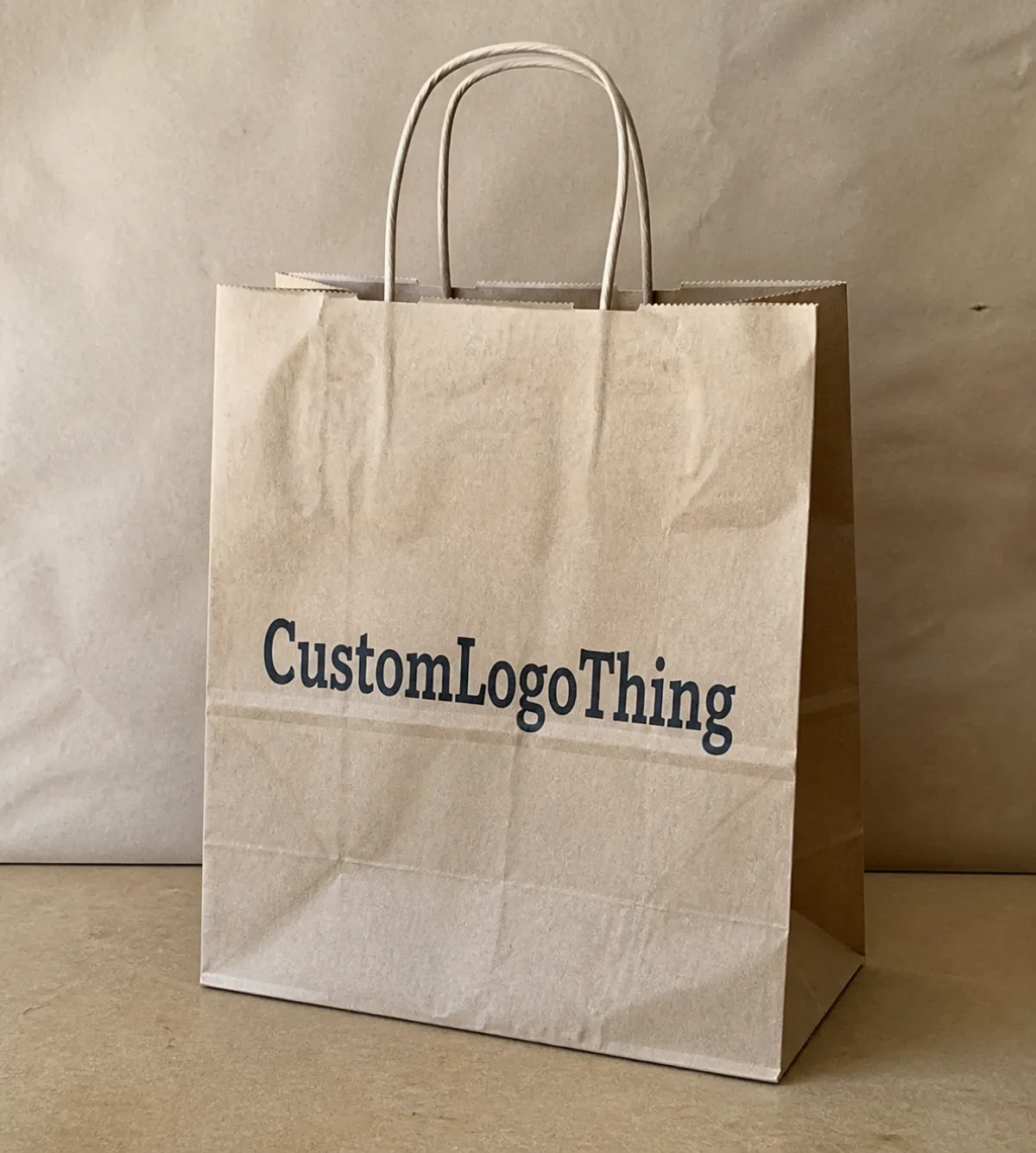
Plenty of buyers hear “recycled” and assume the bag will be softer, weaker, or less reliable. Sometimes that happens. Often it does not. Strength depends on the fiber blend, paper formation, bottom build, and whether the handle area is reinforced well enough to survive real retail use. A cheap-looking bag can pass a photo test and still fail the second it gets loaded with heavier merchandise.
That is why a well-planned recycled paper Shopping Bags Bulk order can beat a lower-priced option that looks similar from a distance. A properly sized recycled kraft bag can handle apparel, bakery items, boxed goods, takeaway meals, and event handouts while still giving a cleaner presentation than thin plastic. Most buyers are not trying to make a speech about sustainability. They want a bag that works, looks intentional, and does not slow the register line.
Storage matters too. Paper bags ship flat, stack neatly, and stay organized by size or print run. That helps in cramped back rooms, seasonal pop-ups, and multi-location retail operations where space is already tight. A bag that loads quickly and stacks cleanly saves time before it ever reaches a customer.
Real buyer scenario: a boutique may need medium twisted-handle bags for folded apparel, while a cafe may need flat-handle bags with a wider base for pastry boxes and takeaway containers. The recycled look can be identical. The load profile is not. One style rarely covers every use case well, and that is usually where avoidable waste starts.
“The cheapest bag is not cheap if it fails at the counter, gets repacked by staff, or sends a customer out the door annoyed.”
That is the part buyers remember after the invoice is paid. A wholesale bag should reduce packaging waste, support branding, and keep handling predictable. If staff can pack it fast and the customer can carry it without thinking about it, the bag is doing the job.
For buyers who want a more structured purchasing path, our Wholesale Programs page is a good starting point because it frames the order around quantities, artwork, and the kind of supply continuity most stores need. A useful wholesale program is not just a lower unit price. It is a repeatable order that behaves the same way every time you reorder.
For broader packaging context, industry groups like the Institute of Packaging Professionals and similar standards-focused organizations consistently push the same idea: material, structure, and end use need to line up. That sounds obvious until you see how many bad orders come from skipping one of those pieces.
Product Details: What Recycled Paper Shopping Bags Bulk Orders Include
Most recycled paper bag programs start with a handful of common formats. Each one fits a different kind of retail, foodservice, or promotional use. The right choice starts with how the bag is carried, what it carries, and how long it needs to keep looking presentable while it is in use.
Common Bag Styles
- SOS grocery-style bags for fast packing and simple distribution, often used in foodservice and general retail.
- Twisted-handle retail bags for a more polished handoff and a cleaner branded look at checkout.
- Flat-handle bags for grocery and takeaway use where speed matters and the bag leaves the counter quickly.
- Reinforced or heavier-duty options for bottled items, boxed sets, or bundled products that need a stronger bottom and better handle support.
- Die-cut handle bags for promotional use, gift packaging, or special retail events where presentation matters as much as function.
Recycled paper grades vary more than most buyers expect. Recycled kraft stock usually has a natural, earthy finish with visible fiber variation. A blended recycled paper stock can print more smoothly and look cleaner on press. Higher recycled content helps with sustainability goals, but fiber quality still matters. A sheet with good formation, enough thickness, and steady caliper usually performs better than a lower-grade board that looks fine on paper and fails in use.
Handle choice changes the customer experience more than people like to admit. Twisted paper handles often feel more premium and work well for apparel, cosmetics, and gift retail. Flat handles are common in grocery and foodservice because they are efficient, economical, and easy to grab during a busy checkout. Die-cut handles fit better when the bag needs a slimmer profile or when the packing team wants a quick carry point without a separate handle attachment step.
Print options deserve the same attention. A one-color logo can look crisp on recycled kraft, especially when the artwork uses bold lines and decent spacing. Multi-color artwork can work too, but the prepress file needs to be cleaned up so the print does not lose detail on a textured surface. Full coverage is possible, though it affects price and requires a more careful ink setup to avoid muddy color or patchy absorption.
Water-based inks are common in paper bag programs because they suit paper converting and usually produce a clean finish without heavy coating. Depending on the design, you can also specify printing on the inside or outside, reinforce the top edge, or add a gusset that improves load stability. Those small construction details often matter more than a decorative feature that looks good in a mockup but adds nothing in the real world.
For bakery, apparel, gift, and general merchandise retail, the best bag usually balances appearance with load behavior. A bakery bag may need a wider opening and a base that stands well. An apparel bag may need a taller profile with a neat handle presentation. A gift bag may care more about print clarity and surface finish. Recycled paper can handle all of those jobs, but only if the style matches the task.
If the order has to move through distribution, ask how the bags are bundled, stacked, and boxed. A clean carton pack reduces wrinkling, bent handles, and crushed corners. The bag itself may be simple, but once it is packed by the thousand, small mistakes in packing show up immediately on the receiving dock.
One more point that gets skipped too often: recycled content and print quality are not the same thing. A bag can be made with a high recycled fiber percentage and still print poorly if the surface is too uneven for the artwork. The sample is what settles the argument. Not the sales sheet.
Specifications That Matter Before You Order
Before you ask for pricing, lock down the core specifications. That sounds basic because it is. It is also the step that prevents most ordering mistakes. A clear spec sheet saves time, cuts revision rounds, and makes quotes easier to compare from one supplier to the next.
The first details to confirm are width, gusset, height, paper weight, handle type, print coverage, and intended product load. Those six things shape everything else. A bag that is too narrow can pinch products and slow packing. A bag that is too short may not close around the item. A bag that is built heavier than necessary can push cost up without giving you much in return.
| Bag Style | Typical Use | Common Paper Weight | Strength / Presentation Notes |
|---|---|---|---|
| Small twisted-handle retail bag | Jewelry, accessories, gift items | 120gsm-150gsm | Good print quality, neat handoff, best for lighter loads |
| Medium shopping bag | Apparel, boxed goods, boutique retail | 140gsm-170gsm | Balanced look and carry strength, usually the most versatile option |
| Flat-handle takeaway bag | Cafe orders, grocery packing, deli use | 110gsm-160gsm | Efficient and economical, often chosen for speed at checkout |
| Large reinforced bag | Heavy merchandise, bottles, bundled items | 170gsm-200gsm+ | Better for weight and repeated handling, usually higher cost |
Dimensions change function more than many first-time buyers expect. A narrow boutique bag with a nice print may look great, but it will not handle a shoebox or folded sweater as well as a wider gusseted format. A medium shopping bag works as a dependable middle ground for many brands. A large takeaway bag may need extra gusset depth so containers sit flat instead of tipping at the bottom.
Paper weight should always match the load, not the habit. Light bags work well for apparel, cards, and dry goods. Heavier stocks are better for groceries, bottles, and items with sharp edges or uneven weight distribution. If the product has corners or a concentrated center of gravity, stronger paper and a better base usually pay off in fewer failures and less customer frustration.
The bottom construction is another detail worth checking closely. A well-built square bottom lets the bag stand upright while packing, which keeps the team moving and stops products from leaning into each other. Handle attachment needs attention on both the glue bond and the placement. If the handle sits off-center, the stress spreads unevenly and the bag feels awkward in hand.
Print placement deserves the same scrutiny. A logo set too low may disappear once the bag is filled. Artwork that wraps around a gusset can look sharp, but only if the line work stays readable where the paper folds. If the bag will sit on shelves or be handed over directly at the counter, request a sample or sample photo so you can judge the shape and print in real conditions, not just on a screen.
Shipping matters too. When bags are packed for transit, carton count and stack pattern affect damage risk and freight cost. If the order is going to a distribution center, a retail chain, or multiple stores, ask whether the cartons are palletized in a way that fits your receiving process. A strong bag can still arrive in bad shape if the packing plan is sloppy.
For buyers who manage a wider packaging mix, it helps to compare paper bag specs against cartons, labels, inserts, and point-of-sale materials. A paper bag should fit the same operational rhythm as the rest of your packaging. That is why clear dimensions and load expectations matter before the first quote lands in your inbox.
When shipping performance matters, many packaging teams also refer to transit-test thinking from groups like the International Safe Transit Association. Paper bags are not corrugated shippers, but the logic still holds: if the item will move through handling, stacking, and distribution, specify it with that reality in mind.
Recycled Paper Shopping Bags Bulk: Cost, Pricing, and MOQ
Pricing for recycled paper Shopping Bags Bulk orders usually comes down to six variables: bag size, paper weight, handle style, print coverage, order quantity, and freight destination. Change any one of those, and the unit price moves. That is normal. A useful quote shows those variables clearly so you know what you are actually comparing.
Lower unit costs usually come from larger quantities, simpler construction, and fewer print colors. A plain natural recycled kraft bag with no print and a standard handle will usually cost less than a full-color custom retail bag with extra reinforcement and a specialty finish. That spread is not random. It reflects material usage, press setup, labor, and the converting steps needed to build the bag.
MOQ expectations vary by construction. A small custom run may be possible for simpler bags, especially if the print is limited and the size is standard. True wholesale runs usually deliver better value because the fixed setup cost gets spread across more units. If you are testing a new design, start with a quantity that protects your budget but still gives you enough bags to judge real use.
Freight needs to stay in the conversation from the start. A low bag price can look great until shipping gets added. Carton count, pallet configuration, delivery region, and whether the order moves by parcel or freight all affect the final number. Large recycled paper shopping bags bulk orders often work better with palletized shipping, but only if the receiving location can handle it. If your stores receive smaller shipments at multiple locations, splitting the order or staging deliveries may make more sense.
The easiest way to compare suppliers is to compare line-by-line spec sheets. A lower quote may hide a thinner paper stock, a smaller print area, or a weaker handle attachment. That makes it look cheaper until you check the construction. Ask for the exact width, gusset, height, gsm, handle type, print colors, carton pack, and shipping terms. Once those match, the comparison starts to mean something.
| Order Tier | Typical Use | Estimated Unit Range | Notes |
|---|---|---|---|
| 1,000-2,500 bags | Trial run, seasonal promotion, limited rollout | $0.32-$0.72 each | Best for testing size and artwork; setup cost is spread over fewer units |
| 5,000-10,000 bags | Standard wholesale replenishment | $0.18-$0.42 each | Often the strongest balance of price, flexibility, and inventory control |
| 25,000+ bags | Multi-location retail, recurring programs, large promotions | $0.12-$0.28 each | Usually the best pricing, assuming the spec stays consistent |
Those ranges are examples, not promises, because the final number depends on dimensions, paper weight, printing, and freight. Still, they show the direction clearly. A simple bag ordered at volume will almost always beat a heavily customized bag on unit cost. That is true across most packaging categories, and paper bags are no exception.
Order timing also affects price. A rush production window may force the factory to reshuffle scheduling, which can add cost. If the artwork is still moving, revisions can delay proof approval and push the ship date. That is why the best pricing conversation is not only about the per-unit figure. It is about whether the quoted lead time fits your inventory plan.
At Wholesale Programs, the goal should be a quote that reflects the actual order you need, not a rough estimate that changes after the proof stage. Clear dimensions, realistic print coverage, and a firm delivery target create a cleaner quote and a smoother buy cycle. Buyers who prepare those details early usually get better pricing discipline and fewer surprises later.
Process and Timeline: From Quote to Delivery
A reliable order process matters just as much as the bag itself. A clean workflow lowers the risk of artwork mistakes, wrong dimensions, and shipping delays. That matters even more for custom packaging, because one small error can stall an entire selling season.
The process usually starts with a request for specs. That should include bag size, paper weight, handle style, print colors, estimated quantity, shipping destination, and whether you need stock or fully custom construction. Once that is on the table, the supplier can confirm what is possible and flag any design constraints before the order moves into proofing.
Artwork review is usually the next slow step. If the logo file is low resolution, poorly separated, or set up for the wrong print area, the proof stage drags. Clean vector artwork helps. So does a blunt conversation about whether the design should be simplified for a recycled paper surface. A bolder logo often prints better than a delicate layout that disappears into the paper texture.
After proof approval, production begins. Lead times vary by quantity and customization level, but buyers should think in ranges instead of wishful dates. Standard custom bag orders often land in the two- to four-week range after proof approval, while larger or more complex projects can take longer. Add unusual paper stock, extra colors, or special packing requirements, and the schedule grows. If a supplier promises a tiny lead time without asking questions, that is not a comfort. That is a warning sign.
One of the easiest ways to shorten the timeline is to send complete information at the start. That means exact dimensions, final artwork, delivery zip or port, target date, and the contact details for whoever approves the proof. Delays usually happen because the buyer is still choosing between two sizes or waiting on a logo edit while the supplier is trying to hold a production slot.
Inspection and packing are the last steps before shipment. Carton count, pallet build, and label accuracy matter here. A strong packing plan lowers damage risk and makes receiving easier. If the order is headed to a warehouse network, ask how cartons are labeled and whether pallets are stacked in a way that helps the inbound team identify sizes quickly. Small detail, real time savings.
Large or highly customized recycled paper shopping bags bulk orders usually need more planning than standard stock bags. That is normal. Bigger orders mean more cartons, more handling, and more chances for a mismatch if the details are vague. The more complex the order, the more valuable it is to confirm every step before production starts.
For sourcing teams that need documentation, ask about responsible material claims and chain-of-custody support where available. If FSC-certified fiber is part of the spec, check the paperwork early. The Forest Stewardship Council is a useful reference point for certified sourcing expectations, and it helps when buyers need a material story they can explain clearly to their own customers.
Why Choose Us for Recycled Paper Shopping Bags Bulk
Custom Logo Things is built for buyers who want practical answers, not vague sustainability language. A bag has to do real work, and the order should be managed with that in mind. Material consistency, sound construction, and clear communication keep a wholesale program dependable from one reorder to the next.
That matters because many packaging problems begin with a guess. The bag was estimated instead of measured. The handle style was picked for looks alone. The print area was approved from a mockup without checking how it would sit once the bag was filled. Those mistakes are easy to make and expensive to fix. A good packaging partner should help prevent them before the run begins.
Our approach focuses on fit, load, and presentation. If the bag needs to stand upright for packing, we pay attention to the base. If it needs to carry heavier goods, the handle and top edge need to be checked for strength. If the artwork is brand-critical, the print layout should be reviewed for legibility on recycled paper, where surface variation can affect fine detail.
Quality control is not a slogan here. It means checking paper grading, handle attachment, print alignment, carton packing, and the consistency of the finished stack. Those checkpoints help ensure the order arrives ready to use instead of needing hand sorting or rework. For a retailer with multiple store locations, that consistency can be the difference between a smooth rollout and a messy one.
We also know many wholesale buyers need more than bags. They need a supplier who can help size the order correctly, document the construction, and answer the practical questions that come up in procurement. If your team needs support on dimensions, artwork setup, or the difference between a lighter retail bag and a heavier grocery-style bag, that is part of the service, not a side note.
Responsible sourcing matters too, especially for buyers who need to explain packaging decisions to customers, investors, or internal sustainability teams. Where available, documentation and material claims should stay straightforward and accurate. That kind of clarity builds trust, which is more useful than a polished claim that falls apart under scrutiny.
For larger programs, continuity matters. A bag that works on the first order should work the same way on the reorder. That means the spec has to be precise enough to repeat, and the communication has to be clear enough that the next production run matches the first. Buyers who care about brand consistency notice that immediately.
If you are comparing vendors, look beyond the unit price. A supplier with better communication, tighter proof control, and more reliable packing can save time and avoid hidden costs. That is especially true for recycled paper shopping bags bulk orders that support daily retail operations or a high-traffic promotional season.
Next Steps for Recycled Paper Shopping Bags Bulk Orders
The most useful next step is simple: define the product first, then define the bag. Measure the largest item that will go inside, confirm the load weight, and decide whether the bag needs to stand upright for quick packing or simply carry out the door. Once those basics are fixed, the rest of the order gets much easier to quote accurately.
To Request a Fast Quote, gather the essentials: quantity, bag size, paper weight, handle style, print colors, shipping zip or port, target delivery date, and any artwork files you already have. If the artwork is not final, send the best version available and note what still needs revision. That gives the production team a clear place to start instead of a guess.
It also helps to compare one spec sheet against another before you commit. If two quotes look similar, check the dimensions, gsm, handle construction, carton pack, and freight terms. A quote that is cheaper on paper may not be the better value if it uses a lighter stock or leaves out a detail you actually need. Buying well often comes down to reading the spec closely and asking one more question before approval.
If the bags will be handed directly to customers, used at a branded event, or displayed on a checkout counter, request a sample or proof. Print layout, paper feel, and handle comfort matter more in person than they do on a screen. A sample can catch a sizing issue that would otherwise show up only after the full order arrives, and that is an expensive lesson to learn late.
For buyers ready to move, the cleanest path is to send the details now and let the quote reflect the actual use case. That usually leads to a better recommendation, a clearer production plan, and a more reliable schedule. In wholesale packaging, clarity saves time, and time saves money.
When you are ready to place recycled paper shopping bags bulk orders, the most useful thing you can do is provide precise specs up front and ask for a production-ready recommendation rather than a rough estimate. That is the fastest way to get a bag that looks right, carries well, and arrives on a schedule that makes sense for your business.
Here is the takeaway: choose the bag by load, dimensions, handle style, print needs, and freight reality, not by recycled content alone. If those pieces line up, the order usually goes smoothly. If they do not, the cheapest quote is just a way to buy problems in bulk.
FAQ
What is the minimum order for recycled paper shopping bags bulk?
The minimum order depends on bag size, print complexity, and whether the bags are stock or fully custom. Larger runs usually bring the unit cost down, while smaller runs may still be possible if the construction is simple and the artwork stays limited to one or two colors. If a supplier gives you a minimum without explaining what changes it, ask for the spec that drives it.
Which size works best for bulk recycled paper shopping bags in retail?
Pick the bag based on the largest item customers need to carry, not the average one. Measure width, gusset, and height together so the bag loads properly, stands up during packing, and avoids wasted paper from being oversized for the job. A bag that is a little too small creates friction at checkout. A bag that is too large wastes money and space.
Can recycled paper shopping bags bulk orders include custom printing?
Yes, most bulk orders can include logos, brand colors, and custom artwork. Print quality is best when the artwork is clean, the color count is defined early, and the proof is checked before production so the layout fits the bag size correctly. Simple artwork often prints better on recycled kraft than delicate line work, especially on textured stock.
How are prices calculated for recycled paper shopping bags bulk orders?
Pricing depends on dimensions, paper weight, handle style, print coverage, quantity, and shipping. A clear spec sheet is the fastest way to get a quote that can be compared against other suppliers without hidden differences in the construction. If freight is not included, treat the quote as incomplete until you know how the bags will actually get to you.
How long does production usually take for bulk recycled paper shopping bags?
Lead time depends on order size, customization level, and proof approval speed. Orders move faster when the buyer sends complete artwork, exact specs, and a firm delivery date at the start, which is why recycled paper shopping bags bulk orders work best when the details are locked in early. If a project has multiple stakeholders, get proof approval named up front so the order does not sit in limbo.

