Two poly mailers can look almost identical on a packing bench and behave very differently in transit. That is the core challenge behind any Recycled Poly Mailer Bags material options comparison: the film recipe, seal quality, gauge, and recycled-content blend matter far more than the outside appearance suggests.
For buyers, the decision is practical rather than philosophical. Lower material impact, a cleaner brand story, and a more efficient shipping workflow all matter, but none of them help if the bag splits at the seam, clouds the print, or creates rework on the line. The right choice depends on the product weight, shipping channel, and how much failure risk your operation can tolerate.
For custom packaging programs, the most useful procurement questions are the unglamorous ones: how much post-consumer waste is actually in the film, what thickness is being quoted, whether the resin blend is consistent from lot to lot, and whether the supplier can prove seal integrity with test data instead of slogans.
What makes recycled poly mailer bags different—and why the material mix matters
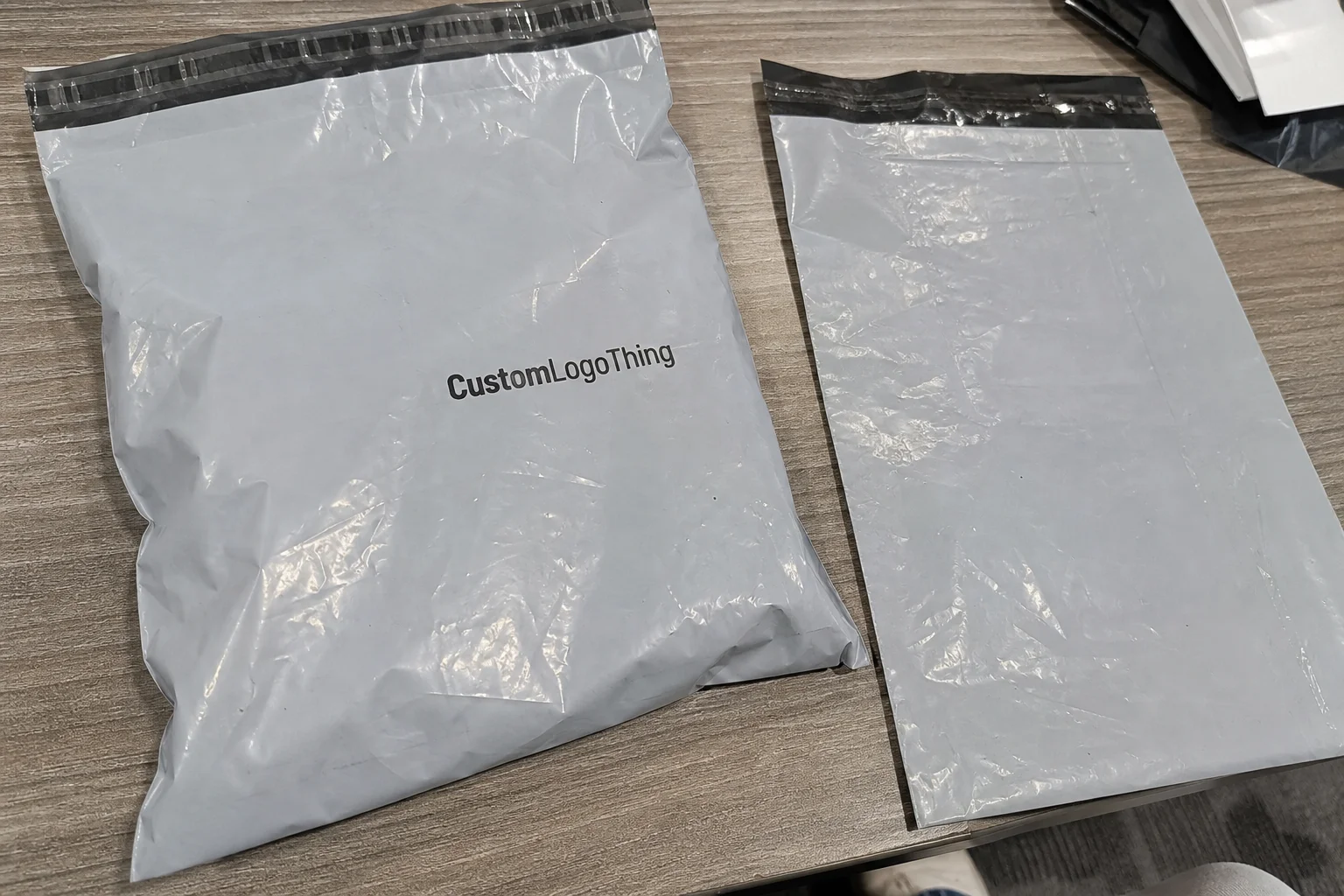
Recycled Poly Mailer Bags are flexible shipping bags made from polyethylene film that includes post-consumer recycled (PCR) resin, post-industrial recycled (PIR) resin, or a mix of recycled and virgin material. The mix matters because recycled content is only one part of performance. A bag with 70% recycled resin and a weak seal can be a worse shipping choice than a 50% recycled bag built with better film structure and cleaner extrusion control.
Here is where buyers sometimes get surprised: two bags can be the same size, the same color, and even carry the same print layout, yet one may have a 2.5 mil equivalent film that holds up under rough handling while the other feels softer and punctures more easily. That difference often comes down to resin quality, film construction, and how much reinforcement the converter built into the final bag.
Buyers usually compare five variables first:
- Recycled content percentage
- Single-layer versus co-extruded construction
- Thickness or gauge
- Opacity and color consistency
- Printability and surface finish
More recycled content is not automatically better. A lightweight apparel shipment may do fine with a high-PCR film, while a boxy accessory with sharp corners may need a reinforced blend to reduce punctures. From a packaging buyer’s point of view, the best bag is the one that survives the lane it will actually travel, not the one with the most impressive sustainability claim on paper.
That is also why buyers who are exploring Custom Poly Mailers often compare recycled films against corrugated cardboard mailers, kraft paper mailers, or other paper-based alternatives. Those materials solve different problems. A paper mailer can look premium and fit a recycled materials story well, but poly film still has the edge on moisture resistance and tear control for many e-commerce shipments.
How recycled poly mailer bag materials are made and layered
The basic production flow is straightforward, even if the details are not. Collected plastic is sorted, cleaned, reprocessed into pellets, then compounded into film suitable for bag conversion. The cleaner the input stream, the more consistent the output film tends to be. That is why recycled resin from controlled sources often performs better than material that has been heavily contaminated before reprocessing.
PCR and PIR are not interchangeable. PCR usually comes from used consumer packaging or other consumer plastic waste that has already completed one life cycle. PIR comes from manufacturing scrap, trimmings, or offcuts that never reached the end consumer. PCR can support stronger sustainability messaging because it contains post-consumer waste, while PIR often offers more predictable consistency. Both are recycled materials. They just enter the supply chain from different places.
Then there is co-extrusion. This is where suppliers build a film with more than one layer, so one layer may contain recycled resin while another layer adds virgin resin to improve seal strength, puncture resistance, or printing smoothness. That structure is common in shipping films because it lets converters balance cost and performance instead of forcing one resin to do everything.
A buyer asking for a recycled film should also ask which test methods back up the claim. The useful ones are familiar to packaging engineers: dart impact, tensile strength, seal strength, and puncture resistance. For transit validation, many teams also reference ISTA protocols for distribution testing. You can review testing standards and packaging resources at the ISTA website, and broader packaging guidance through the Packaging Machinery Manufacturers Institute.
One practical caveat: higher recycled-content percentages can introduce slight color variation, a softer hand feel, or more visible speckling. None of that is automatically a defect. But it does mean brand teams should review printed samples before committing to full production, especially if the mailer is expected to carry a premium look.
“A recycled mailer should be judged like any shipping component: by how it performs in the lane, not by how well it photographs.”
Recycled poly mailer bags material options comparison: PCR, PIR, blends, and additives
If you are doing a real material comparison, start by separating the main material families. Each has a different strength profile, appearance level, and cost behavior. The best fit depends on the product, the shipping channel, and how much visual variation your brand can accept.
| Material option | Typical use case | Strength profile | Appearance | Best fit |
|---|---|---|---|---|
| High-PCR blend | Light apparel, soft goods, low-sharpness items | Good, but may vary more by lot | Often matte, slightly speckled, less glossy | Brands prioritizing recycled-content messaging |
| PCR/PIR blend | General e-commerce, mixed SKU programs | Balanced and usually more stable than PCR-only | Moderately consistent | Most buyers who need a middle ground |
| Mostly-PIR film | Higher-volume runs with tighter quality control | Often more consistent in sealing and clarity | Cleaner visual finish | Programs where film stability matters more than consumer-waste storytelling |
| Hybrid with virgin reinforcement | Heavier loads, sharp edges, return mailers | Strongest puncture and tear resistance | Usually the most uniform | Shipments with higher failure risk |
For lighter apparel, a high-PCR film can be enough. For jeans, boxed cosmetics, or accessory kits with hard edges, a hybrid construction is usually safer. That does not mean the bag has to look thick or bulky. It means the structure should absorb abuse during sorting, bag tossing, and last-mile handling.
Appearance is where expectations can drift from reality. Recycled films are often less glossy than virgin film, and some show minor tint shifts depending on the input stream. If your brand wants a polished look, that can still work. The key is designing for the material instead of expecting recycled film to behave like a pristine virgin substrate.
Optional additives can change performance without changing the recycled-content story much. Common examples include opaque pigments, anti-static treatment, slip modifiers, and tamper-evident seals. Each one serves a purpose. Opaque pigments help hide the contents. Slip modifiers improve automation. Tamper evidence reassures receiving teams and customers. None of those features is free, but each can reduce operational friction.
There is also a useful connection to broader packaging programs. A brand that already uses Custom Packaging Products across cartons, labels, and mailers can compare recycled poly against kraft paper mailers or corrugated cardboard secondary packs. The wrong format often costs more than the first quote suggests, especially if one option slows packing speed or increases damage claims.
Cost, pricing, and unit cost: what actually drives your quote
Price is not just about resin. In recycled-film mailers, the biggest drivers are recycled-content percentage, bag dimensions, thickness, print coverage, closure style, and order volume. Resin markets move, too, which means recycled and virgin pricing can drift toward each other or spread apart depending on supply conditions. A recycled option is not always cheaper, and a virgin option is not automatically the premium one.
For typical custom runs, buyers often see quotes shaped by minimum order quantities and setup complexity. A standard-size mailer in a simple one-color print may land in a very different range than a fully custom size with full-bleed print and tamper-evident adhesive. The difference can be a few cents per unit, but on 20,000 units that becomes real money.
A useful way to think about unit cost is total shipping cost per successful delivery. A bag that saves $0.01 but tears once every few hundred shipments can easily create a more expensive program than a slightly stronger bag. Replace the bag, repack the item, answer the support ticket, and maybe reship the order. The accounting changes fast.
Fair quote comparison means apples to apples. Ask suppliers to specify:
- Exact size and usable internal dimensions
- Film thickness in microns or gauge
- Recycled resin percentage and blend type
- Print method and number of colors
- Closure type, adhesive strength, and tamper feature
- Freight terms and destination
If those details are missing, the comparison is not really a comparison. It is a guess dressed up as a quote.
For buyers balancing budgets against sustainability goals, the pricing conversation should also include documentation. If a supplier can support recycled-content claims, provide testing references, or show how the film is built, that can matter as much as the raw unit rate. The Environmental Protection Agency has useful background on waste, recycling, and materials management at EPA recycling resources.
On the production side, there are a few practical cost levers that do not show up clearly in a one-line quote. Wider gussets, thicker seals, and special adhesive formulas usually add cost. So do custom sizes that require non-standard slitting or extra setup time. Low-volume runs almost always carry a higher per-unit price because the press setup, film tuning, and quality checks get spread over fewer bags.
Process and timeline: from material selection to production steps
The best projects move in a clear sequence. First, define the shipment profile: product weight, dimensions, corner sharpness, moisture exposure, and expected transit length. Then choose a recycled-content target, request samples, confirm specs, approve artwork, and schedule production. That sounds basic, but skipped steps are where most delays begin.
Timeline depends on whether the bag is stock, semi-custom, or fully custom. Stock recycled mailers move faster because the film is already standardized. Semi-custom projects may need a new print plate or modified dimensions. Fully custom recycled-film constructions can require extra testing, especially if the supplier needs to tune the blend for opacity or seal performance.
For a typical custom recycled mailer, lead times often fall into the 12-15 business day range after proof approval, but that can stretch if artwork changes late or the film spec is unusually specific. If the project is tied to a product launch or seasonal drop, add buffer time. Packaging delays have a habit of showing up on the most public day possible.
Common approval bottlenecks include barcode verification, seal sample sign-off, artwork revisions, and bag size changes after sampling. None of those steps are glamorous. All of them can stop a production slot.
It also helps to remember that recycled film can print differently from virgin film. Ink adhesion, gloss, and color vibrancy may shift a little, especially on lower-gloss surfaces. If your brand colors are sensitive, request a printed proof on the exact material blend. A digital mockup is useful, but it is not a substitute for seeing how the ink sits on the film.
Quality control should not end at printing. Reputable production checks usually include seal inspection, dimension checks, adhesive peel tests, and random sample pulls across the run. If the shipment is high volume, ask how many bags are inspected per carton or per batch. That is where the difference between a controlled process and a loose one often shows up.
Common mistakes buyers make when comparing recycled mailer materials
The most common mistake is treating recycled content as the whole story. It is not. A mailer with a higher PCR percentage may be less reliable in the warehouse than a lower-PCR blend with better structure. The comparison should always include seal reliability, puncture resistance, and transit performance.
Another mistake is assuming recycled-looking packaging equals better sustainability. That is a visual shortcut, and it can backfire. If the bag fails more often, you create extra waste through replacements, returns, and customer service friction. A bag that arrives damaged is not a sustainable outcome just because it used recycled materials.
Buyers also misread the product itself. Heavy denim, cosmetics, booklets, and accessory boxes stress a mailer differently. One SKU may be fine in a 2.0 mil-equivalent film, while another needs a stronger build because the corners act like little knives during sorting.
Brand teams can get ahead of operations and approve appearance before function. That is understandable. The bag is part of the customer experience. But if you skip warehouse testing, you may approve a beautiful bag that sticks too much, seals inconsistently, or collapses under automation speed.
Finally, do not skip sample testing. Recycled films can differ in feel, opacity, and closure behavior from supplier to supplier, even when the spec sheet looks almost identical. A hands-on test with actual SKUs tells you more than a polished sales sheet ever will.
One more mistake shows up in sourcing teams that compare only the unit price and ignore supply stability. A low quote means little if the supplier cannot hold the same blend, same thickness, or same print quality on repeat orders. For recurring programs, consistency is part of cost.
Expert tips for choosing the right recycled poly mailer build
Start with failure risk. If the package contains sharp edges or heavy items, prioritize reinforced blends or a co-extruded structure with a stronger outer or inner layer. If the shipment is soft goods and low risk, higher-PCR content may be the smarter brand move. The point is to match the film to the job.
Ask for data, not just claims. Request material specs, recycled-content documentation where available, and test results for dart impact and seal performance. If a supplier cannot explain the film structure or provide evidence that the bag meets your handling conditions, keep looking.
A two-sample review process works well. One sample should go to the brand team for print, color, and unboxing review. The second should go to operations for packing-line testing. Those are not the same evaluation. A mailer can photograph well and still be frustrating in a high-speed packout environment.
Print requirements need to be addressed early. Recycled films may show less gloss and more texture, which affects ink adhesion and color pop. If the brand depends on very bright artwork, build that into the spec conversation instead of discovering it after proofing.
The lowest sticker price is not always the best value. If a slightly better bag reduces damage, shortens handling time, and cuts waste across the shipping system, the real savings are bigger than the per-unit difference suggests. That is especially true for recurring fulfillment programs where small improvements multiply quickly.
For broader packaging strategy, compare recycled poly against other formats in the same order set, including kraft paper, corrugated cardboard, and biodegradable packaging claims that may sound good but are not always the right answer for every distribution lane. If moisture resistance matters, poly often remains the more practical choice.
It also helps to think in terms of operational tolerance. If your packing team handles a narrow SKU mix with predictable sizes, you can often tighten the spec and use a more optimized recycled blend. If the assortment changes constantly, a slightly more forgiving construction may save more money over time by reducing mispacks and damaged shipments.
What to do next: narrow your shortlist and request the right samples
Build a simple comparison sheet before talking to suppliers. List shipment weight, target recycled content, required durability, print needs, budget ceiling, and whether the bag must work with automation. That one sheet will make every quote conversation cleaner and faster.
Then request two or three candidate materials with identical dimensions. If the sizes change, you are no longer comparing material performance. You are comparing geometry, which is a different question entirely.
Test the bags in real conditions. Check line speed, seal behavior, drop handling, abrasion, and exposure to moisture or rough transit. If possible, push a few samples through the same pack process your warehouse uses on a normal day, not a simplified demo. The test should reflect reality.
If the options are close, choose the one with the clearest documentation, the most stable supply, and the lowest total landed cost. That usually beats picking the cheapest unit price by a narrow margin.
In short, the right Recycled Poly Mailer Bags material options comparison is not about finding the greenest-sounding film. It is about choosing the recycled poly mailer bag material that protects the product, supports the brand, and fits your operating reality. Do that well, and the bag stops being a commodity and starts doing real work for the business.
Which recycled poly mailer bag material option is strongest for shipping?
Higher-performance blends usually combine recycled resin with virgin reinforcement to improve tear and puncture resistance. The strongest option depends on bag thickness, seal quality, and the product being shipped, not recycled content alone.
Are PCR and PIR recycled poly mailer bags the same thing?
No. PCR comes from post-consumer plastic that has been used and recovered, while PIR comes from post-industrial manufacturing scrap. PCR often supports stronger sustainability storytelling, while PIR can offer more consistent film quality in some applications.
How do I compare recycled poly mailer bags on price fairly?
Compare identical sizes, thickness, print specs, closure type, and freight terms. Ask for the unit cost at your expected order volume, plus MOQ requirements and any tooling or setup charges.
Will recycled poly mailer bags affect print quality?
They can. Recycled films may have more texture, less gloss, or slight color variation that changes ink appearance. Request printed samples or a proof on the exact material blend before approving production.
How long does production usually take for custom recycled mailers?
Timing depends on whether the material is stock or custom, plus artwork approval and testing requirements. New blends or custom print jobs often need extra lead time, so build in buffer before launch or seasonal demand.


