For brands shipping apparel, accessories, and other soft goods, Recycled Poly Mailer Bags Low MOQ Custom Order programs solve a very practical problem: you need branded shipping packaging that looks polished, protects the product, and does not force a large inventory commitment before demand is predictable. That matters for launches, seasonal drops, influencer kits, and smaller ecommerce runs, where packaging spend has to earn its place instead of sitting in storage.
Plain mailers can absolutely move product from A to B, but branded packaging changes the customer’s first impression the moment the parcel leaves your facility. Recycled content adds a material-efficiency angle without pushing the bag into a heavier, more expensive format. The strongest orders are usually built around clear specs, realistic minimums, and a design that still looks good after the bag is folded, stacked, and handled through the shipping chain.
Why recycled mailers make sense for small-batch shipping
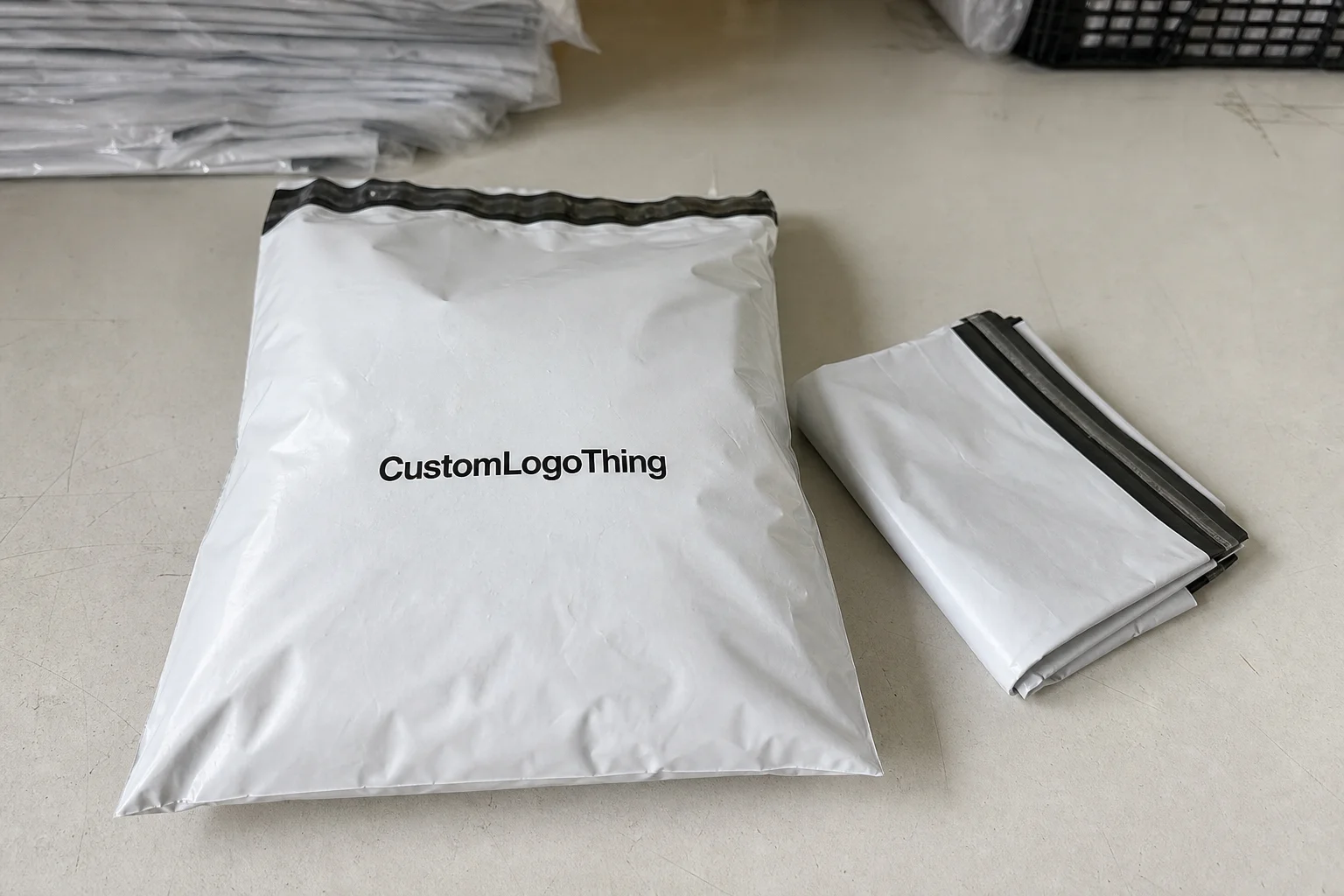
A recycled mailer is a practical middle ground for brands that want product packaging protection in transit but are not ready to move into rigid cartons, inserts, or a more complex packout. For many shipments, especially soft goods, the mailer is the outer layer doing most of the work: it sheds moisture, resists tearing, and presents the brand clearly at the door. That makes recycled poly mailers a strong fit for companies that want functional packaging design without locking cash into extra stock.
The fit becomes even better when volume is uncertain. New product launches often start with demand that is hard to predict. Seasonal collections may only run for a short window. Influencer kits and press mailers need a clean presentation, but no one wants a warehouse full of leftovers. Smaller ecommerce brands also need to keep unit cost under control while using packaging that supports recognition and repeat purchase behavior. That is where recycled poly mailer Bags Low MOQ Custom Order programs earn their value.
Durability still comes first. Buyers should care about tear resistance, sealed seams, and moisture protection before they worry about marketing copy. If a mailer splits at the gusset or the adhesive fails in transit, recycled content does not rescue the customer experience. For apparel, socks, scarves, and many accessories, a properly specified recycled poly mailer is usually strong enough for normal parcel handling. For heavier or more rigid products, the order may need a stronger gauge, an inner pouch, or a different package structure altogether.
Good recycled packaging is not trying to be everything at once. It is about matching the bag to the product, keeping the specification honest, and choosing a custom print that supports the brand without inflating MOQ or waste.
That balance is why many buyers begin with mailers before moving into other formats like Custom Poly Mailers, printed cartons, or broader Custom Packaging Products. The bag gives you a lower-barrier way to test branded shipping, refine artwork, and see how the material performs in actual packing conditions before scaling.
For teams still building a fulfillment workflow, recycled mailers also make sense because they are lightweight secondary packaging. They do not add much postage weight, they print cleanly, and they are easier to store than boxes. That matters when floor space is tight and every carton on the pallet needs to justify itself.
Custom mailer bag construction, print options, and recycled film choices
Most recycled poly mailers are made from recycled polyethylene film, with a smooth printable exterior and a seal flap that closes with a pressure-sensitive adhesive strip. Film thickness is usually specified in mils or micron equivalents, and the exact structure can vary by supplier. Some films feel softer than virgin resin versions; others feel almost identical. What matters is not the feel in the hand alone, but whether the final bag performs consistently across the whole run.
There is also a meaningful difference between post-consumer recycled content and post-industrial recycled content. Post-consumer material comes from recovered consumer waste streams, while post-industrial content comes from manufacturing scrap that is reprocessed. Both can work well in packaging, but the available blend, appearance, and sourcing consistency depend on the specification and the supplier’s material input. If recycled-content claims matter for your brand messaging, ask for the exact structure and supporting documentation before you approve the artwork.
Customization is where the package starts carrying brand value. A one-color logo is often the most practical low-MOQ choice because it keeps setup straightforward and preserves sharper registration. Some buyers want full-panel graphics, while others prefer a simple logo plus a recycled-content statement or a short message near the flap. Many brands also reserve space for a barcode, shipping label, or internal SKU marking so the bag works in the packing line, not only in a mockup.
Functional options that matter in daily packing
- Permanent adhesive strip for a one-time secure closure.
- Double adhesive return strip if the bag may be reused for returns.
- Tear-open strip for easier customer opening.
- Opaque or black inner layer when privacy matters for apparel or intimate items.
- Matte or gloss finish depending on the brand look and ink system.
From a print standpoint, simpler layouts usually produce the cleanest result at lower MOQ. A bold logo, clear typography, and a limited color count often outperform a crowded design with too many small details. That is especially true on film, where fine type can become harder to read if the bag is folded, filled unevenly, or stacked tightly in cartons. Strong package branding is not always about adding more art; often it is about making the right elements visible from a normal viewing distance.
For brands comparing mailers with other retail packaging formats, the biggest operational advantage is speed. You are not folding a carton, inserting a liner, or building a more complicated packout. The mailer is quick to load and easy to store, which is one reason it remains a staple for ecommerce.
Packaging sustainability information is often part of the conversation as well. If you want a general reference for recycling and waste terminology, the EPA recycling resources are useful for sorting what can be claimed, collected, or communicated responsibly.
Size, thickness, and performance specifications to confirm before ordering
The most common mistake is under-specifying the bag. A buyer approves the artwork and then realizes later that the bag still has to fit the product, close properly, and survive the shipping lane. Before placing a custom order, confirm the finished width, finished length, flap depth, film gauge or micron equivalent, adhesive type, print colors, and the target recycled-content percentage. Those basics do more for the success of the order than most aesthetic choices.
Size matters for a simple reason: too small and the seams are stressed; too large and you use more film than needed, which raises cost and can create a sloppy packout. A good fit keeps the mailer tight enough to ship efficiently while still allowing enough movement to avoid friction damage. Apparel usually packs well in mailers. Items with hard corners, sharp hardware, or rigid boxes need more caution because puncture risk rises quickly.
What to test before you approve production
- Drop check to see how the bag holds after normal handling.
- Seal integrity to confirm the adhesive stays closed under pressure.
- Seam strength to watch for weak points at the side welds.
- Print alignment so the logo lands where it should.
- Carton count accuracy before release to freight.
Those checks matter even more if the bags will be used in daily fulfillment rather than occasional mailing. In a real packing environment, a mailer that looks fine on a spec sheet can still cause trouble if the flap release liner is inconsistent or the seal placement varies from one case to the next. That is why sample testing beats claims. If you are planning a new launch, ask for a sample, proof, or production-equivalent reference before you commit.
Artwork templates should also be requested early. A proper dieline lets you confirm logo placement, copy clearance, bleed, and any compliance marks before production starts. That step helps prevent avoidable revisions later and keeps the schedule moving.
For buyers who want a benchmark on mechanical test expectations, industry bodies such as ISTA provide useful packaging test frameworks that many teams use to evaluate shipping performance under realistic conditions.
Cost, pricing, MOQ, and quote factors that change your unit cost
Pricing for recycled mailers usually comes down to a handful of variables: size, film thickness, recycled content level, print coverage, number of colors, and quantity. If you want lower MOQ flexibility, the simplest builds usually quote best. Standard sizes are easier to produce, common film gauges are easier to source, and one-color printing is simpler to set up than multi-color graphics or full-coverage artwork.
| Option | Typical MOQ behavior | What it does to unit cost | Best fit |
|---|---|---|---|
| Standard size, one-color logo | Lowest practical MOQ | Usually the most efficient | Launches, test orders, small ecommerce runs |
| Standard size, two to three colors | Moderate MOQ | Higher setup and print cost | Growing brands with fixed artwork |
| Custom size, one-color print | Higher than stock size | More tooling or setup cost | Products that need a special fit |
| Full-panel graphics, special adhesive, custom structure | Highest MOQ among these options | Highest unit cost | Large branding programs and repeat volume |
That table reflects the reality most buyers run into: the more you move away from standard materials and simple artwork, the more setup and production cost enters the picture. The unit cost may still be sensible, but it usually improves as order quantity rises. A smaller run often carries a higher per-bag price because press setup, film sourcing, and finishing effort are spread over fewer pieces. That is not a penalty; it is simply how custom film packaging works.
When quoting Recycled Poly Mailer Bags low moq custom order programs, suppliers generally need a clean set of inputs. Have these ready:
- Finished dimensions
- Estimated quantity
- Artwork count and print colors
- Recycled-content preference
- Desired adhesive or return-strip structure
- Packing method and destination
- Whether you need samples or a proof
Watch for hidden cost drivers too. Special adhesive structures, custom sizing, extra artwork revisions, and rush production windows can all raise the quote. If the goal is to keep the order economical, stay close to standard dimensions and avoid adding features that do not improve the customer experience or fulfillment workflow. Honest pricing should make those tradeoffs clear. If you are comparing repeat-purchase options, some brands also review Wholesale Programs once they expect recurring volume over time.
Process and lead time: from artwork approval to finished cartons
The order process should be simple, but it still needs structure. A good workflow starts with inquiry and spec confirmation, then moves to artwork review, proof approval, production scheduling, quality checks, packing, and shipment. Each step exists for a reason. Miss one, and the order usually slows down later when the press is ready and nobody is certain about logo placement or material requirements.
Lead time depends on whether the bag is stock-based or fully custom, how complex the print is, and whether the recycled film structure is standard. A low-MOQ custom order can still move efficiently, but buyers should leave enough time for proofing and production, especially before a launch date or seasonal shipping window. Often, the delay is not machine time. It is the back-and-forth caused by incomplete specs or late artwork changes.
From the production side, the biggest schedule killers are usually familiar: low-resolution logos, missing dieline notes, color uncertainty, or a revision that arrives after proof approval. Every one of those can push a release by days. The fastest projects are the ones where the buyer gives one approval contact, a clear delivery window, and complete ship-to information up front.
Clear specs save time. If you can define the bag size, print count, recycled-content target, and delivery date early, the rest of the order becomes much easier to manage.
Final packing should be checked before freight release. Confirm seal integrity, print alignment, carton counts, and the outer case labels. That sounds basic, but it prevents a lot of avoidable problems once the material reaches fulfillment. If your operation uses label printers, returns handling, or manual pack stations, say that before the order is finalized. The more the supplier understands the use case, the better they can set up the bag structure and packing format.
Why choose a packaging supplier with recycled film experience
Not every supplier who prints poly bags truly understands recycled film. There is a real difference between printing a logo on film and managing a recycled substrate that can vary in consistency, surface behavior, and seal performance. If the supplier knows the material, they can guide you toward realistic minimums, acceptable thickness ranges, and layouts that reduce waste rather than adding it.
That practical guidance matters more than polished sales language. A good packaging partner should be able to explain whether a bag needs a heavier gauge, whether a one-color print will hold better than a more complex design, and how the recycled-content claim should be handled in the artwork or product description. Transparency matters in a transactional buy. You need clear pricing, stable repeat-order support, and lead times grounded in production reality.
Quality control becomes more important with recycled films, not less. The supplier should be checking film thickness, adhesive performance, print registration, and carton counts. For a small ecommerce brand, a bad carton count or weak adhesive can create a day of fulfillment problems. For a larger brand, those issues can cascade across a launch. That is why recycled poly mailer orders benefit from a supplier who treats packaging design as both a branding tool and a shipping tool.
If you want a broader reference for packaging terminology and material thinking, the Institute of Packaging Professionals and related industry resources are useful. They will not spec the bag for you, but they do help set a professional baseline.
In practice, the best suppliers are the ones who say when a specification is too ambitious for the MOQ or the budget. That kind of honesty saves money, reduces rework, and makes repeat ordering easier when volume grows.
Next steps to order recycled poly mailer bags with confidence
Start with the basics: finished size, estimated quantity, print art, recycled-content preference, and the delivery deadline. If the product fit is not finalized, request quotes for two or three sizes so you can compare fit, shipping efficiency, and unit cost before committing. That small step often prevents overbuying a bag that looks fine on paper but wastes material in real use.
If the product is new, the artwork is detailed, or the bag will run through a tight fulfillment line, order a sample or proof. A small approval step now is cheaper than correcting a large production run later. Also think through daily use: manual packing, automated label placement, returns handling, and storage space all affect how the mailer performs in the real world. A bag that is easy to store and quick to seal is worth more than a prettier one that slows down packing.
For many brands, the right answer is the simplest spec that still protects the product and supports the brand. That usually means standard dimensions, a sensible film gauge, a clean logo, and an adhesive structure that fits your shipping and returns process. It is a practical way to build branded packaging without tying up cash in excess inventory or overcomplicated features.
If you are preparing a reorder or building a first run, gather the spec sheet, artwork, and delivery window, then ask for a quote on Recycled Poly Mailer Bags low moq custom order options that fit your product and budget. The best order is the one that ships well, looks right, and can be repeated when volume grows.
What should I check before ordering recycled poly mailer bags low MOQ custom order?
Confirm size, film thickness, print colors, recycled content target, and adhesive style before requesting a quote. Ask for an artwork proof so you can verify logo placement, readability, and any compliance or return-use details.
Can I get a low MOQ on custom recycled poly mailers with one-color printing?
Yes, one-color designs and standard sizes usually have the most practical low-MOQ options. Keeping the layout simple often improves pricing and speeds up proof approval.
What affects recycled poly mailer bag pricing the most?
The biggest drivers are quantity, dimensions, film gauge, print coverage, number of colors, and custom features like extra adhesive strips. Rush timing and special sourcing requirements can also raise the unit cost.
How long does production usually take for a custom recycled mailer order?
Lead time depends on artwork approval, quantity, and whether the size and film structure are standard or custom. Approving proofs quickly and providing complete specs helps keep the schedule moving.
Are recycled poly mailers strong enough for ecommerce shipping?
For soft goods like apparel and accessories, yes, when the size and gauge are matched correctly to the product. For sharp, heavy, or rigid items, test the mailer or consider added internal protection before full production.


