Buying recycled poly mailer bags is rarely a one-number decision. A proper recycled poly mailer Bags Unit Cost breakdown shows where the money actually goes: resin, size, thickness, print, closure, packaging, freight, and the small add-ons that turn an apparently low quote into a higher landed cost than expected.
For most packaging buyers, the best order is not the prettiest sample or the cheapest quote. It is the one that protects the product, packs quickly, and holds up under the handling your shipment really sees. Recycled-content mailers can do that well, but only if the spec matches the product and the supplier is quoting the same build you intend to buy.
The mistake happens when buyers compare two numbers that look similar on paper but are not built the same way. A thinner film, less print coverage, fewer colors, or a smaller carton count can make one quote appear cheaper while hiding a compromise that shows up later in damage rates, returns, or freight.
Why recycled poly mailers can lower real shipping costs
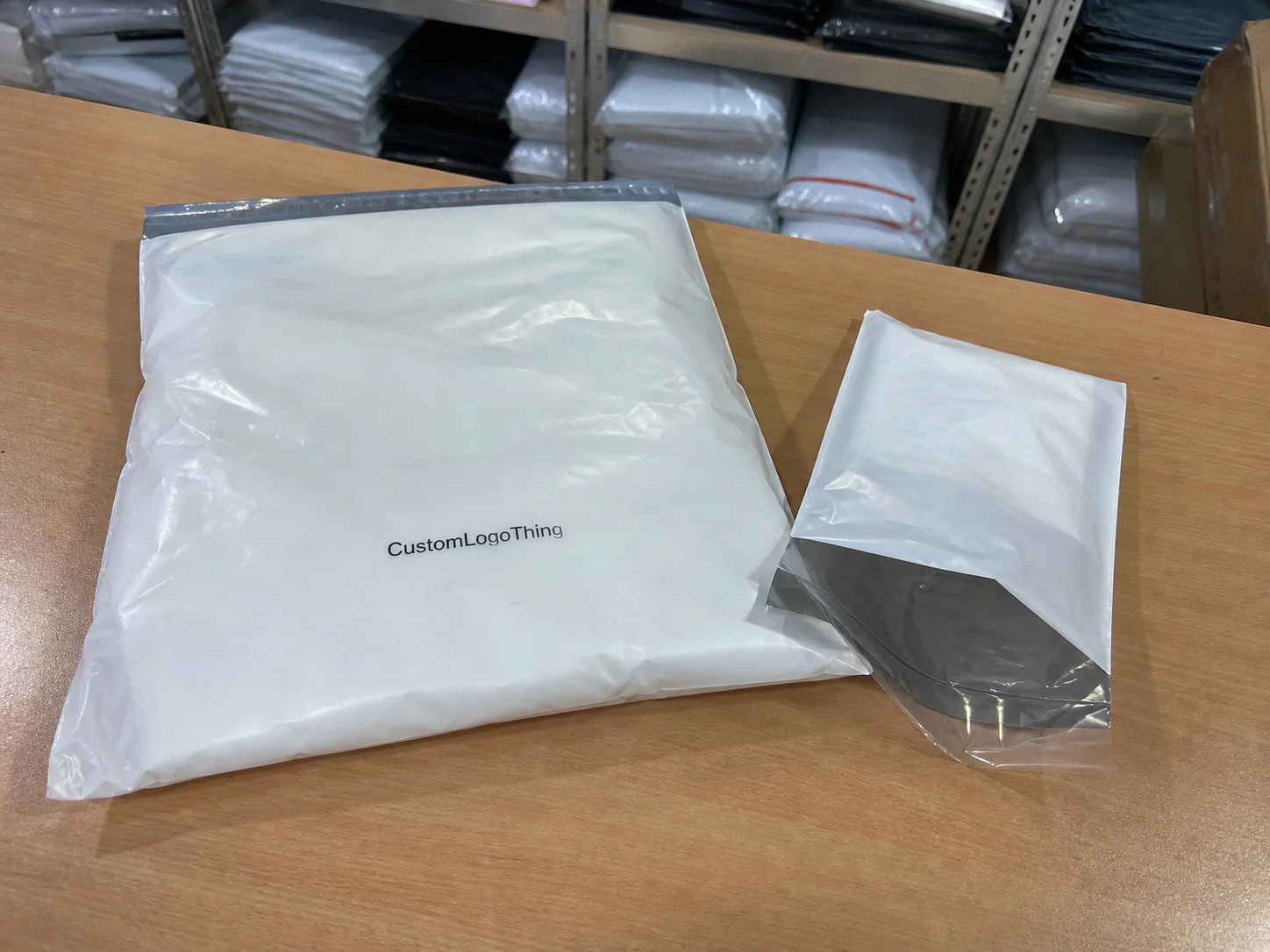
The recycled-content label is not always the biggest cost driver. In practice, the unit price moves more with film gauge, dimensions, print coverage, and freight efficiency than with recycled content alone. A 2 mil mailer and a 3 mil mailer are not interchangeable, even if they look similar in a quote sheet. The lighter film saves material and shipping weight, while the heavier version gives better puncture resistance and less risk of split seams or corner tears.
That tradeoff matters most for apparel, accessories, and other soft goods that do not need a rigid carton. A mailer can replace a box, reduce pack-out time, and cut dimensional weight charges when the item is compressible and not easily damaged by pressure. In those cases, the right bag protects margin better than an overbuilt carton that adds material, labor, and freight.
The sticker price can be misleading. A buyer sees $0.11 versus $0.13 and assumes the lower number wins. Then the cheaper mailer prints poorly, tears during stuffing, or ships in less efficient cartons. By the time the order lands, the “saving” has disappeared into labor, waste, and freight. That is why a real cost review has to include the whole path from bag conversion to warehouse receiving.
“The right mailer is the one that survives handling, packs fast, and lands at a sane total cost. Everything else is decoration.”
Before comparing suppliers, decide what matters most for that program. Unit price is one variable. So are damage rate, packing speed, appearance, and shipping weight. You rarely improve all four at once, and the cleaner decision is the one that makes the tradeoff explicit instead of hiding it in a vague quote.
Material and print choices that affect the bag build
Recycled poly mailers are typically built around PCR blend film, mono-material PE, or a recycled-content blend with additives that improve sealability and toughness. The marketing language can get noisy fast, but the practical questions are straightforward: does the film hold together, does it seal consistently, and does it print cleanly at the target gauge?
Thickness is usually the first decision point. Common ranges fall between 1.5 mil and 3 mil. A 2 mil bag is often enough for tees, socks, and light accessories. A 2.5 or 3 mil build makes more sense for denser goods, sharp edges, heavier packs, or order profiles with a higher return rate. More thickness means more resin, more weight, and usually a higher unit cost. It also means better puncture resistance and a lower chance of failure in transit. That trade is real, and it should be priced honestly.
Finish affects both appearance and handling. Matte usually hides scuffs better and can look more premium, especially on darker colors. Gloss can be a little easier to print brightly and may cost slightly less in some runs. Neither finish fixes weak film or poor sealing. Buyers sometimes focus on the surface effect and overlook the structural side, then discover the problem only after a few warehouse shifts.
Print has a larger cost impact than many buyers expect. A plain stock mailer, a one-color logo, and a full-coverage multi-color design are three different production jobs. More print coverage means more ink, more setup, more press adjustment, and more waste during color matching. If the artwork requires a white base layer, tight registration, or several spot colors, the price rises quickly. Clean, simple artwork is usually the best route if the goal is a controlled unit cost.
Closures deserve more attention than they usually get. A weak adhesive strip causes repacks, returns, and complaints that cost far more than the cents saved on the bag. A good tamper strip adds a little to the order price but protects the customer experience and reduces labor at the packing table. Tear lines matter too. If the tear strip is inconsistent or badly positioned, the opening looks messy and the product inside can get nicked on the way out.
For most buyers, the practical design ladder looks like this:
- Unprinted stock mailer — easiest to source, lowest setup burden, limited branding value.
- One-color custom logo — often the best balance of cost, speed, and brand presence.
- Multi-color or full-bleed print — higher setup, more ink, more proofing, and more QC sensitivity.
That ladder is useful because it keeps the discussion grounded. If the bag is only doing shipping work, then a simple build is often the sensible choice. If the mailer has to carry a premium brand impression as well as product protection, the print and finish spec should reflect that from the beginning.
Specs buyers should lock before requesting quotes
Most quote problems start with vague specs. If the request says “standard size” or “same as last time,” the supplier has to guess, and guesswork ruins comparisons. A meaningful quote needs exact dimensions, thickness target, print details, closure type, and delivery location. Otherwise, the supplier is not pricing your job. It is pricing an interpretation of your job.
Before sending a request, lock the following details:
- Flat width and usable length
- Side gusset, if the product needs extra volume
- Film gauge, such as 2 mil or 2.5 mil
- Color count and print coverage area
- Closure type and adhesive strip style
- Product type and weight
- Delivery address for landed-cost quoting
Product behavior matters more than a lot of buyers first assume. Soft folded apparel is easy to bag. Cosmetics, metal accessories, or items with corners behave differently and can stress the film at the seams. If the mailer will be used for returns, the adhesive choice and seal strength target change again. A good spec reflects the real use case, not the neatest version of it.
Compliance can also shape the quote. Recycled-content claims should be supportable, and print must remain legible enough for any barcode, care label, or shipping information printed on the bag. Retail programs may impose their own packaging rules. If those requirements are in play, put them in the quote request before anyone starts pricing. That saves a round of revisions later.
Buyers who want a cleaner sustainability framework sometimes cross-check broader packaging materials with references like the EPA recycling resources. Where paper components are part of the program, chain-of-custody expectations may also come into view through organizations such as the FSC. Not every mailer order involves both, but the documentation standard should still be clear and supportable.
Recycled poly mailer bags unit cost breakdown for bulk orders
A useful Recycled Poly Mailer Bags unit cost breakdown separates the bag into its cost layers instead of treating the price as a single block. That makes it much easier to see why one quote is higher and whether the difference is justified by performance or only by presentation.
- Raw resin blend — PCR percentage, virgin blend ratio, and market resin availability.
- Converting labor — extrusion, printing, slitting, bag making, and inspection.
- Tooling and setup — plates or cylinders, artwork prep, press adjustment, and line setup.
- Bag size and gauge — larger and thicker bags use more material.
- Print complexity — more colors, more coverage, and tighter registration increase cost.
- Packaging format — carton count, inner packs, pallet pattern, and labeling.
- Freight — trucking, ocean transit, destination charges, and final delivery.
The MOQ effect is one of the strongest pricing forces in packaging. Setup charges do not disappear just because the order is small. On a 5,000-piece run, those costs land on a limited number of bags, so the unit price climbs quickly. At 20,000 or 50,000 pieces, the same setup spreads across more units and the price usually settles into a much better range. That is why bulk pricing can look dramatically lower than short-run pricing even when the product itself barely changes.
For common apparel-style mailers, realistic price ranges often look something like this:
| Bag type | Typical MOQ | Approx. unit price | Main cost driver |
|---|---|---|---|
| Unprinted recycled stock mailer | 3,000-5,000 pcs | $0.08-$0.14 | Resin blend and bag size |
| One-color custom logo | 5,000-10,000 pcs | $0.11-$0.20 | Setup charges and print coverage |
| Full-bleed or multi-color print | 10,000+ pcs | $0.18-$0.32 | Ink, proofing, QC, and waste risk |
Those ranges are not fixed rules. Resin prices move, regional labor costs move, and the exact size of the bag changes the material draw more than many buyers expect. Still, the ranges are useful because they expose unrealistic quotes quickly. If a supplier offers a full-coverage custom mailer at the price of a plain stock bag, something has probably been stripped out of the build, the freight, or the service assumptions.
Unit price is only one half of the equation. Landed cost is the number that actually affects the budget. That includes cartonization, palletization, inland freight, ocean freight if applicable, duties where relevant, and destination fees. A lower unit price with heavier freight or inefficient packing can cost more in the end than a slightly higher bag price that ships efficiently.
That is why two quotes that differ by only a few cents can still produce very different results. If one supplier quotes $0.15 per piece and freight adds another $0.04, the real cost is $0.19. Another supplier may quote $0.17 per piece but ship in tighter cartons with less freight drag. The second option can be cheaper overall even though the unit number looks higher at first glance.
Discounts only matter if they do not create hidden cost later. Lower piece price with overs, seal failures, or reprint risk is not a bargain. It is deferred expense, and packaging budgets usually feel it eventually.
Production steps, lead time, and freight timing
A reliable supplier should be able to walk through the order in order: spec confirmation, artwork proof, sample approval, material sourcing, printing, conversion, inspection, and pack-out. If any one of those steps is unclear, the risk of a mistake rises. Packaging errors are rarely mysterious; they usually come from one of those handoffs being rushed or skipped.
Lead time typically has three parts. The first is proofing, which can be quick if the artwork is clean and much slower if files need repair or the color standard is not clear. The second is production, which for many custom mailer runs often falls around 12-20 business days after approval, depending on quantity, print complexity, and line availability. The third is freight, which may take only a few days domestically or several weeks if the shipment moves by ocean plus destination handling.
A fast sample does not mean a fast order. Samples are only one gate in the process. Material sourcing, press scheduling, carton packing, and freight booking all add time. If a launch date is fixed, schedule backward from the warehouse receiving date, not from the production start date. That habit prevents more emergencies than any project tracker.
Common delay points are usually the same:
- Artwork revisions after the first proof
- Color matching changes after approval
- Material shortages or resin substitutions
- Buyer-side approval lag
- Freight booking delays
Freight booking is especially easy to underestimate. A production order that is complete but not yet on a truck or vessel is not in inventory. It is still in transit planning. Packaging teams know how often that distinction matters.
For higher-value goods or rough transit lanes, test the mailer as part of the full packaging system rather than judging the film by eye. Industry references such as ISTA are useful when a shipment needs to survive distribution handling, compression, or repeated touches before it reaches the customer. Not every order needs formal testing, but the more fragile or premium the product, the more worthwhile it becomes.
What a serious packaging supplier should prove before you buy
A serious packaging supplier does more than answer quickly. They should be able to confirm the spec in writing, explain the cost drivers, and identify where the risk sits. If they cannot discuss film tolerance, print registration, or seal performance in practical terms, the quote is just a number with no production context behind it.
These are the points worth checking:
- Spec control — exact thickness, size, closure, and print details written clearly.
- Test data — seal strength, puncture resistance, and thickness tolerance where applicable.
- Shipment-level inspection — not just a vague “QC checked it.”
- Artwork proof process — an approval trail before production starts.
- Transparent recycled-content claims — specific percentages and supportable wording.
Engineering support matters more than order-taking. If a supplier looks at the contents and says a 2 mil film is too light, or that the adhesive should change because the bag will be reused for returns, that is useful production knowledge. The answer “yes” to everything is usually less helpful than a careful recommendation that protects the bag from avoidable failure.
How they discuss defects matters too. Good suppliers do not promise zero variation. They talk about tolerances, common failure points, and the inspection points used before shipment. That kind of clarity is more useful than polished language about sustainability or premium quality, because it tells you how the job is controlled in practice.
For recycled-content claims, ask for specifics. If the mailer uses PCR blend film, the claimed percentage should be clear, and the supplier should be able to explain how that claim is supported. Buyers who manage broader packaging programs often compare those details against the rest of their shipping materials, including Custom Poly Mailers, so the whole program stays aligned instead of drifting between unrelated specs.
If your packaging system includes more than mailers, reviewing Custom Packaging Products can help keep shipping bags, cartons, inserts, and related items under one standard. That makes it easier to compare materials and avoid paying premium prices for a bag that is not matched to the rest of the pack-out.
How to request a usable quote and move forward
If you want a quote that can actually be used for buying, send one clear request with the full job spec. Include dimensions, quantity, thickness target, print colors, recycled-content goal, delivery address, and deadline. Attach artwork if you have it. If there is a retailer requirement or a compliance note, attach that too. The cleaner the input, the more trustworthy the output.
It also helps to ask for two versions at once: a value spec and a stronger or more premium spec. That side-by-side comparison shows exactly where the cost gap sits. Then you can compare unit price, print quality, freight, and performance in one view instead of guessing whether the cheaper option is actually the better buy.
For higher-value goods, retail shelves, or return-use bags, ask for a sample or pre-production proof. The extra step is inexpensive compared with a pallet of bags that print wrong, seal badly, or feel flimsy during packing. A small proof charge is usually a better expense than a full run that has to be corrected later.
The most practical way to read a Recycled Poly Mailer Bags unit cost breakdown is simple: confirm the spec, compare landed cost, check the supplier’s proof points, and place the order only after the numbers and performance requirements line up. That process is not fancy, but it is how packaging budgets stay under control.
What drives recycled poly mailer bag pricing the most?
Film gauge, bag size, and print coverage usually move price more than the recycled-content label. MOQ matters because setup cost gets spread across the run, so smaller quantities almost always raise unit price. Freight and destination charges can also change landed cost enough to make the lowest unit quote the most expensive option overall.
What MOQ should I expect for custom recycled poly mailers?
Many custom runs start in the low thousands, but the practical MOQ depends on size, color count, and print complexity. Simple one-color jobs can usually support lower quantities than full-coverage designs or specialty sizes. If a supplier offers very low MOQ, check whether the unit price, freight, or overs make the offer less attractive than it first appears.
How do recycled poly mailers compare to virgin film on cost?
Recycled film can be close to virgin pricing on some specs and higher on others, depending on resin availability and performance requirements. Compare seal strength, puncture resistance, and total landed cost instead of sticker price alone. If the recycled option reduces damage or complaint rates, the real cost can be lower even if the piece price is slightly higher.
How long does production usually take after approval?
After artwork approval, many custom mailer orders take around 12-20 business days to produce, although larger runs, more complex print, or busy production periods can extend that. Freight adds its own timeline, especially for ocean shipments. The best schedule is built backward from the required dock date, not from the factory start date.
What should I send to get an accurate recycled poly mailer quote?
Send exact dimensions, thickness target, print colors, quantity, recycled-content goal, and whether the bag needs matte, gloss, or unprinted finish. Include the shipping destination and required delivery date so the supplier can quote landed cost rather than just piece price. If you want a useful Recycled Poly Mailer Bags unit cost breakdown, include the end use and any retailer or compliance requirements up front.


