Buyer Fit Snapshot
| Best fit | Recycled Rigid Boxes Manufacturer projects where brand print, material claims, artwork control, MOQ, and repeat-order consistency need to be specified before quoting. |
|---|---|
| Quote inputs | Share finished size, material target, print colors, finish, packing count, annual reorder estimate, ship-to region, and any compliance wording. |
| Proofing check | Approve dieline scale, logo placement, barcode or warning zones, color tolerance, closure strength, and carton packing before bulk production. |
| Main risk | Vague material claims, crowded artwork, missing packing details, or unclear freight terms can make a low unit price expensive after revisions. |
Fast answer: Recycled Rigid Boxes Manufacturer: Board, Finish, Dieline, and Unit Cost should be specified like a repeatable production item. The safest quote records material, print method, finish, artwork proof, packing count, and reorder notes in one written spec.
Production checks before approval
Compare the actual filled-product size with the drawing, then confirm tolerance on folds, seals, hang holes, label areas, and retail display edges. Reserve space for logos, QR codes, warning copy, and material claims before decorative graphics fill the panel.
Quote comparison points
Review material grade, print process, finish, sampling route, tooling charges, carton quantity, and freight assumptions side by side. A quote is only useful when the supplier can repeat the same color, closure quality, and packing count on the next order.
Recycled Rigid Boxes Manufacturer: Sustainable Basics
A recycled rigid boxes manufacturer can turn recovered paper fiber into Packaging That Feels weighty, gift-worthy, and genuinely premium. The surprise usually lands in the hand first. Corner strength holds. The lid closes with intention. The board may come from post-consumer or post-industrial fiber, yet the finished box can still read as high-end if the build is disciplined. Buyers notice that fast, especially when they compare a sample against a flimsy carton that bends before the product is even inside it. For brands sorting through packaging partners, that is one reason many teams begin with Custom Packaging Products and then narrow the list to suppliers who can explain the material story without turning it into marketing fog.
I have watched packaging reviews go off the rails over something as simple as a sample that looked beautiful on a desk but failed in a real packout. A recycled rigid box is not just a prettier container. It is a structural decision, a cost decision, and, increasingly, a credibility decision. Brands that want the sustainability story to hold up under scrutiny need a supplier who can talk board caliper, wrap behavior, and end-of-life claims without flinching.
For a practical path through the subject, the sections below focus on what the box actually is, how it is made, what drives cost, and how to judge a recycled rigid boxes manufacturer without getting lost in sales language. You can also learn more about the company behind this resource at About Custom Logo Things.
What a recycled rigid boxes manufacturer actually does
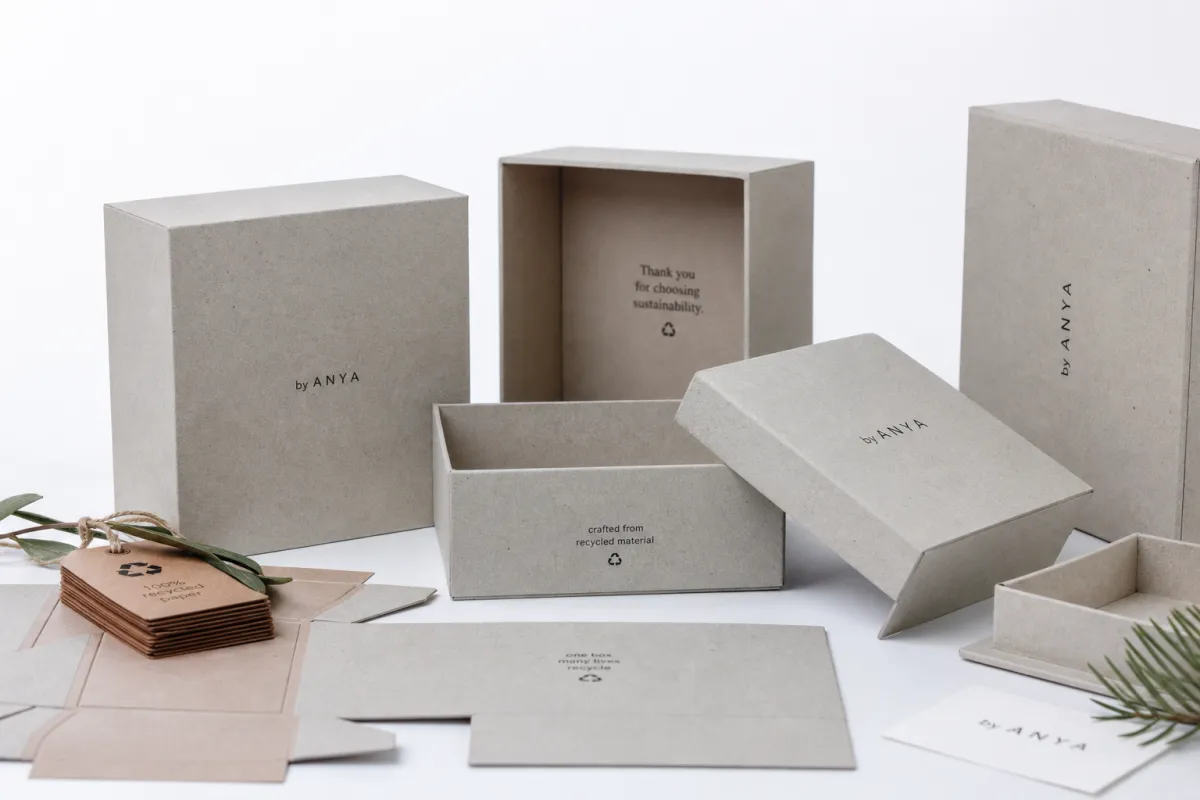
A recycled rigid boxes manufacturer builds set-up boxes that keep their shape, protect the product, and create a more deliberate presentation than a folding carton usually can. The category covers two-piece lift-lid boxes, drawer boxes, hinged presentation boxes, subscription packaging, and retail gift boxes built with recovered fiber content in the board or wrap layers. The structure sounds simple. The execution is not. Panel alignment has to be tight, the wrap has to sit flat, and the box needs enough resistance to feel substantial without becoming annoying to open.
Brands choose this format for more than the visual payoff. A rigid box protects fragile goods during display and transit, supports inserts more securely than a soft carton, and gives the customer a stronger first impression before the product is touched. A packaging buyer has to think in triplicate here: protection, shelf appeal, and brand storytelling. A supplier can support all three if the board spec, insert design, and print finish are planned together instead of treated as disconnected decisions.
One confusion shows up constantly: recycled content, recyclable packaging, and recycled paperboard are not the same thing. Recycled content means the material includes recovered fiber, usually from post-consumer or post-industrial sources. Recyclable packaging means the package may be accepted in a recycling stream, depending on local collection rules and what else is attached to it. Recycled paperboard is the substrate itself, and that substrate can still be wrapped, laminated, or decorated in ways that change how the package is handled at end of life. A careful supplier should explain that clearly, not hide behind jargon.
That distinction matters because a premium package does not have to look plain or unfinished to support a sustainability goal. It needs the right thickness, the right wrap, and the right finish. A disciplined design can feel substantial, print sharply, and still tell a cleaner material story than a heavy multi-layer package built from more components than necessary. That is the real job of a recycled rigid boxes manufacturer: make the structure feel intentional, not improvised.
There is also a trust angle that buyers sometimes miss. If a supplier cannot tell you whether the wrap, insert, and adhesive system are paper-based or mixed-material, they are probably guessing at the claim rather than engineering the package. That is a bad sign, full stop. The better shops know the difference between a box that looks sustainable and one that can actually be defended in a spec review.
How a recycled rigid boxes manufacturer turns waste fiber into premium packaging
The material flow starts with recovered paper fibers, which are cleaned, repulped, screened, and formed into sheets that become chipboard or liner board. A recycled rigid boxes manufacturer then turns those sheets into a dense substrate that can be cut, laminated, wrapped, and assembled into a box that resists crush far better than a standard folding carton. In many luxury or gift applications, the core board is often around 1.5 mm to 3 mm thick, depending on the product weight and the amount of stack pressure it will face during shipping and storage.
Once the board is formed, it moves through a series of practical steps: sheets are calendered for consistency, cut to size, wrapped with printed or specialty paper, and glued into a rigid structure that keeps its shape. The factory may use water-based adhesives for the wrap, hot-melt adhesives in selected assembly points, and paper-based inserts or trays where the design allows. Recycled content can live in the board, the wrap, or both. The real question is whether the full construction works as a package, not whether one component looks good on paper.
Print and finish choices matter more than many teams expect. Offset printing gives strong color control for larger runs, while digital printing can work well for shorter runs or variable artwork. Matte aqueous coatings, soft-touch lamination, embossing, debossing, and foil stamping can all live on a recycled structure, but the best packaging partner knows where restraint helps. A textured uncoated wrap can look elegant with simple typography. Full-coverage foil can look expensive too, yet it can also flatten the natural fiber character some brands want to keep visible.
Compared with a folding carton, the rigid box wins on structure first. It does not collapse flat, so it usually holds shape better and feels more substantial in the hand. Compared with molded pulp, it often offers a cleaner print surface and tighter graphic registration. Compared with corrugated mailers, it leans more toward presentation than shipping. The premium feel comes from the combination of board density, tight conversion, and the way the wrap paper is applied. A skilled packaging partner can make recycled packaging feel more refined than many buyers expect.
That said, the material is only half the story. I have seen recycled board perform beautifully in a two-piece setup and then fail in a drawer-style build because the Tray and Sleeve tolerances were not matched. The board did not fail; the system did. That is why technical packaging review matters so much. The best manufacturers think in terms of compressive strength, friction fit, corner memory, and how the lid behaves after repeat handling, not just how the box photographs on day one.
Recycled rigid boxes manufacturer pricing: what drives cost
Pricing from a recycled rigid boxes manufacturer usually tracks the same core variables you would expect in any custom packaging project, but the mix matters more than the label. Board thickness, recycled content level, box dimensions, lid style, closure type, insert complexity, and artwork coverage all affect the unit quote. A simple two-piece box with a printed wrap and no insert can come in far below a magnetic closure box with a die-cut tray, foil, embossing, and a specialty paper wrap.
Smaller runs usually cost more per unit because tooling, setup, adhesive preparation, die cutting, and conversion labor are spread across fewer finished boxes. That is easy to miss when a buyer compares quotes too quickly. A supplier may quote a 3,000-piece run at a much better unit rate than a 500-piece run, even if the structure is identical, because machine time and handwork are distributed differently. The same principle applies to artwork changes, especially when plates, dies, or sample corrections are needed.
| Option | Typical build | Common use | Approx. unit cost at 3,000-5,000 pcs | Cost notes |
|---|---|---|---|---|
| Two-piece rigid box | Recycled chipboard, printed wrap, matte finish, no special insert | Gift sets, apparel accessories, retail presentation | $0.95-$1.75 | Best starting point for clean brand presentation and controlled cost |
| Magnetic closure box | Thicker board, hidden magnets, printed wrap, die-cut paper insert | Cosmetics, premium kits, small electronics | $1.60-$3.20 | Magnets, assembly labor, and tighter fit tolerances raise the price |
| Drawer-style rigid box | Sleeve and tray construction, ribbon pull, paperboard insert | Jewelry, samples, curated product bundles | $1.80-$3.75 | More components mean more conversion time and more packing labor |
| Book-style rigid box | Hinged board, foil, embossing, multi-piece insert | High-end gifting and presentation kits | $2.50-$5.00 | Detailed finishing and complex assembly can push pricing quickly |
Shipping and storage also alter the math. Domestic production can lower transit time and simplify communication, while offshore production may reduce the factory price but add freight, duty, pallet handling, and longer lead times. A quote of $1.25 at the factory gate can become something closer to $1.60-$2.10 after freight, carton packing, and receiving costs are added. That is why a smart buyer asks every supplier to quote the same spec sheet, the same artwork assumptions, and the same accessories before comparing numbers.
Practical note: Do not compare a wrapped board sample against a magnetic box with foil and a flocked insert and call the pricing gap a surprise. Those are different products, different labor profiles, and different material stacks. A fair comparison starts when the board caliper, finish system, insert type, and order quantity are aligned.
There is one more cost factor that gets glossed over too often: waste. Poor dieline planning can raise scrap rates, especially on specialty wraps or tight-turn projects. A supplier with strong process control will think about yield before anyone hits production, because an extra 3% to 5% waste on a large order is not trivia. It is money that goes straight out the door.
What should you ask a recycled rigid boxes manufacturer before ordering?
A reliable recycled rigid boxes manufacturer should answer five questions quickly: what fiber content is in the board, which parts are recyclable, how the structure will hold the product, what the finish does to end-of-life handling, and whether the sample proves the fit. If those answers are vague, keep looking. Good packaging decisions are made with specifics, not adjectives.
Ask for the exact board caliper, not just a generic "sturdy" description. Ask whether the wrap stock is recycled, FSC-certified, or virgin, and ask what percentage of the total package mass that component represents. Ask which adhesive system is used and whether magnets, foam, or laminated films are part of the build. Those details matter because they shape recyclability, cost, and the way the box feels after a customer opens it for the first time.
I also recommend asking how the supplier handles tolerances. A box that is supposed to fit a product insert to within a few millimeters sounds simple until the first sample arrives and the product rattles. A careful manufacturer should be able to explain acceptable variance, corner wrap limits, and how they test closure action across the run. That is not fussy. That is basic risk control.
Key factors to compare before you choose a recycled rigid boxes manufacturer
Structural capability comes first. Can the supplier build the exact size, closure style, and insert system your product needs, or are they steering you toward the closest standard shape? A reliable partner should be able to explain wall thickness, lid tolerance, corner wrap behavior, and how the insert will hold the product in transit. If the product is heavy or oddly shaped, that discussion should happen early, not after the artwork is already approved.
Print and finishing consistency matter just as much. Recycled substrates can show more natural fiber variation than virgin board, and that is not a defect by itself. The real question is whether the supplier can keep the edges clean, the wrap flat, and the color consistent across the run. A strong packaging partner will talk openly about registration tolerance, glue squeeze-out, corner crush, and how they inspect the first articles before full production starts.
Sourcing claims need the same level of care. If you need recycled-fiber documentation, FSC paperwork, or clear statements about paper content, ask for it upfront. For transit testing, a team may also want to discuss ISTA testing standards, especially if the box is shipping by parcel instead of sitting safely in a retail display. For forest-fiber sourcing claims, FSC certification can help separate verified material sourcing from vague marketing language. A thoughtful supplier will not treat those questions as a burden.
A sample that looks perfect under studio lights but caves in under stack load is not a premium package. It is an attractive liability, and the difference shows up fast once real freight, real handling, and real merchandising enter the picture.
Communication may sound soft, yet it saves real time and real money. Packaging jobs move faster when engineering, quoting, artwork review, and revision notes are handled clearly. A responsive partner should be able to tell you what changed, what remains open, and what needs approval before the line is booked. If every answer takes three messages and two follow-ups, the project will probably drag once the deadline gets real.
Good suppliers also know when to push back. If a brand wants a paper-based box that behaves like a shipping case while also looking like a luxury gift set, somebody has to say the quiet part out loud. That does not mean the idea is wrong; it just means tradeoffs are real. A manufacturer with experience will help you Choose the Right balance instead of pretending every request can be solved with a different finish.
Step-by-step workflow and timeline for custom orders
Most custom jobs follow the same path: discovery, structural recommendation, quote, sample, artwork review, production, and shipping. A supplier usually starts by asking for the product dimensions, target quantity, insert requirements, and any sustainability goals that need to be respected in the build. If that brief is clear, a straightforward quote may come back in 1-3 business days. If the box needs a new structure or an unusual insert, the review can take longer because the engineering team has to work through fit, closure, and assembly sequence.
Sampling is where many schedules expand. A basic structural sample may take roughly 5-10 business days, while a printed proof or decorated sample can take 7-12 business days depending on color requirements, wrap material availability, and how many corrections are needed. A careful supplier will use this stage to catch board issues, corner fit problems, and artwork placement errors before production begins. That is not wasted time. It is the stage that prevents expensive mistakes later.
- Discovery: share product dimensions, weight, display method, and shipping method.
- Structure: confirm board thickness, closure style, and insert material.
- Sampling: test the fit, the closing action, and the overall look in hand.
- Artwork: review dielines, bleed, color targets, and any special finishes.
- Production: run cutting, wrapping, assembly, and in-line inspection.
- Shipping: pack for transit, label accurately, and confirm pallet or carton counts.
Production often takes about 12-20 business days after proof approval for straightforward builds, while more detailed construction can take longer if specialty papers, magnet placement, or multi-piece inserts are involved. Freight time sits on top of that. A supplier may also build in extra lead time for dieline revision, paper sourcing, and pre-production approval if the job has sharp color requirements or complex brand standards.
The cheapest changes are made early. Size, structure, and insert layout are easiest to adjust before tools are finalized and the production line is booked. Once the board is cut and the wrap is printed, changes become real costs. That is why the best projects treat the first sample as a decision point, not a decoration. If the sample is not right, slow down, revise, and approve only when the fit and finish are genuinely ready. A disciplined supplier will respect that process.
One detail worth adding to the schedule is final packout testing. Even a short trial run with the actual product can reveal if the closure feels too loose, if the insert is scuffing the surface, or if the lid is getting marked during handling. It is a small step, but it catches the kind of problem that makes a launch feel kinda avoidable in hindsight.
Common mistakes brands make with recycled rigid boxes
Brands often call a package recyclable without checking the full build. A paperboard shell may be recyclable, but mixed laminations, magnets, foam inserts, or heavy adhesive coverage can complicate end-of-life handling. A supplier should help you separate what is technically possible from what is honestly claimable, because the wrong sustainability statement can create more trouble than the box ever saves.
Another common mistake is choosing board that is too light for the product weight. If the box is holding glass, metal, skincare jars, or a dense accessory kit, thin board can lead to crushed corners, lid warp, or a sleeve that slides too easily. A better supplier will push back when the structure is underbuilt, even if that means the quote goes up a little, because a weak sample is not a useful sample.
Overdesign shows up more often than people admit. Too many finishes, too many inserts, too many hidden parts, and too many decorative touches can erode both sustainability value and cost efficiency. Sometimes the strongest package is the quieter one: solid board, a clean wrap, one thoughtful insert, and a crisp print system. In those cases, the right build can save you material, assembly time, and freight weight without making the package look plain.
Skipping prototype testing is another expensive mistake. A box can look great on a desk and still fail once it is packed, stacked, and shipped. If the product rattles, shifts, or presses into a lid wall, the issue might not show up until someone has already approved the design. A practical supplier will encourage drop, compression, and fit checks before production, because transit is far less forgiving than a mockup table.
Brand claims need to match the real construction. If marketing calls the box recycled, the team should know which parts are recycled, which parts are recyclable, and which parts are mixed-material. Honest labels are easier to defend, easier to explain, and easier for customers to trust. That is the kind of clarity a serious packaging partner should support.
There is a smaller mistake that still causes headaches: changing the brief halfway through the project and expecting the sample to hold. It rarely does. A different closure, insert depth, or print finish can mean a new dieline, new tooling, and a new timeline. If the launch calendar is fixed, the packaging brief needs to be fixed too.
Expert tips and next steps for working with a recycled rigid boxes manufacturer
Start with the product, not the decoration. Size, weight, fragility, display setting, and shipping environment should shape the box structure before anyone worries about foil, embossing, or specialty wrap papers. A strong recycled rigid boxes manufacturer will ask about those details first, because the structure is what keeps the package useful. If the fit is wrong, no amount of beautiful printing will fix it.
Use fewer materials where possible. A clean one- or two-material system is often easier to source, easier to build, and easier to explain to customers. It also makes the sustainability story easier to tell without sounding defensive. In many projects, a supplier can replace unnecessary plastic parts with paper-based components, or simplify a closure system without hurting the user experience.
Always request a physical sample before committing to full production. Screen images do not tell you how the wrap feels in the hand, whether the lid lifts smoothly, or whether the insert is holding the product snugly enough. A good supplier will understand that hand evaluation is part of the process. It is the fastest way to see whether rigidity, color, print clarity, and closing action all work together.
Build a compact packaging spec sheet and keep it updated. Include the outer dimensions, quantity, finish level, insert need, product weight, branding files, and sustainability priorities. That one document can save days of back-and-forth. If you are comparing quotes, send the same spec to each supplier so the pricing is fair and the answers are easier to compare. Otherwise, one supplier will be quoting a different box and the numbers will not mean much.
For a final reality check, compare the new packout against what you use now. Look at unit cost, freight weight, shelf appearance, customer feedback, and damage rate. A slightly higher box price can still make sense if it reduces transit damage or improves perceived value. If you are ready to move forward, gather the product measurements, request two or three sample structures, compare pricing against your current packout, and ask a supplier to quote the exact same spec set so the comparison stays honest.
That last step is where many brands gain the most clarity. The right packaging partner does not just print and ship a nice-looking package; they help you build a box that protects the product, respects the material story, and fits the budget without hiding the tradeoffs.
If you want the process to stay practical, make the sample the decision gate and not the decoration. Check the fit, test the closure, and confirm the claim language before you approve anything. That is the cleanest path to a box that feels premium, keeps its promise, and does not trip over its own sustainability message.
Frequently Asked Questions
What does a recycled rigid boxes manufacturer use for the box structure?
Most recycled rigid boxes start with chipboard or paperboard made from recovered fiber. The board is wrapped with printed paper, specialty paper, or another outer liner to create the finished look. Inserts, trays, and dividers can also be made from recycled paper-based materials when the design allows, which keeps the structure aligned with the sustainability goal.
Are recycled rigid boxes strong enough for luxury products?
Yes, when the board thickness, wrap, and insert design are matched to the product weight. Rigid boxes are built for shape retention, so they handle premium goods well when engineered correctly. Testing the final sample is still the best way to confirm that the box protects the product during transit and display, especially if the item has uneven weight or fragile surfaces.
How much do recycled rigid boxes from a manufacturer usually cost?
Price depends on size, board thickness, print complexity, finish level, and order quantity. Magnetic closures, custom inserts, and specialty coatings can raise the unit cost. The fairest quote compares the same structure, same artwork assumptions, and same accessories across vendors, because a supplier may be quoting a very different build if the spec sheet is vague.
How long does a recycled rigid boxes manufacturer need for production?
Timelines usually include brief review, sampling, approval, production, and shipping. Simple projects move faster, while custom structures or detailed finishes take more time. Sampling changes are the most common reason schedules expand, so early approval matters, and it helps to lock the measurements before the line is booked.
Can a recycled rigid boxes manufacturer help with sustainability claims?
Yes, a good supplier can explain material composition, recycled content options, and available certifications. You should still verify which parts of the package are recycled, recyclable, or mixed-material. Clear documentation helps your marketing team make accurate, confident packaging claims, and it keeps the story aligned with what the box is actually made from.