Restaurant Logo Patch Beanies Material Sample Guide
Two beanies can look identical on a product page. After three dish shifts, one starts to pill and lose its cuff shape; the other still looks clean enough to sell from a retail shelf near the register. That difference is the reason a restaurant logo patch Beanies Material Sample guide is worth using before a staff uniform order, merch drop, patio rollout, or holiday gift run.
A beanie is a small line item beside food cost, rent, labor, and equipment repairs, but it works harder than most buyers expect. Guests see it at the host stand, in pickup photos, on delivery runners, behind the bar, on winter patio staff, and sometimes in the social post that gets shared far beyond the dining room. If the logo patch curls, the knit stretches, or the color looks wrong under restaurant lighting, the issue becomes public quickly.
What a Restaurant Logo Patch Beanies Material Sample Guide Actually Shows
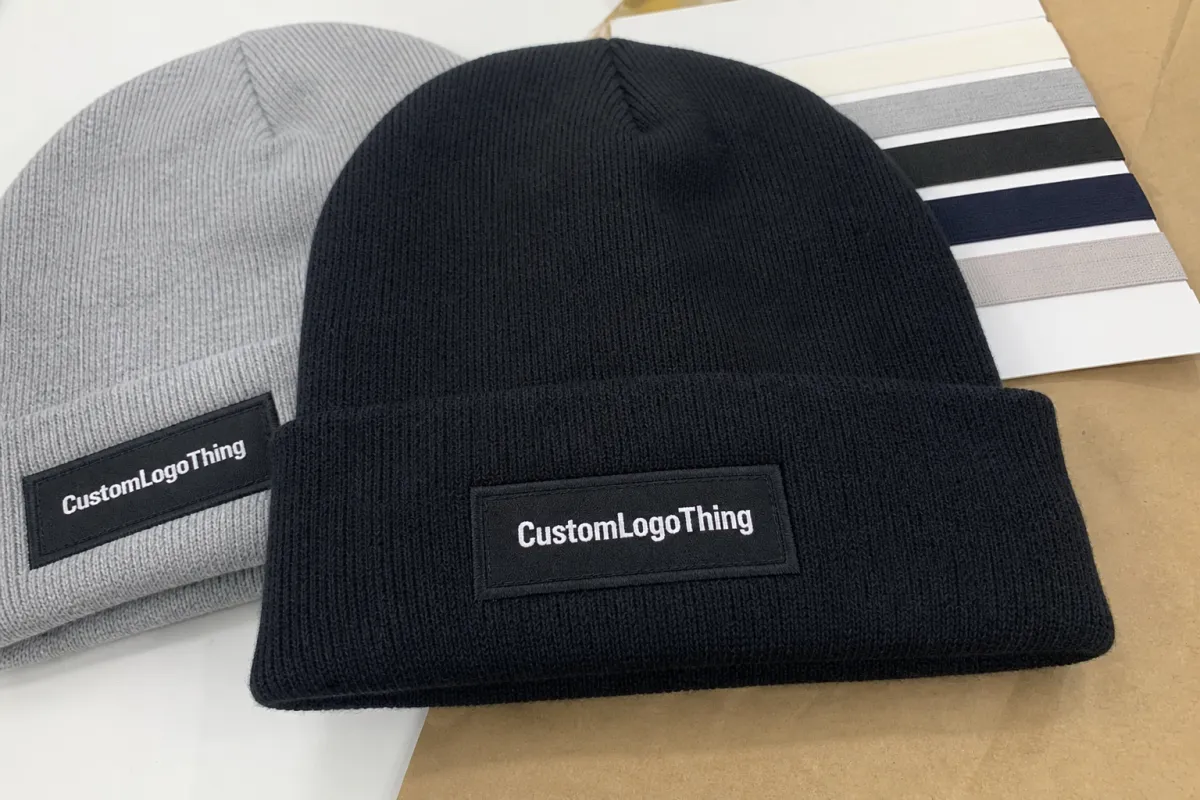
A useful sample guide is not a decoration catalog. It is a risk-control tool that lets you compare the physical parts of the product before production: yarn content, knit weight, rib structure, cuff height, stretch recovery, patch material, backing, edge finish, stitch detail, deboss depth, logo scale, and color behavior.
The buying logic is similar to approving takeout packaging. A mockup of a printed box can look sharp on a screen, but a packaging buyer still checks board weight, grease resistance, stack strength, lid fit, print coverage, and delivery survival. A beanie sample deserves the same discipline, because the “package” is worn on someone’s head through heat, cold, moisture, movement, and repeated cleaning.
Restaurant owners, franchise marketers, catering teams, brewery kitchens, coffee shops, food trucks, and hospitality groups all use beanies differently. A small cafe may want 48 pieces for staff and a basket of retail merch. A regional group may need hundreds of units that reorder cleanly across locations. A food truck may care most about warmth and easy cleaning, while a boutique bakery may prioritize softness, color, and the way the patch photographs beside branded packaging.
Good sampling does not automatically point to the most expensive beanie. It helps you choose the material and patch combination that can survive restaurant use without making the brand look careless.
The best sample answers plain questions. Does the cuff hold its shape? Does the patch sit flat after handling? Can a guest read the logo from six feet away? Does the beanie feel comfortable at the forehead? Does the color still match the brand once it moves from daylight to warm interior lighting? Staff compliance matters too; a beanie that scratches, overheats, or slides up during service will end up in a locker.
How Logo Patch Beanie Samples Work Before You Order
Sampling usually happens in three levels. First, a supplier may send blank beanie options so you can compare fit, stretch, fabric feel, cuff height, and warmth. Second, they may send patch material swatches such as woven, embroidered, faux leather, PVC, printed twill, or other label styles. Third, for higher-volume or brand-sensitive orders, they may produce a pre-production sample with your actual logo on the intended beanie.
A material sample and a production proof are not the same thing. The material sample shows hand feel, texture, color, stretch, and general quality. The production proof confirms logo size, placement, artwork treatment, border, stitch color, attachment method, and visual balance. Both reduce risk, but they answer different questions.
| Sample Type | What It Shows | Best Use | Buyer Risk Reduced |
|---|---|---|---|
| Blank beanie sample | Knit texture, cuff height, stretch, warmth, color | Comparing acrylic, cotton blend, recycled polyester, or wool blend bases | Choosing a beanie that feels too thin, too tight, or too warm |
| Patch swatch | Material thickness, edge finish, texture, color behavior | Comparing woven, embroidered, faux leather, PVC, or printed patches | Approving a patch that curls, scratches, or hides logo detail |
| Photo proof | Logo layout, placement, scale, and color approximation | Checking artwork before production when timing is tight | Misplaced patches, wrong logo files, or poor proportion |
| Pre-production sample | Actual beanie, actual patch, actual attachment | Higher-volume orders, franchise rollouts, retail merch | Production surprises after the full order is made |
Common beanie bases each come with tradeoffs. Acrylic rib knit is often the affordability leader and usually holds shape well, although low-grade versions can feel plasticky or pill early. Cotton blends feel soft and breathable, but looser ribs may stretch after repeated wear. Recycled polyester blends can support a sustainability message, especially if the restaurant already talks about recycled materials, FSC certified menus, or reduced post-consumer waste. Wool blends add warmth and a more premium hand, but care instructions, itch sensitivity, and unit cost deserve closer review.
Patch choices need the same practical reading. Woven patches often handle small lettering and detailed marks better than bulky thread. Embroidered patches add texture, though tiny type and thin linework can disappear if the logo is reduced too far. Faux leather suits barbecue, steakhouse, coffee, bakery, and rustic bar concepts. PVC handles moisture well and can be useful for outdoor pickup teams or brewery patios. Printed patches help with complex colors, gradients, illustrated mascots, or artwork that cannot be simplified cleanly.
Attachment changes performance. Sewn patches generally feel more durable and retail-grade. Heat-applied patches can be appropriate for lighter-duty decoration, but they should be checked for edge lifting, heat sensitivity, and stiffness after laundering. Restaurant cleaning habits are rarely gentle, even when the care tag asks politely.
Color deserves suspicion. Screen colors mislead buyers, especially with black, charcoal, cream, navy, forest green, and brown. A rich brown faux leather patch can turn muddy under warm dining-room lighting. Navy may read almost black at an outdoor pickup window. Cream yarn can look fresh in daylight and dingy beside stainless steel, fryer oil, or wood paneling. Physical samples catch those shifts before the invoice is locked.
Material Factors That Matter in a Hot Kitchen and Cold Patio
Restaurant work is a temperature contradiction. One employee may move from a steamy prep line to a walk-in cooler, then to an outdoor pickup window, then back past the dish area, all within one shift. A beanie that feels right for a retail counter may be wrong beside fryers or on a windy patio.
Warmth and breathability should be judged together. Dense acrylic gives dependable warmth and structure, but it can trap heat if the yarn feels too synthetic or the knit is too tight. Cotton feels softer against the forehead, though it may stretch if the rib structure is weak. Wool blends insulate well in cold weather, but they can raise price, care complexity, and comfort concerns for sensitive wearers.
For many restaurants, a midweight rib knit in roughly the 70-100 gram range is more wearable than an oversized winter cap built for ski trips. That range is not a universal rule, because yarn density and construction affect feel, but it gives buyers a useful starting point when comparing samples side by side.
Stretch recovery is one of the most overlooked quality checks. A beanie can look sharp while lying flat, then grow loose after repeated wear. Pull the cuff gently for 10 seconds, release it, and watch whether the rib returns. If the cuff waves, twists, or stays stretched, staff will notice quickly.
Wash behavior is not theoretical in food service. Oil, smoke, sauce, hair product, sweat, and frequent laundering all attack the material. Ask whether the sample has been wash-tested, and request guidance on shrinkage, pilling, colorfastness, and drying. Standards organizations such as ASTM International publish textile and material test methods that serious manufacturers may reference, but even a simple controlled wash test is better than approving blindly.
Patch legibility needs real distance. A logo that looks crisp at six inches may vanish from six feet if the patch is too small, too tonal, or too textured. Thin taglines, tiny utensils, flames, mascots, and circular seals often collapse on small patches. The mistake is treating the logo like artwork when, on a beanie, it also has to function as signage.
Use your fingers, not only your eyes. Check scratchiness at the forehead, patch stiffness, seam bulk, cuff compression, interior comfort, and whether the patch backing creates a pressure point. Then ask the blunt question: does this feel like staff gear, sellable merchandise, or a giveaway that nobody would buy twice?
Cost, Pricing, MOQ, and Unit Cost Signals to Compare
Beanie pricing is a stack, not a single number. The final cost may include the base beanie, patch material, decoration complexity, artwork setup, sample charges, freight, order quantity, packing method, and rush fees. A quote that looks inexpensive on the first line can become ordinary once the landed cost is counted.
Minimum order quantity, or MOQ, matters because restaurants buy in uneven patterns. An independent cafe may want 36-72 pieces to test staff wear and a small retail display. A regional restaurant group may need 300-1,000 pieces across multiple locations. Higher quantities usually reduce unit cost, but only if the approved sample is correct; a bad low-cost run is still wasted money.
As a practical range, basic custom patch beanies often land around $9-$16 per unit at moderate quantities, depending on blank quality, patch type, logo detail, and freight. Premium wool blends, custom colors, oversized patches, unusual trims, or complex PVC tooling can push higher. Very small runs may carry setup and sampling costs that make the per-unit math look uncomfortable.
| Option | Common Strength | Likely Cost Driver | Restaurant Fit |
|---|---|---|---|
| Acrylic rib knit with woven patch | Balanced price, clear small details | Patch size, border, thread colors | Staff uniforms, franchise basics, coffee shops |
| Cotton blend with faux leather patch | Soft feel and rustic brand character | Deboss depth, laser detail, patch thickness | Breweries, barbecue, bakeries, casual dining |
| Recycled polyester blend with woven patch | Sustainability messaging and shape retention | Material sourcing, certification claims, color range | Restaurants already using recycled materials or FSC certified print pieces |
| Wool blend with embroidered patch | Premium warmth and textured appearance | Beanie fiber content, stitch density, care requirements | Retail merch, winter patios, upscale casual concepts |
| Acrylic beanie with PVC patch | Moisture resistance and bold shape | Mold or tooling, color count, patch thickness | Outdoor service, delivery teams, brewery patios |
Quote details protect budgets. Ask whether setup is included, whether the sample fee credits back to production, whether shipping is estimated or final, and whether reorder pricing changes after the first run. Confirm if individual polybags, hangtags, size labels, or retail-ready packing are included, or if the beanies will arrive bulk-packed like back-of-house supplies.
A better calculation divides the total landed cost by expected use. If a $14 beanie gets worn 40 times, the cost per wear is $0.35. If a $9 beanie stretches out after five shifts, the apparent savings disappears. For retail merch, the math shifts again: a beanie that costs more but can sell at $24-$32 may outperform a cheaper one that guests handle once and leave behind.
Process, Timeline, and Lead Time From Sample to Staff Rollout
The normal path is straightforward on paper: artwork review, material selection, proof or sample approval, production, quality check, packing, shipping, and internal distribution. In practice, the slowest step is often approval, not manufacturing.
Artwork readiness can save days. Send clean vector files such as AI, EPS, or SVG whenever possible. Include Pantone, thread, or brand color references. Specify the preferred patch size, beanie color, cuff position, and whether the logo can be simplified for small-format use. If the supplier has to rebuild a low-resolution PNG from a menu screenshot, the timeline starts slipping before sampling begins.
Sample timing and production timing are separate. A digital proof may arrive quickly, but a physical order still requires material availability, patch preparation, attachment, review, and shipping. Production then enters the queue after approval. Patch type, custom-dyed yarns, order size, holiday demand, supplier capacity, freight method, and delayed signoffs can all change the schedule.
A stock beanie with a woven patch usually moves faster than a custom PVC patch or a special-color wool blend. Not always, but often enough that buyers should ask directly before promising dates to managers or staff.
Restaurants with opening dates, patio launches, winter menu changes, staff appreciation events, or holiday gift plans should build in a buffer. Ordering against the final possible date is a gamble, and restaurant operations already contain enough of those: weather, callouts, late produce, broken equipment, and weekend surges.
Before production starts, approve one final reference. Ideally, that means a physical pre-production sample. If timing does not allow it, request a detailed photo proof showing the exact beanie color, patch size, logo version, stitch or edge treatment, and cuff position. Save the approval record, because reorders depend on documentation.
Step-by-Step Sample Review Before Approving Production
A restaurant Logo Patch Beanies material sample guide becomes more valuable when the review method stays consistent. Do not judge the sample only on a desk under office lighting. Inspect it in daylight, under restaurant lighting, near the host stand, and at the distance where guests will actually see it.
- Compare material feel against the intended use. Staff uniform needs are not identical to retail merch expectations. A line cook may care about breathability and wash tolerance; a guest buying the beanie may care more about softness, weight, and perceived value.
- Test stretch recovery. Stretch the cuff and crown gently, then release. Check whether the shape recovers or starts to warp. Repeat the test a few times, because the first pull rarely tells the whole story.
- Inspect the patch edge and backing. Look for curling, puckering, uneven borders, loose threads, stiff backing, or pressure points against the forehead. A 2.25-inch patch can feel very different depending on backing thickness.
- Check logo readability with a phone photo. Photograph the sample from several feet away. Phone photos mimic how many guests will encounter the beanie online, especially in staff posts, delivery photos, and event recaps.
- Ask about care behavior. Request wash guidance, test spot cleaning if you have permission, and ask about shrinkage, pilling, and colorfastness. Restaurant textiles live harder lives than office promo items.
- Document the approval. Photograph the beanie flat and worn. Record measurements, color names, patch material, border style, placement from cuff edge, and approved logo file name.
If possible, have one operations person and one brand decision-maker review the sample. The operator notices whether the beanie works during a shift. The brand person notices whether the logo, color, and style fit the public image of the restaurant. Both viewpoints matter, and they often catch different problems.
Packaging buyers use similar checks with corrugated cardboard, kraft paper wraps, biodegradable packaging claims, and FSC certified print materials. The sample is never just a sample. It is evidence. If it cannot prove performance at small scale, it has no business moving into full production.
Common Mistakes Restaurants Make With Patch Beanie Samples
The first mistake is choosing a patch because it photographs well. A stiff patch may look sharp in a flat lay and still irritate someone during a full shift. Weight matters too. A heavy patch can pull on a lightweight beanie and distort the cuff.
The second mistake is shrinking the logo too aggressively. Thin typography, taglines, utensils, flames, mascots, and circular seals can turn into noise on a 2-inch or 2.5-inch patch. If the logo has many parts, ask for a simplified beanie version. Large brands do this constantly; smaller restaurants should not feel odd doing the same.
The third mistake is treating all staff roles as if they face identical conditions. A host at the front door, a line cook near heat, a bartender moving between stations, a delivery runner at the curb, and a patio server in cold air may need different warmth, breathability, and care performance. One beanie can still work for everyone, but the sample should be judged against all those uses.
The fourth mistake is approving low-contrast combinations. Black-on-black, tan-on-brown, charcoal-on-navy, and cream-on-light-gray can look refined in a mockup. In a dim dining room, they often vanish. If guests cannot read the mark, the beanie becomes plain winter wear with extra cost attached.
The fifth mistake is skipping documentation. Reorder drift is real. A second batch may use a different blank, yarn tone, patch border, backing, or placement unless the approved specs are recorded. A structured sample guide helps turn taste into measurable criteria.
The sixth mistake is forgetting retail potential. If guests might buy the beanie, judge it as merchandise, not merely a low-cost uniform accessory. Would someone pay $22-$32 for it near the register or in an online shop? Would it sit naturally beside sauces, mugs, gift cards, or packaged goods? If not, adjust the sample before production.
Actionable Next Steps Before You Request Samples
Before asking for samples, prepare the basics: logo file, preferred beanie colors, desired patch material, quantity range, deadline, budget range, and a clear answer on use: staff, retail, or both. That short list prevents much of the confusion that slows custom orders.
If budget allows, compare at least two material directions. For example, request an acrylic rib knit with a woven patch and a cotton-blend beanie with a faux leather patch. Or compare a recycled polyester blend against a wool blend if sustainability and premium feel are both part of the brand conversation. The goal is not to collect options forever; it is to create a fair comparison before money moves into production.
Define approval criteria before samples arrive. Comfort. Logo readability. Wash expectations. Brand fit. Unit cost. Reorder consistency. Put those six criteria in writing and score each sample from 1 to 5. It sounds simple, but it keeps the loudest opinion in the room from becoming the whole decision.
Ask the supplier for a quote matrix showing price breaks by quantity, patch type, and sample option. A restaurant ordering 72 pieces may make one decision; a group ordering 600 pieces may make another. Total landed cost should include setup, sampling, freight, and any special packing.
Sustainability claims deserve careful wording. If you plan to mention recycled materials, post-consumer waste, biodegradable packaging, or FSC certified paper in the same brand ecosystem, make sure the claim applies to the actual item or packaging involved. The Forest Stewardship Council is a useful reference for responsible fiber sourcing claims, especially for tags, sleeves, and paper-based presentation materials.
Use the sample as the final filter before approval. If it cannot prove comfort, durability, and brand clarity, it is not ready for production. Pretty is not enough. A restaurant beanie has to work during service.
FAQ
What should be included in a restaurant logo patch beanies sample kit?
A useful kit should include beanie fabric options, patch material swatches, decoration examples, available colors, size and placement guidance, and care information. For serious orders, ask for either a physical pre-production sample or a detailed photo proof showing your actual logo on the chosen beanie.
Which patch material is best for restaurant logo beanies?
Woven patches usually work well for detailed restaurant logos, embroidered patches add texture, faux leather suits rustic or premium concepts, and PVC is useful when durability and moisture resistance matter. The best choice depends on logo complexity, staff comfort, washing expectations, and whether the beanie will also be sold as merch.
How much do custom restaurant patch beanies usually cost?
Cost depends on quantity, beanie material, patch type, logo complexity, setup, sampling, and shipping. Many moderate custom orders land in the broad $9-$16 per unit range, while premium materials or complex patches can cost more. Ask for unit cost at multiple quantity levels and compare the total landed cost, not just the base price shown on an estimate.
How long does the restaurant beanie sample and production process take?
The process usually includes artwork review, proofing, sample approval, production, quality control, and shipping. Lead time changes based on patch type, order size, approval speed, supplier capacity, and freight method, so restaurants with launch dates should build in a buffer rather than approving samples at the last possible moment.
How do I know if a logo patch beanie sample is durable enough for restaurant staff?
Check stretch recovery, patch edge security, comfort at the forehead, logo readability, wash guidance, and resistance to pilling or distortion. Have staff wear the sample in realistic conditions before approving a full order whenever the timeline allows. A good restaurant Logo Patch Beanies material sample guide turns that wear test into a repeatable buying decision instead of a guess.