Order restaurant Unstructured Dad Hats material sample guide
The restaurant Unstructured Dad Hats material sample guide matters because a cap can look expensive in a mockup and still behave like a bargain hat once real people wear it through a shift. Soft crowns relax differently on every head. Brims bend. Closures pull. Colors shift under warm dining-room lighting. A sample is the only way to see the hat as a working object instead of a flat idea.
Restaurants also put apparel through unusual pressure. Staff move from kitchen heat to host stand lighting, lean over tables, tuck hats into aprons, and repeat the same motions for hours. That combination exposes weak fabric, awkward crown depth, and flimsy trim fast. A polished render cannot tell you whether the cap survives that routine with its shape and branding intact.
So the question is not only whether the hat looks on-brand. It is whether the material, construction, and decoration can hold up under actual use. A good sample answers that before the bulk order starts.
Restaurant unstructured dad hats material sample guide: what a swatch actually reveals
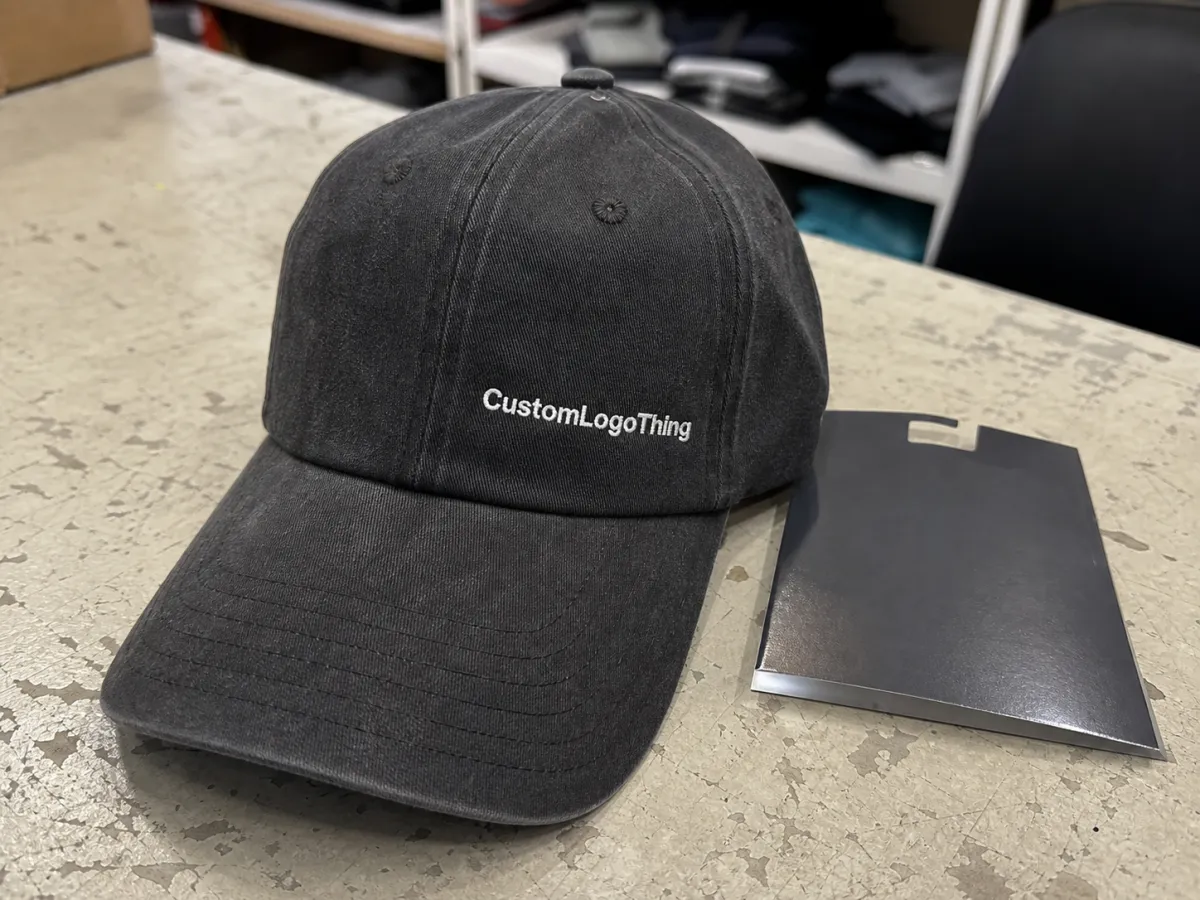
A fabric swatch tells you more than color. It shows hand feel, weave tightness, surface finish, and how the cloth responds when folded or pinched. On an unstructured dad hat, those details matter because the front panel is meant to sit softly rather than stand upright. If the fabric is too limp, the logo can sink. If it is too stiff, the hat loses the relaxed profile people expect from this style.
Common options for restaurant programs include 100% cotton twill, brushed cotton, chino cotton, washed cotton, and cotton-poly blends. Cotton twill around 240-320gsm usually lands in a useful middle ground: substantial enough to support embroidery, light enough to feel casual. Brushed or garment-washed finishes feel softer immediately, though they can show wear sooner if the weave is loose. A polyester blend may dry faster and resist wrinkles better, but it can also feel less natural on long shifts. There is no universal winner. The right answer depends on the job the hat will do.
The sample should also show how the brim is built. Cheap visor board can crease, and a weak curve can flatten after a few wears. Stitch density on the visor edge matters more than most buyers expect. If the rows are uneven, the hat looks unfinished even when the logo is clean. If the front panel has too little body, embroidery can pucker or create a slight ripple around dense areas of the design.
Color accuracy deserves the same scrutiny. A swatch viewed under warehouse light and the same swatch under restaurant warm white lighting will often read differently. That is not a defect; it is physics. If your brand relies on a specific beige, stone, olive, or washed black, ask for the swatch to be compared against Pantone or your own approved sample under the light the staff will actually work under.
Packaging is part of the sample too. A hat can leave production looking fine and arrive with a flattened crown because it was packed too loosely. Corrugated cardboard with internal kraft support protects shape far better than a thin mailer. If the supplier claims sustainability, ask for specifics: FSC certified paper, recycled-content cartons, or post-consumer waste. General green language is cheap. Measurable packaging specs are not.
"A swatch tells you what the fabric is; a sample tells you what the hat does."
How the unstructured build changes fit, comfort, and branding
Unstructured means the front crown has little or no rigid internal support. That single construction choice changes the entire feel of the cap. The hat sits lower and softer, with less of the boxy silhouette that structured caps create. For restaurant staff, that usually means better day-long comfort and a less formal look that still feels intentional.
Fit is broader on a dad hat than on many uniform caps, but “one size fits most” should still be tested in the real world. A soft crown often fits a wider range of heads comfortably because it does not force a fixed front shape. Self-fabric straps with a brass buckle or metal slider tend to provide finer adjustment than plastic snaps. That matters if the team includes different hair types, braid styles, or people who prefer the cap worn low. A sample should prove that the adjustment hardware sits flat and does not snag.
Branding is where unstructured hats become tricky. A logo that looks balanced on a digital proof can shift once it lands on a relaxed front panel. Large embroidered marks may crowd the crown. Thin type can disappear. Patches can tilt slightly if the front panel collapses more than expected. The practical test is distance: can a guest read the logo from six to ten feet away without the cap shouting at them? That is the distance that counts on a dining floor.
Decoration method changes the outcome. Embroidery gives texture and durability, but dense stitch counts can make a soft front ripple. Woven labels are cleaner for small marks, though they may feel quieter than the brand team expects. Patches add dimension and can hide some fabric softness, yet they also add stiffness. A sample is where those tradeoffs become visible. On paper, they look equivalent. On a head, they are not.
Comfort can also affect branding. If a hat pinches, scratches, or feels too warm, staff stop wearing it neatly. They push it back, wear it crooked, or leave it off. That is a product problem dressed up as a style issue.
Cost, MOQ, and quote factors that shape the final unit price
Pricing for sample hats usually breaks into three parts: the base cap, the decoration or customization, and the setup work. The first part is easy to understand. The second and third are where quotes begin to diverge. A plain cotton twill sample is usually inexpensive; a decorated pre-production sample with custom embroidery, patching, label work, or special hardware rises quickly.
MOQ changes the equation as well. A 100-piece run nearly always carries a higher unit cost than a 500-piece run because setup is spread over fewer hats. Lower quantities also leave less room to absorb sourcing inefficiencies. If the closure, thread color, or fabric finish is not already stocked, the supplier may need to source components from different bins or even different mills. That is the kind of detail that never shows up in a mockup but often shows up in the price.
Typical ranges for soft unstructured restaurant caps often fall somewhere like this:
| Option | Typical sample cost | Typical bulk unit cost | Best use |
|---|---|---|---|
| Fabric swatch or color chip | $0.50-$3.00 plus shipping | N/A | Color, hand feel, and finish checks |
| Blank hat sample | $12-$25 | $2.80-$5.50 at 300-500 pieces | Fit, crown shape, brim curve, and closure review |
| Decorated pre-production sample | $25-$65 | $3.75-$7.50 at 300-500 pieces | Logo placement, stitch density, and final approval |
Those are working ranges, not promises. A short lead time, a specialty buckle, a high-stitch embroidery file, or a custom interior label can move the number fast. Rush orders do the same. If the supplier gives you a quote that looks unusually low, check what is excluded. Shipping, duties, digitizing fees, and premium packaging sometimes sit outside the headline price.
Lead time also affects cost. Fast production often adds fees because it disrupts a normal queue. If you are trying to keep the order economical, separating sample approval from bulk production helps. The sample stage should settle the major questions before money is spent on a full run.
Production steps and lead time from sample request to approval
The cleanest path starts with the exact fabric request, then moves to closure style, crown shape, logo file, and sample status. Those steps sound procedural, but they prevent expensive corrections later. A salesperson can call something a “sample” and mean three different things: a fabric card, a blank stock hat, or a decorated pre-production piece. If the wrong version gets approved, the bulk order may still miss the mark.
For stocked blank samples, the turnaround may be only a few business days. Decorated samples usually take longer because embroidery digitizing, patch production, and thread matching all need their own slot in the schedule. Seven to fourteen business days is common for a clean sample cycle. Bulk production after approval often runs another 12-20 business days for a straightforward order. Add more time if the hat uses custom dyeing, specialty labels, or a sourced closure that is not already sitting in inventory.
There is one habit that saves time: keep the approval chain short. The fewer people who can reinterpret the hat, the better. Ideally, one person checks the swatch, one person confirms the sample fit, and one person signs off on decoration placement. If every reviewer asks for a different shade of black or a different logo scale, the project drifts.
Before the order is released, get these points fixed in writing:
- Fabric: exact content, weight, finish, and color reference.
- Fit: crown height, panel softness, brim curve, and closure style.
- Decoration: logo size, stitch count, placement, and thread colors.
- Status: sales sample, stock sample, or pre-production sample.
That list sounds basic because it is. Basic details are usually what break an order.
Transit should not be treated as an afterthought. A sample that arrives crushed creates a false negative. The product may be fine. The packaging may not be. If the sample is traveling a long distance, ask whether the crown is internally supported and whether the carton is stiff enough to resist compression. A hat’s brim curve can be damaged before the box ever reaches your desk.
Key evaluation checks before you approve the hat for staff use
Start with a wear test, not a desktop review. Put the sample on different head sizes and different hair types. Let people wear it for several hours, not just a minute. A cap can feel soft in a fitting and then become irritating after repeated bending, order-taking, and kitchen trips. The forehead tells the truth eventually.
Check the hat under the lighting conditions the team actually works in. Warm dining-room lights can soften contrast; daylight near windows can sharpen it. Thread sheen also changes the impression. If the embroidery glints too much, the logo may look louder than planned. If it disappears under indoor light, the branding loses presence. A sample should be evaluated where the customer will see it.
Then inspect the failure points that usually show up first:
- Front panel: does it hold enough shape for the logo without rippling?
- Brim edge: is the stitching even, and does the visor keep its curve?
- Sweatband: does it feel soft, absorbent, and stable after movement?
- Closure: does the strap or buckle stay secure without snagging hair or aprons?
Material choice changes how those tests read. A cotton sweatband usually feels softer and more natural. A polyester blend often dries faster, which may suit a hot prep area better. Neither is inherently right. The correct choice depends on the environment, the length of shifts, and how much sweating the cap is expected to absorb.
The sample should also hold up visually from a short distance. A logo that is too small will vanish on the floor. A logo that is too large can overpower the soft silhouette and make the hat feel more like a promo item than part of the uniform. Good restaurant apparel looks composed. It does not shout.
"If it looks right in a photo but feels wrong after a shift, it is not approved."
Common mistakes when ordering restaurant staff hat samples
The first mistake is approving from photos alone. Camera correction can hide wrinkles, flatten shadows, and make a thin fabric look denser than it really is. A staged image cannot show how the crown relaxes or how the brim responds after being worn, folded, and worn again. Photos are useful. They are not a substitute for a sample.
The second mistake is treating logo size as a minor detail. On an unstructured hat, the front panel can collapse enough to shift the visual center of the art. A logo that was technically placed correctly may still look low or crowded once the crown settles. The problem is usually not the embroidery; it is the relationship between the artwork and the softer structure underneath it.
Other errors tend to appear later, during reorder season:
- Not documenting color references, so the next batch drifts slightly.
- Skipping a wear test, then learning the closure bothers half the team.
- Ignoring sample status and assuming a sales sample matches production exactly.
- Comparing different styles under different lighting and calling the result a match.
Packaging can create a false problem too. A cap may look defective when it simply arrived poorly supported. If the outer carton is weak or the internal fill is sparse, the crown can flatten and the brim can bend. That is a logistics failure, not a design failure. Ask how the sample is packed before you judge the hat itself.
One more mistake is approving without comparing against a kept reference sample. Memory is not a spec sheet. After a few weeks, people remember the color as warmer, the crown as shorter, or the logo as smaller than it actually was. A retained approved sample solves that. It gives the next order a physical anchor.
Next steps for a cleaner approval, faster reorder, and better inventory control
The easiest way to control future orders is to build a small approval kit and keep it intact. Save the approved physical sample in clean storage. Keep a written spec sheet with fabric, closure, crown depth, brim curve, and decoration size. Store the final logo file and the exact thread colors. That sounds tedious until the first reorder lands and everyone is trying to reconstruct decisions from email fragments.
Then ask the people who will actually wear the hats what changed after the sample test. Did the crown sit too shallow? Did the strap catch hair? Did the visor curve feel right on the face? A short set of wearer notes often prevents a very expensive mistake. Uniform programs fail more from ignoring small discomforts than from large visual problems.
A practical control system can stay simple:
- Keep one approved sample in sealed storage.
- Record the exact material, weight, and finish.
- Write down the decoration size, stitch count, and thread colors.
- Log the closure hardware and any packaging requirements.
- Compare new samples against the same reference under the same lighting.
If sustainability is part of the brand story, keep the claim narrow and specific. Ask whether the carton uses FSC certified paper, whether recycled materials are available, and whether the packaging can change without affecting the cap. A precise paper spec helps. Vague environmental language does not change the product and should not be treated like proof.
The real value of a restaurant Unstructured Dad Hats Material sample guide is consistency. You get one approved reference for fit, finish, and decoration. The next order becomes a repeatable production task rather than a guess dressed up as confidence. That is how restaurants avoid last-minute uniform problems and keep staff looking coordinated without making the hat feel stiff or overdesigned.
What should I ask for in a restaurant unstructured dad hats sample package?
Ask for the exact fabric swatch, a blank hat sample, and one decorated sample if logo placement or patch size is part of the decision. Request closure details, crown height, brim shape, and any available color references so you can compare the sample against your brand standard. If possible, ask for a measurement sheet so future reorders can match the approved version exactly.
How do I compare fabric samples for unstructured dad hats?
Compare hand feel, thickness, drape, and how quickly the fabric wrinkles when folded, because those traits affect daily wear and the finished look. Check whether the cloth feels breathable enough for kitchen and front-of-house use, especially if the team will wear the hat for long shifts. Hold each swatch under the same lighting you use in the restaurant so color and surface finish are judged accurately.
What affects the price most on restaurant dad hat samples?
Fabric selection, decoration method, and whether the sample is blank or fully customized usually have the biggest effect on the quote. Small logos with many stitches, special patches, and uncommon closures can raise the unit cost more than buyers expect. MOQ and rush timing also matter, because lower quantities or compressed schedules often increase the sample and production price.
How long does a restaurant dad hat sample and production run usually take?
A stocked blank sample can move quickly, but custom decoration, special fabric, or sourced trims add time before approval. Bulk production usually starts after the sample is approved, so any delay in confirming the art, color, or closure extends the final turnaround. Ask for a timeline that separates sampling, approval, and production so you know where the schedule can slip.
What if the sample fits well but the logo looks off?
Adjust the artwork size, placement, or stitch density before approving the bulk order, because a comfortable hat can still be wrong visually. Compare the logo against the crown shape and front panel width, since a soft unstructured cap may need different art proportions than a structured style. Request a revised decorated sample if the logo is too small, too low, or too dense to read clearly from normal customer distance.

