For buyers sorting through skincare unstructured dad hats Unit Cost Review numbers, the surprise is rarely the cap body itself. The price usually shifts after the spec starts to move: a different crown shape, a larger logo, a closure change, a wash treatment, a label upgrade, or packaging that was assumed to be “included” but never actually was. That is where a clean-looking hat can stop being a simple accessory and turn into a small supply chain puzzle.
Skincare brands tend to prefer a softer cap profile than a classic sports hat. The relaxed shape feels closer to a beauty shelf than a stadium crowd. It works with muted palettes, minimal graphics, and natural fabrics, which is exactly why the unstructured dad hat keeps showing up in sampling programs, retail bundles, staff kits, and influencer mailers. The style is easy to wear, but the quote is only easy if the brief is disciplined.
A lower-profile cap, a restrained logo, and a clear trim package usually protect margin better than chasing the lowest headline price.
Why skincare unstructured dad hats unit cost review changes so fast
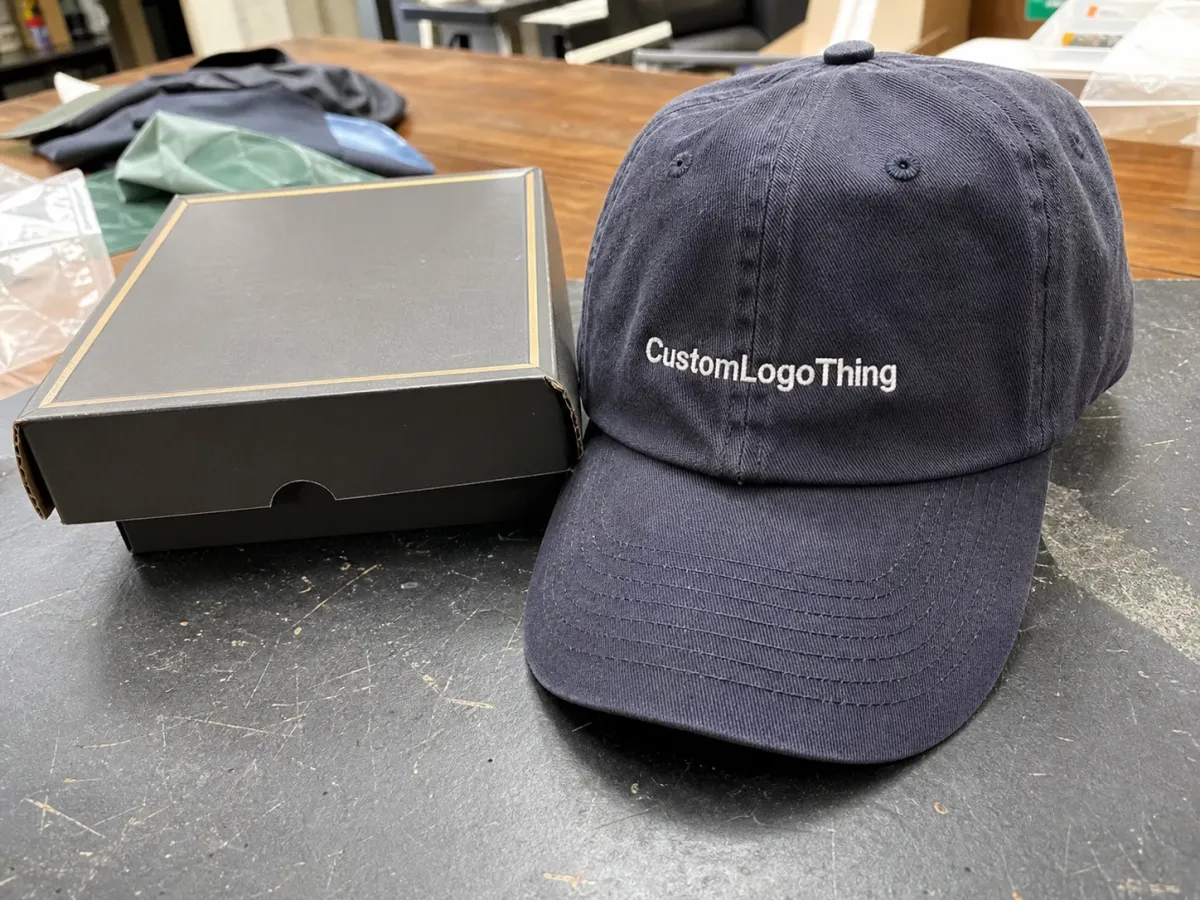
The phrase skincare Unstructured Dad Hats Unit Cost review sounds simple. The pricing logic behind it is not. Unstructured hats are built to feel relaxed, which gives factories more room to vary the crown, seam structure, lining, and finish. That flexibility can be useful, but it also means two hats that look similar in photos may land in very different price brackets once production details are locked.
A standard cotton twill dad hat with a small front embroidery mark is one thing. Add garment washing, a woven side label, tonal stitching, a better buckle, and an interior tape print, and the cost moves. None of those changes are dramatic on their own. Together, they affect labor time, trim sourcing, and the number of steps the factory has to manage before packing. That is why a quote should never be judged on the cap silhouette alone.
For skincare buyers, the cap often needs to do two jobs at once. It has to carry branding, and it has to feel like something a customer might actually wear outside the campaign. That balance is hard to maintain if the specification is vague. A low-friction style can still become expensive if the decoration is oversized or the closure choice is upgraded without changing the target price.
The weakest quotes usually bury the extras. Packaging adders, digitizing fees, custom label charges, and tooling for special patches are small line items individually, but they add up fast. If a supplier only gives a single number with no breakdown, the real unit cost usually shows up later in sampling or in the final invoice. That is where buyers lose the most time.
It also helps to think about how the caps will move through the rest of the program. If they are being packed with jars, paper cartons, or other beauty items, carton size and protective packing matter. Many teams use ISTA-style thinking for transit planning because compression, carton crush, and repacking can distort a soft cap more easily than a rigid accessory. A hat that arrives flat and clean is cheaper than one that needs rework at receiving.
Cap body details that matter for skincare branding
The unstructured crown is the reason this style works so well in beauty and wellness. It sits lower, drapes more naturally, and avoids the stiff promotional look that can make a branded hat feel dated before it reaches the customer. For skincare, that softness matters. It matches the visual language of minimal packaging, calm color systems, and products that want to feel approachable rather than athletic.
Fabric choice changes the mood more than many buyers expect. Cotton twill is the default because it is dependable, stable in sewing, and familiar to most factories. Brushed cotton feels softer in hand and can make a small logo look more premium. Garment-washed fabric gives the cap a broken-in finish that pairs well with natural or clinical-clean skincare branding, but the wash process introduces more variation than a plain dry-finished cap. If color matching is strict, that matters.
There is a tradeoff here. Washed caps often look richer in photos and more authentic on shelf, yet they are harder to keep perfectly uniform across a run. If the campaign needs tight color control, a cleaner fabric finish may be the safer choice. If the brand wants a softer, more casual identity, the wash can be worth the extra cost and the slightly wider tolerance.
Brim shape, eyelets, closure type, and sweatband material all change the final feel. A lightly curved brim keeps the cap familiar. Tonal eyelets look cleaner than contrast eyelets when the goal is a polished beauty aesthetic. A self-fabric strap with a metal buckle usually reads more retail-ready than a basic plastic snap, though it nudges the quote upward. Sweatband quality is easy to overlook, but it affects comfort the first time the cap is worn, which is usually the moment a buyer notices whether the build feels premium or merely adequate.
Color is not a decorative afterthought. Skincare brands often look strongest in sand, stone, cream, washed black, clay, and muted green because those shades sit comfortably beside glass bottles, paper cartons, and natural textures. Bright promo colors can work for events, but they rarely suit the calmer language most skincare labels want to project. A restrained palette lets embroidery carry the branding without fighting the garment.
The most successful versions are not overloaded. A modest logo, a balanced crown, and a consistent finish usually outperform a cap packed with features. That sounds obvious, but it is where many budgets get pulled off course. It is easy to spend on visible embellishment and forget that better fabric hand feel, cleaner stitching, and a more dependable closure often create a stronger impression.
Specification checklist for fit, logo placement, and finish
Good pricing starts with a complete spec sheet. Before requesting numbers, confirm crown height, panel count, brim curve, closure type, fabric weight, stitching density, and whether the front is fully unstructured or lightly reinforced. If those details are loose, the quote will be loose too. Factories can only price what they can confidently source and sew.
Fit should be described in practical terms, not vague ones. If the hat needs a softer back curve, a lower front profile, or a roomier head opening, say so. Those details affect pattern construction and can change how the sample fits on a real head. A cap that looks perfect in a flat lay can wear strangely if the proportions are not balanced.
Logo placement is one of the fastest ways to change unit cost. A compact front logo is usually the most efficient route, especially if the art is simple and the thread count stays manageable. Large embroidery, oversized patches, and multiple decoration points increase production time. They do not automatically improve the item. They just make the factory spend longer on it.
For skincare branding, the strongest placements are often quiet. A small front mark or a neat side hit can feel more expensive than a large graphic because the design is doing less, not more. The cap becomes part of the brand system rather than a billboard. That tends to age better, which matters if the item will be reordered across seasons.
Decoration choice deserves a real comparison. Flat embroidery is usually the cleanest starting point because it is visually restrained and relatively straightforward to produce. Raised embroidery adds texture but increases stitch volume. Woven patches can solve fine detail problems and keep edges crisp, though they may introduce tooling or sample steps if the shape is custom. Printed marks can work in certain promotional programs, but they usually read less premium on a soft cap body.
A practical rule helps here: match decoration to logo complexity, not to ego. If the artwork is simple, embroidery usually makes the most sense. If the logo includes fine lines or small text, a woven patch may be cleaner. If the cap is meant for a brief campaign and price is tight, simplify the art rather than forcing a decoration method that makes the piece harder to produce well.
- Confirm the artwork format - vector files reduce redraw time and lower revision risk.
- Lock Pantone targets - especially if the hat color must align with cartons, pouches, or campaign photography.
- State placement dimensions - so the logo lands consistently from sample to bulk production.
- Specify packaging - polybag, size sticker, insert card, or bulk carton all change final cost.
- List trim requirements - woven label, side flag, inner tape, or metal hardware all need to be quoted early.
That checklist does not make the cap expensive; it makes the price honest. For a careful skincare unstructured dad hats unit cost review, visibility matters more than optimism. The factory needs to see the actual build before it can tell you what the build will cost.
Pricing, MOQ, and unit cost drivers to compare
Quantity changes the math faster than almost anything else. Small runs carry more overhead because setup charges, digitizing, sample approval, and pre-production labor are spread across fewer hats. As the order grows, the per-piece price usually improves, provided the spec stays stable. That is true for most soft goods, and this cap style is no exception.
The clearest way to compare quotes is to separate the cap body from the decoration and packaging. A low base price may look attractive until the adders appear. A more expensive base can actually be cheaper once the decoration is included. That is why a line-by-line review matters more than a single headline number.
Here is a practical planning frame. The figures below are indicative ranges for budgeting, not universal pricing. Fabric weight, factory location, trim quality, and decoration density can move them up or down.
| Spec Level | Typical MOQ | Indicative Unit Cost | Decoration | Best Use |
|---|---|---|---|---|
| Value promo spec | 300-500 pcs | $2.10-$3.20 | One-color flat embroidery, standard closure, basic polybag | Sampling kits, event giveaways, staff items |
| Mid-tier retail spec | 500-1,000 pcs | $3.25-$4.85 | Two-color embroidery, woven side label, improved strap hardware | E-commerce bundles, seasonal drops, brand merch |
| Premium gift spec | 1,000+ pcs | $4.90-$7.25 | Garment-washed fabric, custom patch, branded packaging insert | Retail gifting, press mailers, higher-ticket bundles |
Those ranges are useful because they show how a “simple cap” becomes a different product once the spec changes. A stronger buckle, a denser stitch count, or a custom wash can move the piece price faster than a buyer expects. Small runs feel that most sharply, since the setup burden is shared across fewer units. The same cap body can therefore be cheap in one program and noticeably pricier in another.
MOQ is not fixed by style alone. It often depends on decoration complexity, trim package, and how many colorways or logo versions are being ordered. A straightforward embroidery run may stay flexible. A cap with custom patches, special labels, or multiple finishes can push the minimum upward. Buyers sometimes compare quotations that are not actually comparable because one quote assumes a plain closure and the other assumes premium hardware. That is how confusion starts.
Ask for tiered pricing in writing. A useful quote should show 300, 500, and 1,000 piece pricing if those quantities are realistic for your program. It should also list sample charges, digitizing, packaging adders, and any fees tied to custom labeling or patch construction. When those items are hidden, the true cost usually appears only after approval, which is too late for clean budget control.
Packaging deserves the same discipline. If the hats ship in individual polybags, with size stickers, or inside branded cartons, that changes both material and labor cost. If the order travels with skincare products, extra care may be needed to prevent crush marks or lint transfer. FSC-certified paper inserts and cartons can support the brand story without altering the cap itself, but they still need to be included in the quote from the beginning.
One comparison rule is worth repeating: compare on the same spec, not just the same style name. Two suppliers can both say “unstructured dad hat” and mean very different things. One may be quoting a lighter body, another a heavier fabric with cleaner interior finishing. If the specs are not matched, the price comparison is only half useful.
Production steps and turnaround from artwork to shipment
The production path is predictable when the brief is clean. It usually starts with intake, then artwork review, then material confirmation, then a sample or digital proof, followed by bulk production, quality control, and final packing. The order matters because it gives the factory a chance to catch problems before the run becomes expensive to correct.
Most delays come from a familiar set of issues. Missing vector art forces redraw work. Unclear color references lead to disputes later. A logo that looks fine on screen can become too dense once translated into thread. If the first proof is revised repeatedly, the schedule stretches quickly. In many cases, one careful feedback round does more for the timeline than asking for a rush.
For a straightforward program, many buyers should plan on about 12-15 business days after proof approval. Specialty washes, custom labels, multi-stage patch construction, or highly detailed embroidery can extend that. Sampling often adds another 5-10 business days, depending on the factory queue and whether digitizing or a pre-production strike-off is needed. The best schedule is the one that assumes a little friction rather than pretending there will be none.
Quality control should be concrete. Check logo placement, thread color, stitch density, closure function, and carton count before dispatch. If the hats are being shipped into a warehouse or fulfillment center, confirm carton markings and master pack quantities. A soft cap is easy to overlook at the dock, which is exactly why its packing instructions need to be explicit.
Late changes are the fastest route to a worse unit cost. A revised logo size may trigger a new embroidery setup. A different closure may change hardware sourcing. A packaging change may require a fresh carton format. None of those changes are catastrophic, but each one adds friction. Buyers who keep the spec stable usually get better pricing and fewer surprises.
For transit planning, the same logic used for sturdier consumer goods is still useful here. Compression, carton crush, and repacking can flatten the front panel or distort the brim if the hats are packed carelessly. That is why protective packing is not a luxury line item. It is part of delivery quality.
Why repeat buyers keep this cap style in rotation
Skincare brands keep returning to Unstructured Dad Hats because the silhouette is dependable. It works across campaign types without needing a new visual language every time. It fits staff kits, press mailers, event uniforms, and e-commerce bundles without feeling overly promotional. That kind of versatility has real value when the brand launches often.
The decoration is usually easy to repeat as well. A simple front embroidery can be reordered without redesigning the item. That predictability matters more than it sounds. Reorders are where a buyer learns whether a supplier can actually hold shape, color, and trim consistency across multiple runs. If those basics remain stable, the cap becomes easier to manage and cheaper to maintain.
There is also a strategic reason the style stays in rotation: restraint ages better. Beauty packaging tends to reward measured design. A cap that sits in the same visual lane as the rest of the kit feels intentional. A louder cap can look more fashionable for a week and less useful after that. The quieter version usually keeps working.
That is why the most successful programs are often the least overdesigned. A solid fabric, a controlled logo size, a reliable closure, and a repeatable spec usually beat a complicated cap that looks impressive in a mockup but becomes difficult to reorder. Buyers who understand that equation protect both their budget and their brand consistency.
The strongest skincare unstructured dad hats Unit Cost Review is not the one that squeezes the last cent out of a quote. It is the one that shows where the money is going, which features matter, and which upgrades actually support the brand.
FAQ
What drives skincare unstructured dad hats unit cost up the fastest?
Decoration complexity usually moves first. More stitch counts, more thread colors, and additional decoration locations all raise the price. Custom closures, special washes, and small order quantities follow close behind because they add setup work and reduce the number of units over which that work can be spread.
What MOQ should I expect for unstructured dad hats for skincare brands?
MOQ depends more on the decoration and trim package than on the cap body alone. A basic embroidered run may be flexible, while custom labeling, special patch construction, or multiple colorways can increase the minimum. Ask for MOQ by spec, not just by style name.
Can I reduce the price without making the hat look cheap?
Yes. Keep the logo simple, limit thread colors, and use one clean front placement. Standard trims and closures help too. If you want to spend more anywhere, spend it on fabric hand feel or a cleaner finish rather than on oversized decoration that adds cost without improving the look.
How long does production usually take after approval?
For a straightforward run, many buyers plan on about 12-15 business days after proof approval. Specialty washes, custom patches, and complex labeling usually extend the schedule. Clear artwork and fast feedback shorten the process more reliably than asking for a rush.
What files do you need to quote skincare unstructured dad hats accurately?
Vector artwork, Pantone references, logo placement dimensions, target quantity, delivery timing, and packaging instructions usually produce a cleaner quote. If labeling or patches are part of the job, include those as well so the unit cost reflects the full finished build rather than just the cap shell.

