Two caps can look nearly identical in product photography and still behave differently once they are worn, folded, packed, and handled for real. That is why the skincare unstructured dad hats material sample guide matters. It turns a visual choice into a production decision, which is where most merch projects either gain restraint or lose it.
For a skincare brand, the hat is rarely the hero item. It sits beside cartons, bottles, tissue, inserts, and shipping materials that already carry a mood. If the cap feels too sporty, too shiny, or too stiff, it breaks the system. If the sample is right, it quietly supports the brand without demanding attention.
"A sample that only works under showroom lighting is not a reliable sample. It is a sales prop."
What the skincare unstructured dad hats material sample guide covers
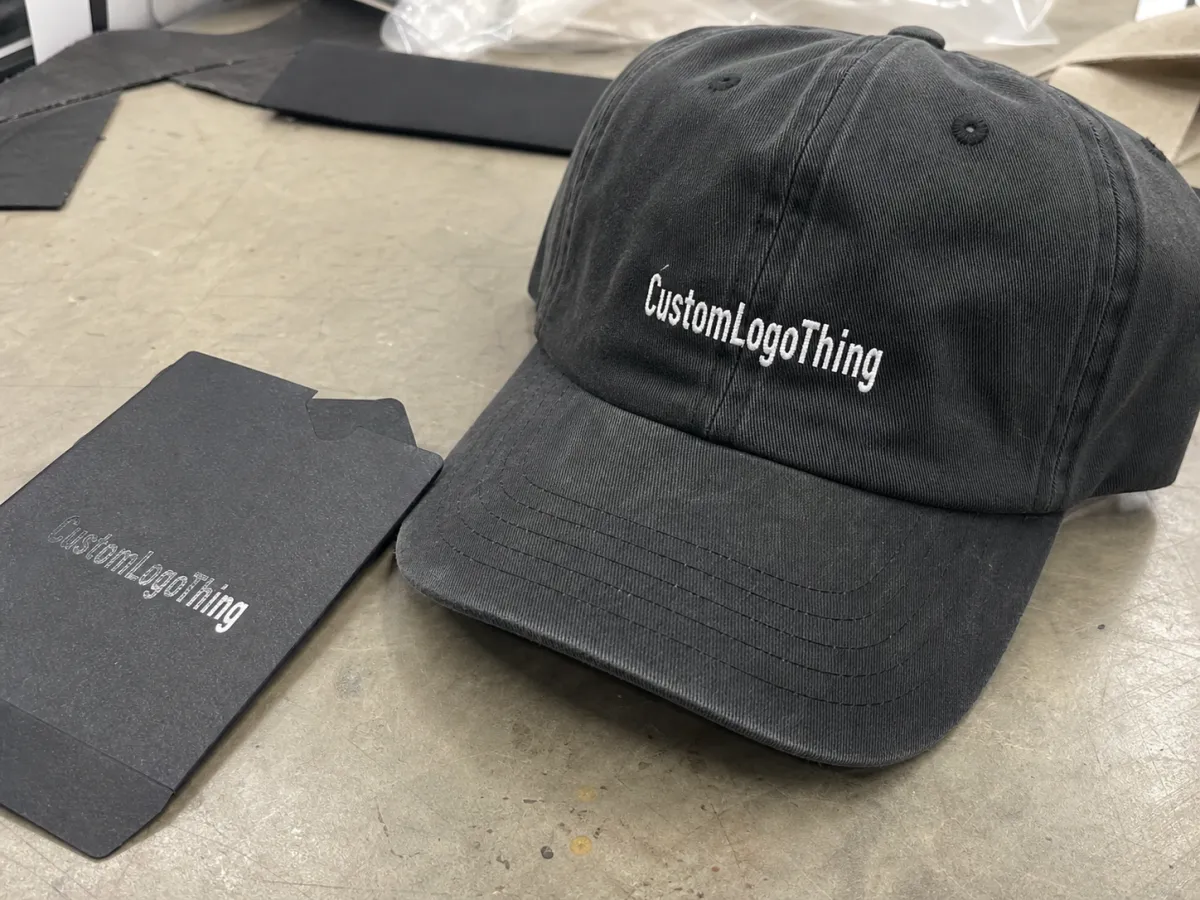
A useful sample process is not about collecting pretty versions of the same product. It is about reducing uncertainty before bulk production starts. For Unstructured Dad Hats, that usually means checking the fabric, the crown shape, the closure, the brim, and the decoration method as one system rather than as separate decisions.
Ask for more than a finished cap if possible. A blank cap shows drape and fit. A swatch shows color, weave, and surface finish. A thread card helps confirm embroidery shade. A hardware sample tells you whether the buckle, strap, or clasp feels cheap in hand. If decoration is part of the order, request it on the actual material, not on a generic test patch. A logo that looks clean on paper can shift badly once it meets soft cloth and a curved front panel.
- Blank cap for crown depth, fit, and brim structure
- Fabric swatch for color, weave, and handfeel
- Thread card for embroidery shade matching
- Closure sample for strap, metal, or buckle quality
- Decorated test area for logo placement and stitch clarity
The skincare connection is practical, not decorative. Buyers in this category usually want calm finishes, low sheen, and a material that feels closer to a considered lifestyle object than to event merch. Matte cotton twill, brushed cotton, or washed chino generally reads more naturally beside minimalist packaging than glossy synthetics do. The cap should feel like it belongs next to facial care, not sideline sportswear.
Packaging matters here too. If the hat ships inside a corrugated cardboard mailer with kraft paper, tissue, or a recycled board insert, the sample should survive that presentation. The point is not only to see whether the cap looks good flat on a table. It is to see whether it still looks right after folding, packing, shipping, and unboxing. That is where packaging and product stop being separate conversations.
Some teams also forget to ask for a color target. Without one, the same beige can drift warm or cool, and a light olive can swing from muted to dusty in ways that feel subtle on screen and obvious in hand. Pantone references help, but they do not replace physical comparison. The sample needs to sit beside the rest of the kit, not only beside a monitor.
How sample materials affect fit, handfeel, and decoration
Unstructured construction changes how the cap behaves from the first wear. The front panel collapses more naturally, the crown sits lower, and the fabric does more of the work that an internal frame would normally do. That makes the material choice unusually important. A soft cloth can feel relaxed and premium. The wrong soft cloth can feel tired before the customer even leaves the house.
When reviewing a sample, visual inspection is not enough. Run your fingers across the crown seams. Bend the brim and let it recover. Check whether the sweatband feels scratchy after a few minutes of wear. Hold the cap at arm's length, then inspect it again under indoor light. Color and sheen change more than most buyers expect, especially with washed or pigment-dyed fabrics.
Handfeel matters because people read comfort as quality. A cap that feels breathable and balanced usually earns a better response than one that looks polished but feels overbuilt. For skincare brands, that distinction is important. The audience is already trained to notice texture, finish, and subtle cues of care. A hat that feels abrasive or hot can undermine the same quiet credibility the rest of the packaging is trying to build.
Decoration reacts differently across substrates. Dense embroidery can sit neatly on cotton twill and then pucker on a very soft washed cap. Heat transfers may look crisp on a flat mockup and distort once they move over a curved crown. Patches need enough surface stability to lie cleanly. Small text is especially unforgiving; a wordmark that is technically legible on screen may close up once the stitch count rises and the fabric gives way.
Fit testing should be treated as a wear test, not a mirror test. A one-minute try-on says very little. A cap can feel fine in the first minute and start to pinch, twist, or collapse after a few hours, especially if the internal band is too rigid or the strap range is narrow. That gap is where sample approval saves money. It catches a problem before it becomes a warehouse problem.
There is a close parallel with shipping performance. A cap that looks fine in isolation can still fail once it is folded into a kit, placed inside a mailer, and handled by multiple people. The packaging industry understands this logic well; a product has to survive the journey, not just the photo shoot. If you want a broader reference point for transit thinking, the ISTA site is useful.
Material choices that change the final look and wear
Fabric choice is where many buyers overcorrect. They start with a color they like, then forget that weave, weight, and finish determine how the cap feels after an hour of wear. For Unstructured Dad Hats, the material is the shape. There is no rigid frame to hide behind.
Cotton twill is the safest baseline because it is breathable, familiar, and easy to decorate. In sample terms, it usually gives a clear read on crown collapse and stitch clarity. Brushed cotton softens the surface and often looks a little more refined. Washed chino tends to sit between the two: relaxed, wearable, and still stable enough for embroidery. Pigment-dyed cotton can deliver a lived-in tone that works well for wellness brands, but the variation is part of the effect, and part of the risk.
Fabric weight changes the story as much as finish does. A lighter cloth can feel easy and airy, yet lose shape in transit or after repeated wear. A heavier cloth will hold the front panel better, but it can feel too warm for summer promotions or all-day event use. For skincare campaigns, the useful middle ground is often a fabric that keeps a relaxed silhouette without feeling flimsy. That is why side-by-side samples matter. A catalog photo cannot tell you whether one cloth will collapse gracefully while another just looks tired.
Some approximate reference points help. A cotton twill around 240-280 gsm usually offers enough body for embroidery without becoming stiff. Brushed cotton in the same range may feel softer in hand. Washed chino often lands in a similar band, though finishing processes can change the result more than the raw weight does. Two fabrics can share a number and still behave differently once cut and sewn.
Surface finish sends a signal too. Low-sheen materials pair well with skincare branding because they photograph softly and feel less promotional. That is one reason muted caps often sit better beside kraft paper cartons, recycled board inserts, and frosted bottles than brighter fabrics do. The look is quieter, and quiet is often the goal.
Pay attention to trim materials as well. Cotton or poly-cotton sweatbands usually wear better than rough synthetic tape. A metal closure may look elevated, but it should not pinch or feel cold and heavy in hand. If the brand has sustainability requirements, ask what the closure and label components are made from. Recycled or lower-impact trims do not need to be the headline. They just need to stop contradicting the rest of the kit.
There is also a production constraint that comes up often: the softest-looking fabric is not always the easiest to sew. Very washed materials can shift under the needle, which affects seam alignment and logo placement. A sample should reveal that early. It is better to discover slight distortion in one sample than in a bulk run of 1,500 units.
Cost, MOQ, and unit price drivers for sample orders
Sample pricing usually looks high relative to bulk pricing because the setup cost is loaded into a single unit or a very small run. Someone has to source the fabric, cut the panels, sew the hat, test the decoration, and often revise the work before it ships. That is why the first sample is not just a cap. It is a decision package.
Here is the uncomfortable truth: the cheapest sample can become the most expensive mistake. If the fit is off, the logo sits poorly, or the closure feels flimsy, the hidden cost shows up later as rework, delayed launch photos, or unsellable stock. That risk is especially sharp for skincare brands, because the hat often appears alongside polished packaging. One weak item can make the whole presentation feel less intentional.
| Sample type | What it proves | Typical price range | Usual lead time |
|---|---|---|---|
| Blank cap prototype | Fit, crown depth, brim shape, closure feel | $20-$45 | 5-10 business days |
| Material and trim set | Fabric handfeel, color, sweatband, hardware | $10-$30 | 3-7 business days |
| Decorated sample | Embroidery, patch placement, logo clarity | $35-$90 | 7-15 business days |
| Presentation sample | Hat plus packaging, insert, and shelf look | $50-$120 | 10-18 business days |
MOQ changes the final math, but not always the way first-time buyers expect. A larger minimum can lower the per-unit production cost because setup is spread across more units. A smaller sample run protects budget while you confirm the spec. For a brand still refining creative direction, that tradeoff usually makes sense. Paying more now is often cheaper than correcting 2,000 hats after launch.
If you need the cap to reflect packaging cues, tell the supplier early. A kraft paper wrap, a recycled materials mailer, or an insert printed on FSC certified stock may affect the quote slightly, but those details also help the sample feel like part of the final kit. A cap that arrives beautifully but in the wrong context still misses the brief.
One more budgeting point: revisions are rarely free in time, even when they are minor in appearance. Changing logo scale by a few millimeters, tightening embroidery density, or swapping a closure can trigger another round of sampling. That is normal. It is also why a strong brief saves money. A clear first pass can shave days off the process and reduce the chance of a second sample.
Process and turnaround: from sample request to approval
The cleanest approval process starts with a complete brief. Include artwork files, logo placement, Pantone targets, preferred closure, size expectations, and any packaging constraints. If the hat has to sit flat inside a specific carton, say so. If the kit uses a printed sleeve or a corrugated cardboard mailer, include dimensions. Every missing detail creates one more round of clarification, and every clarification adds time.
A straightforward workflow usually looks like this: the buyer submits the brief, the supplier confirms available material options, a mockup is reviewed, the sample is produced, photos are checked, and the physical sample ships for final approval. The fastest approvals happen when one person owns the decision. The slowest happen when a team debates the color after the sample already exists. That delay is common, but it still pushes the calendar back.
Turnaround depends on what is being tested. A simple blank prototype may move in a week. A decorated sample with custom fabric, a special closure, or a packaging insert can take two or three weeks. Add revisions and the timeline stretches. That is not failure; it is the cost of accuracy.
- Review the sample under daylight first.
- Compare it against the original brief and packaging mockups.
- Document changes in writing, not in scattered comments.
- Approve only after the hat works in the intended use case.
It helps to treat the approved sample as a master reference, not just a sign-off item. Archive the cap, the thread card, the color notes, the packaging references, and the final spec sheet together. That simple habit prevents drift on reorders, especially when a different team member handles the next run months later.
Shipping presentation should be part of approval too. If the hat is folded into tissue, slipped into a recycled board insert, or packed with sample jars and cartons, the way it holds shape matters. The best sample process does not separate the product from its presentation, because customers will not experience them separately.
Common mistakes that make samples misleading
The first mistake is relying on screen images alone. Lighting can hide shade differences, soften stitch density, and make a crown look more structured than it really is. A phone photo is useful for a quick sanity check. It is not enough for approval.
The second mistake is skipping fit testing on real people. Unstructured Dad Hats vary more than buyers expect in crown depth, panel collapse, and strap range. A cap that feels fine on one head can sit awkwardly on another. Ask several people to wear the sample for more than a minute. Ten seconds in front of a mirror does not tell you much.
"A sample that survives a five-minute try-on can still fail after a full event day. That is the gap buyers need to close."
The third mistake is approving decoration on a flat mockup and assuming the same result will transfer to a curved front panel. Thin lines can break, small text can fill in, and dense logos can pull the fabric. This is where a sample earns its keep. It shows whether the artwork is merely attractive or actually manufacturable on the chosen cloth.
The fourth mistake is ignoring wear behavior. A hat can feel excellent for ten minutes and become warm, itchy, or misshapen after a long day. That matters in skincare because the audience often reads comfort as part of quality. If the cap is going into a launch kit or retail bundle, the user experience needs to hold up after the first impression.
Another common miss is approving the cap and the packaging separately. The combination is what customers see. A muted hat beside a glossy insert can feel mismatched. A low-sheen cap inside a recycled board shipper with kraft paper padding usually feels more coherent. The sample should help you catch that mismatch before production locks it in.
Expert checks and next steps before bulk approval
Before bulk approval, compare the sample against the brief line by line. Color. Fit. Closure. Logo size. Stitch finish. Seam comfort. Packaging compatibility. That sounds methodical because it is. A disciplined checklist is still cheaper than discovering drift when production has already started.
- Color: check under daylight and indoor light.
- Fit: test on more than one head size.
- Decoration: confirm logo legibility at actual viewing distance.
- Construction: inspect seams, sweatband, and closure hardware.
- Presentation: confirm it fits the PR kit or shelf format.
Then test the cap in context. Place it next to the carton, insert, bottle, or tote it will travel with. If the packaging system uses post-consumer waste content, FSC certified paper, or biodegradable packaging components, confirm that the hat does not visually fight those cues. A good sample should make the whole kit feel like one decision.
Keep the approved sample and the final spec together. Reorders go faster when the standard is already archived. That matters more than it sounds. A lot of production drift happens months later, when someone new is working from memory instead of a physical reference.
If the brand is still evaluating direction, the safest path is usually simple: request the sample pack, review it in daylight, score it against the checklist, and use the Skincare Unstructured Dad Hats material sample guide to decide whether the cap deserves bulk approval. The goal is not a perfect hat. The goal is a hat that wears well, photographs cleanly, and sits comfortably beside the rest of the brand.
What should a skincare unstructured dad hats material sample include?
A useful sample should show the fabric, closure, brim feel, stitch quality, and one decorated area so you can judge both appearance and wear. Ask for swatches or color references that confirm the final shade, especially if the brand relies on muted neutrals or a specific Pantone target.
How do I tell if the fabric feels premium enough for a skincare brand?
Check softness, drape, and surface finish in natural light, then see whether the cap still holds a clean shape after handling. Premium usually means calm texture, even dye, comfortable seams, and a finish that looks deliberate rather than rough or overly sporty.
What drives the cost of material samples for dad hats?
Setup, fabric sourcing, embroidery complexity, custom closures, and shipping usually matter more than the base fabric itself. If the sample needs revisions or special finishes, expect the cost to rise before the production spec settles.
How long does the sample and turnaround process usually take?
Simple samples can move quickly, but custom fabrics, embroidery approvals, and revision rounds add time before a physical sample is ready. The fastest path is a complete brief with clear artwork, color references, and one person responsible for approvals.
Can one approved sample cover embroidery, labels, and packaging decisions?
Yes, if the supplier builds those details into the sample and you review them together instead of approving each piece separately. Use the approved sample as the master reference for future production so decoration, labels, and presentation stay consistent.


