An apparel unstructured dad hats Unit Cost Review usually begins with a simple mistake: buyers look at the blank cap price and assume they have the whole number. They do not. The blank body is only the starting point, and the final landed cost can move fast once decoration, artwork prep, packaging, and freight are added. A relaxed six-panel cap can look inexpensive on a line sheet and still become a very different line item once thread count, patch construction, closure hardware, and carton charges are folded in.
That is also why Unstructured Dad Hats keep showing up in merch programs, staff uniforms, event kits, and retail drops. They have a softer hand, they pack flatter than many structured caps, and they fit a wider range of heads without the rigid front panel that can make some promotional hats feel stiff or dated. From a purchasing standpoint, though, the useful quote is the one that breaks out the full cost stack. Anything less invites false comparison.
A quote that only shows the hat body is not a complete quote. For budget planning, the better question is always: what is the actual cost per piece after decoration, setup charges, packaging, and freight?
Why Unstructured Dad Hat Unit Cost Can Surprise Buyers
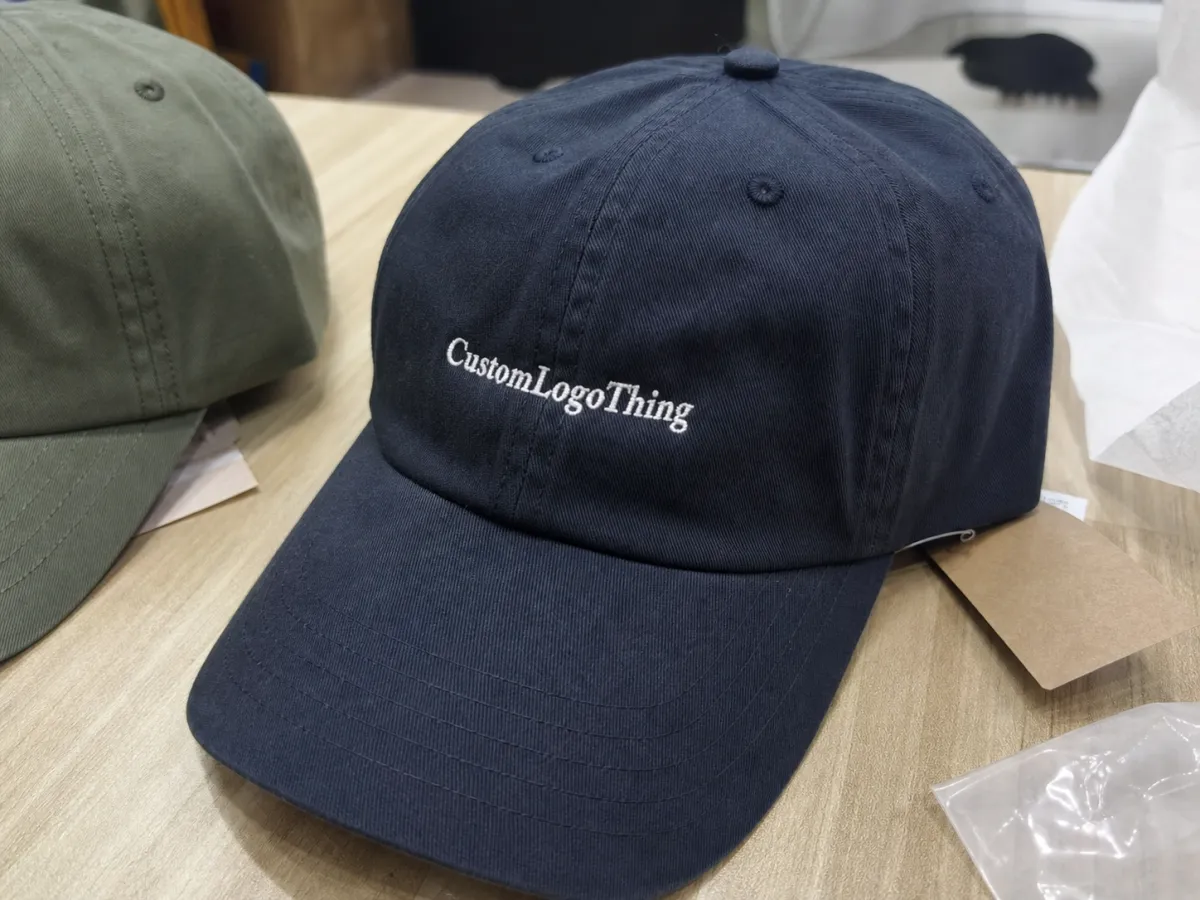
unstructured dad hats are straightforward at a glance, but they behave differently in production than a standard structured cap. The soft front panel uses less internal support, which is part of the appeal, yet that same softness changes how embroidery sits, how a patch is backed, and how the hat holds shape during sewing. If the order is for 300 pieces, the unit cost can look reasonable until a buyer adds a dense logo, a custom woven patch, or upgraded packaging and realizes the landed number is higher than expected.
That is where a real cost review pays off. It forces the buyer to separate the blank hat, the decoration method, the packaging spec, and the freight method instead of treating the order as one flat figure. That distinction matters for merch calendars and procurement approvals because a quote with low bulk pricing on paper can still produce a higher landed cost if the supplier is charging more for digitizing, art cleanup, or a special ship method.
These hats are still a strong option for many programs. They store efficiently, they travel well in cartons, and they tend to wear better across a broad audience than stiff promotional caps. For a staff giveaway, that usually means better adoption. For a retail-style drop, it means a cleaner laid-back profile that feels intentional rather than corporate. The trick is to treat the quote like a production plan, not a catalog entry.
One more reason buyers get caught off guard is that the savings in the blank body can disappear if the decoration is not simple. A hat with a clean one-color mark is one thing; a hat with a layered patch, multiple thread colors, and a custom backing is another. The cap body may be inexpensive, but the true cost per piece is set by the total amount of labor and finishing the order asks for.
There is also a practical timing issue. The cheapest spec is not always the fastest spec. Hats with small front logos, stock materials, and standard closures tend to move through production with fewer checks. Once the build calls for custom colors, special labels, or exact placement requirements, the schedule usually stretches, even if the decoration itself seems simple on paper.
Body Fabric, Crown Shape, and Closure Specs That Set the Base Cost
The base cost starts with material choice. Washed cotton usually gives the soft, broken-in feel many brands want, and it can sit in a moderate price band because the finish is familiar to sew. Chino twill is a common middle-ground option with a cleaner hand and consistent appearance across colors. Brushed cotton adds a slightly softer surface, while heavier canvas-like fabrics can raise the quote because they take more machine time and can be harder on needles, especially around curved seams and visor stitching.
Crown shape matters too. An unstructured crown uses less internal support than a firm front panel, which changes both the look and the build. That softer profile is the point, but it also means the supplier has to manage seam alignment and reinforcement carefully so the cap does not collapse unevenly. A pre-curved visor usually improves wearability and can reduce complaint risk because many end users prefer a ready-to-wear shape instead of a flat bill that needs breaking in.
Closure choice is another part of the base price that is easy to misread. Self-fabric straps often look like the most economical option, but labor, trimming, and finishing can narrow the gap versus a tri-glide buckle or metal closure. Hook-and-loop can be quick to use, though some programs avoid it because they want a cleaner retail feel. The cheapest-looking closure is not always the cheapest closure once sewing time and finishing are counted.
Before asking for numbers, a buyer should confirm the core spec details that drive quote accuracy:
- Panel count and crown depth
- Fabric type, weight, and wash finish
- Closure style and hardware finish
- Sweatband type and color
- Eyelets, visor stitching, and top button style
- Stock color availability versus custom-dyed production
If those items are not locked down, two quotes can look similar and still be pricing different hats. That is where the conversation gets muddy, especially on bulk orders where a small spec change can add up across hundreds or thousands of units.
Packaging and shipping deserve the same discipline. If the hats are going into retail channels or a brand activation, carton strength and transit handling can matter almost as much as the cap body. The ISTA distribution test standards are useful reference points when a buyer wants to think clearly about how goods behave in the shipping lane, and paperboard hang tags or inserts can be sourced with FSC certification if the project calls for chain-of-custody documentation.
Decoration Choices That Change the Quote on Every Hat
Decoration is usually where the quote starts to move. Flat embroidery remains the most familiar path because it is durable and easy to understand, but the price depends heavily on stitch count, thread changes, and logo size. A small, clean mark with limited colors can stay efficient. A dense logo with fill stitches and multiple detail areas takes longer to sew and can push the unit cost up fast, especially on a lower MOQ.
3D puff embroidery brings a more raised look, but it almost always carries more labor and more sensitivity to art setup. The foam has to be cut and placed carefully, and not every logo works well at small scale. Thin strokes can disappear. Tight negative spaces can close up. Buyers often like the visual impact, then discover that the approved art needs simplification before production can run cleanly.
Woven patches are popular because they can hold detail well without the same stitch load as embroidery, and they can be efficient on small logos that would otherwise become expensive in thread time. Leather patches usually read premium and can help a brand achieve a quieter look, though tooling fees or laser setup charges can enter the picture if the patch is custom shaped or embossed. Printed applique can be the most practical answer for artwork with gradients or fine color shifts, but buyers should confirm durability expectations early if the hat will be washed often or worn outdoors.
Here is a buyer-friendly way to compare common options:
| Decoration method | Typical use | Quote impact | Best for |
|---|---|---|---|
| Flat embroidery | Clean logos, text, simple icons | Usually lowest when stitch count stays controlled | Merch, uniforms, promotional runs |
| 3D puff embroidery | Bold front marks with dimension | Higher due to extra labor and setup | Streetwear-style drops, retail programs |
| Woven patch | Detailed art without heavy thread load | Moderate; patch tooling can apply | Fine-line logos, badges, small graphics |
| Leather patch | Minimal, premium-looking branding | Moderate to high depending on finish | Outdoor brands, lifestyle programs |
| Printed applique | Artwork with color variation or gradients | Can be efficient for complex art | Short runs needing visual impact |
Placement also changes pricing. Front panel branding is the main cost driver because it is the most visible and usually the easiest to standardize. Add a side hit or back hit and the supplier may need extra hooping, more setup time, or a second production pass. That does not always double the price, but it can move the quote enough that the buyer should compare it against the value of the extra branding.
Clean vector art helps lower cost per piece because it keeps thread changes under control. If the logo can be simplified without changing the brand message, the order often becomes easier to sew and easier to quote. That is one of the more reliable ways to keep the conversation focused on value instead of on avoidable production complexity.
There is a quality side to decoration as well. A dense embroidered logo can look strong in a digital mockup and still fail on the cap if the stitch density is too high for the fabric. Thread puckering, uneven registration, and small gaps around curves are not rare. They are usually signs that the art was not adjusted for the hat material or the front panel structure. Good quoting takes that risk into account before the order is approved.
Apparel Unstructured Dad Hats Unit Cost Review
The cleanest way to review pricing is to break the order into separate pieces: blank cap, decoration, setup or digitizing, packaging, and freight. When those items are listed clearly, it becomes much easier to audit the quote and compare two suppliers on equal terms. A hat quoted at a low base price can still end up more expensive if it carries higher setup charges or if freight is billed separately from the start.
For a common run of 5,000 hats, a simple unstructured dad hat with flat embroidery might land in the rough range of $4.10 to $7.25 per unit before freight, depending on fabric, stitch count, and closure. Add a layered patch, premium closure, or more complex art, and the range can move to $6.50 to $10.00+. Smaller runs often sit higher because the setup burden is spread across fewer hats, which is why MOQ has such a direct effect on bulk pricing.
The range matters, but the shape of the quote matters more. One supplier may include digitizing, proofing, and carton packing. Another may only include the cap and a single decoration pass. If the comparison is not line by line, procurement can approve the wrong number and still miss the actual spend. For an apparel unstructured dad hats Unit Cost Review, the buyer should ask for the same fabric, the same closure, the same decoration method, and the same shipping basis before judging price.
Below is a simple comparison framework buyers can use during review:
| Quote element | What to verify | Why it matters |
|---|---|---|
| Blank cap | Fabric, crown style, closure, color | Sets the base unit cost |
| Decoration | Embroidery, patch type, stitch count, location | Usually drives the largest price swing |
| Setup charges | Digitizing, tooling fees, patch mold, art prep | Can raise the effective cost on small runs |
| Packaging | Bulk pack, polybag, insert card, hang tag | Changes handling and landed cost |
| Freight | Origin, destination, ship method, cartons | Affects total order value and delivery timing |
If a buyer is trying to compare quotes fairly, the most useful habit is to request both the per-unit price and the total order value. The per-unit number helps with budget planning, but the total order value is what purchasing ultimately signs off on. In real production work, that distinction saves time because it exposes whether the deal is truly cheaper or just easier to present on paper.
There is another detail that changes the math: the sample path. Digital mockups may be free or included, while physical preproduction samples can add time and money. That extra spend is not wasted if the decoration is complex or the crown shape is sensitive to stitching. On a low-risk order with standard art, a digital proof may be enough. On a higher-value retail run, a physical sample is usually worth the delay because it reveals fit, sewout behavior, and patch placement before bulk production starts.
Pricing, MOQ, and Quote Rules Buyers Should Confirm First
MOQ shapes pricing more than many buyers expect. A lower minimum order quantity can help if the program is a test run or a seasonal drop, but it often carries a higher unit cost because setup charges and decoration labor are spread across fewer hats. On the other hand, buying a little above the minimum can sometimes unlock a better price break without changing the spec, which is why it is worth asking for a price ladder at multiple quantities.
Before approving a quote, confirm the variables that tend to change the number later. These include the number of logo colors, the number of decoration locations, sample fees, rush charges, and whether freight is included or billed separately. Buyers should also ask if the quote includes artwork cleanup or digitizing, because those costs can be easy to miss when the first number arrives by email.
The lowest quote is not always the best value. A supplier that excludes sample approval, delivery to the final ZIP code, or a backup artwork pass can appear cheaper at the start and more expensive at the end. Honest quoting is less about having the smallest number and more about showing the buyer exactly what is included so there are no awkward changes after approval.
A practical question to ask is: what does the next quantity break do to the cost per piece? If 250 hats and 500 hats are almost the same on the same spec, the team may decide to order more now and lower the average cost. If the gap is small, staying at the lower MOQ may be the smarter move. That kind of decision is easier when the supplier shows the price ladder clearly instead of burying it in a single line item.
Buyers should also be careful with rush orders. Expedited freight can fix a transit problem, but it does not always fix a production problem. If the line is busy, the factory may still need the same sewing and decoration time. A quote that promises fast delivery without defining the production window deserves a second look.
Quality Control Checks That Protect the Budget
Quality control is where price and performance meet. On Unstructured Dad Hats, the most common issues are uneven front panel shape, off-center embroidery, loose threads, crown collapse, and inconsistent strap finishing. None of those problems sound dramatic in isolation. Across a bulk order, they create rework, delays, and avoidable waste.
The most useful checks are simple. Confirm that the logo placement is measured from a fixed point, usually the center seam or crown midpoint. Confirm that stitch density does not distort the fabric. Check that the sweatband sits flat and that the closure hardware is aligned and secure. If the order includes a patch, inspect the edge finish and the bond line so the patch does not lift after a few wears.
Color is another area that can look fine in a proof and then disappoint in bulk. Fabric lots, thread lots, and patch materials do not always match perfectly across vendors. For brand-critical projects, a supplier should be asked to confirm color tolerance early, especially if the cap uses custom-dyed body fabric or a very specific thread shade. That step is faster than rejecting an entire lot later.
There is also a packaging angle to QC. Hats packed too tightly can deform in transit, especially unstructured crowns that do not have the same internal stiffness as structured caps. A few extra carton checks can protect the product better than trying to correct damage after arrival. For programs that ship to multiple locations, clear carton labeling and consistent pack counts save more time than most teams expect.
Process, Timeline, and Production Steps From Proof to Ship
The production path is straightforward, but each step matters. It usually starts with artwork review, then a digital proof or mockup, then sample or preproduction approval, followed by bulk production, quality check, and final packing. If the decoration is simple and the art is ready, the process moves faster. If the logo needs cleanup or the patch is custom made, the timeline stretches even before sewing begins.
For a standard custom cap run, a realistic schedule often looks like this: proof approval in 1-3 business days, sample or preproduction confirmation in another few days if required, bulk production in roughly 10-15 business days, and transit time based on the ship method. More complex decoration can add several days, especially when there are multiple art revisions or when the buyer changes details after the proof is issued.
Most delays come from avoidable changes. Missing approvals, shifting quantities, last-minute edits to artwork, and revised shipping addresses are the usual trouble spots. Special color matching can add time too, because a factory may need to confirm dye lots or approved thread colors before moving forward. For buyers under deadline pressure, the safest plan is to lock the spec early and keep the approval path short.
Final packing deserves attention as well. Carton labeling, pack counts, and the number of hats per inner bag all affect how easy the order is to receive and distribute. Rush shipping can shorten transit, but it does not always shorten production time. If the order is already behind schedule, the buyer should know whether the supplier is shortening the build or simply upgrading the carrier service.
One useful expectation check: a quote that looks fast should still show the individual milestones. If the supplier cannot identify proof approval, production start, and ship date, the timeline is too vague to manage. That is especially true for seasonal merch, where a week of delay can remove the product from the selling window entirely.
What to Send for a Fast, Accurate Final Quote
The fastest way to get a clean quote is to send complete information up front. The supplier needs target quantity, colorway, decoration method, logo file, deadline, delivery ZIP, and any packaging requirements. If the artwork is not final, send the best available file and say what needs to stay fixed. That is usually enough to start the proof path without guessing.
It also helps to include a price ceiling and a backup option. If the preferred build goes over budget, a simpler patch, a lower stitch count, or a different closure can bring the number back into range without reopening the whole brief. Buyers who do this tend to get faster answers because the supplier can quote an alternate spec in the same round instead of waiting for a second request.
One useful move is to ask for two versions of the quote: the preferred spec and a value-engineered alternative. That side-by-side view makes it easier for purchasing teams to approve an order without starting over. It also reduces the chance that the team signs off on a number that looks good in isolation but does not match the real project goals.
A clean request should also state whether the order is for one ship-to location or multiple destinations. Freight math changes quickly when cartons need to be split across addresses. The same is true for special packing notes such as size stickers, retail tagging, or insert cards. Those details are small individually, but they shape labor, carton configuration, and the final landed cost.
For a focused review, the best next step is to send the spec sheet, confirm the quantity break, and approve the proof path. That is how the cost review turns into a practical bulk quote instead of a guessing exercise, and it gives everyone a clearer read on unit cost, MOQ, and total spend before production starts.
What drives the unit cost most on unstructured dad hats?
Decoration complexity usually moves the price more than the blank cap itself, especially with dense embroidery or layered patches. Quantity, freight, and setup charges can change the final landed cost just as much as the hat material choice.
How does MOQ affect apparel unstructured dad hats pricing?
A lower MOQ usually raises unit cost because setup and decoration labor are spread across fewer hats. Buying a little above the minimum can sometimes unlock better bulk pricing without changing the product spec.
Which decoration method is usually the most cost-efficient?
Simple flat embroidery is often the most economical when the artwork is clean and the stitch count stays controlled. Small woven or printed patches can also be efficient when they reduce thread changes and production time.
Can I review a sample before bulk production?
Yes, and it is smart to confirm whether the sample is a physical preproduction cap or a digital proof only. Ask whether the sample fee is credited back on bulk approval so the total project cost is clear.
What should I expect for turnaround on custom dad hats?
Timeline depends on art approval, decoration method, and material availability, so a simple order can move faster than a fully customized build. Rush service may shorten shipping time, but it does not always eliminate proof or production steps.

