A store launch can be delayed by something as ordinary as a paper bag. The hidden issue behind retail Black Paper Gift Bags lead time is rarely the bag alone. More often, it is the chain of choices around stock availability, handle type, print method, finish, packing, and freight.
Black bags look simple once they are sitting on a display table. In production, they are less forgiving than plain kraft. Dark stock exposes scuffs, laminates can show fingerprints, and special handles or inserts introduce extra parts that must arrive together. If you separate sample time, production time, and transit time from the start, the schedule becomes much easier to manage. It also becomes easier to explain to the people waiting on launch materials.
For buyers, the useful question is not only how fast the bags can be made. It is how fast the supplier can confirm the spec, secure the materials, approve the proof, run production, and move cartons out without damage. That broader view is where most surprises live.
“If the spec sheet changes twice, the calendar changes twice.” That is the part many teams miss. A clean brief is usually the fastest route to a clean delivery date.
Industry groups such as ISTA help packaging teams think about transport durability, while FSC documentation matters when paper sourcing is part of the brief. Those references do not shorten production on their own, but they help a buyer ask better questions before a ship date is promised.
What Retail Black Paper Gift Bags Lead Time Really Means
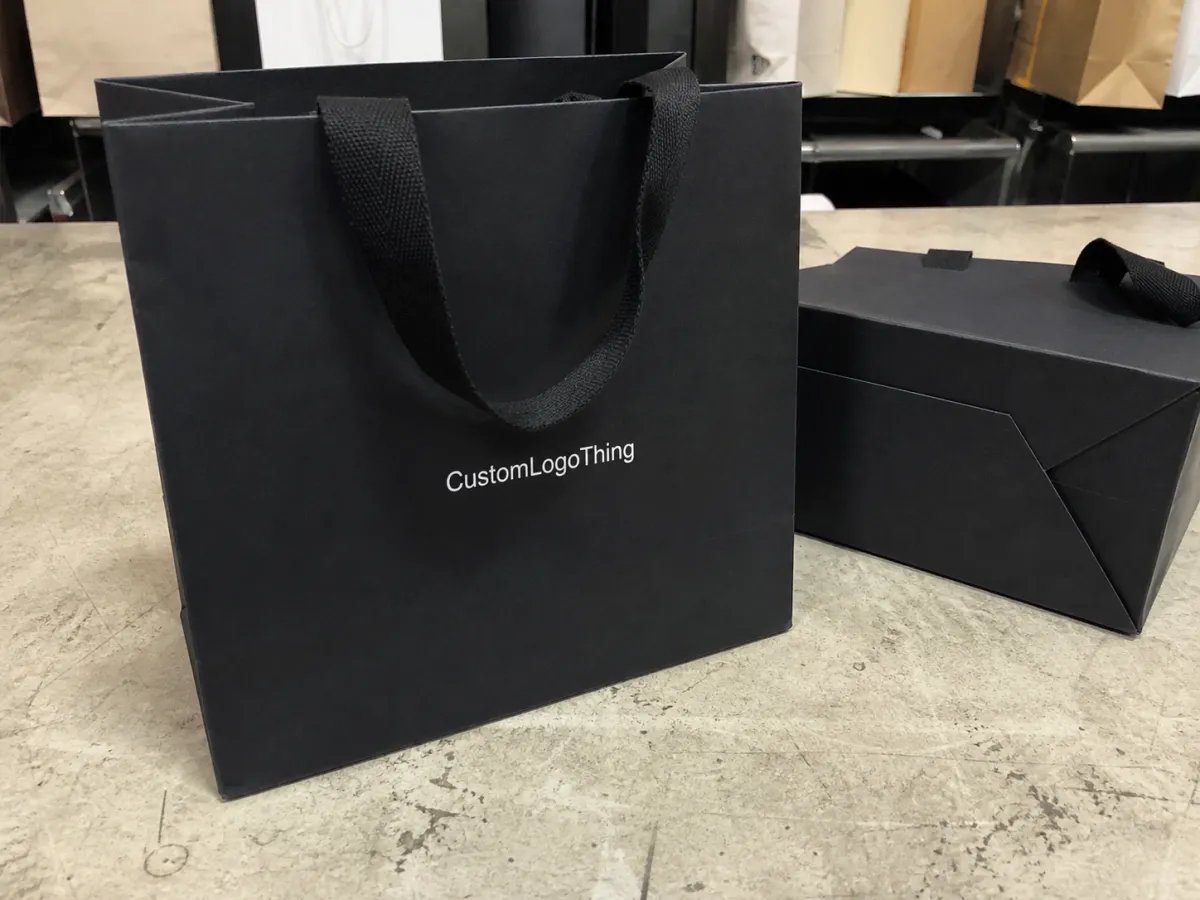
Lead time is the full calendar from approved artwork or confirmed specs to bags arriving ready to use. That is different from press time, converting time, or the few hours a bag spends on a machine. A buyer may hear “two weeks” and picture a factory running nonstop, but the real clock also includes proofing, material checks, packing, freight booking, and any delay caused by an unfinished approval.
For retail black paper gift Bags Lead Time, the timing can stretch a little more than for standard white or kraft bags because black stock tends to reveal every decision. Matte versus gloss, soft-touch lamination versus plain paper, ribbon handles versus twisted paper handles, and hot stamp versus simple ink all change how the job moves through the plant. The order may still be straightforward, but it is rarely a one-step job.
One reason the timeline gets misunderstood is that “production” sounds like a single stage. It is not. In a typical order, materials are checked in, sheets are cut or bag blanks are prepared, print is applied, the bag body is formed, handles are attached, cartons are packed, and the finished goods are inspected again before freight is booked. Any mismatch in those steps can add a day or three. On a tight launch schedule, that matters.
Black paper also demands a little more discipline in quality control. Light scratches, glue marks, dust, and color drift are more visible on dark surfaces. A supplier that works quickly but skips inspection can create a faster shipment that looks worse on arrival. That trade-off is rarely worth it.
How the Order Moves From Spec Sheet to Shipment
A well-run order usually follows a predictable path. First comes the inquiry, where the buyer shares size, quantity, artwork, and deadline. Then comes the quote, which should reflect the actual bag structure rather than a loose guess. After that, the supplier checks artwork, confirms the build, and sends a proof. Only after proof approval does production begin in earnest.
That sounds tidy on paper, but in practice there are handoffs. Sales hands the job to prepress, prepress hands it to converting, converting hands it to quality control, and logistics gets involved before the cartons ever leave the floor. Each handoff is a chance to pause if a detail is unclear. If the handle type is not specified, or the finish is described only as “premium,” somebody has to stop and ask.
A strong spec sheet keeps those pauses short. The most useful briefs include exact bag dimensions, paper weight, handle style, print coverage, finish, quantity, packing method, and ship-to address. If the buyer also notes whether the bags must fit a shelf display, a shopping tote insert, or a retail compliance requirement, the supplier can flag issues before a machine is set up.
Artwork approval is where many schedules lose time. If a logo arrives in low resolution, the colors are not specified, or the buyer changes the handle choice after the proof is issued, the calendar moves. The line can only move as fast as the approvals allow. The equipment is not the only bottleneck.
A practical buyer also asks for the proof to show the bag in context, not just as a flat art file. Folds, gussets, and handles affect placement. On black stock, a small reduction in type size may be needed to keep the design readable. Catching that on a digital proof is faster than discovering it after production has already started.
What Actually Changes the Timeline
The biggest timeline drivers are usually simple: order quantity, bag size, paper stock availability, handle style, print method, coating or lamination, and whether the order is plain or custom printed. A 1,000-piece plain run can move very differently from a 20,000-piece branded run, even if both are black paper bags. Quantity affects setup, packing, carton counts, and freight booking, so the total calendar stretches as the order gets more complex.
Paper choice matters more than many buyers expect. Heavier stock, such as 157gsm to 250gsm black kraft or laminated art paper over board, can look better on retail shelves, but it may need more careful scoring, gluing, and drying. A soft-touch laminated finish can raise perceived value, yet it also adds a surface layer that shows handling marks more easily. That extra care is worthwhile for some brands, but it is rarely the fastest route.
Handle style changes the rhythm too. Twisted paper handles are common and efficient. Cotton rope handles, grosgrain ribbon handles, and die-cut handles each bring their own material requirements, attachment steps, and inspection points. If the handle color is custom-matched to the print, add more time for sourcing and confirmation. If the handle is imported or has an attachment accessory, lead time can stretch again.
Print method matters in a less obvious way. A simple one-color logo on black stock often moves quickly if the art is clean and the layout is stable. Hot foil stamping, debossing, UV print, or multi-color registration adds more setup and more chances for reject pieces during the first run. Those processes can look excellent, but they are not the same as a plain production job.
Seasonal pressure is real. Store openings, holiday programs, promotional resets, and new product launches all squeeze production calendars. A plant that can turn a job quickly in a quiet month may need a longer window during peak buying seasons because machines are already booked and freight space gets tight. That is one reason retail Black Paper Gift Bags lead time can feel short one month and stubbornly long the next.
Destination also matters. Domestic delivery may only need a few business days once the bags are packed, while cross-border shipping can add customs clearance, port delays, or appointment delivery at the warehouse. A job that finishes on time can still arrive late if final-mile logistics are not handled with care. Buyers often focus only on production days and forget that transportation can become the real bottleneck.
There is also a quiet factor that does not show up in the quote line by line: scrap rate. Dark packaging can have a slightly higher reject rate for cosmetic reasons. A small surface mark that might pass on kraft can fail on black gloss or matte laminate. Good suppliers plan for that waste in the setup. Poor ones do not, and the missing margin shows up later in delays or reprints.
For a quick comparison, this pattern is common:
| Bag Option | Typical MOQ | Typical Unit Cost | Lead Time Pressure | Best Fit |
|---|---|---|---|---|
| Plain black paper bag, standard handles | 1,000-3,000 pcs | $0.18-$0.32 | Lower, if stock is available | Fast replenishment and simple retail use |
| 1-color custom logo on black stock | 3,000-5,000 pcs | $0.22-$0.40 | Moderate, due to proofing and print setup | Brand visibility without heavy finish work |
| Custom size, laminated finish, ribbon handles | 5,000-10,000 pcs | $0.35-$0.75 | Higher, because more materials and inspection steps are involved | Premium retail presentation and gifting programs |
Those numbers are not fixed quotes. Paper grade, print coverage, packaging, and freight move them around. Still, they give buyers a useful starting point when comparing supplier offers that may otherwise look similar on the surface.
Pricing, MOQ, and Unit Cost: How to Compare Quotes
A fair quote should break the job into pieces you can actually compare. Ask for material grade, print colors, setup charges, handle type, finish, packaging, and freight. If one supplier gives a single lump sum and another itemizes the build, the lower number is not always the better value. The real question is whether both quotes describe the same bag.
MOQ, or minimum order quantity, exists because setup and tooling cost money before the first finished bag reaches a carton. That includes plates or screens, machine setup, calibration, waste allowance, and packing labor. Smaller orders carry more of that setup cost per unit, so the unit price rises. That is not a penalty; it is simply how the math works in converting and print production.
Plain black bags can be cheaper than printed bags, but not always by much. A plain order still needs stock, cutting, folding, gluing, handles, and inspection. If the paper is premium, if the handles are specialty rope, or if the bag size is custom, the gap between plain and printed narrows quickly. A buyer looking only at print cost may miss the bigger driver, which is often the substrate and assembly.
It helps to ask for three quote scenarios: a baseline MOQ, a volume break, and a rush option. That gives you a clearer picture of how much money you save by ordering more, and how much extra you pay if the schedule gets tight. In practical terms, it lets you weigh inventory carrying cost against the risk of missing a launch date.
A quote should also show what is not included. Freight is the usual blind spot, but so are artwork changes, sample revisions, pallet fees, import duties, and reboxing charges if the destination warehouse has unusual receiving rules. The cheapest line item may turn expensive once those extras are added.
Packaging buyers who work through organized quote reviews often also reference industry guidance from groups such as the Packaging Institute or FSC sourcing records when paper origin matters. That does not make a quote cheaper, but it does make the comparison more honest.
If you are balancing timing and spend, there is a useful rule: the lowest unit price is not always the lowest order cost. A late shipment, a reprint, or a rush freight charge can erase savings fast. That is especially true for retail black paper gift bags lead time decisions tied to store openings or seasonal resets.
A Realistic Order Timeline From RFQ to Delivery
A workable buyer timeline usually looks like this: request quote, review specs, approve artwork, confirm sample, release production, inspect packout, and schedule delivery. Each step has its own clock, and each one gets shorter when the buyer is prepared. A complete brief on day one is far better than a long message thread full of corrections after the proof has already been sent.
Sample lead time is often where people get surprised. A physical sample can take several business days, sometimes longer if the bag uses custom paper, a unique handle, or special finishing. Production after proof approval might take another 12 to 20 business days for a standard custom run, though smaller plain-stock jobs can move faster if the line is open and the materials are on hand. Add transit on top of that, and the calendar becomes much clearer.
A useful way to think about the total timeline is in layers:
- Spec finalization and quoting: 1-3 business days
- Artwork proofing and approval: 1-5 business days, depending on revisions
- Sampling: 3-10 business days for standard requests, longer for custom structures
- Production: 7-20 business days, depending on quantity and finish
- Freight: 3-15 business days for most domestic or regional shipments
The best buffer is built before the order is urgent. If a store opening is fixed, start earlier than feels necessary so there is time to correct a proof, replace a missing material, or reroute freight if weather or customs causes trouble. That buffer is not waste. It is insurance against the exact kind of delay that makes a launch team lose confidence in the supplier.
Buyers can speed the process by sending the right details the first time:
- Bag size, paper weight, and finish
- Handle type and handle color
- Print method, number of colors, and artwork files
- Quantity, pack count, and ship-to address
- Target in-hand date and any retail compliance notes
A good supplier will look at that list and tell you where the weak points are. A great supplier will also tell you which parts are flexible, because that is often where a deadline can be saved without changing the look of the bag.
Common Mistakes That Slow Down Bag Orders
The first classic mistake is approving artwork before the exact bag construction is locked. Print area, fold lines, handle placement, and gusset depth all affect where the logo can sit. If the bag size changes after proof approval, the art may need to be resized or moved, which restarts part of the process.
The second mistake is assuming all black paper bags are interchangeable. They are not. A matte black bag with paper handles behaves differently from a gloss-laminated bag with cotton rope handles. Surface texture changes the look, but it also changes how the bag packs and how easily it can scuff in transit. That is one reason buyers should ask for a sample before they commit to a full run.
Third, freight gets underestimated all the time. A finished order still may need palletizing, carton labeling, customs paperwork, appointment delivery, or liftgate service. If the warehouse has strict receiving hours, that can add another layer of timing risk. Retail black paper gift bags lead time is not just a production question; it is a logistics question too.
The fourth mistake is underordering. A small first run feels safer for cash flow, but if the bags move quickly through stores, you may end up placing a second order right when the first batch is nearly gone. Then you are back at the start of the cycle, only with less breathing room and more pressure. For steady retail programs, that is the kind of decision that creates avoidable stockouts.
One more issue shows up often with premium black stock: buyers expect the same color on every run without discussing paper lot variation. Even good mills can have slight shade shifts between batches. If color consistency matters, ask the supplier how they control incoming stock and what they do if a future reorder needs to match an older run.
There is also a finishing problem that gets missed until the sample arrives. Heavy matte coatings can dull a logo more than expected; high-gloss laminates can look dramatic under showroom lights but show abrasion sooner in shipping. Neither is wrong. The issue is matching the finish to the actual use case instead of judging it only by a studio mockup.
Expert Tips and the Next Steps to Lock In a Smoother Order
Standardizing a few bag sizes across product lines makes life easier. It shortens reorder time, improves cost visibility, and reduces the number of new proofs a team has to review. If the same bag can serve gift cards, cosmetics, accessories, or seasonal promos, the purchasing side becomes much simpler.
Keep the artwork clean if speed matters. Strong contrast, simpler layouts, and fewer special effects usually produce a more predictable result on black stock. That does not mean every bag should look plain. It means restrained design often prints cleaner and moves through the line with fewer surprises, especially if the brand wants a sharp retail presentation rather than a highly embellished one.
Ask for a sample, a backup ship date, and a reorder threshold before the first run lands. That sounds like a lot of paperwork, but it gives the team a workable system. Once the bags are in stores, someone should already know the weekly usage rate and the point at which reordering needs to start. That is how you avoid the panic order that costs more and arrives too late.
It also helps to define what “ready” means before production starts. A bag may be technically finished but still not ready if cartons are unlabeled, if the pallet height exceeds warehouse rules, or if the exterior print does not match the approved proof. Clear acceptance criteria prevent arguments after the goods ship.
My practical order of operations is simple: confirm specs, compare at least two quote options, approve artwork quickly, and place the order with enough cushion to protect the schedule. If the bags support a launch, opening, or campaign, the safer move is to treat the calendar as a planning tool, not a promise.
Handled that way, retail black paper gift bags lead time becomes manageable instead of mysterious. The timeline still has variables, because every printed bag order does, but it is far easier to control when the spec is tight, the proof is clean, and freight is part of the plan from the start.
What affects retail black paper gift bags lead time the most?
The biggest drivers are paper stock availability, print complexity, bag size, handle type, and how quickly the buyer approves proofs. Freight method and destination can also change the total calendar even when production finishes on time.
Can a rush order shorten retail black paper gift bags lead time?
Sometimes, but only if the spec is simple, the materials are already in stock, and the factory has an open production window. Rush orders usually cost more and leave less room for artwork changes or transit delays.
How do MOQ and unit cost affect a quote for black paper gift bags?
A lower MOQ usually raises unit cost because setup, tooling, and packing labor are spread over fewer bags. Higher quantities often reduce unit cost, especially when the design and print setup stay the same.
What should I send to get a faster, more accurate timeline?
Send the bag size, paper weight, handle style, print details, quantity, ship-to address, and the date you need the bags in hand. Include artwork files or a simple sketch so the supplier can flag issues before quoting.
How far ahead should I reorder retail paper gift bags?
Reorder before inventory gets tight, ideally when you still have enough stock to cover lead time plus a small buffer. Stores with steady bag usage should set a reorder point based on weekly consumption and the longest realistic delivery window, because that is how you protect retail black paper gift bags lead time from turning into a last-minute scramble.

