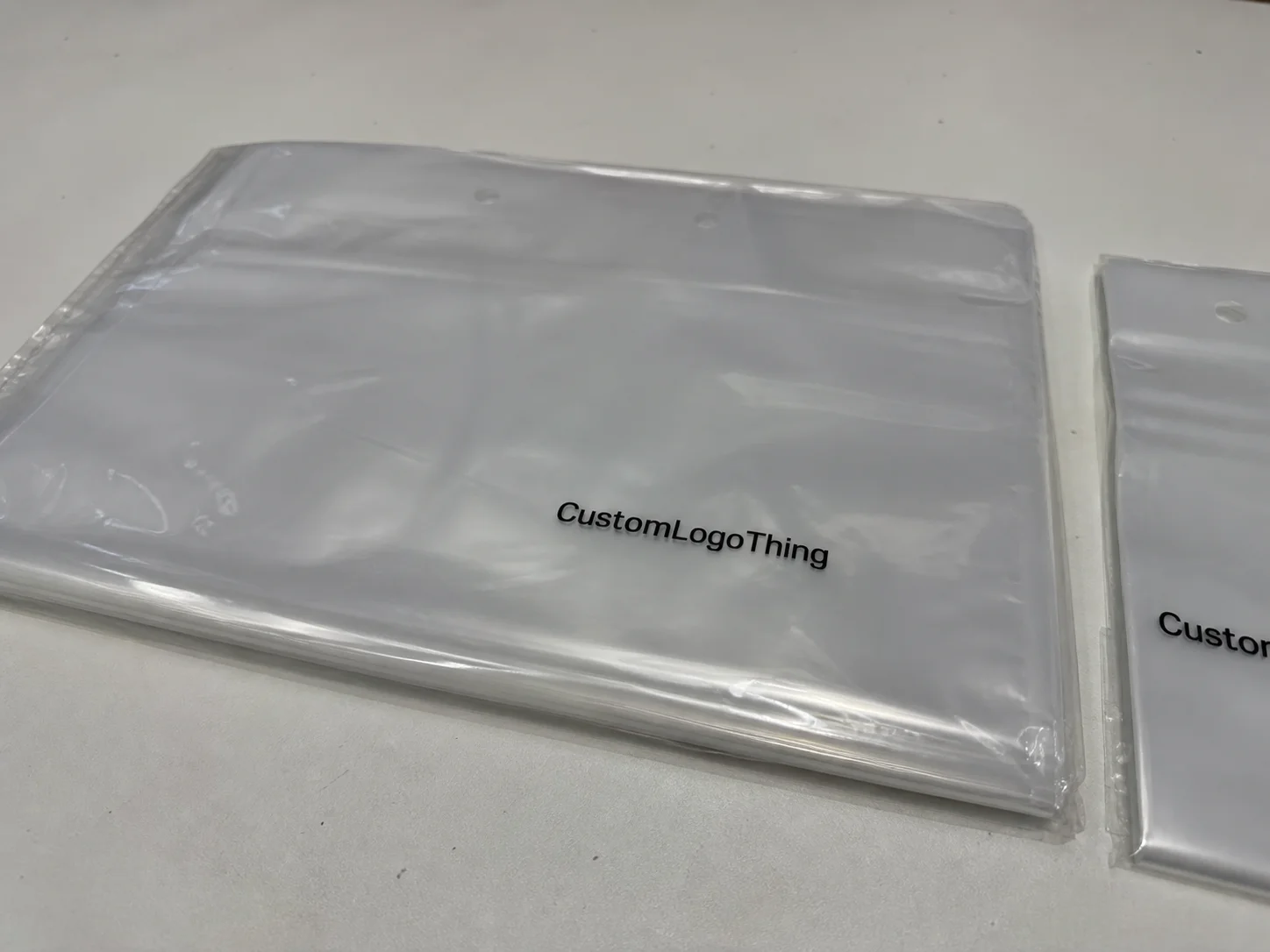
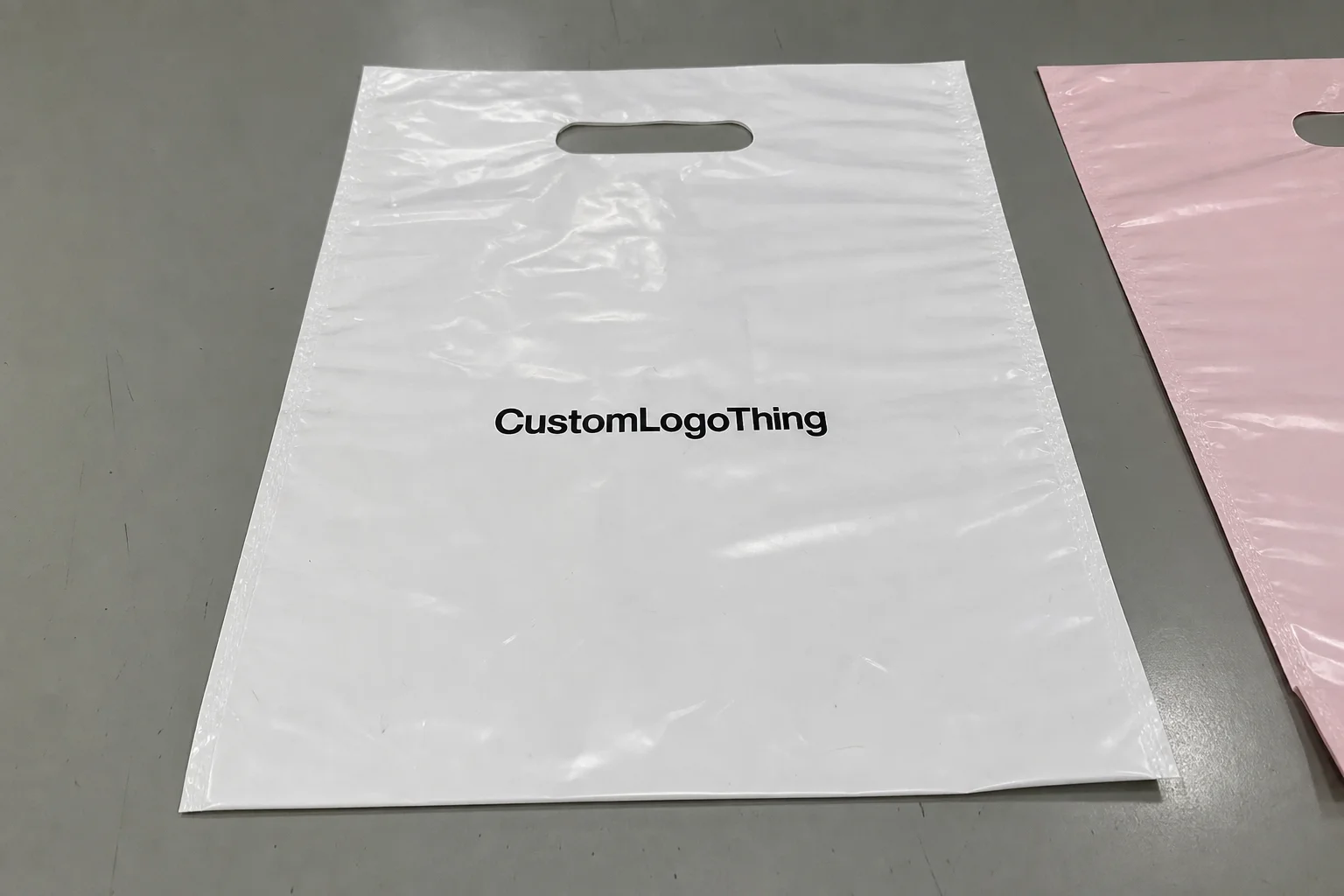
Most packaging problems start before production. Brands ask for a price before the fold is defined, then discover the garment footprint changed the bag size, the closure added cost, and freight was quoted on the wrong carton count. A clear retail launch Slider Lock Clothing Bags factory quote checklist avoids that by locking the spec before anyone starts pricing it.
These bags have one job: protect the product and present it cleanly on shelf. If the fit is wrong, the pack looks stuffed or loose. If the film is too light, it wrinkles or splits. If the slider jams, store teams hate it. The buyer's question is not "what looks nice?" It is "what spec fits this garment, what does it cost, and how fast can it ship?"
"Buy the fit first, the print second. Everything else is just a way to spend more on the wrong bag."
Retail launch slider lock clothing bags: what buyers miss
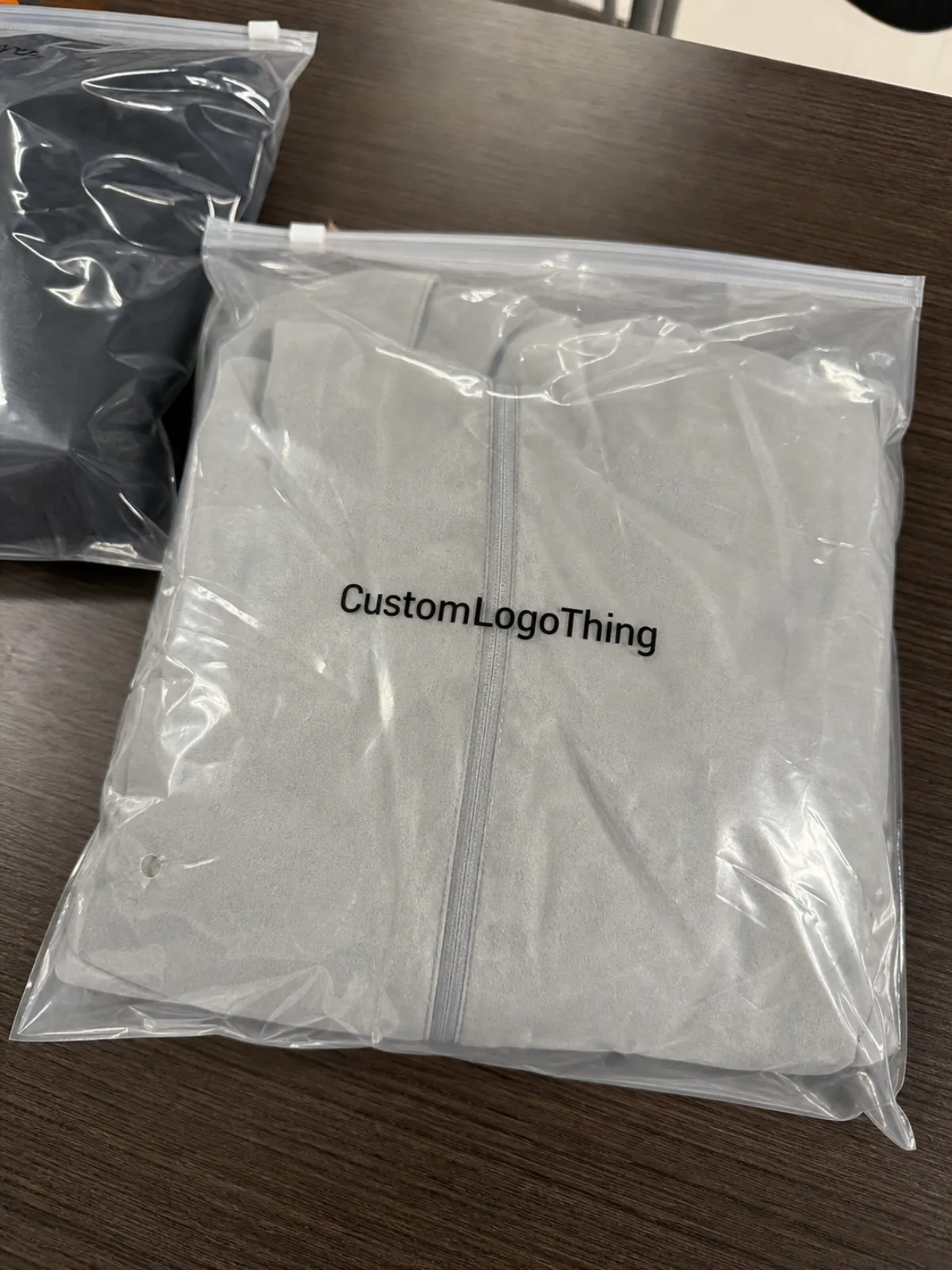
The common mistake is to quote a bag size instead of a garment size. A folded tee, a knit set, a hoodie, and a sock bundle do not occupy the same footprint, even when the mockup looks close. A difference of 20-30 mm can change the presentation from crisp to cramped.
That is why the quote request should begin with the product, not the budget. If the fold is not defined, the factory can still price the job, but the number will not be useful. The same is true for handling. Retail launch packaging is opened, restacked, and moved more often than shipment packaging, so the closure and surface finish matter on day one and after weeks in store.
Cost control is easy to misread. A low unit price can hide repack labor, excess freight volume, or retailer complaints after launch. The better comparison is landed cost plus presentation risk. If the bag saves a cent but creates a problem at receiving or on shelf, it is not the cheaper option.
Slider lock formats that fit launch-ready apparel
Slider Lock Clothing Bags are not one-size-fits-all, even when a supplier tries to simplify the quote. The right format depends on the garment family, how often the bag will be opened, and how much shelf visibility the product needs.
- Folded tees and tanks: narrower bags usually work best, with enough height to keep the fold straight and the logo centered.
- Knitwear and hoodies: need more width or a gusset so the bag does not pinch the garment into a bulge.
- Socks, intimates, and accessories: can use smaller formats, but the top edge still needs enough strength to open cleanly.
- Launch bundles: benefit from a larger front panel, cleaner print discipline, and a closure that can be reopened without damage.
Film choice changes the way the product reads. Clear film gives the strongest visibility and works when color, fold, or detail is part of the sell. Frosted film softens the view, hides minor handling marks, and often feels more premium on shelf. Tinted film can look deliberate, but it can also mute the garment if the tone is too heavy.
Closure behavior matters just as much. Easy-open sliders help when the bag will be reopened during retail handling. Tamper-evident styles fit tighter control. Reusable locks are useful for storage and internal handling, but they need consistent tolerances. A cheap slider that jams halfway through store setup is not a small defect; it is a recurring complaint.
Retail extras also move cost and performance: hang holes, euro slots, gussets, anti-scratch finishes, and edge trims all change the quote. If they are not in the brief, the factory may price a different product from the one you want.
Material, thickness, and print specs buyers should request
Lock the spec before asking for pricing. That means film type, thickness, dimensions, closure width, finish, print position, and any secondary features. Missing details lead to loose quotes, and loose quotes are where budget overruns hide.
For most retail apparel launches, 40-50 micron film is usually enough for lighter folded tees, socks, and accessories. 60-80 micron is safer for knitwear, multi-item bundles, or any pack that will be handled repeatedly. Thicker film feels sturdier and protects better, but it adds resin cost and freight weight. Too light feels flimsy; too heavy can make the package look overbuilt.
Finish matters too. Gloss film reads brighter and more transparent. Matte or frosted film hides fingerprints and handling marks, which is why many premium launches use it when the garment itself is simple. If branding is minimal, the surface finish becomes part of the design language.
Print instructions should be specific enough that the factory cannot guess. Say whether the job is one-color, multi-color, spot-matched, full-panel, outside-only, or reverse printed. Reverse print is often better for clear bags because it protects the ink from wear. Outside-only print can be cheaper and quicker, but it scuffs sooner.
Ask for tolerances on size, seal, and clarity. A serious supplier should state the dimensional variation it accepts, how it checks seal integrity, and how it controls optical clarity. If the answer is vague, the process probably is too.
For shipping tests on packed retail cartons, referencing ISTA methods is more useful than relying on intuition. If the launch includes paper inserts or outer cartons, EPA recycling guidance is a better baseline than wishful wording on the bag itself.
Pricing, MOQ, and factory quote variables that move unit cost
A useful quote should show the variables that move cost: size, thickness, closure style, print coverage, carton loading, and whether the bag uses standard tooling or custom dimensions. If the factory sends one number with no context, that is a placeholder, not a quote.
MOQ changes the economics quickly. Smaller runs carry a higher unit price because setup, color matching, and machine calibration are spread across fewer pieces. Larger runs benefit from better resin buying and more efficient production flow. The break point depends on bag size and print complexity, but the unit cost usually improves once the order moves past the low-thousands and becomes repeatable volume.
| Spec tier | Typical use | 5,000 pcs | 20,000 pcs | Notes |
|---|---|---|---|---|
| Economy clear slider bag | Light tees, socks, simple launch kits | $0.12-$0.18 | $0.07-$0.11 | 40-50 micron, minimal print, standard closure |
| Standard frosted printed bag | Mid-range retail apparel, branded sets | $0.18-$0.28 | $0.11-$0.16 | 50-60 micron, one-color logo, hang hole or euro slot |
| Premium launch bag | Higher-touch collections, giftable bundles | $0.28-$0.45 | $0.18-$0.30 | 60-80 micron, fuller print coverage, better finish, tighter presentation |
Those numbers are ex-factory ranges, not landed cost. Freight, duty, carton pack, plate charges, sample fees, and currency movement can change the real total quickly. A quote can look low until the setup and freight lines appear.
To compare suppliers properly, send the same information to every one: artwork files, target quantity, destination, carton requirements, and any retailer-specific compliance marks. Ask for three versions if possible: economy, standard, and premium. That makes the tradeoffs visible instead of hiding them inside one blended number.
Production process and timeline from file approval to shipment
A realistic production flow is usually boring. That is good. The less drama in the timeline, the better the odds the order will land on time.
- Quote review and spec confirmation - same day to 2 business days if the brief is complete.
- Artwork check and dieline review - 1-3 business days for clean files, longer if the layout needs corrections.
- Proof or sample approval - 2-7 business days depending on whether the factory sends a digital proof or a physical sample.
- Mass production - often 10-20 business days for standard custom runs, longer for unusual sizes or film specs.
- Inspection and carton packing - 1-3 business days.
- Export booking and freight - a few days by air, several weeks by ocean, depending on the lane.
Stock-size bags with custom print move faster than fully bespoke shapes. Standard tooling means less setup and fewer chances to miss a detail. Custom dimensions, special finishes, or strict retail packaging rules add time because every change creates another checkpoint.
The delays that matter are predictable: missing artwork dimensions, loose color direction, barcode placement that does not fit the panel, and late sample sign-off. A single approved master sample and one written spec sheet prevent most of that. So does one decision-maker who can answer questions without routing every correction through a committee.
Build buffer into the launch schedule. A factory can do everything right and still lose time in freight booking or transit.
Print, closure, and presentation options that make the product sell
Presentation details separate retail-ready packaging from a plain storage bag. Clean logo placement, proper transparency, smooth slider action, and edge finishing that does not snag on fixtures all change how the line feels on shelf.
Common branding options include one-side print, full-wrap print, label-only branding, and QR code placement. One-side print is usually enough for a clean launch and keeps setup cost under control. Full-wrap print gives more visual control, but it can crowd the product and raise the cost quickly. Label-only branding works when the film itself should remain as clear as possible. QR codes are practical if the packaging needs to connect to care instructions, sizing help, or launch-page traffic.
There is a thin line between premium and overworked. A launch bag should frame the garment, not fight it. If the face is crowded with copy, heavy ink, or excessive glare, the product loses impact. Keep the main panel calm.
Compatibility checks matter here. Confirm that barcodes scan through the film if the retail system uses them. Check hang-tag clearance so tags do not bunch under the closure. Make sure the slider opens and closes without chewing up the print. These seem small until the first store team handles hundreds of bags and the weaknesses become obvious.
For brands that want a cleaner paper trail across packaging components, FSC-certified inserts or cartons can support the broader presentation. That helps if the bag is part of a larger launch kit rather than the only packaging element.
Quality checks, compliance, and risk control before you place the order
The right factory should confirm the basics before mass production begins: dimensions, seal integrity, film clarity, print registration, closure function, carton count, and the condition of the pack-out. If those checks are skipped, the order is carrying unnecessary risk.
Ask for photos or video from the first production run. That is one of the cheapest ways to catch a bad print position, a crooked seal, or the wrong surface finish before thousands of units are completed. If the launch date is fixed, the first real inspection should not happen after the shipment lands in your warehouse.
Compliance depends on the market and the channel. Some buyers need material declarations, recycled content statements, resin codes, or retailer-specific packaging rules. Others only need a clear spec sheet and proof that the bag matches the approved sample. If the packaging includes environmental claims, keep the language specific and supportable.
For film strength and thickness, ask what test method the factory uses. An ASTM method such as ASTM D882 for tensile properties is far more useful than a vague statement like "we check it by feel." That kind of answer usually tells you everything you need to know about the supplier's control system.
A simple risk-control step saves a lot of pain: approve one master sample and one written spec sheet before production begins. If either changes later, the price, the timeline, or both should change too.
Retail launch slider lock clothing bags factory quote checklist: what to send for a clean factory quote and next steps
If you want a quote that can actually be compared, send one complete brief. Not three partial answers and a mood board. The factory needs garment dimensions, target quantity, preferred film, print file, packaging requirements, destination, and delivery deadline in the same message. That is the core of a usable retail launch slider lock clothing Bags Factory Quote checklist.
- Garment size: folded width, height, and thickness range.
- Bag spec: clear, frosted, or tinted; micron or mil; slider style; hang hole or euro slot.
- Print: logo file, color count, placement, and whether reverse print is required.
- Quantity: ask for at least two or three volume tiers.
- Delivery: destination, freight method, and required in-hand date.
- Compliance: retailer rules, material declarations, or recycling language.
Ask for three quote versions if possible: economy, standard, and premium. That makes the price of each upgrade obvious. A thicker film, a better slider, or more print coverage should create a clear step in cost.
Request a sample, a dieline, or at least a digital proof before approval. That is the cheapest point to catch fit mistakes, bad proportions, and logo placement errors. It costs far less to fix a mistake on screen than to correct it after production.
If the quote does not clearly show specs, MOQ, lead time, freight assumptions, and proof status, it is not ready for retail. A buyer who treats those items as optional usually ends up paying for them later.
What should I include in a retail launch slider lock clothing bags factory quote request?
Include bag dimensions, film thickness, closure type, print details, quantity, destination, and the required delivery date. Attach artwork files or a clear mockup so the factory can price setup, print coverage, and color matching correctly.
What MOQ is typical for custom slider lock clothing bags?
MOQ depends on size, film spec, and print complexity, but custom runs usually get better pricing as volume rises. Ask for multiple quantity tiers so you can see where the unit cost drops enough to justify a larger order.
How do I choose the right thickness for retail clothing bags?
Match thickness to garment weight, handling frequency, and shelf presentation goals instead of picking the cheapest film by default. Heavier gauges feel sturdier and protect better, but they add cost and freight weight.
Can the factory print branding on slider lock clothing bags?
Yes, most factories can print logos, care icons, QR codes, or full-panel graphics if the artwork is supplied in the correct format. Confirm whether the print is one-sided, full-wrap, or label-based because that changes setup and unit cost.
What is a realistic lead time for retail launch packaging?
Lead time depends on approval speed, order size, and whether the bag is standard or fully custom. Fast approval of artwork and samples is the easiest way to keep the production schedule from slipping.