A reorder is where a packaging program either stays disciplined or starts drifting. The Slider Lock Clothing Bags reorder planning guide is built around a simple reality: the fastest quote usually comes from the clearest spec, not the broadest request. A prior sample, a correct carton count, and a dimension sheet that matches the approved run will save more time than a long email thread trying to reconstruct what was ordered last season.
That matters because small shifts in a bag spec can change more than appearance. Moving from a 2 mil film to a 3 mil film affects stiffness, stack height, shipping weight, and puncture resistance. A slider that feels smoother in the hand can also change how easily a folded garment enters the bag. Even a modest adjustment can send a reorder back into proofing if nobody confirms the details early.
For apparel buyers, the job is not to browse options. It is to control variation. A reorder should either match the last approved version or document a deliberate change with cost, lead time, and minimum quantity spelled out before production starts.
Slider lock clothing bags reorder planning guide: where delays start
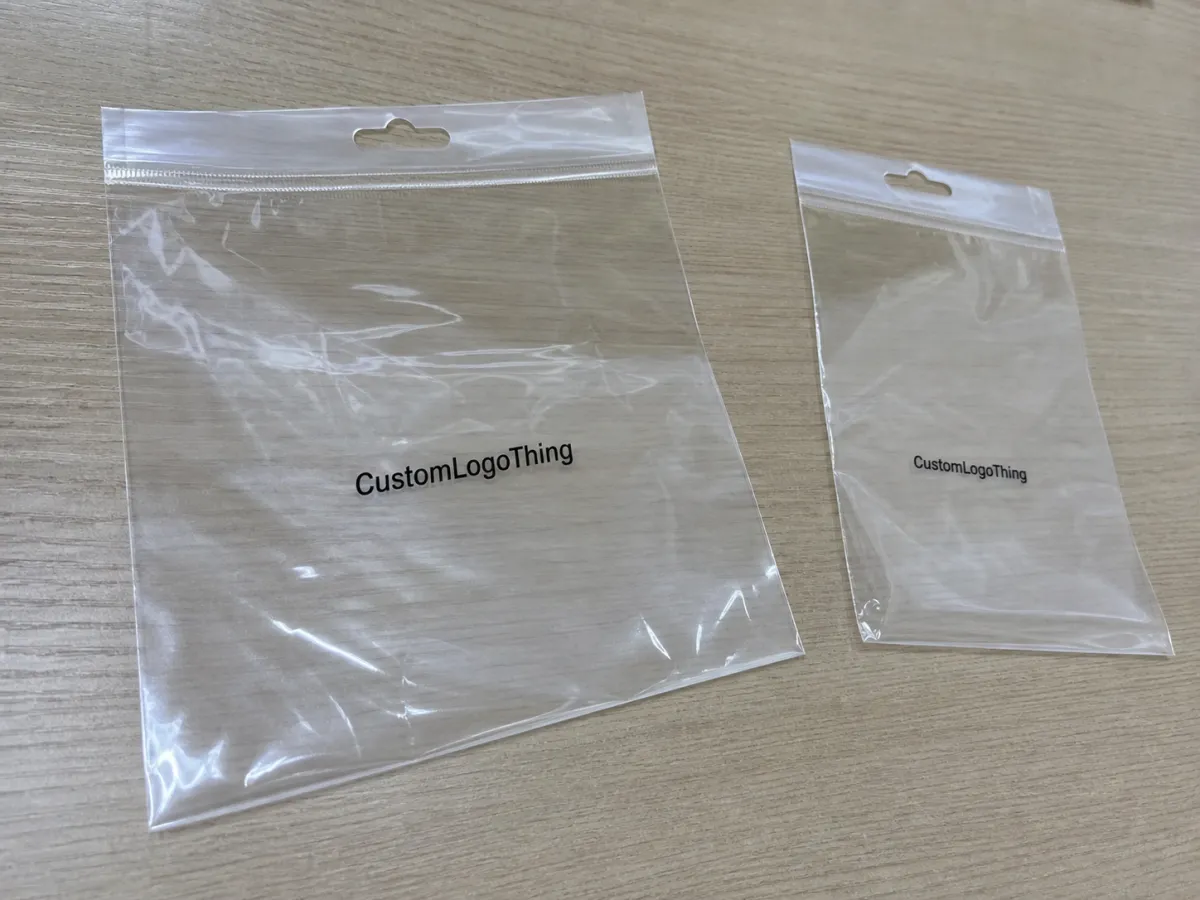
Most delays begin with memory, not manufacturing. A team remembers that the last bag was “around 12 by 16” and “pretty clear,” then discovers the actual run was 11.75 x 15.5 with a 2.5 mil film, a 1.5-inch slider, and 250 bags per carton. Those are the kinds of details that seem harmless until the order is already in motion.
The second common problem is treating a repeat order like a first-time launch. New quotes need exploration. Reorders need confirmation. If the garment size, fold method, print, closure style, and carton pack have not changed, the supplier should be able to compare the new request against the previous job and identify drift before pricing is finalized. That is where the time savings usually appear.
Buyers also underestimate how much the bag itself affects fulfillment. A lighter tee in a lower-gauge bag may pack cleanly and hold a neat profile. A hoodie or thick sweater needs more film strength and often a little extra width or depth to avoid forcing the seal. Once the garment gets bulkier, the bag is no longer a simple cover; it becomes part of the packing system, and the quote should reflect that.
“If the old order number is available, use it first. That one piece of data can remove half the guesswork.”
The slider lock clothing Bags Reorder Planning guide works best when the buyer stops describing the bag in general terms and starts describing the production version in precise terms: dimensions, gauge, slider length, print coverage, pack count, and whether the next run must match an approved sample exactly. That shift keeps the conversation concrete, which is usually what shortens the turnaround.
Bag construction, closure, and material choices that affect performance
Slider closures are popular for apparel because they are easy to open, easy to reseal, and easy for a customer to understand at a glance. They also give the package a more finished appearance than an open-top poly bag. For clothing programs that care about shelf presentation, that matters. A bag that clouds, creases sharply, or splits around the closure can make the product look lower grade than it is.
Material choice drives most of the performance. LDPE is common because it offers flexibility, clarity, and a soft hand feel. Coextruded films can improve toughness and seal behavior, especially when the bag needs more stiffness or a better balance between inner strength and outer print quality. Recycled blends can support sustainability targets, but they should be evaluated for haze, odor, consistency, and color variation. Not every recycled film behaves the same way, and that is exactly why sample approval is worth the extra step.
Smaller construction choices can change the end result more than many buyers expect. Some apparel programs need a bottom gusset so the folded garment lies flatter in the carton. Others need a flatter profile for warehouse handling, which changes the seal layout and the amount of headspace above the closure. Slider feel matters too. A loose closure can feel cheap; one that is too tight can make packaging slower and frustrate fulfillment staff.
For teams comparing performance claims, shipping and compression testing are worth asking about. Industry references such as ISTA packaging test standards help frame how a bag should hold up under handling, compression, and transit stress. If the broader packaging program includes fiber-based components, FSC certification can be relevant to sourcing claims, even if the clothing bag itself is plastic.
The practical takeaway is straightforward: a bag that looks similar on paper can behave very differently in production. The Slider Lock Clothing Bags reorder planning guide keeps that from slipping through by forcing the buyer to compare the actual build, not just the product name.
Specs buyers should lock in before requesting a quote
A reorder quote moves faster when the spec is locked before pricing starts. Width, height, gauge, slider size, print coverage, venting, carton pack count, and ship-to location all affect the final number. If one of those inputs is vague, the estimate may look attractive and still fail when the run is built.
Garment type changes the math quickly. A slim folded tee can fit comfortably in a lower-gauge bag with little headspace. A hoodie needs more room for loft, especially if the fold includes a drawstring or a retail insert. Sweaters usually sit in the middle, but even there, the fold method matters. A packed set with tissue, hangtag, and insert card is a different load than a bare garment in a plain bag. One size rarely serves every apparel line cleanly.
Print and labeling deserve the same level of attention. Some buyers want a clear, unprinted bag with a warning line or SKU label. Others need one-color branding, barcode placement, or warehouse instructions. If the bag will be scanned in a fulfillment center, barcode location should be confirmed before artwork is approved. Moving it later can trigger reproofing, and that usually pushes the schedule back.
A useful reorder checklist compares the previous production sample against the current need. Check the old PO, the physical bag, the packed garment dimensions, and the carton count. Then confirm whether the next order is an exact repeat or a controlled change. That is how the Slider Lock Clothing Bags Reorder Planning guide becomes a working buying tool instead of a loose request.
- Dimensions: Confirm usable interior size, not only nominal size.
- Gauge: Lock the film thickness in mils or microns.
- Closure: Verify slider length, profile, and opening feel.
- Print: Specify colors, coverage, and one-side or two-side placement.
- Pack count: State units per carton and cartons per pallet if relevant.
Pricing, MOQ, and unit cost drivers for reorders
Quote differences usually come from five places: resin cost, film thickness, print colors, custom sizing, and setup. A reorder that uses an existing size and print layout is simpler to price than a new custom film with full-coverage branding. If the job needs new tooling or a different seal structure, MOQ often moves with it.
That is why quotes should be compared on equal terms. Two suppliers can quote the same “bag” and still include different pack counts, freight assumptions, and sample charges. One may quote ex-works pricing. Another may include domestic freight. A third may hide setup inside a higher unit price. If the buyer looks only at the bottom line, the lowest line item may not be the lowest landed cost.
| Option | Typical use | Likely quote impact | Watch-out |
|---|---|---|---|
| Stock-style repeat size | Fast replenishment for a stable garment line | Lowest setup burden; often the easiest reorder | May not match a previous custom fit exactly |
| Custom size, no print | Programs that need exact garment fit | Moderate cost; MOQ can rise with size changes | Small dimension changes can force a new sample |
| Custom size with one-color print | Branded retail or wholesale apparel | Higher setup and press time | Confirm artwork, ink coverage, and proof timing |
| Thicker film or recycled blend | Heavier garments or sustainability-driven programs | Usually higher unit cost | Check clarity, stiffness, and seal consistency |
On a simple repeat run, buyers may see pricing in the neighborhood of $0.18-$0.28 per unit for 5,000 pieces, depending on thickness and print coverage. More complex custom runs can move higher quickly. That range is not a promise; it is a practical reference point that helps teams sanity-check quotes before they spend time on artwork changes or sample corrections.
For a slider lock clothing bags reorder planning guide, the goal is not chasing the lowest number. It is identifying the lowest reliable landed cost, including damage risk, rework risk, and the cost of carrying excess inventory because the bag was overbuilt.
Process, proofing, and lead time for repeat orders
Repeat orders move fastest when the approval path stays simple. The cleanest sequence is RFQ, spec confirmation, proof, approval, production, inspection, shipment. Each time a buyer interrupts that flow with an unclear edit, the schedule stretches. The delay is usually modest on its face, but it is enough to miss a cut-off or push delivery into the next window.
What speeds approval? A previous PO, approved artwork, dimensioned sample photos, and one person who can sign off quickly on minor adjustments. If the request is a true repeat, the supplier should not need to rebuild the job from scratch. They should be able to compare the new request with the old record and confirm whether the film, print, and carton pack match.
Typical lead time often lands around 12-15 business days from proof approval for a standard repeat run, but that still depends on material availability and factory load. Holiday capacity, paperwork lag, and resin substitutions can add days. If the bag must match an earlier order exactly, send the old order number and sample images before asking for a timeline. That single step prevents a lot of avoidable guessing.
There is a practical process lesson here. Buyers who use the slider lock clothing bags reorder planning guide as a checkpoint tend to cut back-and-forth. Buyers who skip it tend to discover surprises at proof stage, where every surprise costs more than it would have cost in the first email.
“The best reorder is the one that looks boring in proof review.”
How to match sizes to garment programs without overbuying
The easiest mistake is grouping garments by category alone. Tee, hoodie, sweater, set. That sounds organized, but folded volume is the real driver. A heavyweight hoodie with a thick drawstring and insert card may need a different bag than a lightweight sweatshirt, even if both are sold as tops. The label matters less than the packed shape.
Measure the folded garment after the actual packing process is complete. Include tissue, hangtag, backing card, and any retail insert. Then add a tolerance band for production variation and warehouse handling. If one line folds slightly tighter than another, the bag still needs to accept both versions without forcing the closure or crushing the garment corners.
Standardizing too aggressively can backfire. Fewer bag sizes simplify purchasing, but they can also create more empty space, higher freight volume, and a looser shelf presentation. Too many sizes create a different problem: more SKUs, more MOQ pressure, and more opportunities for the wrong size to get pulled from inventory. The better answer is usually one or two bag sizes that cover most units, with a custom exception for bulky styles.
For multi-SKU apparel lines, a basic planning grid keeps the process practical:
- Group products by folded size, not by marketing category.
- Match each group to the smallest bag that fits cleanly.
- Test one packed sample before placing the full reorder.
- Reserve special sizing only for outliers.
That discipline keeps the slider lock clothing bags reorder planning guide focused on fit efficiency. Less empty space usually means better carton utilization and fewer complaints from the warehouse side.
What a reliable packaging partner should prove on reorders
Promises do not carry much weight on a reorder. Proof points do. A reliable supplier should be able to quote quickly, confirm the spec against a prior job, retain samples, and explain any change before the run begins. If they cannot find the last approved version, the process is already slower than it should be.
Look for change control. The vendor should be able to state what is identical, what is revised, and what the change means for cost or timing. If the closure length changed by half an inch, that should be clear. If the film changed from clear LDPE to a coextruded structure, that should be clear too. The point is not to block improvements. It is to avoid accidental ones.
Operational signals matter as much as price. Stable quality checks, honest lead-time updates, and the ability to handle both smaller replenishment runs and larger seasonal buys are strong indicators of a dependable process. For buyers, that lowers risk in a very practical way: fewer missed dimensions, fewer surprise charges, and fewer delays during peak demand. The slider lock clothing bags reorder planning guide should help a supplier show that discipline instead of hiding behind generic sales language.
If your team wants a broader purchasing benchmark, packaging trade resources such as the Packaging Institute can help frame questions around sustainability, materials, and transit performance. That context is useful when the reorder sits inside a wider wholesale or retail packaging program.
For internal reference, Custom Logo Things keeps related buying information organized through the FAQ and the Wholesale Programs page, which can help when a buyer is comparing repeat orders across multiple product lines.
Next steps: build a reorder brief that gets faster quotes
The cleanest way to move a reorder forward is to send a brief that answers the estimator’s first questions before the email exchange starts. Include bag dimensions, gauge, closure type, print details, target quantity, ship-to location, and whether the new order must match a prior run exactly. If any one of those is missing, expect extra clarification.
Attach the previous PO, a sample photo, and the carton pack count. If you have the approved artwork or a dimensioned spec sheet, include that too. A buyer who supplies those files upfront usually gets a faster and cleaner quote than a buyer who sends only the product name. The difference is not small; it can be the difference between same-day clarification and a multi-day correction cycle.
In some cases, it is worth asking for two pricing paths: an exact match to the old spec and a cost-optimized version with one approved change, such as a different film blend or a revised carton pack. That comparison turns a vague discussion into a real decision frame. It shows the tradeoff in numbers rather than assumptions.
Handled well, the slider lock clothing bags reorder planning guide is less about paperwork and more about control. It helps apparel buyers protect fit, presentation, and landed cost at the same time. If the next run matters, submit the reorder brief with the old order details and ask for a quote that confirms the spec before production begins.
What information do I need for a slider lock clothing bags reorder quote?
Provide dimensions, gauge, closure style, print details, quantity, and whether the new run must match a prior approved sample. Include the previous PO or spec sheet so the supplier can confirm any changes before pricing. The more complete the brief, the less time spent correcting assumptions.
How do I compare slider lock clothing bag quotes fairly?
Compare the same bag size, material, thickness, print setup, carton pack, freight terms, and sample charges across every quote. Check landed cost, not just unit price, because lower-priced quotes can hide setup or shipping differences. If two quotes look close, the one with clearer assumptions usually carries less risk.
What affects MOQ on custom slider lock clothing bags?
MOQ usually changes with custom sizing, print complexity, and whether the order uses existing tooling or a fresh setup. Stock-style reorders often allow smaller runs, while fully custom films and prints tend to require higher minimums. A supplier should explain that tradeoff before the order is approved.
How long does a reorder of slider lock clothing bags usually take?
Lead time depends on approval speed, material availability, and whether the order is a true repeat or needs artwork changes. Submitting the old spec, sample images, and quantity target early is the best way to shorten the timeline. Standard repeat runs often move faster than new custom builds.
Can I change the size or thickness when reordering slider lock clothing bags?
Yes, but any change can affect fit, cost, MOQ, and production timing, so it should be reviewed before approval. If the goal is to control cost, ask for two quotes: an exact match and a revised spec with the tradeoffs clearly shown. That makes the choice easier for purchasing and operations teams alike.

