Retail Merch Caps material and sizing guide choices can look straightforward on a spreadsheet and still go sideways on a shelf. Two caps may share the same logo, the same color, and the same target price, yet one lands as a polished retail item while the other feels flimsy or awkward the moment a shopper picks it up. That difference usually comes from the quiet details: fabric weight, crown height, panel count, closure type, and how much structure the front panel carries.
Caps are small, but they are not simple. A buyer is not just selecting a blank surface for decoration; they are selecting a physical product that has to sit well in packaging, survive handling, and look convincing under store lighting. The cap has to travel through several environments before it reaches a customer’s head, and each step can expose a weak spec. A soft crown might feel relaxed online and look crushed in person. A stiff front panel can photograph beautifully and still sit badly on a broader range of heads.
Retail programs reward precision. A cap that arrives with consistent shape, clear sizing logic, and decoration suited to the fabric will usually outsell a prettier concept that ignores wearability. That is especially true when the item sits next to other branded goods and has only a few seconds to justify its price.
Why the Right Cap Spec Matters on the Shelf
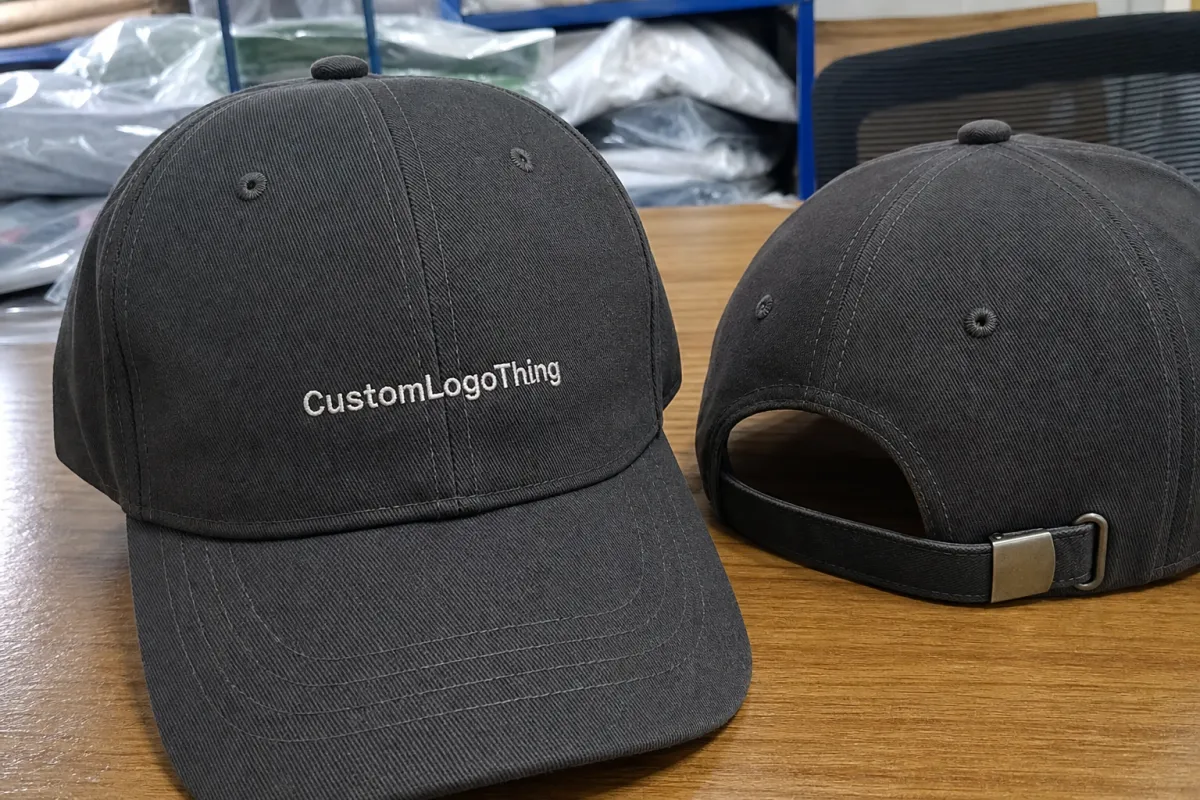
Most buyers start with artwork. The better ones start with the spec. A stitched logo is only as strong as the fabric beneath it, and a clean mockup can hide practical problems like crown collapse, seam tension, or a closure that does not accommodate the intended audience. Under bright retail lighting, those issues become obvious fast.
Structure changes perceived value more than many teams expect. A six-panel structured cap with a firm front panel usually reads as more finished than a limp cap with no support, even if both use the same decoration. That is not just visual preference. A structured cap holds embroidery better, resists puckering, and keeps its front profile after repeated try-ons. A softer cap can feel more casual and comfortable, but it asks more from the artwork and more from the packaging.
The spec sheet should always include shell fabric, panel count, crown depth, sweatband type, closure, and fit range. Those details determine whether the cap is adjustable or fixed, how broad the head-size tolerance is, and whether the product is suitable for adults, youth, or a mixed audience. A buyer who ignores these points often discovers too late that the “standard” fit is standard only for a narrow slice of customers.
Retail presentation matters too. A cap that arrives in a neat shipper, retains its shape in transit, and opens cleanly on a display wall feels more expensive than one that is bent flat in a loose carton. Packaging is not a side issue. If the program uses FSC certified cartons, kraft paper inserts, or recycled materials, those components should be matched to the product spec so the sustainability story feels deliberate rather than bolted on.
“A cap that fits a wider range of heads and still keeps its shape on the shelf usually earns repeat orders faster than one that only looks good in a render.”
That is why a practical Retail Merch Caps material and sizing guide should begin with use case. A boutique drop may justify premium handfeel and tighter packaging. A fan-merch wall or a broad retail assortment usually needs a more forgiving fit and a closure that works for most shoppers without explanation.
How Cap Construction Changes Fit and Wear
Structured and unstructured caps solve different problems. A structured crown has internal support, so the front panels stand up and protect the decoration. That makes it a strong choice for embroidery, woven patches, and retail displays that need a sharper silhouette. An unstructured crown is softer and tends to break in quickly, which many casual buyers like because it feels less rigid from the first wear. It also has less visual authority on the shelf.
Panel count affects both style and production behavior. Six-panel caps are common because they create a familiar rounded shape and generally work well across a broad audience. Five-panel caps flatten the front, which gives more room for larger graphics and a streetwear feel. Foam-front caps sit in their own category; they create a bold, high-contrast face for print, but they need the design to justify the format. Without strong artwork, foam can look promotional rather than retail-ready.
Closure style is where most of the sizing flexibility lives. Snapbacks are the most forgiving for adult programs because they cover a wide adjustment range and are easy to explain on a product page. Strapbacks can feel a little more refined. Hook-and-loop closures are economical and simple, though they do not always age as cleanly. Fitted caps can look premium, but they only make sense when the target size range is known and narrow enough to reduce returns.
Decoration needs to follow the construction, not fight it. Dense embroidery on a soft front panel can cause pulling or visible puckering. A patch can stabilize the front and hide seam transitions, while print or heat transfer depends on the surface and the temperature tolerance of the fabric. Even crown depth matters: a shallow fit can make the logo appear too high or too low once the cap is worn, which is why approval photos are not enough on their own.
Material Choices That Hold Up in Retail
Cotton twill remains one of the safest retail choices because it feels familiar, behaves predictably, and takes embroidery well. A 7 to 9 oz twill typically gives enough body for a clean front profile without turning the cap into a stiff shell. Brushed cotton leans softer and can read as more premium or more lifestyle-driven, depending on the color and decoration. It also tends to hide handling marks better than very smooth fabrics.
Polyester has a different job. It is useful when color retention, wrinkle resistance, and shape stability matter more than a natural handfeel. That makes it a sensible option for performance-led merch, bright graphics, and programs that expect long shelf time or repeated try-ons. The tradeoff is that polyester can feel less grounded than cotton unless the brand image supports a sharper, more technical look.
Blends often split the difference. A cotton-poly mix can soften the handfeel while keeping the cap more stable than pure cotton in some constructions. Wool blends still have a place in heritage-inspired retail because they convey a classic, familiar texture. Foam-front styles are louder by design and can be useful where the goal is instant visual impact, but they need careful pack-out and shipping protection because they crease more easily than a twill cap.
Sustainability claims need precise language. Recycled materials may refer to the cap shell, the packing components, or both. FSC certified cartons do not make the cap itself sustainable, and a biodegradable sleeve does not automatically change the rest of the supply chain. Buyers who check the actual material spec avoid overpaying for a claim that sits only on the insert card.
Practical rule: choose softer or brushed fabrics when comfort and premium touch matter most; choose firmer fabrics when the cap needs to hold shape, handle decoration cleanly, and survive repeated handling on the sales floor.
| Cap Build | Typical Feel | Best Use Case | Indicative Unit Cost at 1,000 | Indicative Unit Cost at 5,000 |
|---|---|---|---|---|
| Cotton twill, structured | Clean, familiar, balanced | General retail, logo caps, boutique basics | $3.10-$4.20 | $2.05-$2.85 |
| Polyester, structured | Crisp, stable, colorfast | Bold graphics, sport-inspired merch | $3.25-$4.50 | $2.20-$3.05 |
| Five-panel, cotton blend | Flat-front, modern | Patch programs, streetwear drops | $3.40-$4.80 | $2.30-$3.20 |
| Foam-front with print | Bold, high visibility | Promotional retail, statement graphics | $2.90-$4.10 | $1.90-$2.70 |
These numbers are directional, not a promise. Decoration, labels, packaging, carton spec, and shipping all move the final landed cost. A cap that looks cheap on paper can become expensive once sewn labels, custom inserts, or retail folding instructions are added. The same is true in reverse: a slightly more expensive base cap can be cheaper overall if it cuts down on rework, rejects, or avoidable pack-out problems.
Production Steps, Lead Time, and Sampling
Good production starts with a written spec that leaves little room for interpretation. That means confirming crown depth, closure type, fabric weight, decoration placement, packaging, and the exact head-size range if the cap is fitted. Vague notes like “standard cap” create trouble because factories and buyers often use the word differently.
Sampling is where most misunderstandings surface. A pre-production sample should prove front-panel shape, logo size, stitch behavior, closure function, sweatband comfort, and overall wearability after adjustment. If the cap will use a custom insert, branded tissue, or a special fold, those pieces should be included in the sample. A shell-only sample is not enough for retail approval because the buyer is not purchasing a shell.
Lead time depends on more than country of origin. Simple domestic programs can often move through bulk production in about 12 to 15 business days after approval. Overseas orders usually run longer, often 20 to 35 business days depending on decoration, fabric sourcing, and freight. Rush schedules are possible in some cases, but they reduce room for changes and usually limit customization. If a buyer still wants special labels, premium packaging, or multiple cap variants, the calendar stretches quickly.
Color approval can add time when the brand expects exact thread matching or a specific fabric tone. Embroidery approval can also stall if the stitch density is too high for the material and the front panel starts to pull. These are not cosmetic issues. They show up in bulk if the sample is approved too casually.
For shipping and transit testing, teams often use practical pack-out checks and, for larger retail programs, standards-based thinking such as the test methods described by ISTA. A cap that passes visual approval in the sample room can still arrive flattened if the carton is underfilled, overfilled, or packed without enough internal support.
Cost, Pricing, MOQ, and Quote Inputs
Fabric choice, decoration method, closure type, packaging, and order quantity are the main cost drivers. A simple embroidered snapback in volume will usually cost less than a limited-run fitted cap with woven patches, custom labels, and folded retail presentation. The higher price is not arbitrary; it reflects more steps, more labor, and more points where the job can be slowed down or rejected.
MOQ changes the math because setup costs get spread across the order. A 144-piece run can look expensive even when the design is modest. At 1,000 units, the same style may move into a more workable retail range. At 5,000 units, the cost curve often improves again, especially if the spec is stable and the decoration is straightforward. Smaller runs are useful, but they rarely enjoy the efficiency that makes volume retail viable.
Quote comparison only works when each supplier is quoting the same thing. Ask for line items. Separate cap body, decoration, labels, sample charges, packaging, and freight. Otherwise one quote may appear cheaper only because it left out the carton spec or assumed a simpler closure. This is one of the fastest ways to make a bad decision while thinking you are being careful.
Retail-ready presentation also needs a decision. Some caps ship in single polybags; others use kraft wraps, folded inserts, or master cartons with no individual retail packaging at all. If the cap is going to hang or sit on a display wall, the buyer should know whether the packaging needs to do visual work or simply protect the product in transit. For sustainability-led programs, recycled corrugated cardboard, FSC certified paper stock, and recycled materials in non-product components are usually easier upgrades than changing the cap shell itself.
A few easy cost controls usually have a bigger impact than buyers expect:
- Use one strong front decoration instead of stacking multiple stitched placements.
- Choose a standard closure unless the target audience has a specific reason to need a premium clasp.
- Keep colors in the standard palette if the artwork already carries the visual weight.
- Standardize pack-out across SKUs so the carton plan does not change from one style to the next.
That is the difference between a quote that looks low and a quote that actually lands well. A clean brief does not just save money; it prevents the kind of missed assumption that shows up later as returns, rework, or a product that does not feel worth the shelf price.
Step-by-Step Retail Merch Caps Material and Sizing Guide
The best way to specify a cap is to work from the shopper outward. Start with the audience, then the fit range, then the material, then the crown shape, and only after that lock decoration and packaging. That order keeps the project tied to real use instead of mockup logic.
- Define the use case. Decide whether the cap is meant for retail shelves, a merch table, a boutique wall, or a broader branded program tied to events or uniforms.
- Choose the sizing method. Adjustable caps suit wider audiences; fitted caps only make sense when the size range is narrow enough to control returns.
- Pick the fabric. Match handfeel, structure, and seasonality to the brand and the decoration method.
- Select the crown shape. Structured, unstructured, five-panel, six-panel, and foam-front styles each carry a different visual and physical profile.
- Finalize decoration. Embroidery, patch, print, or applique should suit the cap body and the support in the front panel.
- Confirm pack-out. Decide whether the cap needs tissue, a folded presentation, a label, or extra protection in transit.
Fit should be tested on more than one head. A single approval sample can hide problems that show up only when different head shapes and sizes try the cap on. Check the cap in the same lighting it will face in retail, adjust it more than once, and wear it long enough to see whether the front panel collapses or the closure starts to feel uncomfortable. A cap can feel fine for thirty seconds and still fail after a longer wear.
Adjustable styles usually cover a practical adult range of roughly 55 to 62 cm depending on the construction, though the exact spread depends on the closure and the band. Fitted caps are more precise and therefore more fragile from a merchandising standpoint. If the audience includes youth, do not assume that a smaller-looking crown equals a youth size. Crown height, band length, and circumference all matter, and the wrong combination is a common source of fit complaints.
Packaging should protect the shape instead of flattening it. Corrugated cardboard shippers, paper wraps, and light internal supports can preserve presentation without pushing the program into premium packaging territory. If the project has a sustainability angle, kraft paper and FSC certified components are easy, visible upgrades. If the supplier claims biodegradable packaging, ask what part of the pack-out is actually biodegradable and under what conditions. That kind of specificity matters more than the label itself.
For longer freight lanes or distribution-center handoffs, ask how the carton is packed and whether the supplier has checked the format against common handling stress. You do not need laboratory testing for every order, but you do need enough discipline to avoid crushed front panels, bent brims, and closures that snag in transit. That is where the Retail Merch Caps material and sizing guide stops being abstract and becomes useful on the buying floor.
Common Mistakes, Expert Tips, and Next Steps
The most common mistake is choosing a fabric because it looks good in isolation. A brushed sample can feel premium and still be too soft for the intended decoration. A stiff poly cap may look sharp and still feel wrong for a comfort-led brand. Material needs to be judged in relation to the logo, the price point, and the way the item will be handled in store.
Another frequent error is ignoring head-size diversity. Programs with a broad adult audience usually need adjustable sizing unless the brand has real fit data and a reason to go fixed. A cap that does not fit comfortably will not get repeated wear, and that shows up quickly in sell-through. Shoppers may not explain the issue in technical language, but they will avoid the item.
Sampling mistakes are just as costly. Some teams approve a cap by sight and forget to wear it. That skips the part where crown depth, closure tension, and panel stability reveal themselves. Keeping an approved sample archive helps. Save the sample, the spec sheet, decoration notes, and one clear on-head photo. Future reorders become faster when the decision history is visible.
These habits save money without degrading the product:
- Request swatches for cotton twill, polyester, and blends so the handfeel is compared before the order is placed.
- Use one spec-sheet format across programs so quotes are easier to compare.
- Keep an approved sample for repeat lines instead of rebuilding the brief from memory.
- Review packaging with the same care as decoration, especially when the cap ships through multiple handling points.
If the brand wants a cleaner sustainability claim, ask whether the shippers can use recycled corrugated cardboard, whether the inserts can switch to kraft paper, and whether any non-product component can be made from recycled materials or post-consumer waste content. Clear language matters here. A broad “eco-friendly” claim without material specifics is usually weaker than a simple, documented packaging change.
The final comparison should always use the same brief across vendors: fabric, sizing method, decoration, pack-out, MOQ, freight terms, and sampling expectation. That is the only fair way to compare quotes and avoid apples-to-oranges pricing. When those inputs are aligned, the cap is much more likely to arrive retail-ready, fit the right audience, and justify its place on the shelf.
That is the practical test. Not whether the cap looks good in a mockup, but whether it holds its shape, wears correctly, and lands in the store in a condition that still supports the brand story.
What materials are best for retail merch caps that need a premium feel?
Cotton twill and brushed blends usually give the softest, most premium handfeel. Polyester helps the cap hold shape and color, especially for bold retail graphics. Foam-front styles can work when the brand wants a louder visual statement, but they need artwork that suits the format and packaging that protects the front panel.
How do I choose the right retail merch cap sizing for adults and youth?
Start with the audience mix and use an adjustable closure if you need the widest fit range. Compare the cap against real head measurements rather than visual guesses, and test samples on different head shapes before locking the size spec. That simple step prevents a lot of avoidable returns.
What usually changes the price of retail merch caps the most?
Material choice, decoration method, and order quantity have the biggest impact on unit cost. Packaging and labeling can add meaningful cost if the cap needs a more finished retail presentation, and smaller runs usually cost more per piece because setup and labor are spread across fewer units.
How long does production usually take for custom retail merch caps?
Sampling and approval can add time before bulk production starts. Domestic runs are often faster, while overseas orders usually take longer but can handle larger scale. Artwork changes, color matching, and approval delays are the most common schedule slowdowns, so a clean brief saves real calendar time.
Which decoration method works best on different cap materials?
Embroidery works especially well on structured caps with firm front panels. Patches can look strong on softer fabrics and can help cover seams or panel transitions. Print or heat transfer may suit smoother surfaces, but each fabric should be tested first so the finish matches the material and the application temperature.


