A Retail Merch Caps reorder planning guide matters because the second order is usually where small differences start to show. A crown measures a little taller than the first run, thread color reads warmer under store lighting, or carton counts no longer fit the receiving plan. Buyers often assume the old purchase order is enough, but the real reference is the approved sample, the final artwork, and the packaging spec that actually got signed off.
For merch teams running repeat retail drops, the job is not to reinvent the cap. It is to keep the same cap looking and packing the same way across months, seasons, or channels without slowing approvals to a crawl. That means treating a reorder as a controlled production run with a known reference, not a memory exercise built around last time's invoice.
Retail merch caps reorder planning guide: where reorders slip first
The first failure point is usually assumption. A buyer finds the old PO, sees the same style number, and assumes the reorder is locked. Then the shipment lands and the fit feels different, the patch sits a few millimeters off-center, or the carton labeling no longer matches the distribution center's intake rules. None of those errors looks dramatic by itself, but in retail merchandising small misses create returns, delays, and avoidable rework.
A repeat cap program is really a stack of controlled inputs: pattern, fabric, decoration, trim, and pack-out. If any one of those changes, the order is no longer truly the same. A supplier may source a similar twill or mesh, but a slightly different weight changes drape. A different thread brand changes sheen. Even a closure substitution can alter how the cap sits on the rack or on a customer's head.
The approved sample matters more than the old PO. The PO tells you what was bought; the sample tells you what was accepted. Those are not always identical in the field, especially if a rushed correction happened between proof and shipment. A strong reorder process starts by comparing the prior run against the signed sample, the final artwork file, and the pack-out instructions line by line.
Early planning pays off in three ways. Approvals move faster because the spec is already controlled. The supplier has less room to substitute material or trim. Retail ship dates are safer because there is room for proofing, production, transit, and store allocation. That becomes more valuable when the same cap is split between multiple destinations or fulfillment partners.
A reorder is only "same order" if the approved sample, not just the old purchase order, is the reference point.
For programs built around custom embroidered hats, patch caps, or promotional headwear tied to a retail line, the best mindset is straightforward: verify the repeat as if it were a fresh run, because the smallest deviation is often the one that gets noticed first.
Cap product details that stay consistent across repeat retail runs
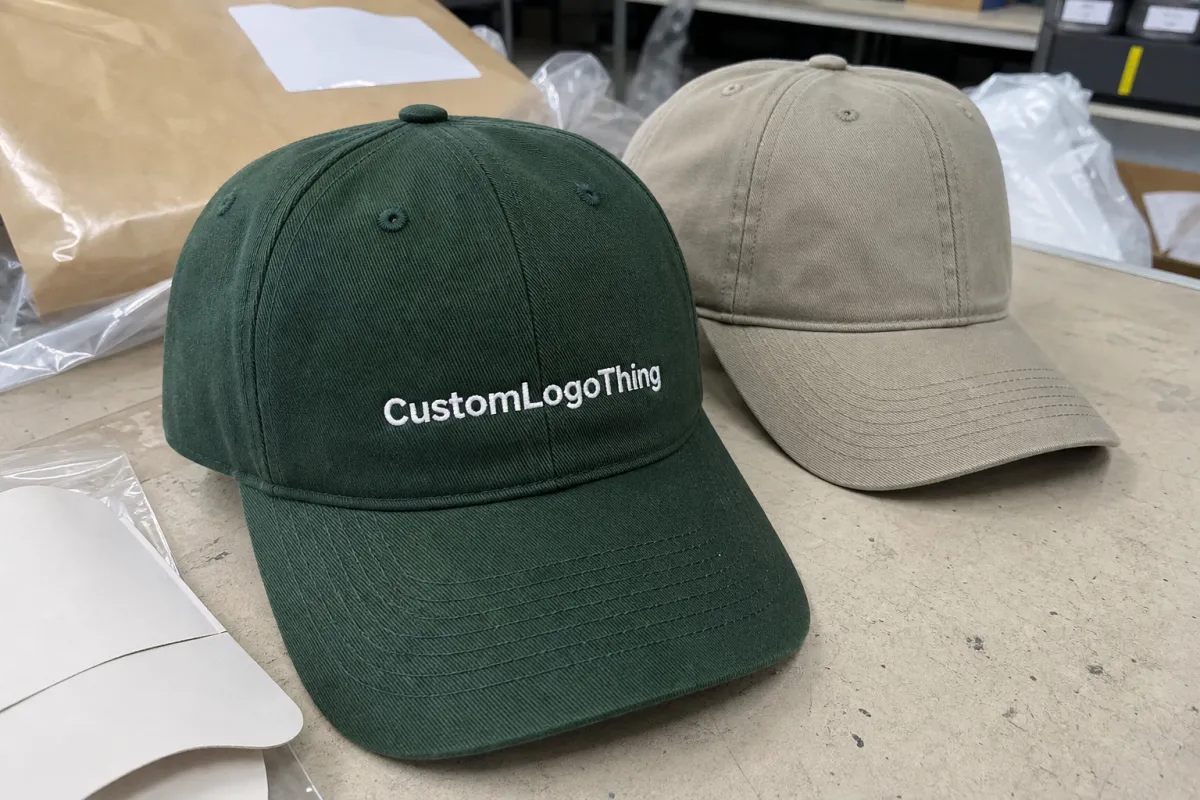
Most Retail Merch Caps fall into a familiar set of styles: structured six-panel caps, unstructured six-panel caps, dad caps, truckers, and rope caps. Each has its own visual language. A structured cap keeps a cleaner front panel for embroidery or a patch. An unstructured dad cap sits lower and softer, which changes how a logo reads. Truckers introduce mesh, foam, or a higher-profile front that can feel more casual or more promotional depending on the build. Rope caps carry a specific vintage retail look, but the rope itself becomes a critical trim item that needs close matching.
The details that should stay fixed are the ones shoppers notice on the shelf or in hand. Keep the crown profile, bill curve, closure type, panel construction, fabric weight, and sweatband finish consistent. If the first run used a mid-curve bill with a snapback closure and a clean cotton twill front, the reorder should not quietly drift into a flatter bill or a softer brushed fabric unless the brand is actually refreshing the product.
Decoration choice matters just as much as body construction. Embroidery gives a raised, durable look, but stitch density and thread shade need to stay controlled. Woven patches hold small detail well, though they introduce edge shape and border color into the spec. Printed patches can reproduce fine artwork, but print clarity and the adhesive or sew-on method have to remain consistent. Direct print applications are efficient for some logos, yet print placement on a curved cap surface can shift appearance more than buyers expect.
Small style changes affect fit, appearance, and retail presentation even when the artwork stays the same. A one-inch change in front panel height can make a logo appear too low or too crowded. A different seam tension can pull a patch just enough to show under fluorescent retail lighting. The reorder should always be checked as a full product, not only as a logo file.
For buyers who manage a mix of Retail Merch Caps, hats with woven labels, and apparel-adjacent accessories, consistency is a materials issue as much as a branding issue. If the style is meant to repeat, the team should ask one hard question before approval: what must stay exactly the same, and what is actually allowed to vary?
Specifications to lock before the next cap reorder
A useful reorder starts with a clean spec sheet. At minimum, a buyer should confirm material content, color standards, dimensions, embellishment placement, and label details before the next production run is approved. If the earlier order used a 100% cotton twill crown with a polyester mesh back, that exact composition should be stated again. If the color target was a specific Pantone, the reference should be written clearly instead of described as "navy" or "forest green."
The art package should be equally controlled. Send vector artwork, stitch references if embroidery is involved, Pantone targets, and the approved logo size. If the decoration is a patch, include border thickness, patch shape, and the approved edge treatment. If the design is printed, specify the print method and the target image scale so the artwork is not resized by guesswork. Buyers often lose time here because the last file on hand is a flattened JPG, not the production file the supplier actually needs.
Pack-out details deserve the same attention. Confirm whether caps need to be polybagged individually, banded in inner packs, or packed loose. Lock the inner count, master carton count, and shipping marks. If the reorder is going to multiple stores or a third-party distributor, carton labeling should be checked against the receiving instructions before production starts. One wrong carton count can create a lot of back-end labor even if the caps themselves are correct.
These details matter even more when the order is split across destinations. A DC shipment may want one master carton size, while a retail campaign team may want retail-ready polybags with barcode labels. If both are happening in one program, spell that out early. A locked spec sheet protects speed and consistency at the same time.
- Style reference: cap name, panel count, crown height, closure, bill shape
- Decoration reference: embroidery, woven patch, printed patch, or direct print
- Color control: Pantone targets, trim colors, sweatband finish, label color
- Pack-out: polybagging, inner count, carton count, shipping marks
- Delivery: ship-to address, split destinations, required in-store date
Some teams also track packaging material requirements more tightly now than they did a few years ago. Paper hang tags or carton board may need to align with FSC preferences, while shipping and distribution planning can benefit from the test discipline found in ISTA standards. That does not make the cap itself better, but it can reduce avoidable friction once the goods move through retail logistics.
Pricing, MOQ, and quote inputs that shape unit cost
Cap reorder pricing is driven by a small set of levers: quantity, decoration complexity, material selection, patch type, and packaging requirements. The same logo can price very differently depending on whether the cap is a simple embroidered dad cap, a structured trucker with a layered patch, or a retail-ready piece that needs individual polybagging and barcode labeling.
MOQ has a direct effect on unit cost. A larger reorder usually drops the price per cap because setup, digitizing, and trim sourcing are spread across more units. A small top-up order, by contrast, often carries a higher unit cost because the fixed production work is almost the same whether 300 pieces or 3,000 pieces are made. Buyers sometimes expect the second order to price exactly like the first, but that only holds when quantity and production conditions stay close.
If you want a faster quote, send a complete request the first time. Style reference, color count, logo files, target quantity, ship-to details, and desired delivery window all matter. If you already know the order will be split between warehouse and retail locations, say so. If the reorder needs the same decorative placement but a new hang tag or alternate carton count, include that too. Every missing variable usually creates another email thread and another day of delay.
Common adders are easy to miss. Sample charges may apply if a new pre-production sample is needed. Rush fees can show up when the schedule is compressed. Extra packaging, woven labels, or a switch from ground freight to air freight can also move the total. None of that is unusual; it just needs to be acknowledged early so the buyer is looking at a real landed cost, not a base price that will change later.
| Option | Typical Cost Impact | Best Use | Reorder Risk |
|---|---|---|---|
| One-location embroidery | Lower setup, often about $0.30-$0.80 per cap added to the base style at scale | Clean logo visibility and durable retail presentation | Thread color and stitch density must stay locked |
| Woven patch | Moderate setup, often about $0.45-$1.10 per cap added depending on patch size | Small details, sharper graphic edges, premium look | Border shape and placement can drift if the spec is loose |
| Printed patch | Variable, often about $0.35-$0.95 per cap added | Full-color art and fine detail | Print finish and color match need explicit approval |
| Retail pack-out upgrades | Can add a few cents to more than $1.00 per unit depending on labeling and bagging | Barcode labels, inner packs, display-ready cartons | Receiving specs must be confirmed before production |
As a practical buying range, a simple retail-cap reorder can often land around $2.10-$3.40 per unit at 3,000-5,000 pieces before freight, while more layered builds, specialty trims, or tighter pack-out rules will move the number upward. The exact price depends on the spec, not the style name alone.
Process and lead time: from approval to shipment
A clean reorder follows a predictable path: art confirmation, proof review, production, finishing, inspection, and freight booking. The part that sounds simple on paper is often where schedules get squeezed in real life. Delayed proof sign-off, missing logo files, a stock shortage in the chosen body color, or a late change to the carton spec can all push the shipment window out.
Most buyers should plan the order backward from the retail need date, not forward from the day the PO is sent. A typical repeat cap run may take 12-15 business days from proof approval for standard embroidered or patched styles, but that assumes materials are available and no new approvals are needed. Add more time if the order requires special packaging, a new label format, or a tighter match to an older sample that has to be tracked down first.
One useful checkpoint flow keeps the job visible without turning it into bureaucracy:
- Quote review: confirm style, quantity, decoration, pack-out, and ship date target.
- Proof stage: check logo size, placement, thread colors, patch shape, and bill orientation.
- Pre-production sample: review when the order is high-risk, complex, or tightly branded.
- Production start: confirm all materials, trims, and carton specs are released.
- Final inspection: verify stitching, alignment, color consistency, and carton counts.
- Freight booking: match dispatch timing to the receiving plan and allocation schedule.
Transit and receiving should never be treated as afterthoughts. Retail launches often need buffer time for warehouse intake, store allocation, and merchandising setup. A cap that ships on time but misses the receiving window can still create a missed display date. For programs that travel through distribution centers, it helps to confirm whether cartons need pallet labels, case markings, or carrier-specific documentation before the shipment is loaded.
In practice, the safest reorder calendar leaves room for one round of corrections without threatening the in-store date. That buffer is usually worth more than a faster quote or a slightly lower unit price, because it protects the launch itself.
How to keep repeat cap orders visually matched and retail-ready
Color consistency is one of the first things shoppers notice on a shelf, even if they cannot explain why one cap feels off. That is why repeat orders need real color control, not just a verbal description. If the body color is a deep charcoal, the thread, patch border, closure, and label should all be checked against the approved standard. A slight difference between lots may be acceptable in workwear, but retail merch buyers usually want the repeat to look intentional and uniform.
Pre-production samples and retained approved samples do a lot of heavy lifting here. When a program is reordered months later, the sample becomes the anchor for crown shape, stitch spacing, patch texture, and trim finish. If the first order was signed off with a mid-curve bill and a low-profile front, the second run should be checked against that exact reference before production is released.
Good quality control checks are direct and visual:
- Stitch placement: logo centered, no tilt, no skipped stitches, no thread breaks
- Patch alignment: even borders, square placement, consistent height above the bill seam
- Brim shape: curve and stiffness match the approved sample
- Seam balance: front panels sit evenly and do not pull to one side
- Closure consistency: snaps, straps, or buckles match the agreed trim
Vendor communication reduces substitution risk when raw materials need to be reordered. If a supplier knows a particular mesh, snapback, or label must match a previous run, they can flag issues before production starts instead of after. That matters because a substitution that looks minor at the sourcing desk can become obvious once the cap is merchandised beside other stock.
Packaging choices also affect retail readiness. A cap that arrives with the wrong inner pack count, a flipped barcode label, or inconsistent shipping marks slows receiving and makes the product look less finished, even if the cap itself is well made. The same goes for paper components tied to the presentation; if hang tags or carton materials are part of the brand standard, they should be treated as controlled items, not casual add-ons.
The cleanest repeat programs usually share the same pattern: same item, same standard, same reference sample, same pack-out discipline. That combination keeps the order from drifting, which is a bigger problem than most buyers expect when volume starts to scale.
Next steps for a clean reorder and faster approval
Before you request the next run, gather the previous PO, approved sample photos, spec sheet, artwork files, and destination details. Then compare the current plan against the last approved version line by line. Check color, trim, placement, carton count, and any pack-out changes first; those are the details that most often create back-and-forth.
It also helps to confirm the quantity ladder early. If the team may split the order between a core replenishment and a smaller top-up quantity, say so before the quote is built. The same applies to packaging format and delivery date target. A supplier can only price the actual buying plan if the buying plan is clear.
For repeated custom logo orders, a little discipline on the front end usually saves more time than any rush fee can recover. Tight specifications reduce revisions, keep approval notes cleaner, and make it more likely that the caps arrive looking the way the merch line was meant to look.
For teams managing multiple colorways or rolling retail replenishment, the most reliable habit is to keep one archive that includes the approved sample image, the final art file, the carton spec, and the receiving instructions. That archive becomes the difference between a repeat order and a re-creation project.
FAQ
How far in advance should I place a retail merch caps reorder?
Plan backward from the in-store or launch date, then add time for proofing, production, transit, and receiving. If the reorder needs a new artwork approval, special packaging, or a closer match to an older approved sample, build in extra buffer so the shipment is not forced through on a rush schedule.
What do I need to send for an accurate cap reorder quote?
Send the previous style reference, quantity, decoration method, color targets, and any packaging requirements. Include vector artwork, the delivery address, and whether the order is a full repeat or a revised version of the last run, because that one detail often changes price and lead time.
Can you match the same retail merch cap across separate reorders?
Yes, if the cap specification, decoration method, and approved sample are kept on file and used as the reference point. The closest match comes from locking materials, trim details, and color standards before the next production run begins, rather than trying to recreate the item from memory or a purchase order alone.
Why does the unit cost change on the same cap order?
Unit cost moves when quantity changes, decoration gets more complex, or packaging and freight requirements shift. A lower MOQ, rush timing, or a different material grade can also change the price even when the artwork stays the same, so the repeat order should always be priced from the current spec.
What is the best way to reduce mistakes on a repeat cap order?
Use the last approved sample, not just the old purchase order, and compare every spec before approval. Confirm color, decoration placement, carton counts, and ship-to instructions in writing before production starts so the reorder stays controlled from proof to shipment.