Retail Merch Caps Material Guide: Choosing Fabric That Fits the Shelf
The same logo can look polished on one cap and oddly bargain-like on another, and the fabric is usually the reason. A cap does not live on paper or in a flat mockup. It sits under store lights, gets handled by shoppers, travels in cartons, and loses shape faster than most buyers expect. That is why a practical Retail Merch Caps material guide has to look beyond the logo file and focus on structure, handfeel, stitch clarity, and how the cap behaves after a few dozen touches.
Buyers often start with color, then price, then decoration. That order can work for a promo order, but retail is less forgiving. If the body fabric is too soft, the crown collapses and the artwork starts to pucker. If it is too shiny, the cap can read cheap even when the construction is solid. The material choice is not a finishing detail. It is part of the product identity.
Retail caps also have to survive practical abuse. They get squeezed on hooks, tossed back into stacks, and tried on by customers who stretch the closure, bend the brim, and smooth the front panel with both hands. A cap that holds its shape through that cycle usually sells better than one that only looks good in a studio photo.
Retail Merch Caps Material Guide: What Cap Materials Actually Change on the Shelf
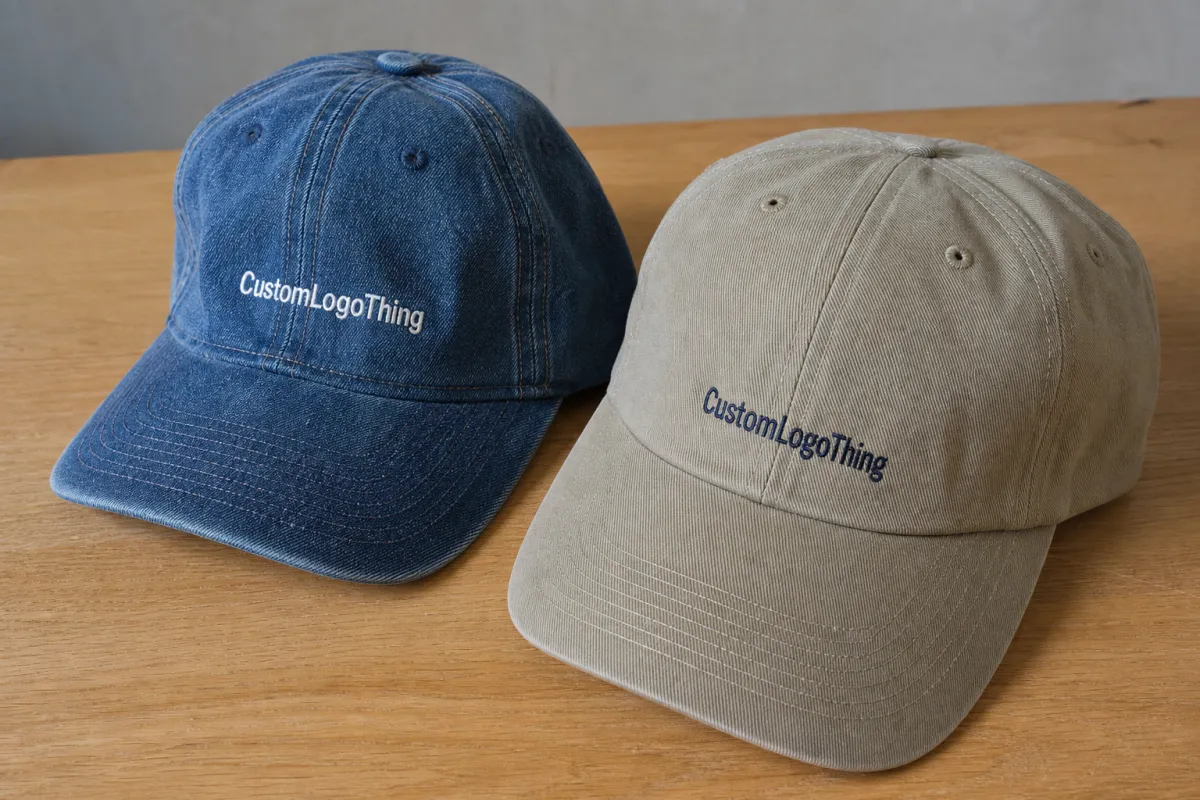
A cap is a bundle of decisions: face fabric, panel structure, sweatband, closure, brim insert, and decoration method. Each one changes how the cap sits on a head and how it reads from three feet away. That matters more in retail than in most buyer meetings. Shoppers rarely inspect a cap for ten minutes. They glance, touch, and make a quick judgment.
Structure is the first hidden variable. A structured front panel helps the cap stand upright and keeps the logo area flatter. Unstructured caps have a softer, more casual feel, but they can sag when they are displayed poorly or packed too tightly. That difference sounds small. On a rack, it is not small at all.
Texture changes the story as well. A brushed twill can feel warmer and more substantial than a plain polyester twill. Mesh-backed styles send a different signal: lighter, sportier, more seasonal. Wool blends carry a heritage look that works well for autumn collections, but they can feel too warm for year-round basics. The fabric should match the retail promise, not fight it.
"The fabric is doing more visual work than most people realize. If the crown holds shape, the whole cap looks more intentional."
There is another reason the material matters: decoration. Embroidery needs a stable base. Woven patches can cover some softness, but even those sit better on a clean, consistent surface. Printed artwork wants smoothness. A cap body that shifts too much during stitching can turn a sharp logo into a slightly wavy one. That is a production issue, not a design issue.
For retail programs, the real goal is not finding the most expensive textile. It is finding the one that preserves the shape, supports the artwork, and survives the channel it will move through. That channel might be a boutique wall, a souvenir shelf, or a folded pack-out inside a larger apparel shipment. Each one changes the performance requirements a little.
How Material Choice Affects Fit, Feel, and Branding
Material choice changes the way a cap wears in the first minute and the tenth hour. Tighter weaves usually bring more body, which helps the front panel resist buckling and gives embroidery a cleaner finish. Softer fabrics can feel easier on the head, but they also collapse faster, wrinkle more readily, and show every seam decision. That tradeoff is easy to miss when you are comparing swatches on a table.
Fit is not just about size. It is about how the crown rises, where the panel bends, and whether the closure pulls the back cleanly. A lighter cap can feel more forgiving, but if the crown rides too low or the front panel caves inward, the cap may look less premium than the artwork deserves. A heavier cap can look more substantial, yet it can become uncomfortable in warm climates if the fabric does not breathe.
Branding behaves differently across fabrics. Dense embroidery tends to look best on structured fronts because the panel supports the stitch density. Woven patches can work on softer bodies, but they still benefit from a firm base. Printed panels want consistency and low sheen. Even a small shift in surface texture can change how the color reads under retail lighting.
That is why the cheapest material is rarely the cheapest finished cap. If a softer fabric causes more embroidery distortion, more sample revisions, or more returns because customers feel the cap is flimsy, the savings disappear fast. Retail buyers care about landed cost, but they care just as much about how many units actually make it onto the wall and stay there.
A useful rule: choose the fabric that protects the silhouette first, then fine-tune the handfeel. If the cap is a summer accessory or a casual lifestyle piece, you can relax the structure a bit. If it needs to photograph cleanly, stand up on a hook, and survive repeated try-ons, the body fabric has to do more work.
Fabric Options Compared: Cotton, Polyester, Mesh, and Blends
Different fabric families solve different problems. Cotton has a natural handfeel and a classic retail look, which is why it still shows up in lifestyle assortments and souvenir programs. Polyester brings repeatability, better color stability, and lower wrinkle risk. Mesh helps with airflow and gives a sporty signal. Blends sit between those poles and can be useful when a buyer needs to keep the product honest without pushing price too far in either direction.
Heavier or specialty builds still have a place. Brushed twill can feel softer while holding enough body for retail presentation. Wool blends bring texture and a more seasonal appearance, especially when the rest of the collection has a heritage or collegiate angle. Foam-front caps are less subtle, but they can work well for bold graphics, throwback merch, and streetwear drops if the entire build supports that look. The key is fit between material and brand language, not fabric prestige by itself.
| Material | Typical Spec | Best Use | Decoration Behavior | Typical Base Cost at 1,000 Units | Watch-Out |
|---|---|---|---|---|---|
| Cotton twill | 260-320 gsm, woven face | Classic retail basics, lifestyle merch | Clean embroidery, woven patches | $1.85-$3.10 | Wrinkles easier than synthetics |
| Polyester twill | 240-300 gsm, stable weave | Team merch, repeat-color programs | Strong logo consistency, good for print | $1.55-$2.70 | Can show shine under bright retail lighting |
| Mesh or mesh-backed | Front panel often 180-260 gsm with lighter rear panels | Summer drops, sport-adjacent styles | Good front-panel decoration, lighter feel | $1.35-$2.40 | Less premium if the build is too bare |
| Cotton/poly blend | Blend ratios vary widely, often 55/45 or 60/40 | Balanced programs with moderate price targets | Versatile across embroidery and patches | $1.70-$2.90 | Quality varies a lot by yarn ratio |
| Wool blend or brushed twill | 280-340 gsm, brushed or melton-style face | Seasonal retail, elevated basics | Strong for premium embroidery and patches | $2.90-$4.80 | Warmer on the head, needs careful color matching |
The price ranges above are base manufacturing estimates at a 1,000-unit level. Freight, duties, embellishment, and packaging can move the final landed number quite a bit. A buyer should treat them as directional, not fixed. Even within the same material family, yarn quality and finishing can push the quote up or down in a way that is easy to miss at first glance.
For premium programs, the finish matters almost as much as the base cloth. A clean brushed surface can make a cap feel richer without adding a lot of weight. A dull, stable finish can help logos read clearly. Excess sheen is rarely flattering unless the brief is intentionally athletic or fashion-forward.
What the Spec Sheet Should Tell You Before You Order
Sample photos are useful, but spec sheets are where the real buying decisions happen. The sheet should tell you more than the color name. Ask for fabric weight, weave type, panel count, crown height, brim construction, sweatband material, and closure type. If any of those are vague, the finished cap can drift away from the sample faster than you expect.
Fabric weight is especially useful because it often predicts behavior better than a marketing description does. A cotton twill in the 260-320 gsm range usually feels substantial without becoming stiff. Polyester in the 240-300 gsm zone often keeps a cleaner line and tolerates repeated handling well. Mesh is useful for airflow, but if the whole cap is built too lightly, the profile can look underdeveloped on the shelf.
Ask for the details that affect decoration too. For embroidery, the cap needs a digitized file that matches the panel curve and stitch direction. For patches, the edge finish and placement tolerance matter. For printed logos, the surface needs to be flat enough that ink or transfer film does not distort. The cap body is part of that test.
There are a few quality checks that separate a serious supplier from a hopeful one:
- Color consistency: Check swatches in daylight and under store lighting, because some fabrics shift warm or cool once they are inside a retail space.
- Panel symmetry: The front panels should line up cleanly; a crooked seam will make the whole cap feel off.
- Stitch tension: Embroidery should sit flat without puckering or tunnel lines around dense lettering.
- Brim stiffness: The visor should hold its shape after bending, shipping, and a few try-ons.
- Sweatband finish: A rough or scratchy band can turn into a complaint, even when the outside looks perfect.
Those checks sound basic, but they catch a lot of expensive mistakes. A cap with the wrong sweatband or a slightly off crown height can look fine in a studio and wrong in a store. Retail buyers do not need perfection in every detail; they need consistency across the details that customers touch first.
Cost, Pricing, and MOQ: What Changes the Quote
The quote is rarely just about fabric. Material grade matters, but panel count, custom colors, closure type, embroidery complexity, packaging, and trim details all shape the final number. A six-panel cap with simple front embroidery is a very different build from a structured cap with contrast stitching, woven labels, a custom closure, and branded packaging. Every extra choice adds labor, setup, or both.
MOQ changes the math more than most buyers expect. At 300-500 pieces, the unit cost often feels stubborn because setup costs are spread across a small run. Around 1,000 units, the price usually becomes more efficient. At 3,000-5,000 units, the curve can drop again if the build stays simple and the color palette stays tight. Multiple colorways can undo some of that benefit because each color usually behaves like a separate mini-order.
Ask for tiered pricing before you commit. A useful spread is one quote at 300-500 units, one at 1,000, and one at 3,000 or more. That shows the actual cost curve instead of hiding it behind a single number. You may find that the better fabric is not the expensive choice if it reduces rejects, holds structure better, or avoids one extra decoration step.
- Fabric grade: Better yarns, tighter weave, and specialty finishes cost more up front.
- Decoration load: Dense embroidery can add roughly $0.45-$1.10 per unit depending on stitch count and thread coverage.
- Closures and trims: Metal buckles, custom snaps, and woven labels add small amounts that stack quickly.
- Packaging: A simple polybag is cheap; a reinforced mailer, insert card, or custom carton changes the equation.
If the cap is retail-bound, packaging should be priced in from the start. A clean kraft insert or a folded hangtag can improve perceived value without making the build fussy. FSC-certified paper is worth considering if the brand already uses it elsewhere, but only if the material chain is actually documented. Claims need to survive scrutiny, not just look good on a card.
Process and Timeline: From Sample to Delivery
The production path looks simple on paper and less simple in practice. Material approval comes first, then sample development, then decoration testing, then bulk production, then inspection and shipment. If that sequence gets scrambled, delays usually show up in both the schedule and the invoice. Caps are small products, which makes the mistakes feel harmless until a whole carton is off by a few millimeters or a logo shifts just enough to annoy a buyer.
- Material approval: Check swatches, not just photos, and confirm the color in daylight and store lighting.
- Sample development: Allow 7-14 business days for a custom sample, sometimes faster if the build uses stock materials.
- Decoration testing: Verify stitch density, patch placement, and logo scale before bulk approval.
- Bulk production: Standard runs often land in 12-20 business days after approval; custom trims or materials can stretch that to 20-30.
- Final inspection and packing: Add time for carton checks, count verification, and retail pack-out.
Delays usually come from a short list of issues. The buyer changes a fabric color after sample approval. The artwork is still being revised when production should be locked. Someone decides halfway through that the closure should be switched from snapback to strapback. Even small changes ripple through the schedule because caps depend on repeatable components, not loose assembly.
Shipping deserves its own check. Lightweight products still get crushed, rubbed, and bent during transit. Transit testing methods from ISTA are useful because they expose the weak points in cartons and pack-out choices. A cap can arrive technically intact and still look tired if the box is too soft or the brim is not supported. For longer routes, a basic corrugated shipper often protects shape better than a decorative carton that looks nicer but offers less structure.
Fast timelines are possible, but only when the build is simple and the approvals are disciplined. Stable material, clear artwork, and a lock on packaging details shorten the cycle more effectively than rushing sample feedback. That is not glamorous, but it prevents expensive corrections later.
Step-by-Step Material Selection for Retail Programs
The cleanest way to use a Retail Merch Caps material guide is to start with the use case, not the fabric menu. A fashion drop wants a different presence from a souvenir line. Team merch wants repeatability. Seasonal basics want a neutral shape that works across sizes and colorways. Once the use case is clear, the material choice stops being a guessing game.
- Set the target landed cost: Work from what the shelf price can support, not from the most expensive sample in the line.
- Choose the structure level: Structured, semi-structured, or unstructured should be a deliberate decision.
- Narrow the fabric list: Start with two or three options that fit the season and the audience.
- Test the decoration: Run embroidery or patch proofs on each fabric, because the best-looking swatch may stitch poorly.
- Lock the closure and trim details: Plastic snap, fabric strap, metal buckle, woven label, and sweatband all change the feel.
- Compare samples under retail light: Side by side, on a hook, from a normal viewing distance.
If a faster decision is needed, a simple three-way test works well: one soft option, one structured option, and one best-value option. That comparison reveals more than a stack of nearly identical samples. A cap that collapses on a display hook is not ready for retail, even if it feels pleasant in hand. A cap that costs a little more but keeps its shape and takes decoration cleanly is often the better business choice.
Packaging should be selected with the same logic. Kraft paper feels more grounded than glossy stock for many lifestyle programs. Recycled or FSC-certified inserts can support a responsible sourcing story, but only if the supply chain actually backs the claim. Biodegradable packaging can work, though it still needs to protect the brim and crown. A bent cap in a greener box is still a bent cap.
Common Mistakes That Make Merch Caps Look Cheap
The first mistake is buying on handfeel alone. Soft does not automatically mean premium. Sometimes it simply means the cap lacks enough structure to look finished on display. The second mistake is underestimating the front panel. A good textile can still look weak if the crown height is wrong or the panel has no support behind the logo.
Decoration overload causes its own damage. Too many thread colors, oversized patches, or a logo placed too high on the crown can make the front look crowded. Buyers sometimes think more branding means more value. On a small surface, it usually means the design is trying to say too much at once.
A cap looks premium when the structure, stitching, and packaging agree with each other. Price alone does not create that effect.
Color mismatch is another quiet problem. The body fabric, thread, patch, sweatband, and packaging should sit in the same visual family. If the cap body is warm and the label is stark cool white, the item starts to feel assembled instead of designed. That difference is subtle in a spec sheet and obvious on a rack.
Dead inventory often starts with broad targeting. A cap built for fashion buyers will not move like one built for tourist retail or giveaway programs. If one style is meant to satisfy every audience, it usually ends up appealing strongly to none of them. The better approach is to match the build to the channel, the price point, and the season.
Expert Tips and Next Steps Before You Order
The most practical move is usually the least dramatic one: ask for three samples and compare them under the same conditions. Use the same artwork, the same light source, and the same packaging. A side-by-side view reveals shape retention, stitch quality, and color behavior far better than a polished render ever will.
- Request swatches: Judge texture and color in hand before approving bulk.
- Get decoration proofs: Embroidery, patches, and labels should be checked on the actual fabric.
- Demand a written quote: It should spell out fabric, MOQ, lead time, closure, and packaging.
- Ask about carton spec: A better carton can protect the brim and crown on the way in.
If the program is meant to feel premium, the build should support that from the start rather than borrowing status from a clever logo. If the goal is volume and repeatability, avoid expensive trims that do not affect the shelf impression. That is the real value of a retail merch caps material guide: narrow the options until the decision is clear, then spend where it changes how the cap looks, wears, and ships.
One final check is worth doing before approval: confirm that the material, decoration, and packaging all pass the same practical test. The cap should look right on a hook, stitch cleanly, and survive pack-out without losing shape. If one of those fails, the material choice is probably wrong even if the sample looks good in isolation.
FAQ
What is the best material for retail merch caps?
The best choice depends on target price, decoration method, and the visual tone of the line. Structured cotton twill and polyester blends usually give the cleanest retail presentation because they hold shape and support embroidery well. If airflow matters more than a heavy handfeel, mesh-backed or lighter polyester styles can work better.
Are polyester retail merch caps cheaper than cotton ones?
Often yes, but not always once decoration and finishing are included. Polyester tends to hold color well and stay consistent across larger runs, which helps with repeat orders. Cotton can cost more in some builds, especially if the buyer wants a heavier, more premium feel or a brushed finish.
Which cap material works best for embroidery?
Stiffer, structured fabrics usually give embroidery the cleanest result because they support the stitch pattern. Very soft or stretchy materials can distort the logo or make the front panel buckle. If the design is dense, it is better to test the actual fabric Before Approving Bulk production.
What affects retail merch cap pricing the most?
Fabric choice, decoration complexity, and MOQ usually move the price more than anything else. Special closures, custom colors, woven labels, and premium packaging also push unit cost up. Ask for tiered pricing so you can see how the cost changes at different order quantities.
How long do custom retail merch caps usually take?
Stock-based programs can move faster because the base cap is already available. Fully custom materials or trims usually add sampling time and extend bulk production lead time. A safe plan is to confirm sample timing, bulk turnaround, and shipping separately before the order is locked.


