Buyer Fit Snapshot
| Best fit | Retail Packaging Pouches with Logo projects where brand print, material claims, artwork control, MOQ, and repeat-order consistency need to be specified before quoting. |
|---|---|
| Quote inputs | Share finished size, material target, print colors, finish, packing count, annual reorder estimate, ship-to region, and any compliance wording. |
| Proofing check | Approve dieline scale, logo placement, barcode or warning zones, color tolerance, closure strength, and carton packing before bulk production. |
| Main risk | Vague material claims, crowded artwork, missing packing details, or unclear freight terms can make a low unit price expensive after revisions. |
Fast answer: Retail Packaging Pouches with Logo: Film, Print, MOQ, and Carton Packing should be specified like a repeatable production item. The safest quote records material, print method, finish, artwork proof, packing count, and reorder notes in one written spec.
Production checks before approval
Compare the actual filled-product size with the drawing, then confirm tolerance on folds, seals, hang holes, label areas, and retail display edges. Reserve space for logos, QR codes, warning copy, and material claims before decorative graphics fill the panel.
Quote comparison points
Review material grade, print process, finish, sampling route, tooling charges, carton quantity, and freight assumptions side by side. A quote is only useful when the supplier can repeat the same color, closure quality, and packing count on the next order.
Retail packaging Pouches With Logo do a lot more than sit on a shelf and look tidy. They can replace a separate label, cut out extra inserts, and still give a product enough visual weight to hold its own in a crowded aisle. That is a big reason retail packaging pouches with logo keep showing up in product launches, seasonal runs, and compact assortments where shipping cost matters almost as much as the front panel design.
I have seen brands treat a pouch like a minor detail and then act surprised when it becomes the thing that either saves the launch or slows it down. The pouch is not just a bag with a print job. It is product protection, retail presentation, and fulfillment behavior all packed into one spec. If that sounds fussy, good. Packaging usually is.
Retail packaging pouches with logo can work for snacks, supplements, pet treats, coffee, beauty products, hardware, and sample kits, but each category pulls the spec in a different direction. A pouch that works fine for dry candy may be a bad fit for powder, fragrance, or anything that hates oxygen. A pretty mockup is nice. A pouch that survives filling, sealing, palletizing, and shelf handling is better.
The real question is not whether retail packaging pouches with logo look good in a deck. The real question is whether they hold up through the actual route: fill, seal, carton pack, freight, stock room, and shelf. If they do, they earn their keep. If they do not, you get a neat-looking problem with your brand name on it. That part is less charming.
The cheapest pouch on paper is often the expensive one in real life. If it dents, leaks, scuffs, or ships badly, you pay for it later in returns, damage, and rework.
Retail Packaging Pouches with Logo: Why They Stand Out
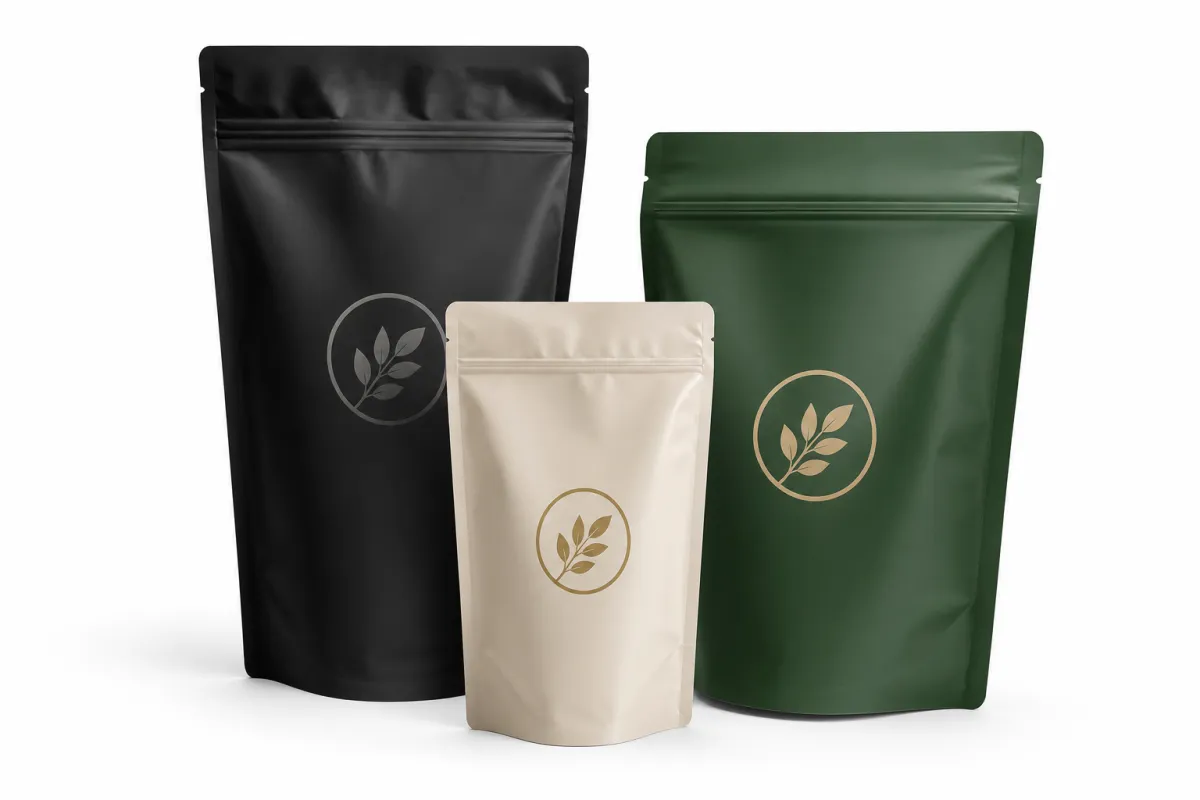
Retail packaging pouches with logo stand out because they do several jobs in a small footprint. A label tells the shopper what the product is. An insert can carry extra copy. Shelf display does some of the selling. A well-built pouch can handle most of that in one piece of packaging. That efficiency matters because buying, warehousing, and sales rarely want the same thing, and somehow the package still has to make all three happy.
There is also a very practical supply chain reason brands keep moving toward retail packaging Pouches with Logo: they often fit the business better than rigid packaging. Less weight means lower freight. Less cube means more units per carton and better pallet use. Less secondary packaging means fewer pieces to track in the warehouse. If you run a small team, fewer moving parts is not a luxury. It is the difference between a controlled process and a spreadsheet that has clearly given up.
Retail packaging pouches with logo also make it easier to keep a product line visually consistent. One pouch family can cover multiple SKUs with different sizes, finishes, or panel copy. That helps with package branding because the line feels connected without forcing every format into the same exact mold. It also supports branded packaging across retail, DTC, and wholesale channels without rebuilding the whole system every time a product changes.
Here is the part people love to skip: not all pouches are built for the same job. A matte stand-up pouch with a zipper behaves differently from a high-barrier coffee pouch or a clear-front cosmetic pouch. Retail packaging pouches with logo need to match the product first and the styling second. Fancy comes after functional. Not before.
If you are comparing retail packaging pouches with logo to Custom Packaging Products like cartons or wraps, the choice usually comes down to weight, protection, and shelf behavior. Flexible packaging often wins on shipping efficiency. Rigid formats can win on structure or stackability. Neither is automatically better. The right answer depends on fill weight, storage conditions, and how the shopper actually uses the item.
That is why retail packaging pouches with logo are such a common middle ground in modern retail packaging. They can look polished, move quickly through fulfillment, and still protect the product well enough for a normal retail journey. Only if the spec is right. Otherwise they are just a nice photo and a future complaint.
How Retail Packaging Pouches with Logo Work in the Supply Chain
The basic flow is simple: fill, seal, pack, ship, display. The useful part is what happens at each stage. Retail packaging pouches with logo are usually made flat or with a gusseted bottom, then filled by hand or machine, sealed with heat, and packed into cartons for outbound freight. In many product lines, one packaging format replaces multiple layers. Less clutter. Fewer handoffs. Better throughput.
At the fill stage, the pouch has to open cleanly and hold its shape enough for efficient loading. If the opening is too tight, labor slows down. If the film is too flimsy, product spills or the pouch collapses in the hopper. If the seal area is too small, you risk weak closures. Retail packaging pouches with logo do not get points for style if the production crew hates using them.
Once sealed, the pouch has to survive transit. Barrier layers help control moisture, oxygen, aroma loss, and contamination. For foods and supplements, that matters a lot. For cosmetics or household items, the bigger concerns might be leakage, puncture resistance, or graphic scuffing. Retail packaging pouches with logo can also include zipper closures for repeated opening, tear notches for cleaner access, and hang holes for peg display. Those features sound minor until one goes missing and the whole setup becomes annoying.
Merchandising matters too. A pouch with a hang hole goes onto a retail hook. A stand-up pouch sits upright and gives the shelf a cleaner face. A clear window can show the product itself, which helps in categories where texture or color sells. Retail packaging pouches with logo are doing logistics and sales work at the same time. That is the whole point.
In practice, the best retail packaging pouches with logo support three jobs at once:
- Protection during storage and transit.
- Presentation on shelf or peg.
- Efficiency in packing and replenishment.
That matters for small and mid-size brands because one packaging format can cover storage, transport, and sales without separate inner wraps, overboxes, or extra display aids. If the pouch is dialed in, the warehouse team handles one packaging motion instead of three. If the pouch is poorly chosen, the "simple" option turns into a very organized headache.
Retail packaging pouches with logo should also be checked against real distribution conditions. Long transit, hot storage, mixed pallet loads, and rough handling all test a package in different ways. You need enough seal strength and film durability to survive the trip. Transit testing standards from groups like ISTA help brands think about the journey, not just the shelf. That is the right frame for it.
Retail packaging pouches with logo are only useful if they reach the shelf looking like the proof, not like they spent a week getting stepped on by a forklift.
Cost and Pricing Factors for Retail Packaging Pouches with Logo
Pricing retail packaging pouches with logo the lazy way leads to bad decisions. A quote is not just a unit price. It usually includes setup, print method, material structure, finishing, closure style, and shipping. Compare two quotes without matching those inputs and you are not comparing options. You are comparing confusion. That gets expensive fast.
The main cost buckets are easy to list and easy to underestimate:
- Unit cost - what each pouch costs before freight and taxes.
- Setup cost - plates, cylinders, dieline prep, or digital setup.
- Landed cost - freight, duties, carton packaging, and delivery.
For smaller runs, digital print often makes retail packaging pouches with logo more practical because setup costs stay lower and artwork changes are easier. That helps with launches, test markets, and seasonal SKUs. For higher volumes, gravure or plate-based printing can lower the per-unit price, but only when the run size is large enough to absorb the upfront tooling. The break-even point changes from project to project, though digital often makes sense under a few thousand units and traditional print becomes more attractive as volume climbs into the tens of thousands.
Typical pricing ranges can look like this, depending on size and spec. These are directional, not promises, because real pricing moves with material, quantity, and freight.
| Option | Best For | Typical Unit Range | Main Tradeoff |
|---|---|---|---|
| Digital printed pouch | Low to mid volume, fast artwork changes | $0.28-$0.85 | Higher per-unit cost at scale |
| Gravure or plate-printed pouch | Mid to high volume repeat orders | $0.10-$0.32 | Higher upfront setup |
| Stock pouch with custom label | Very small tests or pilot launches | $0.15-$0.55 | Less premium, less control |
| Custom structure with zipper and matte finish | Premium retail presentation | $0.22-$0.70 | More features raise cost quickly |
Those ranges shift with size. A larger pouch uses more film and more ink, which means more cost. A window patch, zipper, or tear notch may only add a little per unit, but stack three or four extras together and the price climbs faster than most buyers expect. That is how retail packaging pouches with logo become "just a bit more" until the quote stops feeling so cute.
Overspending usually happens in three places. Buyers overbuild barrier levels for a product that does not need them. They add decorative finishes that do nothing for sales or performance. They chase the lowest unit price and ignore freight, carton counts, or damage risk. A pouch that ships badly can wipe out the savings from a cheaper quote. The invoice is not the full story.
Shipping and logistics matter more than many people think. If retail packaging pouches with logo reduce carton count by 20 percent, your warehouse may save space and labor. If they are packed inefficiently, the opposite happens. Storage and pallet efficiency should be part of the comparison, not an afterthought. Even the packaging industry keeps pushing buyers to think about total environmental and logistics impact rather than only sticker price; the EPA recycling guidance is a decent reminder that material choice and waste handling are part of the cost story too.
The smartest buyers treat retail packaging pouches with logo like a procurement spec, not a design mood board. That habit saves money.
Material, Artwork, and Specification Choices That Matter
Material choice is where retail packaging pouches with logo either earn their keep or quietly fail. The right structure depends on what the product needs to survive. For dry snacks, a PET/PE or BOPP/CPP laminate may be enough. For coffee, spices, or anything aroma-sensitive, you may need higher barrier layers or foil. For products with a premium shelf target, a soft-touch matte finish can create a strong first impression. For visibility-driven items, a clear window can help the shopper trust what they see.
Here is the practical version. If moisture is the enemy, look at barrier film. If oxygen is the enemy, check seal integrity and barrier performance. If scent loss matters, do not underbuild the film structure. Retail packaging pouches with logo are not one-size-fits-all, even if a supplier's sales deck pretends otherwise.
Common finish choices also affect how the pouch is perceived. Gloss usually looks brighter and more vibrant. Matte feels calmer and often more premium. Soft-touch adds a tactile layer, though it can cost more and scuff differently. Clear windows can increase transparency, but they also limit where artwork can sit. Retail packaging pouches with logo need a finish that supports the product story, not one that only sounds fancy in a sales email.
Logo placement matters more than people think. A front-facing logo can disappear if it sits too low and gets hidden by shelf rails, carton lips, or a hand holding the pouch. Barcode space should be planned early. So should nutrition panels, ingredients, warnings, lot code zones, and any compliance copy. If the art layout ignores the die line, the final pouch can look chopped, crowded, or crooked. That is not "brand personality." That is bad planning.
For retail packaging pouches with logo, the spec should cover at least these items:
- Film structure and thickness, often shown in microns or mils.
- Seal width and seal strength target.
- Closure type, such as zipper, press-to-close, or heat seal.
- Tear notch and hang hole placement.
- Print method and number of colors.
- Barcode, copy, and safe-area placement.
Some brands also want proof that the packaging can pass basic performance checks. Depending on the product, that may include seal testing under ASTM methods such as ASTM F88 for seal strength, or leakage and transit checks aligned with supply chain testing programs. Not every project needs a full lab battery, but the point is simple: do not guess if the product is sensitive. Test it.
Sustainability claims deserve a calm head. Mono-material pouches and recyclable structures can be useful, but only if they still protect the product and fit the local recovery system. FSC certification matters more for paper-based components than for plastic film itself. If you are using paper accents, cartons, or hang tags alongside retail packaging pouches with logo, choosing certified paper from FSC can support the broader packaging story. "Eco" means very little if the pouch fails in transit.
From a packaging design standpoint, the best retail packaging pouches with logo balance shelf appeal with handling reality. Pretty is good. Useful is better. Both is ideal.
Process and Timeline: From Artwork to Delivered Pouches
The production path for retail packaging pouches with logo follows a predictable sequence, and that is useful because packaging jobs get messy when people skip steps. Start with a brief. Then quote. Then dieline. Then artwork. Then proof. Then sample or prototype. Then production. Then inspection. Then shipping. Rush any one of those steps and the rest of the job starts wobbling.
A realistic timeline depends on the print method and how finished the spec is before the supplier starts. Simple retail packaging pouches with logo using digital print can sometimes move from proof approval to production in roughly 10-20 business days, plus transit. More complex custom structures, special finishes, or traditional print methods often need 3-6 weeks before shipment, and that is before freight. If a launch date is fixed, build slack. Packaging schedules love to punish optimism.
Most delays happen for boring reasons. Missing dimensions. Wrong file format. Slow artwork revisions. Unclear compliance copy. Last-minute changes to closure style. If you are ordering retail packaging pouches with logo for a retail launch, the safest move is to approve the core spec first:
- Dimensions and fill weight.
- Material structure.
- Print method and color count.
- Seal style and closure.
- Quantity split by SKU.
Once those are locked, artwork becomes much easier. The designer can place logo, claims, barcode, and legal text without guessing at the usable area. That matters because retail packaging pouches with logo often look clean in a mockup and messy in production if the die line was not used correctly. A good proof should show folds, safe zones, seal margins, and the exact panel layout. A bad proof is basically a polite guess.
Sampling is worth the time, especially for products that are moisture-sensitive, aroma-sensitive, or visually fragile. A pouch sample can show whether the finish fingerprints, whether the zipper closes cleanly, and whether the film feels right in hand. For retail packaging pouches with logo, a sample also tells you whether the shelf image matches the brand tone. That sounds subjective, and sometimes it is. Packaging carries engineering and perception at the same time. Pretending otherwise is how people end up with a strong product in a weak package.
There is one more operational detail worth mentioning. If the product has multiple SKUs, ask for a quantity plan that matches sales reality. Sometimes a brand orders the same retail packaging pouches with logo in several versions and then discovers that one flavor or shade moves much faster than the others. The result is stuck inventory. Better to think through the SKU split upfront than to clean up the mess later.
Well-run projects usually move in a clean rhythm: brief, proof, sample, approval, production. Retail packaging pouches with logo do not need to be hard. They just need disciplined planning.
Common Mistakes When Ordering Retail Packaging Pouches with Logo
The first classic mistake is picking retail packaging pouches with logo based on appearance alone. A glossy pouch with a big logo may look great in a presentation, but if the product needs a stronger barrier, better seal, or different fill geometry, the nice-looking option becomes a problem. Packaging is not a poster.
The second mistake is building artwork before the pouch spec is final. That is how logos get clipped, copy gets pushed into seal areas, and barcodes land where no scanner wants to see them. Retail packaging pouches with logo need the dieline first. Artwork comes second. People reverse that order all the time, then act surprised when the proof looks awkward. No mystery there.
The third mistake is comparing quotes without matching assumptions. One supplier may quote a pouch with a zipper and matte finish. Another may quote a plain seal pouch with gloss film. Those are not the same product. Retail packaging pouches with logo should be compared using the same dimensions, material structure, print method, and order quantity. Otherwise, the cheapest quote is just the most incomplete one.
The fourth mistake is underestimating lead time. Rush fees, air freight, and launch delays eat up savings quickly. If retail packaging pouches with logo are tied to a seasonal campaign or retail onboarding date, the schedule needs buffer. A late pouch can delay the entire launch, and that is a painful way to save a few cents per unit.
The fifth mistake is ignoring warehouse realities. A pouch that looks elegant but ships in awkward carton counts, stacks poorly on pallets, or occupies too much shelf space can create real cost. This is where retail packaging pouches with logo need to be judged against actual storage and fulfillment conditions, not just a render on a screen. A format that is too wide, too tall, or too soft can slow down picking and packing in ways that no one notices until inventory is already piled up.
There is also a quiet mistake that buyers make with branded packaging: they assume the same spec will work across every channel. It might not. A pouch that performs well in direct-to-consumer shipping may need a different carton strategy for wholesale. Retail packaging pouches with logo should be checked in the context of the whole route, from warehouse to shelf.
The biggest lesson is simple. Retail packaging pouches with logo are easy to order badly and harder to fix after production starts. Confirm the spec early, and a lot of problems never show up.
Next Steps for Ordering Retail Packaging Pouches with Logo
If you are ready to buy retail packaging pouches with logo, start by gathering a basic spec sheet. Do not send a vague request and hope the supplier reads your mind. Packaging buyers who send complete information get better quotes faster. Buyers who send half a brief get back a half-useful answer. Fair trade, really.
Your spec sheet should include the product type, fill weight, shelf life target, storage conditions, shipping method, closure preference, artwork count, and target quantity. If the item needs a high barrier, say so. If the pouch needs to hang on a peg, say that too. If the product is going into a retail chain with strict labeling rules, include that upfront. Retail packaging pouches with logo are much easier to quote accurately when the supplier sees the whole picture.
Then request quotes from at least two or three suppliers using the exact same requirements. That is the only way pricing can be compared honestly. Ask for unit price, setup cost, freight, sample cost, and estimated production time. If a supplier can only give a rough number, fine. Just make sure you know what is included. Retail packaging pouches with logo can look inexpensive until freight and packaging add-ons show up.
Here is a short pre-quote checklist that saves time:
- Artwork file format: AI, EPS, or print-ready PDF.
- Dieline version approved for the pouch size.
- Logo usage and color references.
- Compliance copy and barcode placement.
- Preferred finish and closure.
- Delivery window and ship-to location.
If the project is sensitive, ask for sample packs or prototype proofs before placing the full order. That is especially useful for retail packaging pouches with logo that will hold moisture-sensitive, aroma-sensitive, or premium retail goods. A sample tells you more than a sales sheet ever will. It also gives your team a chance to handle the pouch, check the feel, and see whether the branding reads clearly at shelf distance.
For buyers managing multiple packaging formats, it can help to think about where the pouch fits alongside other assets such as labels, cartons, or custom printed boxes. If the pouch is the main retail face, the box may only need to support shipping or bundling. If the box is the hero, the pouch may need a simpler role. Either way, the job is to make the package system work together instead of fighting itself.
Retail packaging pouches with logo should be compared on three things before you sign off: specs, pricing, and lead time. If those three line up with your product and channel, you are in good shape. If one of them feels off, keep asking questions. Packaging is expensive enough without guessing.
Choose retail packaging pouches with logo that fit the product, the shelf, and the freight bill. That is the whole point. Retail packaging pouches with logo are worth ordering when they lower waste, hold up in transit, and present the brand clearly without paying for decoration you do not need. Compare Specs, Pricing, and Lead Times carefully, and the pouch will earn its keep.
How much do retail packaging pouches with logo usually cost?
Pricing depends on size, material structure, print method, closure type, and quantity. Small runs usually cost more per unit, while larger runs bring the unit price down but increase total spend. Always compare landed cost, not just unit price, because freight and storage can change the real number fast. For retail packaging pouches with logo, the same shape can quote very differently if one version includes a zipper, matte finish, or higher barrier film.
What is the typical turnaround for retail packaging pouches with logo?
Turnaround usually includes proofing time, production time, and transit time. Simple orders move faster; custom structures, special finishes, or artwork revisions slow things down. Build extra time into the schedule if the packaging is tied to a product launch or seasonal promotion. In many projects, retail packaging pouches with logo take longer than buyers expect because artwork approval is the real bottleneck, not the press.
Which materials are best for retail packaging pouches with logo?
The best material depends on the product: dry goods, snacks, cosmetics, supplements, and pet items all have different barrier needs. Choose the lightest structure that still protects the product through shipping, storage, and shelf life. If sustainability matters, confirm performance first and verify any recyclable or mono-material claims. Retail packaging pouches with logo should be tested against the actual product, not chosen by appearance alone.
Can small brands order retail packaging pouches with logo in low quantities?
Yes, but small quantities usually cost more per unit because setup costs are spread over fewer pouches. Digital print often makes low-volume orders more practical than traditional long-run methods. If you are testing a product, start with a lower MOQ and validate sales before locking into a bigger run. That is usually the cleanest way to buy retail packaging pouches with logo without tying up cash in inventory you have not proven yet.
What artwork files do I need for retail packaging pouches with logo?
Most suppliers want a vector file such as AI, EPS, or PDF with fonts outlined and images placed at print quality. You also need the correct dieline, so the logo, barcode, and copy land in safe areas. Ask for a proof before production, because packaging errors get expensive after the press starts rolling. For retail packaging pouches with logo, a bad file can turn into a bad batch very quickly.
Before you place the order, lock three things and do not budge on them unless the product spec changes: the pouch structure, the artwork dieline, and the landed cost. If those three line up with the product and the channel, the rest is mostly execution. That is the practical path for retail packaging pouches with logo. Clean spec, sane pricing, enough lead time. Everything else is decoration.


