Ribbed Winter Hats Quality Control Checklist for Buyers A ribbed winter hats quality control checklist should catch shape drift, uneven stretch, decoration problems, and packing issues before bulk goods leave the factory. Ribbed beanies can look fine when flat and still fail in wear, so buyers need to check how the hat behaves after stretching, folding, and carton compression, not just how it looks on a sample board.
The rib structure changes fit and recovery, which makes this style more sensitive than a smooth knit. That means the buyer’s checklist has to cover measurements, yarn choice, logo placement, and pack-out detail in one place. If those points are clear before production starts, it is much easier to control cost, lead time, and rework.
What a ribbed winter hats quality control checklist should catch first
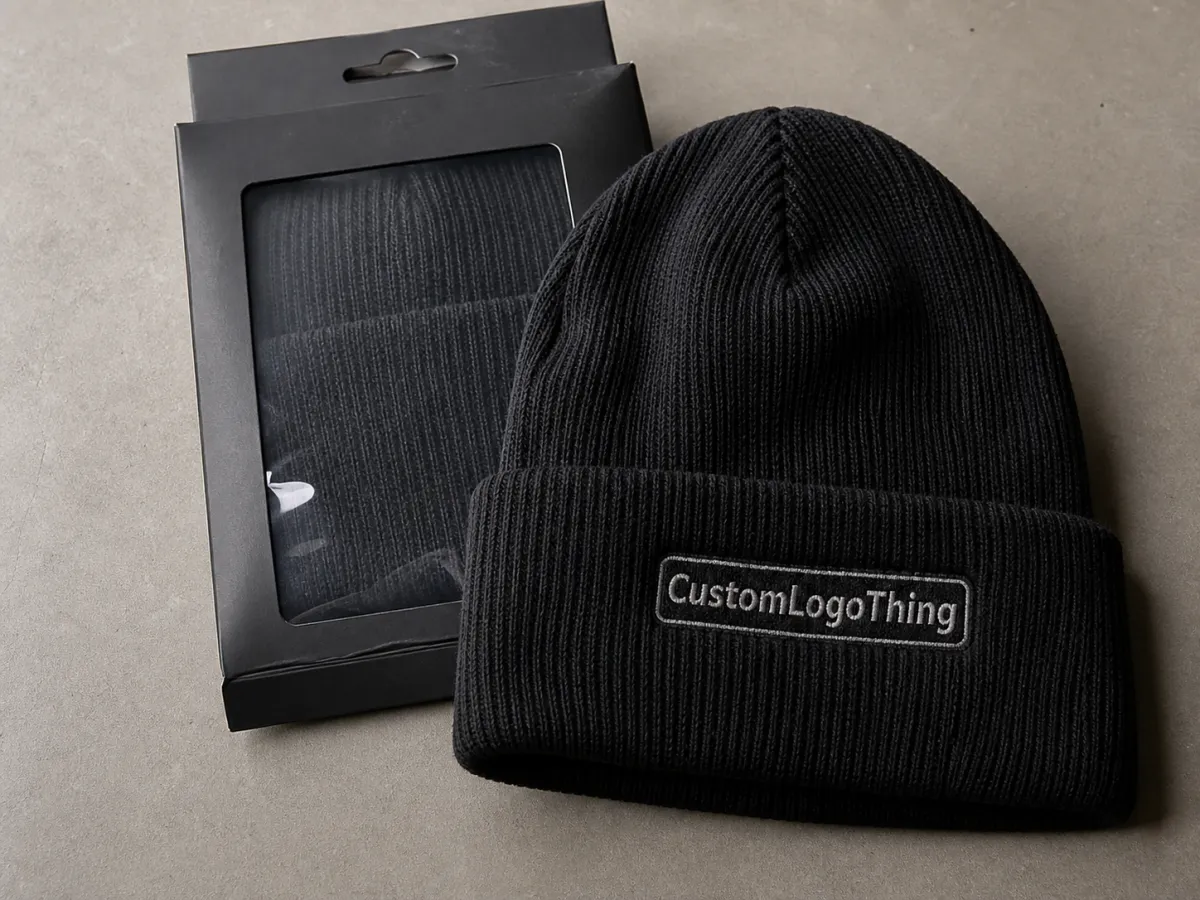
The first job of the checklist is to confirm that the hat holds its intended shape. A ribbed cuff can look crisp when flat but twist after stretching if knit tension is uneven. Buyers should verify fit, stitch quality, yarn consistency, labeling, and carton packing as separate items, not one general approval step.
Ribbed construction matters because the ribs act like springs. A 1x1 rib usually feels tighter and rebounds differently than a 2x2 rib, so the order should state whether the target is snug, soft, or slightly oversized. If the hat is for retail, the checklist should also protect shelf appearance, because a wavy cuff or compressed crown can make the product look lower value even when sewing is acceptable.
If a hat only looks good flat, it is not approved yet.
That rule is useful because the most common claims come from problems buyers could have caught earlier: loose recovery, inconsistent rib count, logo drift, shade variation between cartons, and packing that crushes the silhouette. The goal is not to find every tiny flaw. It is to protect the details the end customer will notice immediately.
How ribbed knit construction affects fit, stretch, and finish
Ribbed knit construction affects both warmth and presentation. Yarn thickness, stitch density, and gauge all change how the hat stretches and how clean the surface looks. A tighter knit usually gives a more polished finish, while a looser knit feels bulkier and softer, though sometimes less refined around the cuff edge.
Buyers often focus on relaxed width, but the stretched state matters just as much. Many adult beanies sit around 8 to 9 inches relaxed width and 11 to 13 inches stretched width, but those numbers only matter if the spec also defines recovery after stretch. A hat that grows and stays open will feel sloppy even if the flat sample passed inspection.
Finishing can change the final result more than expected. Washing, steaming, pressing, and folding can shift dimensions by a quarter inch or more, which matters on a fitted ribbed cuff. If the buyer wants a neat retail finish, the spec should say whether the hat is folded at the cuff, packed loose, or lightly compressed, because each method affects the rib line and the way the product displays.
The main buyer question is simple: does the hat hold form without feeling stiff? That depends on the balance between yarn twist, knitting tension, and post-knit finishing. A dense rib can look premium but run warmer; a softer build can feel more comfortable but need tighter control on size and recovery. The checklist should make that tradeoff visible before production begins.
Materials, trims, and decoration specs that shape cost and unit value
Material choice sets the cost baseline. Acrylic is still the most common option because it is predictable, warm enough for many markets, and easier to keep within target price. Wool blends usually feel richer and hold heat better, but they can raise yarn cost by roughly 15% to 35% depending on fiber ratio and supply. Recycled fibers can support a sustainability story, but the buyer should verify lot consistency, shade control, and supply stability for repeat runs.
Trims affect both appearance and labor time. A woven label is usually the least disruptive option, while embroidery, faux leather patches, woven badges, and pom attachments each add a new point of risk. On ribbed fabric, that risk is higher because the knit surface can shift under stitching and reveal alignment issues quickly.
Decoration should also be checked against fabric behavior. Stitch count, thread density, patch size, and placement all matter, but so does whether the decoration flattens the ribs or pulls the cuff off balance. Too much thread tension can pucker the surface, and a heavy patch can make the cuff sag. If the order uses hang tags or retail cartons, ask for FSC-certified board when the packaging program calls for it.
| Option | Typical added cost per unit at 5,000 pcs | Visual / functional impact | Buyer note |
|---|---|---|---|
| Woven label | $0.08-$0.18 | Clean branding, low distortion | Good for simpler retail presentation and lower risk |
| Flat embroidery | $0.22-$0.45 | Sharper logo presence, moderate labor | Check stitch density so the rib does not pucker |
| 3D embroidery | $0.35-$0.65 | More dimensional, higher visual impact | Needs careful placement on ribbed surfaces |
| Faux leather patch | $0.20-$0.45 | Premium look, rigid feel | Verify alignment and stitch or adhesive security |
| Custom retail carton or insert card | $0.40-$1.10 | Better shelf presentation, more pack labor | Useful for gift sets or higher-margin programs |
The key is to connect the decoration method to the unit price and the expected selling price. A cleaner build with better trim placement can reduce returns, but a vague spec can create hidden losses through rework, relabeling, or scrap. Buyers should compare value, not just the headline quote.
Process and timeline: from sample approval to final packing
A good run starts with the tech pack. The factory needs the knit structure, measurements, color reference, logo method, packing instructions, and target ship date before yarn is cut or machine time is reserved. After that comes yarn sourcing, then lab dip or bulk shade approval if custom color matching is required. Only then should the buyer approve the pre-production sample.
The approval path should be clear:
- Review the tech pack and measurement sheet.
- Approve yarn color, trim stock, and logo artwork.
- Sign off on the pre-production sample with photos and physical reference.
- Confirm packing method, carton count, and barcode placement.
- Release bulk production only after those points match the written spec.
Lead time depends on customization. A straightforward ribbed beanie in standard yarn and label format may move in roughly 12 to 15 business days after proof approval, while custom yarn colors, special woven labels, or multiple size runs can push that to 18 to 25 business days or more. If cartons will move through warehouse or retail distribution channels, some buyers also align transit checks with ISTA procedures so compression and drop risk are addressed before shipment.
That planning matters because a missed label approval or late yarn change can delay the order after knitting has started. Buyers who build in time for photos, measurement review, and sample signoff usually avoid the most expensive delay: the one that happens after bulk work is already underway.
Step-by-step inspection workflow for bulk ribbed winter hats
The easiest way to use a Ribbed Winter Hats quality control checklist is to inspect the order in layers. Start with incoming materials, move through knitting, then finish with post-production and pack-out. If inspection happens only at carton stage, most of the useful evidence is already hidden.
- Incoming materials: confirm yarn lot, shade consistency, label stock, care tags, and polybag thickness before knitting starts.
- In-process checks: verify rib tension, stitch uniformity, crown shaping, and cuff stability on random pieces from each lot or machine line.
- Post-production checks: measure relaxed width, stretched width, cuff height, crown depth, and overall length on finished hats.
- Decoration review: inspect embroidery, patch placement, or label centering across multiple pieces, not just one approved sample.
- Pack-out verification: confirm polybags, size stickers, carton counts, barcode legibility, and master carton markings.
For larger orders, buyers often inspect by colorway and size run rather than by pallet, because ribbed knit variation can hide inside one area of the shipment. A common approach is to use AQL sampling such as 2.5 for major defects and 4.0 for minor defects, then document each issue with a photo and a measurement note. That makes supplier conversations faster and less subjective.
Pack-out is part of quality, not an afterthought. A hat can pass every knit test and still arrive flattened, mislabeled, or short-counted. Carton counts, master carton marks, and warehouse-friendly barcodes belong on the same checklist as stitch inspection. If the goods are retail-ready, packing is the last quality gate.
Common quality mistakes buyers should avoid before order placement
One common mistake is approving a sample without testing it after stretching, folding, and repacking. Ribbed hats can recover well after one stretch and then loosen after repeated handling, so the buyer needs to know how the fabric behaves beyond first impression. If the sample is only judged flat on a table, the review is incomplete.
Another mistake is under-specifying the yarn blend or gauge. Too much acrylic and not enough structure can make the hat feel soft but weak; too much wool can make it warm but itchy; too open a gauge can make the cuff feel thin and less premium. The target market should drive the build, and that target market should be written into the checklist.
- Inconsistent measurement methods: one team measures relaxed width while another measures stretched width, then both think they are right. Use the same method, the same rest time, and the same ruler format on every check.
- Unclear tolerance ranges: a quarter inch may not matter on a slouch hat, but it can matter a lot on a fitted ribbed style. State the acceptable range in the spec sheet.
- Decoration approval gaps: embroidery can look centered on the sample and drift in bulk if the placement guide is not locked. That is especially visible on ribbed fabric.
- Packaging blind spots: crushed hats, wrong polybag counts, mismatched labels, and damaged cartons are all avoidable if the pack plan is reviewed before mass production.
The sample should be treated as a reference, not a trophy. The buyer and the factory need to agree on what is fixed, what tolerances are allowed, and what must not change in production. That is the real purpose of the checklist.
Cost, pricing, and MOQ checkpoints that belong on every quote
Pricing should never be one number with no detail. Ask for yarn, trim, decoration, and packaging costs to be broken out so you can see where the money is going. A quote that hides those inputs is hard to compare and harder to manage once the order is in motion.
MOQ changes with setup complexity. Standard colors and standard labels usually keep the minimum lower, while custom dye lots, specialty patches, or multi-color programs raise MOQ because the setup cost has to be spread across fewer units. If a buyer wants a lower minimum, a higher unit price is normal and should be visible upfront.
Before signing off, confirm what the quote includes. Sampling, sample revisions, carton labeling, testing, and overage for defects should be spelled out. If the supplier cannot say whether 1% to 3% overage is built into the price, the final landed cost may be higher than the headline number suggests.
For comparison, line the options up like this:
- Base knit: 100% acrylic, single woven label, simple polybag.
- Mid-tier retail: acrylic/wool blend, embroidery, folded insert card.
- Premium retail: higher-gauge rib, patch decoration, custom carton or belly band.
That makes supplier comparison much easier. Two quotes can look similar and still include very different labor, packaging, and inspection requirements. A disciplined checklist should sit next to the quote review because cost and quality are tied together from the first approval onward.
Expert next steps to finalize your ribbed hat order
Use the checklist to lock the final spec sheet, then circulate it to production, purchasing, and quality control before the order is released. That reduces confusion when the buyer, decorator, and packing team each care about different details.
Before bulk production starts, ask for three things: a signed pre-production sample, a measurement sheet with relaxed and stretched dimensions, and packing photos showing the finished carton state. Those documents create a shared standard. If the factory later says a piece is acceptable, you want to compare it against the approved reference without guessing.
The fastest way to protect margin is to find the issue before it gets boxed.
Build a simple hold-point schedule as well. One checkpoint for in-line inspection, one for final inspection, and one for carton review is usually enough to catch the problems that become claims later. Keep tolerance ranges, color references, and trim codes on the same record so the reorder path stays clean. That is where the checklist earns its value: it keeps the product you approved from drifting during production, packing, and shipping.
Repeat orders get easier when the spec is treated like a control document, not a folder of screenshots. The same knit structure, trim placement, and packing method should produce the same result every time. If they do not, the issue was probably there in the first order and just did not have a name yet.
How do I use a ribbed winter hats quality control checklist for a bulk order?
Match the checklist to the exact tech pack, approved sample, and packaging spec instead of using a generic beanie standard. Inspect fit, stitch quality, decoration placement, and packing at separate stages, then record pass-fail notes with photos and measurements so any correction happens before shipment release.
What measurements matter most on ribbed winter hats?
Measure relaxed width, stretched width, cuff height, crown depth, and overall length, because ribbed knits can change a lot under tension. Use the same method on the sample and the bulk goods so tolerances stay meaningful, and always check recovery after stretching since a hat that grows too much can feel loose in wear even if the flat measurement looks fine.
Which defects should a buyer look for first in ribbed beanie QC?
Look first for uneven rib tension, dropped stitches, twisting, and inconsistent cuff height, because those are hard to hide once the hat is packed. Then inspect decoration alignment and stitch density, especially on embroidery or patch placements across a ribbed surface, and compare color across pieces and carton layers because dye inconsistency is very visible in retail display.
How do pricing and MOQ usually change for custom ribbed winter hats?
Pricing rises with specialty yarns, embroidery, woven labels, patches, and custom packaging because each one adds material or labor time. MOQ often goes up when the order requires custom dyeing, multiple sizes, or several colorways, since setup work is spread across fewer units, so ask whether sample fees, label setup, and extra cartons are included before you compare quotes.
What should I confirm before approving the final production run?
Confirm the approved sample, final measurements, color references, logo placement, and packing instructions in one written record. Verify lead time, inspection milestones, and shipment terms so there is no confusion when production starts, then recheck the checklist against the signed-off sample and release the order only when every critical point matches.