A ribbed beanie looks like the easiest item on the page. It is not. The Ribbed Winter Hats unit cost breakdown changes quickly once knit density, cuff depth, fiber content, decoration, and packaging are all locked into the spec. A hat that feels like a basic bulk item can behave like a custom product the moment one detail gets more specific.
That is the part buyers usually learn the hard way. One version of the hat is a simple stock build with a small woven label and a bulk carton. Another version has a heavier knit, a longer cuff, embroidery, a sewn-in care label, a hangtag, and retail folding. Same silhouette. Very different cost structure.
The real work is not chasing the cheapest line on the quote sheet. It is comparing builds that are actually equivalent and spotting which choices are functional and which ones are just expensive habits. For seasonal programs, school stores, team merchandise, and retail replenishment, that distinction decides whether the order stays on budget or starts drifting before production even begins.
If the goal is clean buying, the spec has to be clear before art approval and sample approval. Otherwise the quote is just a number with a lot of assumptions hiding under it.
Why Ribbed Beanies Look Simple but Change Cost Fast
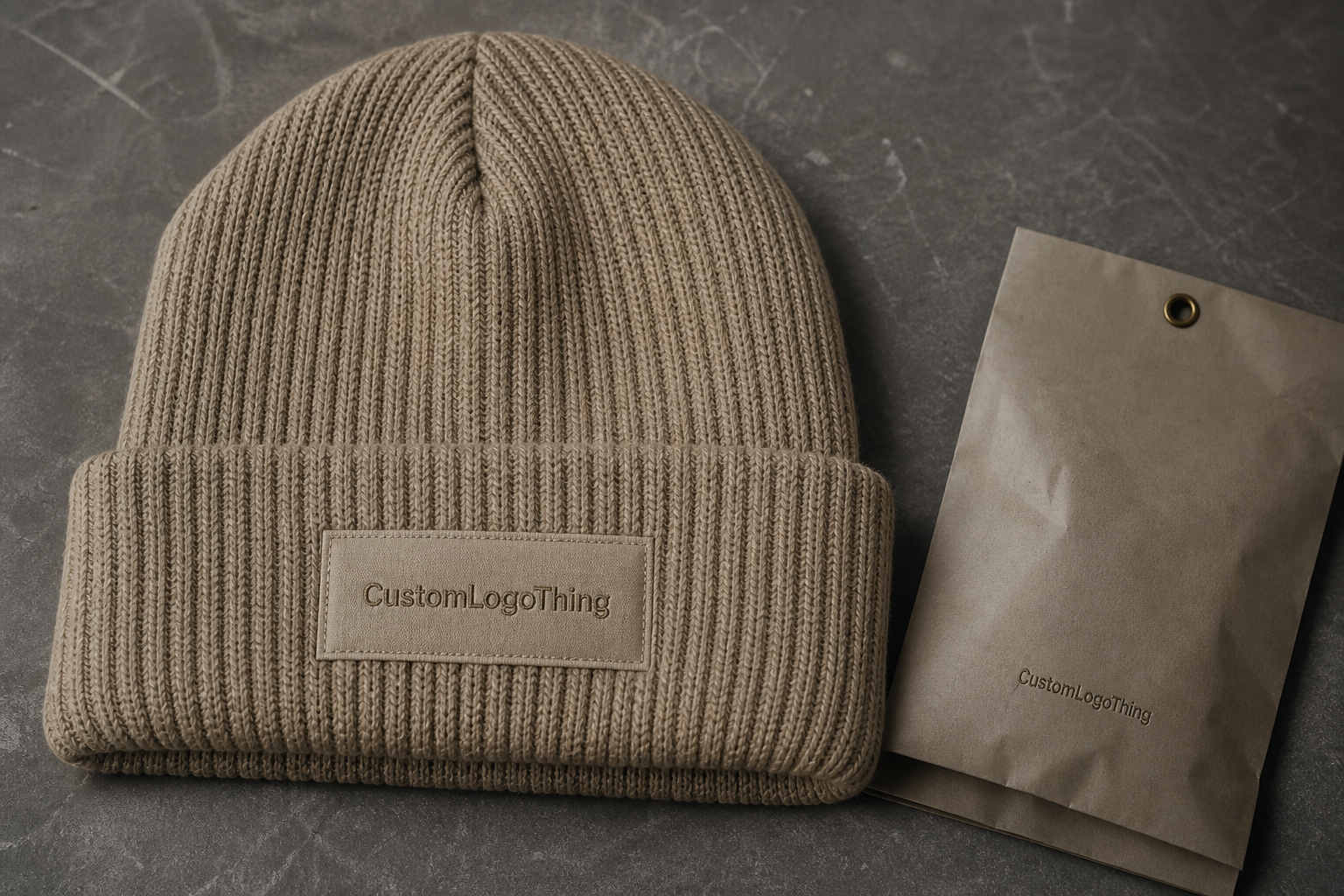
Ribbed winter hats are small, but they are not mechanically simple. The rib structure, yarn choice, shaping method, and finish all affect how long the machine runs and how much material the style consumes. A tighter rib often takes more machine time. A deeper cuff adds both knitting and folding labor. A heavier yarn changes the handfeel and usually the price.
The surprise for many buyers is that two hats with the same logo can sit in very different cost bands. A one-layer acrylic beanie with a tiny woven label is a different product from a cuffed 2x2 rib style made in a recycled blend with embroidery and retail bagging. The difference is not cosmetic. It shows up in setup time, handling, and inspection.
Seasonal timing adds pressure. Once a style is tied to a launch date, there is less room to revise the spec without affecting the whole run. If a merchandiser starts with a workable budget and then adds a second decoration placement, custom labeling, or a heavier knit, the order can move out of range fast. That is why the ribbed winter hats Unit Cost Breakdown should be reviewed early, not after the artwork is already approved.
There is also a common misconception that knit hats are interchangeable commodity goods. They are not. The base shape may be familiar, but the spec controls the actual cost. Small changes in yarn, rib count, or packaging can turn a low-friction order into a custom build with extra fees attached.
Think about the build in three buckets:
- Low-complexity: stock yarn, standard cuff, bulk packing, one simple logo treatment.
- Mid-complexity: tighter rib, custom label, embroidery, individual polybag.
- Higher-complexity: premium blend, branded patch, hangtag, barcode sticker, retail carton marks.
Each step adds something real. Material. Time. Handling. Or all three.
Ribbed Winter Hats Unit Cost Breakdown: What Drives Each Dollar
The cleanest way to read a ribbed winter hats Unit Cost Breakdown is to split it into six parts: fiber, knitting time, shaping and closure, decoration, inspection, and final packing. That is usually enough to explain why one quote is low, another looks high, and a third is missing something important.
Fiber choice usually sets the baseline. Standard acrylic is still the most common low-cost option because it knits consistently and keeps pricing predictable. Acrylic-wool blends generally cost more because they add warmth and a softer, more natural hand. Recycled fibers can cost more again if the mill has limited availability, the color standard is tight, or the order needs a specific certification trail.
Knitting time is the next lever. Denser ribs, heavier gauges, and deeper cuffs keep the machine occupied longer. That means the unit price can rise even when the finished hat does not look dramatically different. Buyers often expect “more premium” to mean “slightly more expensive.” In knitting, it can mean a larger jump than expected.
Color planning matters more than most line sheets admit. Stock colors are easier to produce. Custom-dyed yarns, small dye lots, and several colorways in one program usually mean extra setup and more scheduling complexity. If the order needs a precise brand color, the supplier may need lab dips, strike-offs, or additional approvals before bulk starts. Those steps are not free, and they should not pretend to be.
Decoration is often its own cost center. Embroidery adds digitizing, thread changes, stitch count, and placement control. Woven labels bring artwork setup and label production. Patches and applique add both material and attachment labor. A one-color mark on the cuff is not the same as a multi-color logo with tight outlines. The first is straightforward. The second is a small engineering project pretending to be branding.
| Build option | Typical cost impact | Best fit | Watch-out |
|---|---|---|---|
| 1x1 rib acrylic, bulk packed | Lowest baseline cost | Promotional handouts, high-volume giveaways | Branding can look too small if the logo is not planned well |
| 2x2 rib acrylic blend, cuffed | Moderate increase | Retail basics, team programs | More yarn usage and machine time |
| Heavier-gauge recycled blend | Moderate to higher | Eco-focused merchandising | Color matching and lead time can stretch |
| Premium blend with patch and retail pack | Highest of the group | Gift sets, club stores, premium resale | Setup charges and packaging add up quickly |
Inspection is easy to ignore until something arrives crooked. Knitwear needs checks for measurement, color consistency, seam finish, logo placement, and basic visual defects. If the order includes several sizes, colors, or decoration methods, the inspection load rises with it. This is one reason a quote for a supposedly simple beanie can move once the QC requirements are spelled out.
Packing and carton work are the final piece. Bulk packing is usually the lowest-cost route. Individual polybags protect the product and help with count control, but they add material and labor. Hangtags, barcode stickers, insert cards, and retail folding make the product shelf-ready, but they should be treated as real production steps, not decoration after the fact.
Freight, duties, rush fees, and unusual carton labeling are often separate from the base unit price. That is where the quote can look better than the landed cost. A buyer who only looks at factory price is looking at half the picture.
For packaging and transit context, references from packaging.org are useful for thinking about materials and protection requirements. For distribution and carton testing, ISTA standards are worth reviewing because damage in transit is a cost, not a surprise.
That is the practical version of the ribbed winter Hats Unit Cost Breakdown: the hat itself is only one part of the final number.
Rib Structure, Fit, and Material Specs That Define the Beanie
The rib pattern changes the look and the economics. A 1x1 rib usually gives a tighter, cleaner stretch. A 2x2 rib reads fuller and more casual. Neither is automatically better. They just serve different purposes, and they behave differently on the machine.
Cuff depth matters more than buyers expect. A shallow cuff is quicker and uses less material. A deeper fold-over cuff adds weight, gives more space for branding, and often looks more substantial in retail. For a value program, that added cuff may be unnecessary. For a logo-led retail style, it can be the whole point.
Fiber content is another driver. Acrylic stays popular because it is stable, predictable, and easy to source. Acrylic-wool blends support a warmer handfeel and usually a higher price position. Recycled polyester or recycled blend yarns can support sustainability targets, but the order should confirm exact content, available colors, and whether the material is in stock or needs to be sourced specifically for the run.
Fit is where a lot of bad assumptions show up. Most buyer briefs say “adult size” and stop there. That is not enough if the program needs a specific stretch range, a slouchier profile, or youth sizing. The more exact the fit requirement, the more useful a sample becomes. Descriptions do not catch fit problems very well. Samples do.
A useful spec sheet should answer these points clearly:
- Is the rib 1x1, 2x2, or a custom textured pattern?
- Is the hat single-layer, cuffed, or double-layer?
- What fiber content is acceptable?
- What color standard is being used?
- Where does the logo sit: cuff, body, or patch?
- Does the program need youth, adult, or extended stretch sizing?
The fewer open questions, the cleaner the quote. That is not a theory. It is basic production reality. Every unanswered detail gets guessed at somewhere, and the guess usually shows up in cost later.
In knitwear, structure comes first. Decoration sits on top of it. If the base hat is wrong, no amount of branding fixes the order.
Decoration, Labels, and Packaging Choices That Protect Margin
Decoration can move the economics faster than almost anything else. Direct embroidery is durable and clean, but it adds digitizing and stitch-count planning. Woven labels are controlled and repeatable, yet they still require artwork setup and label production. Patches and applique can create a stronger retail look, but they add materials and attachment steps that must be priced in.
Artwork complexity matters too. One-color logos are easier to place and repeat. Multi-color marks with fine outlines need more care and usually more time. If the artwork sits on a ribbed cuff, the stretch of the knit can affect placement and distortion. That means decoration planning should happen before bulk knitting starts, not after.
Packaging deserves the same level of attention. Bulk packing keeps the unit cost lower. Individual polybags protect the product and make receiving easier, but they add material and labor. Hangtags, barcode stickers, and insert cards improve shelf readiness, though they should be approved early so the production line is not forced to stop for a last-minute label change.
For ecommerce and retail distribution, packaging also affects cube, handling speed, and warehouse efficiency. A hat that costs slightly more at the factory can still be the better buy if it saves time downstream. That is especially true for chain-store replenishment and mixed-channel programs, where packaging discipline matters almost as much as the garment itself.
A hat that is easy to reorder usually has a complete spec, stable decoration, and packaging that does not need interpretation.
If the order needs recycled paper components or FSC-aligned cartons, those requirements should be stated directly. FSC applies to paper and packaging components, not the knit fabric. Mixing those up creates confusion, and confusion creates quote noise. Clean specs keep the pricing honest.
This is where the ribbed Winter Hats Unit cost breakdown starts to look less like a product sheet and more like a packaging plan. The final presentation is part of the product. Pretending otherwise just creates surprises later.
MOQ, Quote Inputs, and Tiered Pricing Buyers Should Expect
MOQ changes the price more than many buyers want to believe. Small runs carry the same setup burden as larger ones, so the per-piece cost is usually higher. As quantity rises, those fixed costs get spread over more units, and the price drops. No mystery there. Just math and factory reality.
For ribbed beanies, the first useful pricing band is often a pilot run or launch order. The next band usually appears at a replenishment volume, where the art, yarn, and labels are already approved and the production path is easier to repeat. A quote at 300 units may be perfectly valid. It is just not the same economics as a 1,000-piece reorder.
To get a quote that can actually be compared, send the core details in one request:
- Target quantity and expected reorder volume
- Color breakdown by style or SKU
- Decoration method, placement, and artwork file
- Fiber content preference and target handfeel
- Packaging style, from bulk carton to retail-ready pack
- Delivery destination and timing requirement
That list is not paperwork for the sake of it. It is how the supplier avoids guessing. If the label type, carton count, or ship-to location is unclear, the quote will probably miss the landed cost. A clean RFQ is the easiest way to make the ribbed winter hats unit cost breakdown usable.
Tiered pricing is also worth watching. Launch orders, first-time samples, and one-off colorways usually cost more than repeat production. Once the yarn is approved, the decoration is locked, and the packout is stable, replenishment pricing should improve. That is normal. It is also one reason repeatability is valuable.
Compare like with like. Ask whether sampling, setup, decoration, packing, and export cartons are included. If they are not, the lowest quote may be missing the exact line items that decide whether the order works.
Mixed programs need the same discipline. Two colorways, multiple sizes, or a second logo placement can look harmless on a spreadsheet. In production, each one adds setup or complexity. If a buyer wants predictable spend, the spec needs to stay as tight as the brand can tolerate.
Production Steps, Approval Gates, and Lead Time Planning
A beanie order usually moves through a simple sequence: art confirmation, sample production, buyer review, bulk knitting, decoration, inspection, and shipment. The sequence is simple. The timing is not.
Lead time tends to be driven by four things: how fast the sample is approved, whether the yarn is in stock, how complex the decoration is, and what the packaging requires. Straightforward builds with stock yarn and simple branding can move faster than custom-dyed yarn, woven labels, or retail packaging. A realistic planning window is often 12-15 business days after final approval for simple runs, with longer schedules for custom yarn or more involved packouts. That is not slow. It is normal production timing.
There are a few approval gates that reduce the odds of expensive rework:
- Color match approval on yarn or lab dip.
- Logo placement confirmation on cuff or body.
- Final spec approval for size, stitch count, and fit.
- Carton marks and packout approval before shipment.
These checks matter because late changes are costly. A color adjustment after yarn is committed can trigger waste or rework. A logo change after decoration setup can slow the line. A carton mark correction after packing can create labor the buyer never budgeted for. It all lands in the unit cost eventually, even if it arrives under the label of “small revision.”
For hard deadlines, plan backward from the delivery date and leave margin for approvals. Holiday retail, school events, and team launches do not care that a supplier was “close.” They care whether the product is on time and correct.
The cheapest order is the one that arrives complete, on time, and without a correction run in the middle of the schedule.
If the shipment needs packaging validation or carton testing, ask whether the packout was designed for travel, not just for a shelf photo. That is where ISTA-style testing becomes useful. Damage in transit is not a theoretical risk. It is a bill.
What Buyers Need From a Beanie Program at Scale
Bulk buyers do not need a dramatic sales pitch. They need the product to be repeatable, the quote to be readable, and the production path to stay stable from sample to reorder. That is the part that protects margin.
The most useful supplier relationship is the one that keeps the core spec unchanged unless the buyer intentionally changes it. Same rib structure. Same fit. Same decoration placement. Same packaging standard. That kind of consistency keeps the ribbed winter hats unit cost breakdown from resetting every time the style comes back.
Documentation matters more than most people want to admit. A useful quote should show what is included, what is optional, and what triggers extra cost. If setup, label production, packing, or freight are vague, the buyer is left guessing until the invoice arrives. That is a poor way to manage seasonal inventory.
Issue control matters too. A supplier who checks the fit, decoration, and carton marks before bulk production starts can catch the expensive mistakes early. That is especially helpful on repeat orders, where a tiny artwork shift or yarn batch change can affect the entire run.
For merchandisers, flexibility matters as long as it does not wreck the cost structure. A promotional hat, a retail hat, and a team issue hat can share the same base construction and differ only in label or packaging. When that difference is managed cleanly, the buyer gets more channel options without rebuilding the product from scratch.
That is the goal: not miracle pricing, just predictable execution. Predictability protects margin better than any glossy pitch ever will.
If a quote is being reviewed internally, ask for the line items separately: decoration, packaging, freight, and setup. That makes the ribbed winter hats unit cost breakdown easier to evaluate, easier to defend, and easier to repeat later.
What affects the ribbed winter hats unit cost breakdown the most?
Yarn choice, stitch density, and decoration method usually move the price first. MOQ, packaging, and custom labeling can add cost even when the hat body is simple, and color changes or repeated art revisions often cost more than buyers expect.
How do I compare ribbed beanie quotes fairly?
Match the same quantity, decoration placement, packaging, and shipping terms on every quote. Confirm whether sampling, setup, and carton packing are included or billed separately, and check the fiber content and rib construction so the specs are truly equivalent.
What MOQ is typical for ribbed winter hats with custom branding?
MOQ depends on the decoration method, color count, and how customized the knit construction is. Simpler styles can usually run at lower quantities than premium builds, and larger quantities often unlock better unit pricing because setup is spread across more pieces.
How long does production usually take for ribbed winter hats?
Lead time depends on sample approval speed, yarn sourcing, and decoration complexity. Straightforward builds move faster than hats with custom labels, patches, or retail packaging, so a clear spec sheet and quick approvals are the best way to protect the timeline.
What should I send for an accurate ribbed winter hats quote?
Send target quantity, color breakdown, logo art, preferred yarn, and any packaging requirements. Include the delivery destination so shipping and carton planning can be priced correctly, and ask for a sample if fit and handfeel matter to the order.
For buyers who want fewer surprises, the simplest move is to keep the spec tight, the approvals fast, and the comparison honest. That is how a ribbed winter hats unit cost breakdown becomes a useful buying tool instead of a vague estimate.