A ribbed winter hats Unit Cost Breakdown is not just the price of a blank beanie. Buyers often focus on the base hat, then act surprised when decoration, labels, packing, freight, duty, and quality checks land on the invoice. Cute spreadsheet. Wrong total.
Ribbed beanies stay popular because they do a lot without looking complicated. The vertical texture gives a basic acrylic or wool-blend winter hat more structure, more warmth, and a stronger retail feel than many flat knit styles in the same price band. For employee kits, outdoor merch, brewery drops, ski shop resale, campus stores, construction crews, and holiday gifting, one product can cover warmth, branding, and daily wear. That is useful.
The part buyers need to understand is simple: small product decisions move the unit cost. Cuff height, yarn type, rib density, logo method, packaging, and freight terms can shift the final price more than expected. A cheap hat can become expensive if the fit is weak, the embroidery puckers, or the packaging turns a compact shipment into a bulky one.
What a Ribbed Winter Hats Unit Cost Breakdown Really Shows
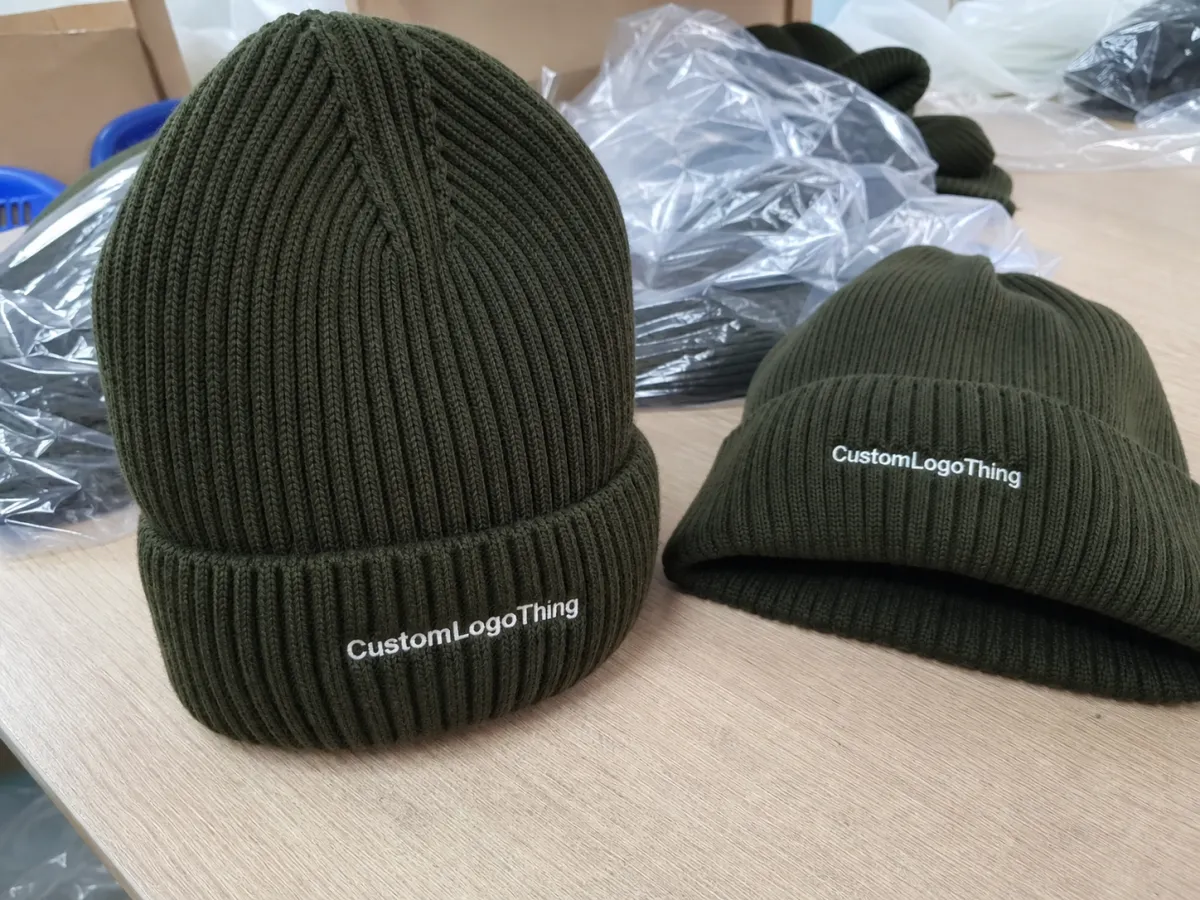
The first job of a cost breakdown is to separate product cost from finished-order cost. A blank ribbed beanie may look simple, but a bulk order usually includes yarn, knitting, decoration, labels, packaging materials, carton packing, inspection, freight, duties, and margin. Yes, margin exists. Factories are not charities.
Cheap and cost-effective are not the same thing. A low cost per piece can become expensive if the cuff stretches out after two wears, the logo lands crooked, color lots shift between cartons, or the packaging looks like it lost a fight with a forklift. Buyers who compare only the lowest visible unit price usually miss the cost drivers that matter.
Rib construction affects price and perceived value. A tight 1x1 rib usually uses less yarn than a chunky fisherman rib, but it may not deliver the same heavy winter look. A double cuff gives embroidery or patches a cleaner base, but it adds material and knitting time. Shocking, I know. More hat usually costs more money.
The main buckets to review are material, knit density, finished size, cuff height, logo method, label style, packaging, MOQ, sampling, production timeline, freight terms, and reorder planning. A useful quote should define those details before production starts, not after a pretty mockup has already made everyone emotionally attached.
Buyer reality: A ribbed winter hats Unit Cost Breakdown should show what changes the landed price, not just what makes the mockup look nice.
Product Details That Change the Final Beanie Price
Ribbed beanies can look nearly identical in a photo and still price very differently. A 1x1 rib, 2x2 rib, chunky rib, fisherman rib, and tight-gauge rib each uses different yarn amounts and machine time. A dense 2x2 rib with a tall fold-over cuff will usually cost more than a lighter stock rib with a standard cuff, even before the logo is added.
Material is one of the biggest decisions. Standard acrylic is often the entry-price option for promotional winter hats because it is warm enough for many use cases, holds color well, and supports bulk pricing. Recycled acrylic adds a sustainability angle and can help with corporate gifting programs, though it usually raises the unit cost. Wool blends increase warmth and perceived retail quality, but buyers should expect higher pricing and clearer care instructions. Cotton blends feel soft and breathable, but they often hold less heat than acrylic or wool blends.
Cuff style changes both the look and the decoration area. A single cuff keeps the profile simple. A double cuff adds structure and gives embroidery or patches a cleaner surface. A tall cuff feels more retail and streetwear-focused. Fold-over cuffs can be adjusted by the wearer, but the logo placement still needs planning so the branding does not disappear into a fold.
Logo options have real tradeoffs. Front cuff embroidery is common because it is durable, familiar, and efficient for many orders. Side embroidery feels quieter and more boutique. Woven patches handle fine detail better than thread on ribbed knit. Faux leather patches create an outdoor retail look. Rubber patches feel modern, but tooling or mold charges can make them inefficient at lower quantities. Clamp labels are clean and minimal, especially for brands that do not want a billboard on the forehead.
Fit also affects price. Adult one-size beanies are the simplest. Youth sizing, oversized streetwear fits, skull-cap profiles, and extra-deep winter styles may need custom dimensions and higher minimums. Common adult Ribbed Winter Hats sit around 20-23 cm wide when laid flat and 20-30 cm tall, depending on cuff height and intended fit.
Color choice is another fork in the road. Stock colors keep cost and lead time lower. Pantone-matched yarn gives tighter brand control, but it usually requires higher minimums, longer production, and sometimes lab dips or extra sampling. For resale, retail presentation upgrades such as hang tags, belly bands, polybags, kraft sleeves, or gift boxes can make a basic beanie feel intentional instead of leftover swag.
Specifications Buyers Should Lock Before Requesting a Quote
A useful quote starts with complete specs. If the request says “custom beanies” and nothing else, the supplier has to guess. Guessed quotes are either padded for safety or too thin to trust. Neither helps you buy smarter.
Send the core details first: quantity, material preference, rib style, finished dimensions, cuff height, color, logo size, logo file, decoration method, packaging style, delivery address, and in-hands date. If there is a target unit price, say it. A good supplier can tell you whether that target fits the product or whether a spec needs to move.
- Quantity tiers: Ask for 100, 250, 500, and 1,000 pieces if your volume is flexible.
- Material direction: Standard acrylic, recycled acrylic, wool blend, cotton blend, or premium mixed yarn.
- Logo file: Vector artwork is best for embroidery digitizing, woven labels, patches, and production files.
- Logo size: Embroidery on a cuff often works around 2-4 inches wide, depending on the artwork.
- Deadline: Give the real in-hands date, not the day you hope someone starts shipping.
Logo complexity can shift price quickly. Dense fills, tiny lettering, gradients that need simplification, metallic thread, and oversized placement can increase setup charges or stitch count. Tiny text stitched onto ribbed knit often looks worse than buyers expect. Thread has limits. It is not a printer.
Color matching also needs a direct answer. “Close stock navy is fine” and “must match our exact brand navy” are different production paths. The first keeps cost and lead time down. The second may require custom yarn matching, lab dips, and approval steps. That can be the right move for retail programs, but it should not be treated like a free upgrade.
Before asking for pricing, sort must-haves from nice-to-haves. Decide the target delivery date, acceptable substitutions, decoration preference, and packaging level. That keeps the Ribbed Winter Hats unit cost breakdown focused on real buying choices instead of twenty random versions no one will approve.
Unit Cost, MOQ, and Pricing Ranges for Bulk Orders
Bulk ribbed beanie pricing is built from several parts: blank knit cost, decoration setup, logo application, labels, packing materials, carton packing, inspection, inland transport, freight, duties, and margin. A quote may show those as separate lines or bundle some into the unit cost. Ask. Guessing is how budgets get weird.
For planning, basic stock-color acrylic ribbed beanies with one-location embroidery usually sit in a lower tier than fully custom yarn colors, custom patches, hang tags, and retail packaging. Actual pricing depends on quantity, logo size, freight mode, and current material costs, but the structure below gives a practical comparison.
| Configuration | Typical MOQ | Common Cost Pattern | Best Fit |
|---|---|---|---|
| Stock acrylic ribbed beanie with front embroidery | 100-250 pieces | Lower setup burden; better cost per piece at 250+ | Staff gear, events, simple merch |
| Stock color with woven patch or clamp label | 250-500 pieces | May include patch or label setup charges | Retail-style branding, detailed logos |
| Custom yarn color with embroidery | 500-1,000+ pieces | Higher minimums; longer approval path | Brand-controlled programs |
| Chunky rib with leatherette patch and hang tag | 500-1,000+ pieces | Higher material and handling cost | Premium gifting, outdoor merch |
| Retail gift set with box or belly band | 500-1,000+ pieces | Packaging raises labor and freight volume | Ecommerce, holiday kits, resale |
Quantity breaks matter because fixed costs spread out. The first 100-250 pieces carry more setup cost per unit. At 500-1,000 pieces, the economics usually improve, especially for custom labels, patches, or packaging. Larger runs make custom options more reasonable because artwork prep, sampling, and setup charges get divided across more hats.
Packaging can quietly punish a budget. Individual polybags are cheap and useful for logistics. Hang tags add retail value but require handling. Belly bands look sharp for ecommerce kits. Gift boxes can turn freight ugly because they increase carton volume, not just material cost. A box does not make the hat warmer. It may make the unboxing better. Different goal.
Always compare landed cost, not just ex-factory price. Ask whether the quote includes freight, duty, delivery to your warehouse, packaging, sampling, and setup. If one supplier quotes a low unit cost without freight and another includes delivery, those numbers are not comparable. Apples-to-apples means same material, same rib style, same logo method, same packaging, same freight terms, and same destination.
For the most accurate pricing, send quantity tiers, logo art, target material, preferred decoration, packaging needs, delivery zip code, and deadline. That gives the supplier enough to price the real order, not a fantasy SKU.
Production Steps and Timeline From Sample to Delivery
A typical custom beanie order moves through quote review, artwork check, material confirmation, digital proof, sample approval if needed, bulk knitting, logo application, labeling, packing, inspection, freight booking, and final delivery. Skip one step and you might save two days. You might also receive 500 hats with the logo too low on the cuff. Thrilling.
Virtual proofs are faster and lower cost. They work well for stock colors, simple embroidery, and straightforward layouts. Pre-production samples reduce risk when the order includes custom yarn, patches, private labels, retail packaging, strict brand colors, or a new fit. A sample can add time, but it can also prevent an expensive bulk mistake.
Simple stock-color embroidered ribbed beanies can move faster than fully custom knit colors with patches and retail packaging. Production depends on seasonal capacity, artwork approval speed, and shipping mode. Buyers should build buffer time for corporate holiday gifts, ski season programs, outdoor event kits, and retail drops. Waiting until the first cold snap to order winter hats is a bold strategy. Not a good one.
Common delay points are painfully predictable: slow artwork approval, unclear Pantone references, changing logo size after digitizing, late packaging decisions, and missing delivery addresses. Lock those details early. Your supplier cannot book freight to “we’ll confirm later.”
Quality control should check rib consistency, dimensions, cuff height, logo placement, embroidery tension, patch adhesion or stitching, label placement, color consistency, packing count, and carton markings. If cartons will move through a distribution center, basic transit testing principles from groups such as ISTA are worth respecting. Packaging is not decoration only; it protects the finished goods.
Shipping choices also change the final cost. Express freight helps urgent small orders, but the price can sting. Air freight balances speed and price for mid-sized programs. Ocean freight can lower freight cost per unit for larger runs, but it requires more planning and more calendar discipline than most last-minute merch buyers enjoy.
Decoration and Packaging Choices That Protect Your Budget
Embroidery is clean, durable, and familiar. It is often the best value for simple logos, initials, wordmarks, and moderate-size marks on a cuff. Woven patches are better for fine detail, small text, and multi-color artwork. Faux leather patches create a premium outdoor look without requiring an expensive hat base. Rubber patches feel modern and bold, but mold costs can make them less efficient for small orders.
Do not embroider everything. Tiny lettering, complex gradients, thin outlines, and detailed mascots can look messy on a ribbed surface. A woven patch or label may save the logo from looking like a melted spider. Honest answer: if your logo has six colors and micro type, thread is probably not your friend.
Budget-friendly setups include a stock ribbed beanie with one-location embroidery, a stock color with a woven label, acrylic rib with a faux leather patch, or a simple clamp label for minimalist branding. These keep the decoration controlled and the MOQ more manageable.
Premium configurations can include custom yarn color, chunky rib, double cuff, leather patch, woven neck label, hang tag, belly band, and branded gift box. That type of build makes sense for retail, ecommerce kits, outdoor brand launches, and higher-end employee gifting. It does not make sense for every order.
Match packaging to the channel. Bulk cartons work for employee distribution. Individual polybags help logistics and protect hats in transit. Hang tags fit retail racks. Belly bands work for ecommerce kits and shelf presentation. Boxes are best for gift programs where presentation matters. If the hats will be handed out at a muddy jobsite or stuffed into event bags, do not pay for custom boxes. Spend where the end user will notice.
For sustainability claims, be specific. Recycled yarn, reduced plastic packaging, FSC-certified paper tags, and right-sized cartons all mean different things. If paper packaging is part of the program, certification guidance from FSC can help buyers understand responsible sourcing language. Vague “eco” claims are not a strategy. They are usually a headache.
How Buyer-Ready Beanie Quotes Reduce Guesswork
Custom Logo Things is built around practical sourcing. The goal is not to throw a pretty mockup over an unknown product and hope production behaves. The goal is to define the hat, decoration, packaging, MOQ, timeline, and landed cost before the order starts.
Manufacturing guidance matters because small spec changes can move the price. If a buyer wants a lower unit cost, the quote can show options such as stock yarn colors, simpler embroidery, larger quantity tiers, lighter packaging, or cleaner logo setup. If the buyer wants premium retail appeal, the quote should show where the money goes: yarn, cuff structure, patch type, label package, hang tag, box, or freight.
That is the practical value of a ribbed winter hats Unit Cost Breakdown. It shows the tradeoffs instead of hiding them. A 72-piece custom Pantone chunky rib beanie with a molded rubber patch and retail gift box will not price like a blank warehouse cap. Anyone pretending otherwise is selling you a surprise, not a quote.
Packaging expertise matters too. Branded products are not finished when the logo goes on. They still need to be packed, labeled, shipped, merchandised, stored, and received by the end customer. Weak packaging can damage a good product. Overbuilt packaging can burn budget that should have gone into the hat.
Risk reduction is boring until it saves the order. Artwork review, proofing, sample planning, QC checks, and clear production timelines help prevent common bulk-order mistakes: wrong logo size, weak cuff shape, inconsistent color, crooked patches, misspelled labels, and missed delivery dates. Boring is good. Boring means fewer expensive surprises.
Next Steps Before You Place a Ribbed Beanie Order
Start with the order path. Choose quantity tiers, select a material direction, pick the rib style, confirm cuff height, choose the logo method, decide packaging, set the deadline, and send artwork for review. That sequence keeps the quote clean.
Ask for two or three versions if the budget is not locked: budget, mid-range, and premium. This helps show what changes the cost per piece. Maybe the patch is driving the increase. Maybe the custom yarn is the issue. Maybe the gift box is eating freight budget like it has a grudge.
- Confirm the quantity range and acceptable MOQ.
- Choose stock color or custom yarn color.
- Select embroidery, woven patch, leatherette patch, rubber patch, or label.
- Decide between bulk cartons, polybags, hang tags, belly bands, or boxes.
- Review whether the quote includes setup, sampling, freight, duties, and delivery.
- Approve the proof only after checking size, placement, spelling, colors, and carton marks.
If the beanie will become a recurring merch item, document the specs. Save the approved artwork, yarn color, rib type, cuff height, decoration method, thread colors, patch files, label specs, and packaging layout. Reorders move faster and price cleaner when nobody has to rebuild the product from memory.
The smartest cost breakdown is tied to actual specs, real quantities, and a real delivery plan. Send those details first, and the quote gets useful fast.
FAQ
What affects ribbed winter hat unit cost the most?
The biggest cost drivers are quantity, yarn material, rib style, decoration method, logo complexity, packaging, and freight terms. Embroidery on a stock-color acrylic ribbed beanie is usually more budget-friendly than custom yarn colors, premium patches, and retail packaging. Buyers should compare landed unit cost, not just the blank hat price.
What MOQ should I expect for custom ribbed winter hats?
Lower MOQs are usually possible for stock colors with standard embroidery or simple labels. Custom Pantone yarn, private labels, patch molds, and retail packaging typically require higher minimums. MOQ also depends on whether the order uses existing materials or requires a dedicated production run.
Is embroidery or a patch cheaper for ribbed beanies?
Simple embroidery is often the lower-cost option for basic logos and moderate quantities. Woven, faux leather, or rubber patches can be better for detailed logos, but they may include setup charges or tooling fees. The best choice depends on logo detail, target look, quantity, and whether the hat is for retail, gifting, or field use.
How long does production take for bulk ribbed winter hats?
Timeline depends on stock versus custom materials, sample approval, decoration method, packaging, and shipping mode. Simple stock-color embroidered orders move faster than custom yarn colors with patches and retail packaging. Artwork delays, color changes, and late packaging decisions are common reasons timelines stretch.
How do I get an accurate ribbed beanie pricing quote?
Send quantity, material preference, rib style, color, logo file, logo size, decoration method, packaging requirements, delivery address, and deadline. Ask for pricing at multiple quantity tiers if your order size is flexible. Confirm whether the quote includes setup fees, sampling, packaging, freight, duties, and delivery so you are comparing real totals.


