A ribbon-handle paper bag can look polished on a shelf and still fail the first real use. That gap between appearance and performance is why the ribbon handle paper bags Quality Control Checklist belongs at the front of the buying process, not buried in a receiving file after the shipment lands. Decorative bags carry more risk than plain carry bags because they combine print, paper stiffness, hand assembly, and a load-bearing handle. Each of those parts can drift a little. Together, they can produce a bag that looks right in a photo and disappoints in use.
The failure mode is usually not dramatic. It is a ribbon that sits 3 mm off-center, a base that creases after a few lifts, or a glue line that softens in humid transit. None of that looks serious until the bags are stacked, handled, and sold. Then the defects multiply through complaints, rework, and waste. A run of 10,000 bags with a small attachment problem is not a small problem.
A premium finish is not proof of a premium bag. Handle bond strength, board stiffness, print durability, and carton packing have to work together or the order can pass a visual check and still fail in use.
What this checklist is for
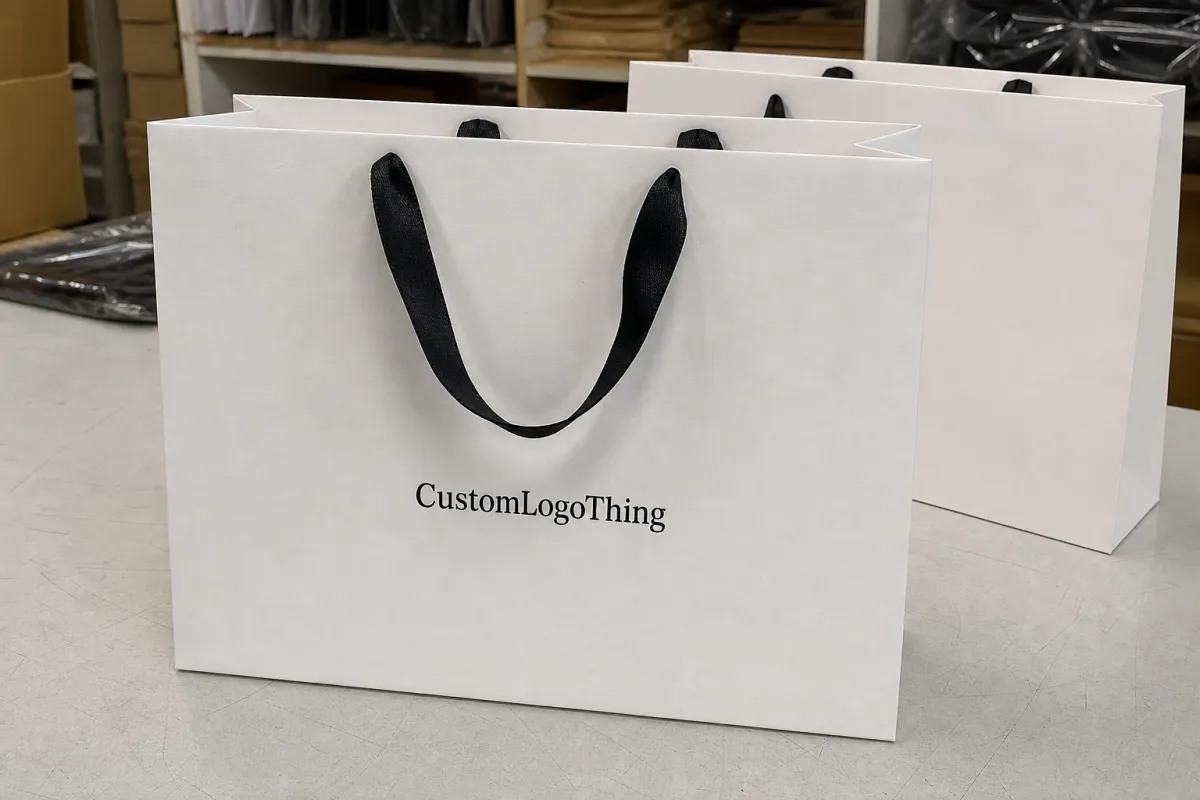
The purpose of a ribbon handle paper Bags Quality Control Checklist is straightforward: it turns a custom packaging order into measurable requirements. That means dimensions, paper grade, ribbon style, print tolerance, load performance, and packing method should all be defined before production begins. A checklist is not only for catching defects. It is for preventing argument over what the finished bag was supposed to be.
Ribbon-handle bags deserve tighter control than standard paper carriers because the buyer is usually paying for presentation as much as utility. A plain kraft bag may allow a wider tolerance band. A gift bag with satin ribbon, foil, or lamination rarely does. If the ribbon shade shifts, the handle drop changes, or the print looks dull under retail lighting, the bag may still function, but it no longer supports the brand value the customer paid for.
That is why cosmetic and functional acceptance need to sit side by side. A slight shade difference may be acceptable if the brand allows it. A weak handle bond is not. A tiny glue mark near a folded edge may be hidden. A base split under load cannot be hidden. Buyers save themselves trouble by deciding those limits before the run starts.
- Structure: paper weight, board stiffness, base strength, seam integrity, and fold accuracy.
- Print: color match, registration, rub resistance, and finish quality.
- Handle: ribbon width, attachment symmetry, drop length, and pull strength.
- Packing: carton counts, stack pattern, label accuracy, and pallet stability.
If the order uses certified fiber, ask for chain-of-custody evidence through FSC. If transit damage is a concern, packing should be aligned with shipping test guidance from ISTA, not just a warehouse habit.
Where ribbon-handle bags fail
Most defects trace back to a handful of production stages: paper selection, cutting, ribbon insertion, gluing and curing, and final packing. Once those stages are mapped, the inspection process becomes more useful because each defect points to a likely cause. A wavy side panel often comes from paper that is too light, too humid, or stored badly. Uneven handles usually point to miscut holes, inconsistent ribbon length, or rushed assembly. A crushed base often starts with weak board or poor folding pressure.
Cosmetic defects and structural defects should not be treated as the same issue. A shade shift can sometimes be tolerated if it falls within the approved sample range. A handle that tears under a normal retail load is a shipment problem. A small glue smear may disappear under the ribbon. A seam that opens at the bottom during filling cannot be explained away. The checklist has to separate what is visible from what is dangerous.
The fastest way to catch this is to align checkpoints with the build process:
- Paper check: GSM, coating, stiffness, moisture content, and fiber consistency.
- Cutting check: bag dimensions, square corners, and clean edges.
- Handle check: ribbon width, finish, color consistency, and attachment symmetry.
- Glue check: bond coverage, cure time, and no wet spots before pack-out.
- Carton check: count, compression resistance, and shipping label accuracy.
That structure also helps communication. “The bags look off” is too vague. “The left handle is 2 mm higher and the base score line is wandering” is actionable. A supplier can correct a measurable issue far faster than a general complaint.
Specs that need to be fixed before production
The buyer side does not need to specify every machine setting, but the key requirements should be locked down before production. “Premium” is not a specification. Paper should be described by GSM, board type, coating, and moisture behavior. For many ribbon-handle bags, 210-350gsm paperboard is common, though the right weight depends on bag size, intended fill weight, and whether the bag needs a rigid gift-box feel or a lighter retail feel.
Handle details matter just as much. Ribbon needs a width, weave, finish, and color tolerance. A 15 mm satin ribbon and a 25 mm grosgrain ribbon look similar on a spec sheet and behave differently in hand. Satin reads softer and more elegant. Grosgrain usually has more grip and a more textured look. Sealed ribbon ends help prevent fray, and dye-lot control matters more than most buyers expect. Two shades can be “close enough” in isolation and still look mismatched across a finished order.
Print control should be written down with the same care. Define acceptable color delta, registration tolerance, and rub resistance. If the bag uses lamination, foil, varnish, or soft-touch coating, each finish should be approved separately because each one changes how the artwork reads under store lighting and how the surface wears in transit. A good Ribbon Handle Paper Bags quality control checklist includes a quick rub test and a close look at cracking near folds and glued edges.
| Spec area | What to define | What happens if it is vague |
|---|---|---|
| Paper stock | Exact GSM, board type, and coating | Soft feel, poor stacking, or base failure |
| Ribbon handle | Width, weave, sealed end, and color match | Fraying, uneven pull, or visible shade drift |
| Print finish | Color tolerance and rub resistance target | Brand inconsistency and scuffed artwork |
| Dimensions | Width, gusset, handle drop, and base flatness | Packing errors and fit complaints |
A written tolerancing standard is cheaper than a dispute at receiving. “Looks acceptable” is not enough if the order will be distributed through multiple stores or used in a gift program that depends on visual consistency.
Inspection points from sample to shipment
The best QC flow is not complicated: pre-production sample, first article check, in-line inspection, final AQL review, and pre-shipment sign-off. Each stage should leave evidence. Save photos, measurements, signed specs, and at least one golden sample. If the bulk run starts drifting, that record is what makes correction possible.
Timing matters as much as measurement. Sample approval might take 3 to 7 business days. Production, drying, and curing can take another 8 to 15 business days, depending on the paper, adhesive, and finish. Packing and booking add more time. Buyers often focus on print proof approval and overlook cure time, but a bag that is packed before adhesive or coating has settled can show defects later, after it has already shipped.
That is one reason quality and schedule should not be separated. A squeezed factory schedule tends to show up in the last operations first: handle placement drifts, glue coverage becomes uneven, and cartons get packed before the bags have fully stabilized. A good checklist includes the date and condition of each approval step, not just the final result.
A practical sequence looks like this:
- Pre-production sample: confirm materials, artwork, handle style, and structure.
- First article: verify the first cartons against the approved sample.
- In-line inspection: watch for drift in handle placement, glue, or print.
- Final AQL review: use a written acceptance level, often AQL 2.5 for major defects and 4.0 for minor defects unless the order needs a stricter rule.
- Pre-shipment sign-off: confirm counts, labels, cartons, and pallet condition.
Final shipment review should also cover the practical side of packaging. Cartons should resist compression, labels should match the purchase order, and pallet wrapping should protect the bags from moisture and edge crush. A bag that survives factory inspection can still arrive damaged if the pack-out was weak.
Cost, MOQ, and quote variables
Pricing is shaped by more than print coverage. Paper grade, ribbon type, finishing, reinforcement, manual labor, and carton configuration all affect the final unit cost. A simple one-color bag with standard ribbon and no specialty finish will usually sit lower than a foil-stamped bag with soft-touch lamination and reinforced top folds. That sounds obvious, yet many quote comparisons ignore spec drift and compare different products as if they were identical.
MOQ changes the cost curve. Smaller runs spread setup, proofing, and labor across fewer pieces, so unit cost rises fast. In many custom packaging programs, a smaller order can run 25% to 60% higher per unit than a larger order with the same spec. That range is not a promise, but it is a useful warning. If the quote looks unusually low, the answer is usually in the details: thinner board, looser inspection, fewer reinforcements, or a simpler pack-out.
Below is a directional reference, not a factory guarantee:
| Order profile | Unit cost direction | Main drivers |
|---|---|---|
| Basic custom bag, standard ribbon | Lowest | Simple print, common board, standard packing |
| Mid-tier retail bag | Middle | Better board, matched ribbon, moderate finishing, reinforcement |
| Premium gift or luxury bag | Highest | Special coating, foil, tight color control, more manual labor |
A clean quote should separate sample cost, tooling or plate charges, production price, defect allowance, inspection scope, replacement terms, and freight assumptions. If one supplier is much cheaper, ask what has been removed from the spec or the inspection plan. Without that comparison, price alone is not a real buying metric.
Mistakes that cause rejects
The most expensive mistakes are usually ordinary ones. Approving from a single photo. Skipping a pull test because the handle “looks solid.” Ignoring glue squeeze-out because it seems cosmetic. Leaving color tolerance undefined. Forgetting carton compression checks. Each one is small by itself. Together, they are how a premium bag order turns into a receiving problem.
Weak or uneven handle bonding is the defect to watch first. Customers do not treat paper bags gently. Bags are lifted, shifted, carried, set down, and often loaded near the stated limit. If the ribbon attachment is weak on one side, the failure may happen during normal use, not abuse. Crooked handle placement is close behind because it is immediately visible and hard to excuse on a premium package.
One useful habit is to keep a locked golden sample and a signed measurement sheet in the order file. Add a photo standard for acceptable variation. Then set the reject threshold before production ends so nobody has to debate the result at the dock. That is exactly what the Ribbon Handle Paper Bags quality control checklist is supposed to prevent: late arguments, not just late defects.
Buyers usually do not get burned by one dramatic mistake. They get burned by a dozen small misses that were never written down.
Practical buyer checks
If the order needs to hold up outside the factory, the checklist should become an operating document. Attach it to the purchase order. Send it to the supplier, the inspector, and the receiving team. Use it at sample approval, during production, and again before shipment. A checklist that stays in procurement is useful only until the cartons start moving through the warehouse.
The most practical field tests are simple. A loaded handle lift that reflects real retail use. A cloth rub test on the print. A symmetry check for ribbon placement. A close look for glue marks inside the bag, warped bases, or uneven gussets. None of those tests requires special equipment. They do require consistency.
Buyers also need to think about product fit. A bag may pass a pull test but still be wrong if the opening is too narrow for the intended product, or if the gusset collapses once the item is inserted. A few millimeters can matter more than the artwork. That is especially true for luxury or gift programs, where the bag is part of the customer experience, not just a carrier.
Here is the shortest workable version of the buying logic: define the spec, inspect the sample, verify the first cartons, and do not release the shipment until the bulk run matches the approved standard. That is how the Ribbon Handle Paper Bags quality control checklist protects margin, reduces returns, and keeps a packaging order from turning into a quality dispute.
What should a ribbon-handle paper bag QC checklist cover?
Paper stock, GSM, and coating quality; handle attachment strength and ribbon consistency; print registration, color match, and carton pack-out. The checklist should also record dimensional tolerances and final shipment labeling.
How do you test ribbon handle strength before approval?
Use a loaded lift test that reflects real retail use, check both handle attachment points, and watch for glue failure, paper tearing, or ribbon stretch after repeated lifts. Keep the test weight and hold time written down so the result can be repeated.
Which defect most often causes rejected ribbon handle paper bags?
Weak or uneven handle bonding is a common cause, followed closely by crooked handle placement. Print mismatch becomes a bigger issue when branding is highly visible or the bag is part of a premium gift set.
How do MOQ and unit cost change on custom ribbon-handle bags?
Lower MOQ usually increases unit cost because setup is spread across fewer bags. Special ribbon, print finishes, and labor-heavy assembly push pricing up, so a quote should clearly separate sample, tooling, and production charges.
What should buyers verify before final shipment?
Final dimensions, handle strength, and print quality; carton counts, labeling, and packing method; and that the approved sample matches the bulk run with no hidden material changes. That final check is the last chance to catch drift before the order leaves the factory.