Order Custom Ribbon Handle Paper Bags for Candle Launches
A luxury candle is judged before it is lit. The jar, the label, the carton, and the carrier all shape that first impression, and the bag often does more of the heavy lifting than brands expect. Custom Ribbon Handle Paper Bags for luxury candle launches do not just carry a purchase from the counter to the door; they tell the customer whether the brand understands presentation, weight, and the quiet signals that justify a premium price.
Why luxury candle launches need a better bag
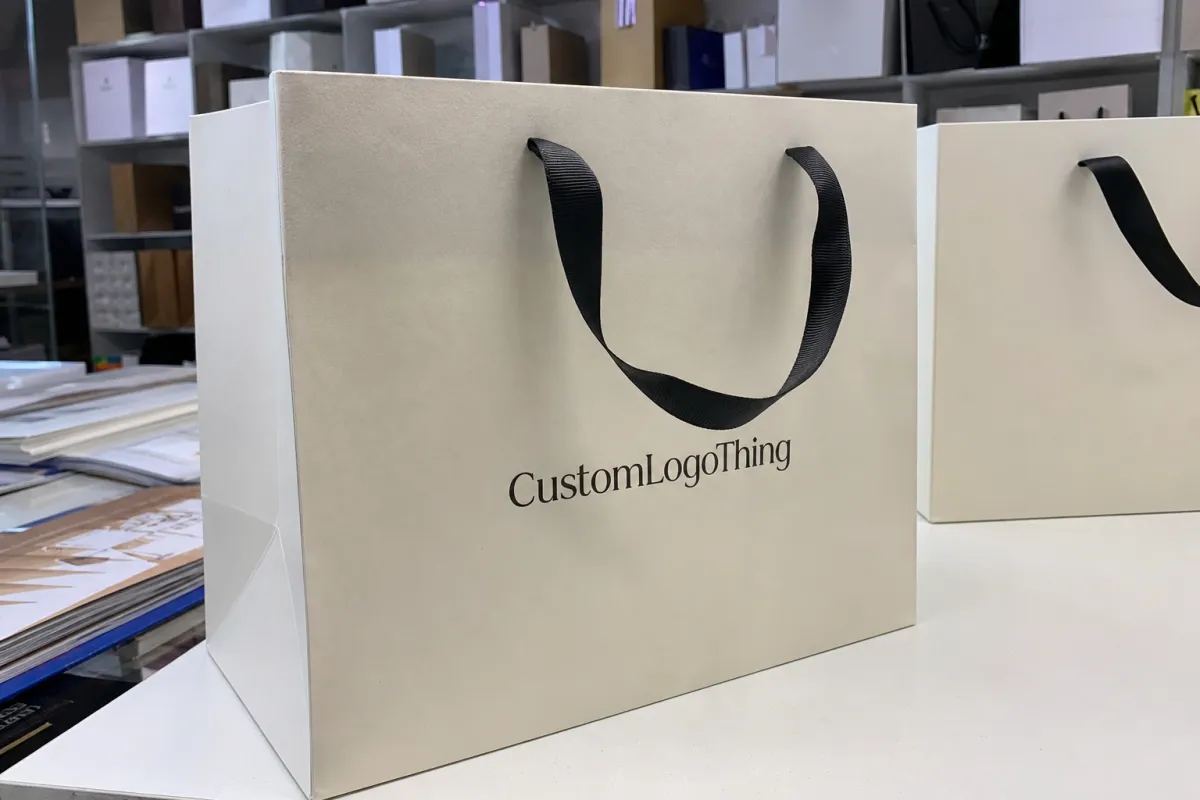
The candle category is intensely visual. Fragrance matters, of course, but it is rarely the first thing a customer experiences. They see the vessel, feel the weight, and notice how the product is handed over. A thin carrier can flatten that experience in seconds. A well-built bag with ribbon handles changes the moment. It adds texture, lift, and a sense of ceremony that makes the purchase feel intentional rather than transactional.
That is why custom ribbon handle paper bags for luxury candle launches deserve the same attention as the jar or outer box. A satin or grosgrain handle reads as giftable. A twisted paper handle reads as ordinary retail. That difference is small on a spec sheet and obvious in a store. For fragrance brands selling into boutiques, department counters, or seasonal launch sets, the bag becomes part of the product story customers photograph, carry, and keep in view after they get home.
Packaging buyers usually notice the same pattern: when the carrier has good structure, tight print registration, and a finish that matches the candle line, the whole launch feels more expensive. When the bag looks generic, the product has to work harder to justify its placement. That is a poor trade for premium brands, especially when the candle itself already carries glass, wax, scent, and often a heavy outer carton.
The best results come from alignment. The bag should echo the box, not compete with it. A restrained logo, a deliberate ribbon color, and a paper stock that feels substantial can do more for package branding than a pile of decorative effects. The goal is not spectacle. It is control.
“For a candle launch, the bag should feel like part of the gift, not the leftover retail container.”
That is also why packaging teams often compare the carrier with the rest of the Custom Packaging Products range early in development. If the carton, tissue, insert card, and bag are designed separately, the palette tends to drift and the final set feels pieced together. Consistency matters because candle launches are usually sold on atmosphere as much as function.
How ribbon handles, board weight, and inserts work together
A premium bag is a structure, not a printed shell. The paper wrap, the board, the base, and the handle anchors all need to be matched to the real packed weight. If the build is too light, the top edge splits, the handles cut into the paper, or the base sags. If it is too heavy, the bag becomes expensive without adding meaningful value. The best construction sits between those extremes and supports the product cleanly.
Typical luxury builds use a printed sheet in the 157gsm to 210gsm range over a 1200gsm to 1500gsm greyboard core, though the right spec depends on size and candle weight. A small single-wick in a light carton can work with a lighter structure. A boxed multi-wick set or a glass-heavy vessel usually needs stronger board, a reinforced top edge, and a base that spreads the load. Those details are not cosmetic. They are what keep the bag standing straight after repeated carry and store handling.
Handle selection matters more than many launch teams expect. A 10 mm satin ribbon can feel refined on a compact gift pack, but a heavier candle often needs a wider ribbon and stronger anchoring. Grosgrain adds grip and visual depth. Satin is softer and more formal. The choice should reflect both the brand language and the actual carrying load. If the product is dense, the ribbon becomes a functional part of the structure, not only a style cue.
Inserts are easy to overlook because they are hidden. They matter anyway. If the candle sits loose inside the bag or if the carton shifts during carry, the corners scuff and the pack starts to look tired before it reaches the customer’s home. That is especially noticeable with metallic foils, gloss labels, and dark glass, where even a small rub mark can look like damage under retail lighting.
For e-commerce or hybrid launches, test the bag with transit in mind. Freight vibration, carton compression, and repeated handling are where weak constructions show up. Industry test profiles such as those from ISTA can help frame the discussion, while FSC-certified paper is a practical way to support sustainability claims without sacrificing the luxury feel. Buyers should be wary of vague “eco-friendly” language that is not backed by a paper spec or certification detail.
The simplest strong build is often the best one:
- Reinforced top edge to prevent handle tear-out
- Board or heavy paper walls sized to the packed candle, not just the vessel
- Bottom support for tall or dense sets
- Internal insert or cradle when the product can shift in transit
- Ribbon handles chosen for both comfort and tensile strength
Choosing sizes, finishes, and print details that feel premium
Size the bag around the final retail pack, not the naked jar. That mistake is common, especially when teams approve dimensions before the carton, tissue, or insert card is locked. A candle that fits neatly in hand may still need extra depth and height once the full pack is assembled. Leave enough room for easy loading and removal, but not so much that the product slides around or looks undersold.
Proportion is one of the fastest ways to make a candle look premium or cheap. A bag that is too tall makes the product feel smaller. A bag that is too wide makes the whole pack look like filler. The sample should hold a straight profile when carried and still give the product a little breathing space. That balance is hard to fake in renders and easy to spot in a physical sample.
Finish choice should follow the brand tone. Matte soft-touch usually works for restrained luxury and quiet color palettes. Foil and embossing are better for hero SKUs, seasonal editions, and launches that need a sharper retail signal. Spot UV can work, but only when it is controlled. Used carelessly, it turns a refined bag into a noisy mix of textures that compete with the product instead of supporting it.
Good candle packaging tends to obey a simple rule: one clear idea beats three competing effects. A disciplined logo placement, one signature color, and a ribbon that either complements or deliberately contrasts the paper stock usually feels more expensive than an all-over print covered in symbols, slogans, and patterns. The more the design tries to prove itself, the less premium it tends to read.
That is why the strongest Custom Ribbon Handle Paper Bags for luxury candle launches usually feel edited. They borrow the same visual logic that strong product packaging uses elsewhere: clean hierarchy, tactile materials, and enough restraint to let the candle itself remain the hero.
Common finish pairings for candle launches often look like this:
- Soft-touch lamination + blind emboss for a restrained, tactile luxury cue
- Matte art paper + hot foil for brighter shelf impact
- Textured specialty paper + minimal ink coverage for an artisan look
- Spot UV + deep solid color for a fashion-led presentation, if used sparingly
If the carrier sits alongside a box, tissue, or insert card, keep the visual language aligned across the set. Reviewing the bag against your broader Custom Packaging Products lineup helps avoid mismatched typography, stray color shifts, and finish combinations that clash once the full launch set is assembled.
Cost, MOQ, and quote drivers you should compare
Pricing for custom ribbon handle paper bags for luxury candle launches is driven by quantity, paper weight, handle type, finish complexity, and reinforcement. The headline quote can look attractive until setup, freight, and sampling are added in. The landed cost is the figure that matters, especially for launches where margins are already being pulled by fragrance, vessel sourcing, and outer packaging.
At 5,000 units, a straightforward luxury paper bag with ribbon handles may land around $0.65 to $0.95 per unit. Add soft-touch lamination, foil, embossing, specialty paper, or a stronger base insert, and the range can move to roughly $1.00 to $2.10 per unit depending on size and print coverage. Smaller runs usually cost more per piece because setup is spread across fewer units. That is not a markup trick; it is the reality of production economics.
Minimum Order Quantity varies by construction. Simpler paper builds may start lower, while heavier custom work usually asks for more volume. For many premium programs, 1,000 to 3,000 pieces is a common starting point, while more customized jobs may want 5,000 or more. If a supplier can share a bag spec across multiple SKUs, that often makes launch planning easier and reduces pressure on minimums.
| Option | Typical use | Approx. unit cost at 5,000 | What it buys you |
|---|---|---|---|
| Matte art paper, ribbon handle, basic reinforcement | Entry luxury candle launch | $0.65-$0.95 | Clean presentation and controlled cost |
| Soft-touch lamination, foil logo, stronger base | Core premium range | $0.95-$1.40 | Higher tactile value and stronger shelf presence |
| Specialty paper, emboss, custom ribbon color, inserted base | Hero SKU or limited launch | $1.40-$2.10 | Heavier brand signal and stronger gift perception |
Ask for a quote that separates the real cost drivers:
- Unit price at each quantity tier
- Setup or plate fees for printing and finishing
- Sample charges and whether they are credited later
- Freight and carton packing details
- Ribbon surcharge if the width, color, or material is nonstandard
The cheapest option is not always the best value. A slightly higher-cost bag that holds shape better, arrives with fewer rejects, and survives handling more reliably can save money across a full launch. That matters even more for branded retail moments, where one weak shipment can undo a lot of careful work.
Process, timeline, and production steps from proof to delivery
The cleanest projects start with a complete spec sheet. Include the packed dimensions, finished weight, handle preference, finish, artwork placement, target carton count, and launch date. If the candle line includes several sizes, list the range of SKUs rather than only the hero item. A bag that works for one SKU may fail once the wider assortment is added.
The production path is straightforward, but it still takes time. First comes digital proofing, where the printer checks layout, line work, and color targets. Then comes a sample or preproduction check. After approval, mass production starts, followed by inspection and freight booking. If the ribbon is a custom color or the paper is special order, lead time can stretch faster than expected.
Most candle launches should be planned backward from the release date, not forward from the purchase order. A simple job may take 12 to 15 business days from proof approval to production completion, but that does not include sampling, revisions, shipping, or customs. Ocean freight can add weeks. Air freight moves faster but changes the cost equation. Either way, the calendar gets tight quickly if the order is placed late.
Artwork changes at the proof stage are normal, but every change costs time. A logo shift, foil repositioning, or revised ribbon shade can mean another approval round. If the same design system is being used across multiple SKUs, lock the master specification before the factory begins cutting. That saves everyone from fixing small inconsistencies across a full launch batch.
Suppliers should also ask how the bags will be packed and stored. That is a good sign, not an inconvenience. A well-made bag can still arrive damaged if it is overfilled, packed too loosely, or stored in a humid environment. For larger fragrance programs, carton counts, pallet planning, and storage conditions matter almost as much as the print spec.
Practical timeline check:
- Day 1-3: spec confirmation and artwork handoff
- Day 4-7: proofing and revision cycle
- Day 8-12: sample or preproduction sign-off
- Day 13-25: production, inspection, and packing
- After production: freight booking and delivery buffer
If the launch date is fixed, say so early. It affects the material recommendation, packing method, and sometimes the finish options that are realistic on the schedule. A believable timeline is more useful than an optimistic one.
Common mistakes that make candle packaging look cheaper
The first mistake is bad sizing. Too large, and the candle looks small and underdressed. Too small, and the walls bulge while the handles pull hard against the top edge. In both cases, the bag starts fighting the product. Luxury candles are especially sensitive to this because their perceived value depends so much on proportion.
The second mistake is over-finishing. Gloss, foil, metallic ink, and busy imagery can look exciting on a screen and loud in hand. Premium does not mean “more effects.” Often it means fewer effects used with more discipline. A single foil logo on a deep matte background can look far more expensive than a design covered in decorative noise.
Third, many brands forget how the bag behaves in real use. Store associates carry it. Customers swing it by the ribbon. Gift wrap counters stack it. Fulfillment teams may place it inside a larger shipper. If the handle anchor is weak, the corners soften too quickly, or the print scuffs, the bag loses its polish long before the candle is opened.
Another trap is ignoring the full packaging system. If the bag, the carton, and the label speak different visual languages, the launch feels fragmented. That does not just affect appearance. It makes the brand look less sure of itself. Strong product packaging usually feels consistent at the shelf, at handoff, and at unboxing.
Here are the failure points that show up most often:
- Handles chosen for style instead of load
- Oversized bags that make the product feel smaller
- Inconsistent color matching across paper, ribbon, and carton
- Weak base support for dense glass candles
- Too many print effects competing for attention
The fix is usually discipline, not drama. Better dimensions, cleaner art, and a stronger base often do more for perceived value than an entirely new visual concept. That is why many buyers revise their approach after the first sample round. The sample exposes what the mockup hid.
Expert tips and next steps before you place the order
Ask for at least two physical samples if the schedule allows it: one value-tier build and one premium build. Place the actual packed candle inside both. Testing with a placeholder of similar size is not enough. Glass weight, carton thickness, and label finish all change the way the bag carries.
When you compare samples, check four things closely: handle feel, board stiffness, print clarity, and corner recovery after light pressure. A bag can look beautiful on a table and still collapse poorly in the hand. Side-by-side testing saves time because the differences are easier to judge when the samples are handled the same way.
It also helps to think about replenishment before the launch ships. If the product sells well, how many bags will the next drop need? Where will the cartons be stored? What minimum reprint quantity can the budget support without creating dead stock? Those questions are not glamorous, but they decide whether the packaging supports the business past the first shipment.
For teams building a broader retail set, align the carrier with the carton, tissue, and insert card before final approval. That keeps package branding tight and reduces the risk of artwork drift late in the process. It also makes the launch easier to reorder because the spec is clearer.
Here is the simplest filter: if the bag makes the candle feel more considered, more giftable, and more expensive without looking busy, it is probably right. If it only looks impressive in a mockup, it needs another round.
For most fragrance brands, custom ribbon handle paper bags for luxury candle launches are worth the extra attention because they sit at the intersection of presentation, transport, and brand memory. Done well, they support the candle, the box, and the launch. Done badly, they quietly drag the whole release down. Keep the structure honest, the finish disciplined, and the cost comparison grounded in landed cost rather than the headline price alone.
What size should custom ribbon handle paper bags for luxury candle launches be?
Measure the candle in its final retail pack, including any insert, dust cover, or outer carton. Leave enough clearance for loading and removal, but not so much that the product moves around inside the bag. If there is any doubt, test the heaviest SKU first.
How much do custom ribbon handle paper bags for candle launches cost?
Unit price changes most with quantity, paper weight, handle type, and finish level. Freight, setup fees, and sample charges can materially change the landed cost, so compare full quotes instead of only the unit number. A restrained design often delivers a premium look without pushing the spec to the most expensive tier.
What is the typical MOQ for ribbon handle paper bags?
MOQ depends on the supplier and the construction. Simpler builds can start lower, while heavier materials and custom finishes usually require more volume. Mixed-SKU orders can sometimes share one bag spec, which helps reduce minimum quantity pressure.
How long does production take for custom ribbon handle paper bags?
Timeline usually includes proofing, sampling or preproduction approval, manufacturing, inspection, and shipping. Specialty ribbon sourcing or artwork revisions can extend the schedule, so allow margin before launch day. A realistic lead time is safer than a compressed one.
Can these bags hold heavy candle jars or boxed sets?
Yes, if the board weight, handle anchoring, and base reinforcement are matched to the actual packed weight. For heavier sets, test the final assortment rather than a single jar because load shifts matter. Reinforced bottoms and stronger ribbon attachments are usually worth the extra cost for dense or glass-heavy products.

