Custom Ribbon Handle Paper Bags for hotel welcome gifts are a packaging choice buyers usually judge on two things at once: how they look in a room or at check-in, and how they hold up once the contents go in. The best versions feel considered without being expensive to produce, which is why hotels use them for VIP arrivals, conference packs, seasonal gifts, and amenity drops.
The real value is practical. A paper bag with ribbon handles can suit a light welcome note or a heavier kit with snacks, printed inserts, and bottled items. It gives the property more presentation than a plain carrier and more flexibility than a rigid box, while still leaving room to control cost, MOQ, and lead time.
The challenge is choosing the right spec. Paper weight, handle style, print finish, and reinforcement all affect the final result. If those decisions are made early, the bag can fit the contents, match the brand, and pass inspection without surprises.
Custom ribbon handle paper bags for hotel welcome gifts: why they stand out
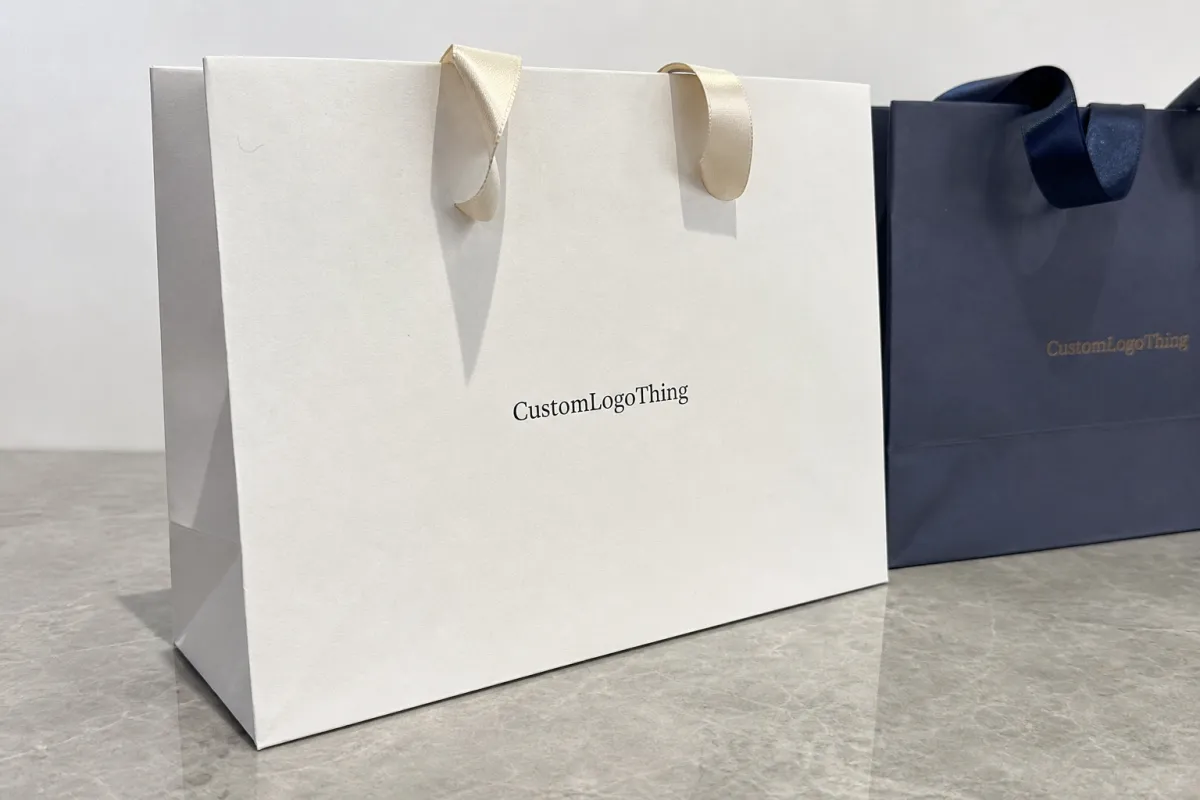
These bags work well because they serve both presentation and operations. They look gift-like, they carry cleanly, and they are easier to store and distribute than many rigid formats. For hotel teams, that means the package can support a branded moment without creating unnecessary handling issues.
They also photograph well, which matters when the bag appears in guest rooms, lobby displays, or event check-in setups. A simple logo, a good color match, and a neat handle detail usually matter more than a crowded design. The bag should look intentional even before the guest opens it.
The format is especially useful when welcome kits vary. Some include only a card and snack; others include brochures, toiletries, or a bottle. A ribbon-handle paper bag can be sized to those differences without forcing the property into a one-size-fits-all box order.
A good welcome bag should look stable when loaded, not just attractive when empty.
That is the main buying test. If the bag collapses, creases badly, or feels awkward in the hand, the guest notices immediately. When the structure is right, the presentation feels more expensive than the materials alone suggest.
How the structure works: ribbon, board weight, and support
The structure is straightforward: printed paper or coated board, gussets, a reinforced base, ribbon handles, and anchor points that can carry the load. Each part matters. If one part is too light, the bag can twist or bow once the contents are added.
Paper weight is the first spec to confirm. Lighter kits can work with 210-250 gsm art paper, but heavier or mixed-content kits usually need thicker stock, lamination, or a board-backed construction. The right choice depends on the actual contents, not on the empty sample.
Handle material changes both feel and durability. Satin ribbon usually reads softer and more decorative. Grosgrain feels firmer and often carries better under load. Width matters too: narrow ribbon can look refined on smaller bags, while wider ribbon may suit larger or heavier welcome kits.
Attachment points deserve close attention during sampling. The handles should hang level, the top board should spread the force, and the bag should not pinch inward when lifted. If the anchors are too close together or too weak, the structure looks strained even if the print is correct.
Internal support is what keeps the bag from looking improvised. A stronger bottom insert, reinforced gusset, or stiffer base board helps the bag hold its shape when items shift. That matters most when welcome kits contain mixed items with uneven weight distribution.
If sustainability is part of the brief, ask for FSC-certified paper and confirm documentation early. If the shipment has to travel a long way, inspection of carton packing and corner protection is also worth requesting. A good bag that arrives crushed is still a failed order.
Sizing and print choices that make a welcome kit look intentional
Start with the contents. Measure the tallest item, the widest item, and the stacked height once everything is grouped together. Then add space for tissue, inserts, or padding. If the bag is guessed instead of measured, the result is usually too tight or too loose.
For hotel use, the most useful dimensions are bag width, height, gusset depth, and handle drop. Handle drop affects comfort when the bag is carried repeatedly by staff or guests. Gusset depth affects whether the contents sit naturally or force the sides open in an awkward way.
Print should support the structure, not compete with it. A single-color logo on matte or textured stock often looks more premium than a busy layout. Foil stamping and embossing can work well, but they are best used when the design is restrained and the finish is doing real visual work.
Color and layout should match the rest of the welcome set. If the hotel already uses branded boxes, cards, or amenity packaging, keep the tone consistent so the bag feels like part of the same system. Too much text or too many colors can make the carrier look promotional instead of hospitable.
Think about where the bag will be seen. A lobby handoff may call for a more compact footprint. A room-drop kit may need a shape that sits neatly on a desk or luggage bench. The right size should support both appearance and practical handling.
Cost, pricing, MOQ, and quote factors buyers should compare
Price depends on the combination of size, stock, ribbon type, print coverage, finish, insert requirements, and freight. MOQ matters because setup costs are spread over the run; small orders usually carry a higher unit price, while larger orders reduce the per-piece cost but require more storage and forecasting.
For moderate-volume runs, these ranges are a practical starting point:
| Build option | Best use | Typical unit price | Main tradeoff |
|---|---|---|---|
| Basic kraft with ribbon | Light welcome kits, simple room drops | $0.38-$0.62 | Practical and clean, but can feel too plain for upscale settings |
| Coated art paper with printed logo | Standard guest bags, moderate loads | $0.48-$0.78 | Better visual finish, needs careful color control |
| Laminated premium build | VIP rooms, event gifting, stronger presentation | $0.72-$1.15 | More refined appearance, but added finish can increase cost |
| Reinforced rigid-style bag | Heavier kits and high-end opening gifts | $1.10-$1.80 | Best structural support, highest storage and freight impact |
Compare quotes line by line. Ask what the price includes: artwork setup, preproduction proof, sample shipping, special ribbon colors, carton packing, and delivery to the final address. A lower unit price can become less attractive once those extras are added.
The clearest brief includes dimensions, quantity, artwork count, finish, handle type, insert needs, and target delivery date. If the hotel is working to a launch or a busy event calendar, it is often better to pay for the version that survives real handling than to save a few cents on a bag that fails inspection.
Production steps and turnaround: from proof to delivery
The usual process is simple: Request a Quote, confirm the structure, approve the dieline, review artwork, produce a sample, run bulk production, then pack and ship. Most delays come from late artwork changes or a size revision after approval, not from the production itself.
Sample lead time is often 7-14 days. Bulk production commonly takes 15-30 business days after proof approval, depending on order size and finish. Foil stamping, custom ribbon colors, and hand-finished details can add time, so those choices should be locked before the schedule is finalized.
Before approving the order, confirm whether freight is included, whether sample revisions are allowed, and whether inspection is part of the process. If the bags need to arrive for a fixed guest date, plan backward from that date and leave room for transit, customs if applicable, and a final quality check.
Plan backward from the guest date. That is the safest way to avoid rush fees and last-minute substitutions. The order should be on site before the bags are needed in the lobby or rooms, not arriving the same week the program starts.
Common mistakes that make the bag feel cheap or fail in use
The biggest mistake is choosing a bag that looks good empty but weak once loaded. Light stock, thin bottoms, and weak handle anchors can all cause the bag to bow or crease when the contents go in. That problem shows up fast with bottles or stacked amenity items.
Bad sizing is next. A bag that is too small forces the gussets open and makes the top edge look stressed. A bag that is too large makes the kit look sparse and unplanned. Measuring the actual contents before placing the order avoids both problems.
Artwork can also hurt the result. Small logos disappear on textured stock, low-contrast colors fade in dim light, and too much copy turns the bag into advertising. The strongest layouts usually keep the branding simple and let the material and finish do more of the work.
Handle problems are common when the ribbon is chosen for appearance only. Decorative ribbon that cannot carry weight is not enough for real use. Handle spacing, anchor strength, and board quality all need to be tested with the actual contents before bulk production starts.
Rushing approval creates avoidable risk. Skipping samples, changing dimensions late, or assuming the factory can absorb a new artwork placement usually leads to delays or uneven results. A short pause before sign-off is cheaper than a failed run.
Expert tips for hotel teams, event planners, and procurement
Standardize the program where possible. One or two bag sizes are usually enough for multiple room tiers or event formats, and that makes reordering easier. A clean spec sheet also helps procurement avoid drift from one run to the next.
Test the bag with real contents, not placeholders. Load the sample with the actual brochure, bottle, snack, pouch, and card, then check whether the handles, gussets, and base still look balanced. The right spec becomes obvious as soon as the sample is used the way guests will use it.
Use ribbon color as an accent rather than a loud feature. A tone-on-tone or low-contrast pairing often feels more premium than a bright ribbon that pulls attention away from the logo. Matte finishes are also easier to control under mixed lighting in lobbies and guest rooms.
Keep the packaging system consistent if the hotel already uses branded boxes or inserts. Matching the tone, finish, and logo placement across items helps the welcome set feel planned instead of assembled from separate orders. That consistency matters more than any single embellishment.
Store the approved spec in one place. Dimensions, stock, handle type, finish, print colors, insert notes, and artwork files should all be easy to find before the next reorder. That saves time when a seasonal program or conference order comes up with limited lead time.
Next steps: lock the spec, request samples, and place the order
Start with three things: contents list, exact dimensions, and quantity. That is enough to get a useful quote and reduce back-and-forth. Then request a sample or preproduction proof before confirming the bulk run, especially if the bags will be used for a launch, conference, or VIP program.
Before approval, confirm the final artwork, paper stock, handle Specs, Lead Time, and delivery buffer. If the order will repeat, save the approved specification so the next round is faster and less prone to error. The bag should match the contents, the budget, and the inspection standard the first time.
custom Ribbon Handle Paper Bags for hotel welcome gifts work best when the structure is practical, the print is restrained, and the schedule leaves room for proofing and delivery. That is usually what buyers need: a package that feels polished without making procurement harder.
Are custom ribbon handle paper bags for hotel welcome gifts strong enough for heavier items?
Yes, if the paper weight, gusset depth, handle reinforcement, and base support are matched to the load. Heavier kits need stronger corners and better anchoring, especially if the contents include glass bottles or stacked items. A sample loaded with the actual contents is the safest way to confirm the build before bulk production.
What size should I order for a hotel welcome kit?
Measure the tallest and widest items first, then add room for tissue, cards, or inserts. The bag should close cleanly without forcing the top edge or leaving the contents loose inside. If the hotel uses multiple room tiers, standardizing one or two sizes usually works better than creating a new size for every variation.
How much do custom ribbon handle paper bags for hotel welcome gifts usually cost?
Price depends on size, stock, ribbon type, print coverage, finish, quantity, and shipping. At moderate volumes, the ranges earlier in this article are a practical starting point, but smaller orders usually cost more per piece and premium finishes raise the total quickly. Compare the full quote, not just the unit price.
What is the typical turnaround for custom ribbon handle bags?
Samples often take about 7-14 days, and bulk production commonly runs 15-30 business days after proof approval. Foil, custom ribbon colors, hand-applied details, or last-minute artwork changes can extend that timeline. It is safer to plan around the delivery date the hotel actually needs, then build a buffer around it.
What print and finish options look best for hotel welcome gifts?
Simple logo placement, strong contrast, and one well-chosen finish usually look better than crowded artwork. Matte stocks, restrained foil, and careful color matching tend to create a more upscale result without making the bag feel overdesigned. The best finish is the one that fits the property and holds up under everyday handling.

