A ribbon handle bag can look right on screen and still fail once it is filled, carried, or packed. That is why a ribbon handle Paper Bags Sample Approval Checklist matters before anyone locks artwork, material, or production timing. A knot can sit slightly off center, the anchor can weaken the top edge, and the paper can fold differently under load than it does on a flat proof.
For a buyer, sample approval is not about whether the bag looks attractive in isolation. It is about whether the physical sample matches the approved size, build, and print spec well enough to move into production without avoidable rework. Ribbon handle bags are especially sensitive because handle feel, finish, and load behavior all affect the final customer experience.
Practical rule: if you cannot judge the bag with a filled product in hand, you are not ready to approve it for production.
Ribbon Handle Paper Bags Sample Approval Checklist Basics
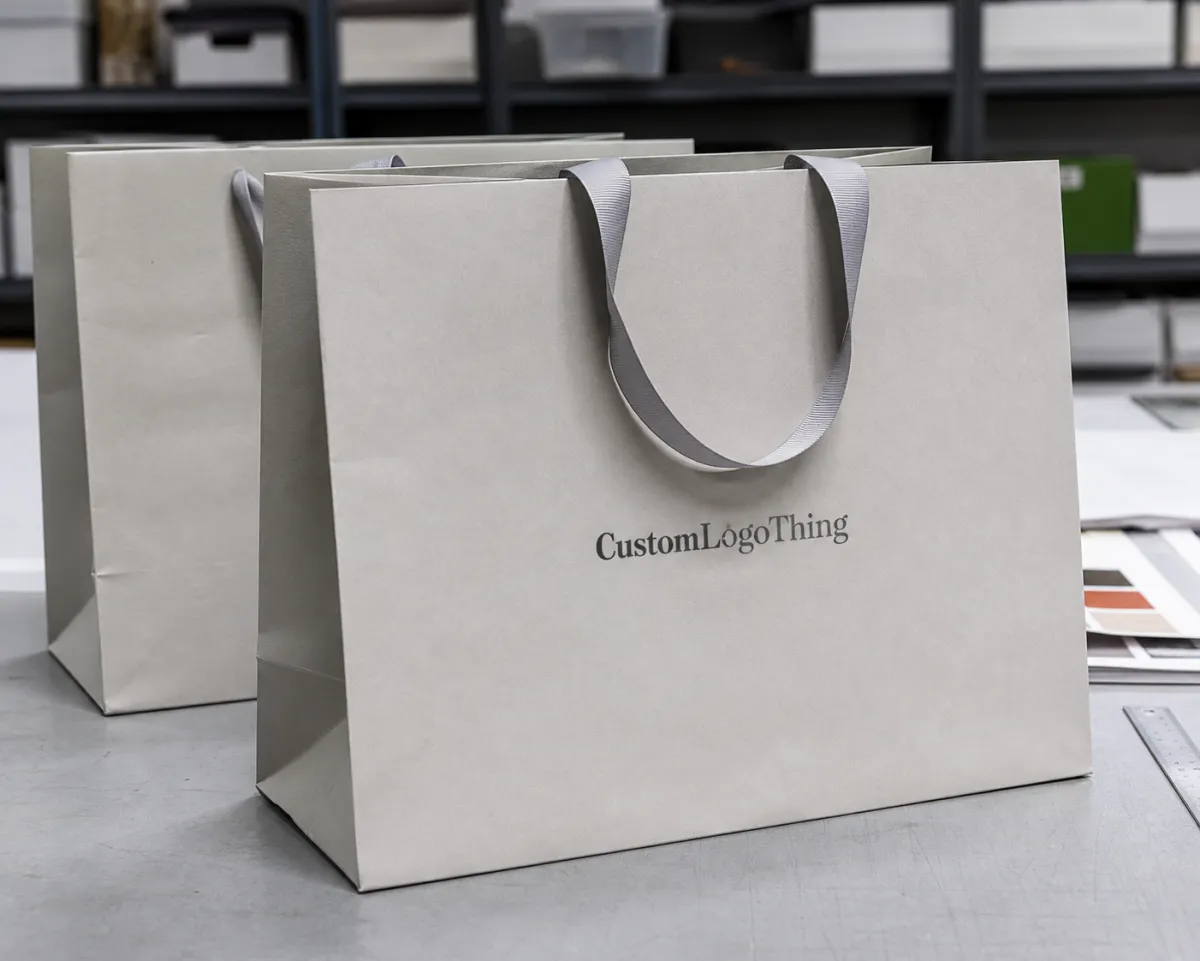
A Ribbon Handle Paper bag is a small structural system. The paper grade, handle ribbon, reinforcement, fold sequence, and bottom construction all work together, so one weak point can change the entire result.
Start with the basics: does the finished size match the spec, does the bag carry the intended load, and does the finish still look right in real light? Those three checks catch a surprising number of problems before production starts. A sample that passes only on appearance is not enough.
Ribbon bags are more sensitive than many teams expect. A matte coating can soften print contrast. A glossy surface can show scuffs early. A wider ribbon may feel premium but can add bulk at the knot or anchor. The sample should confirm that the bag is production-ready, not just photo-ready.
For most buyers, the working checklist is short: measure the structure, test the handle, inspect the print, and load the bag. If it fails any of those, it needs revision. If it passes all four, you are much closer to a safe signoff.
Sample Approval Process and Lead Time
The usual process starts with the dieline and artwork proof, then moves to a physical sample, revision notes, and final written approval. That order matters because every round should trace back to one reference file. If the logo moves on the proof, the ribbon changes on the sample, and the board spec lives in a third document, teams can easily approve the wrong version.
A clean workflow is simple: review the proof, request the sample, compare it to the approved spec, note changes clearly, and approve only one final version in writing. If the supplier adjusts handle placement, ribbon width, print registration, or coating, treat that as a formal revision, not a casual tweak.
Lead time usually expands in three places: custom ribbon sourcing, color matching, and structural revision. A standard physical sample may take 5-8 business days. A sample that needs a custom ribbon dye, foil stamping, embossing, or a new board spec can take 10-15 business days or more. Production lead time is separate, so a quick sample does not mean the factory can still hit the same delivery date at volume.
Shipping is another common delay. A sample that arrives after the approval deadline does not help the schedule. Build a buffer for courier transit, customs, and internal review, especially when several teams need to sign off before the order can move.
Material, Handle, and Print Specs to Verify
This is the section where the checklist becomes concrete. First, confirm the paper grade and thickness. Lightweight stock may work for a gift bag, but denser products often need stronger board, top-edge reinforcement, and a base that stays flat after filling. Caliper and fiber direction matter as much as appearance.
Paper choice also affects how the bag behaves after forming. A 157 gsm art paper may look sharp for light gifting, but it can feel too soft for heavy items. Heavier boards around 190-250 gsm, or paper laminated over a rigid insert, usually hold shape better. The right answer depends on load, shelf life, and the level of stiffness the brand wants.
Next, check the handle system. Ribbon width, ribbon material, attachment method, and knot security all affect feel and durability. A 6 mm satin ribbon can look elegant, while a 10 mm ribbon may carry better on a larger bag. The anchor point should not tear, the knot should not loosen under tension, and the handle length should feel balanced when the bag is full.
Print accuracy deserves the same attention. Confirm logo size, placement, bleed, color tolerance, and any special finish such as foil, embossing, or spot UV. A bag can be technically correct and still look wrong if the logo sits too high, spacing is uneven, or the coating changes the brand color under store lighting.
If sustainability claims are part of the brief, ask whether the board is FSC-certified and whether the paperwork matches the claim. The sourcing basics are explained at FSC. Also check transit needs early if the bags will travel inside cartons to stores, warehouses, or fulfillment centers.
Structural checks belong here too. Open the gussets, inspect the bottom reinforcement, check fold memory, and fill the bag with the real product or a weight equivalent. A sample that looks sharp when empty can bow at the bottom, twist at the sides, or pull the ribbon anchor out of alignment once loaded.
Do not ignore finishing details. Rough cuts around the opening, exposed glue, or uneven ribbon attachment are the kinds of flaws that make a premium bag feel cheap. They are easy to miss in a photo and hard to miss in hand.
Cost, Pricing, MOQ, and Quote Triggers
Pricing for ribbon handle bags usually follows setup work, hand assembly, and the number of custom details in the design. Paper stock, ribbon type, print colors, and finishing all add cost, but labor can matter just as much, especially when the handle is tied or attached by hand.
For many custom programs, unit pricing can land around $0.22-$0.55 per bag at 5,000 pieces for a straightforward build, while foil, embossing, soft-touch lamination, or a custom-dyed ribbon can add roughly $0.03-$0.20 per unit depending on run size and setup. Those numbers are only a planning range; the final quote depends on spec, volume, and expected waste during setup.
MOQ changes for the same reason. A simple one-color bag with standard ribbon may start at a lower quantity, while a custom ribbon color, special die cut, or multiple decoration steps can push MOQ higher because the plant needs to cover setup time and material loss. If the order is small, ask whether the supplier is pricing a pilot run, a full commercial run, or a custom one-off.
| Sample stage | What it confirms | Typical sample fee | Best use |
|---|---|---|---|
| Digital proof | Artwork, bleed, copy, barcode placement | $0-$25 | Catch layout errors before a physical build |
| White mockup | Size, handle placement, gusset shape, bottom strength | $40-$120 | Check structure without paying for full print |
| Pre-production sample | Final paper, ribbon, print, coating, and finish | $80-$250 | Approve the exact version that will go to press |
Use that table as an internal filter. If the approved sample changes paper weight, print method, coating, or ribbon specification, treat it as a quote trigger. A simple buyer habit is to ask, “Did the approved sample change the costed build?” If the answer is yes, refresh the quote before the purchase order moves.
For very low volumes, the sample fee can look high compared with the unit price. That usually means setup labor is being spread across too few pieces, not that the supplier is overcharging. Knowing that upfront helps avoid unnecessary price disputes.
Step-by-Step Signoff Workflow for Buyers
Use a tight sequence so approval does not drift. A practical workflow looks like this:
- Review the sample beside the art file and spec sheet. Keep all three in the same session so size, print, and structure are judged together.
- Test the bag with the actual product inside. Check hand feel, weight distribution, bottom stability, and whether the handles stay comfortable under load.
- Measure the critical points. Confirm finished width, height, gusset, ribbon length, and logo placement rather than relying on visual judgment alone.
- Record issues in plain language. Use measurements, photos, and short notes like “logo 3 mm too high” or “ribbon feels too stiff at the knot.”
- Issue one final written approval. Name the exact sample version so the factory knows which build is released for production.
That last step matters more than people expect. Once a supplier has written approval tied to a specific sample, the risk of building to an older revision drops sharply. Without that paper trail, a plant can easily work from an outdated file that looked close enough in email review.
For shipment-sensitive programs, it also helps to ask whether the sample or carton pack should be checked against an ISTA-style transit expectation. You can read more about that testing framework at ISTA. Not every bag needs formal lab testing, but long runs, retail distribution, and premium packaging usually justify at least a basic drop or vibration check.
One more practical point: decide who owns the final call before comments start coming back. One person should consolidate feedback, even if several teams review the bag. That avoids the common problem of design wanting one thing, procurement wanting another, and operations being stuck with the result.
Common Sample Mistakes That Cause Rework
The biggest mistake is approving from a digital proof alone and skipping the physical sample. Screens hide a lot: ribbon stiffness, paper sheen, and subtle color drift between monitor and stock. A close match on PDF can still turn into a poor retail presentation once the bag is printed and assembled.
Another trap is skipping the filled-weight test. That is where handle pullout, seam stress, and bottom bowing show up. If the sample is only evaluated empty, you can approve a bag that tears early or feels awkward when loaded with the actual product.
Vague feedback causes trouble too. “Make it nicer” is not useful to a production team. “Move the logo 2 mm left, soften the ribbon knot, and reduce the coating gloss” is the kind of note a factory can execute. Precision saves time and material.
Packing details get missed more often than people admit. Carton count, inner protection, and label placement should be confirmed before signoff, because the best-looking bag still becomes a problem if it arrives crushed, scuffed, or mislabeled.
Color approval is another source of friction. A printed ribbon and a printed bag body do not always react the same way to the same color standard. Satin ribbon can shift under light. Soft-touch lamination can dull a saturated shade. If brand color is critical, approve the bag under the lighting it will actually live under, not only in a studio.
Rule of thumb: if a note cannot be measured, counted, or photographed, it is probably too vague to fix correctly on the first production run.
Expert Tips and Final Approval Next Steps
Keep a master approval pack with the signed sample, photos, measurement notes, and the exact artwork revision used for comparison. That archive becomes useful on reorder, especially if a new buyer or designer joins the project later and needs to see what was actually approved.
Ask the supplier to confirm that first production pieces will be checked against the same approved reference, not a newer file that no one reviewed. This sounds obvious, but it is where many rushed jobs slip. One updated line of art or one corrected ribbon shade can quietly change the build if the control document is not locked.
Create a short internal signoff chain as well. Design should verify the look, procurement should verify cost and terms, and operations should verify how the bag will ship, store, or pack. When those three groups approve separately, the final purchase order is much less likely to trigger a surprise later.
My final advice is simple: treat the ribbon handle paper Bags Sample Approval Checklist as a reusable control document, not a one-time form. Archive it with the spec sheet, reuse it for every reorder, and update it only when the bag build truly changes. That discipline protects the brand, trims rework, and keeps production moving with fewer expensive detours.
If the program is premium or time-sensitive, lock a clear acceptance standard before the sample arrives: what counts as a pass, what gets a revision, and what is a hard fail. Buyers who define that early usually move faster because nobody wastes time debating basics after the sample is already on the table.
What should a ribbon handle paper bags sample approval checklist include?
It should cover finished size, paper stock, ribbon width and material, print placement, color accuracy, handle attachment, and base strength. It should also include a clear signoff line for the exact sample version, date, and approver name so there is no confusion later.
How many sample rounds are normal before approval?
One physical sample is ideal when the spec is already well defined, but two rounds are common if the buyer is changing color, finish, or structure. More rounds usually mean the design is still moving, which adds lead time and can raise sample and production costs.
Does sample approval change the final quote?
Yes, if the approved sample changes materials, finishes, ribbon type, or construction, because those details affect labor and material cost. If the revision is only a clarification and the build stays the same, the quote may not change, but the buyer should still lock the spec in writing.
How long should ribbon handle paper bag samples take?
Simple samples can move quickly, while custom ribbon colors, foil, lamination, or special inserts usually take longer because they require more setup. Buyers should also budget time for shipping and one possible revision cycle so the approval does not delay the production schedule.
Who should sign off on the final bag sample?
At minimum, the approver should represent design or brand, procurement or merchandising, and operations if the bag will be packed or shipped in volume. One person should collect the comments and issue the final approval so the supplier receives one clean decision instead of several conflicting notes.

