Rope Handle Gift Bags Material Guide for Smart Buyers — Most rope handle bags do not fail at the rope. They fail at the fold, the glue line, or the board around the handle patch, which is exactly why this guide matters if you want a bag that looks premium and still survives real use.
Rope Handle Gift Bags Material Guide: what fails first
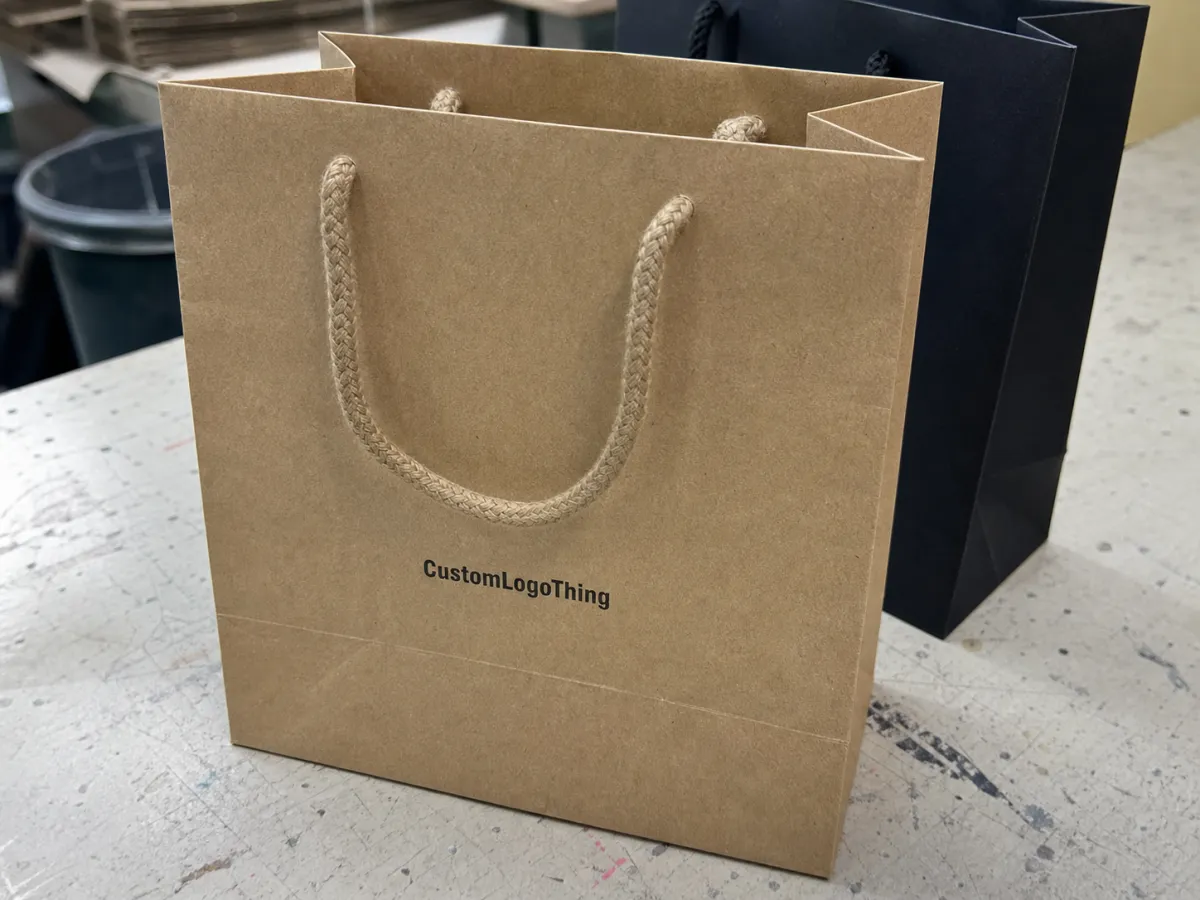
The prettiest rope handle bag on a render is not always the one that survives a customer’s hand. The first failure is usually structural, not decorative. Thin board cracks at the fold, glue gives way around the reinforcement patch, or the side gusset collapses after a few carries. Buyers often notice the handle color first and the body construction last, which is backwards.
A rope handle bag is a system. The outer paper creates the look, the board holds the shape, the reinforcement spreads load, the rope transfers force to the body, and the finish protects the surface from scuffs and fingerprints. If one layer is underbuilt, the bag starts to feel cheap even when the print is excellent.
That is why material choice should follow the product, not the artwork. A jewelry set, a candle, and a boxed bottle set may all use rope handles, but they stress the bag very differently. Weight, carry time, and retail environment all affect the build.
There is another trap: people confuse visual luxury with durability. Kraft can look refined and natural. Coated paper can look crisp and bright. Specialty papers can feel expensive before the product is even inside. None of that matters much if the handle patch is undersized or the base board sags.
If you want the bag to perform, start with the weakest point in the structure and work outward. That is usually where the cost and quality decisions show up anyway.
How the handle system actually carries weight
The handle does not carry the load by itself. The force begins at the rope, moves into the knot or anchor point, spreads through the reinforcement patch, and finally reaches the bag wall and base. If the patch is too small, the adhesive is weak, or the die-cut hole sits too close to the edge, the paper tears where the stress concentrates. The rope can still look fine while the bag is failing underneath it.
Handle material changes both performance and perception. Paper rope usually gives the cleanest natural look and fits recyclable packaging stories well. Cotton rope feels softer and more premium in the hand, which matters for gifting and fashion retail. Polypropylene rope is often the most economical and holds its shape well, but the tactile impression is more utilitarian.
There is no universal best choice. A premium cosmetics bag may benefit from a cotton rope because the hand feel reinforces the product story. A seasonal promotional bag may do better with paper rope because the material palette stays consistent with a simpler brand position. For heavier loads, rope diameter and anchor construction matter as much as the rope type itself.
Failures usually start with the details nobody sees in the mockup. Weak glue. Narrow reinforcement. A patch that covers the hole but not the stress zone around it. Thin board around the top edge. Those flaws do not show up when the bag is empty, which is why empty swing tests can be misleading.
Test the bag with the actual fill weight. If the product weighs 1.5 lb, do not approve the sample on appearance alone. Lift it, carry it, set it down, and look at the top corners afterward. A good bag should hold shape without bowing at the handles or bruising the gussets.
“A pretty bag is not a strong bag. If the reinforcement is undersized, the rope is just the last thing to break.”
One practical rule: size the structure for how the customer will actually use it, not for the marketing photo. If the bag will carry a boxed gift, a bottle, or anything with hard edges, give the top and base more support than you would for a soft textile item.
Paper stock, board thickness, and finish choices
Paper selection drives most of the feel, durability, and cost. For Rope Handle Gift Bags, the common builds are kraft paper, coated art paper, specialty textured paper, and rigid board combinations. Each one changes print clarity, surface resistance, and how the bag behaves when loaded.
Kraft paper gives a grounded, natural look and is often the easiest match for recycled-material positioning. It hides small handling marks better than high-gloss stocks, especially in busy retail settings. Coated art paper is better when color fidelity matters, because it supports sharper graphics and richer solids. Textured paper can look expensive immediately, but it usually requires tighter production control and costs more to source consistently.
Thickness is where structure is won or lost. Lightweight gift bags may sit in the 200-250 gsm range for the outer paper, with reinforcement board added where needed. Midweight retail bags often move into the 250-350 gsm range, especially when the product has edges or the handle span is wide. For heavier premium packaging, buyers often specify a firmer board insert or a multi-layer wall so the base does not sag after the first use.
The exact spec depends on size. A tall narrow bag behaves differently from a short wide one. The same gsm can feel sturdy in one format and floppy in another. That is why material samples should be tested in the actual dimensions, not just judged by hand in a flat swatch.
Finish is not just a visual choice. Matte lamination reads calm and high-end, and it hides fingerprints well. Gloss adds brightness and contrast, but it can scratch faster. Soft-touch feels rich, though it shows scuffs when the bag is handled repeatedly. Uncoated paper offers a more natural look and can fit sustainability claims more cleanly, but it is less forgiving with moisture and abrasion.
If the brief includes sustainability, ask for the actual paper spec. FSC-certified paper is a clear standard. Recycled content should be stated in writing, with a percentage, not wrapped in vague eco language. The same goes for plastic-free claims: ask what is used for the rope, the laminate, and the glue system.
| Build option | Look and feel | Typical cost impact | Best use |
|---|---|---|---|
| Paper rope + kraft paper | Natural, understated, tactile | Lowest to moderate | Gift shops, artisan brands, recycled-material positioning |
| Cotton rope + coated art paper | Softer hand feel, sharper print | Moderate to higher | Beauty, apparel, premium gifting |
| Polypropylene rope + laminated board | Structured, durable, consistent | Moderate | Events, retail, heavier hand-carry use |
| Rigid insert + specialty paper | Most formal, most premium | Highest | Luxury launches, VIP kits, high-ticket gifts |
For most buyers, the smartest start is not the fanciest paper. It is the one that balances print quality, stiffness, and hand feel without pushing the unit cost into a range that makes the bag hard to approve at scale.
Cost, pricing, MOQ, and unit cost drivers
Cost is driven by a few unglamorous variables: paper grade, handle type, reinforcement, print coverage, finish, and quantity. The more specialized the material, the more setup time and scrap risk show up in the quote. Small runs make that effect more obvious because the fixed costs spread across fewer units.
As a rough working range, a simple printed rope handle bag at 5,000 pieces can land around $0.35-$0.60 per unit for basic kraft construction. Move to coated paper, fuller print coverage, and cotton rope, and the range often shifts to $0.70-$1.30. Specialty papers, heavier board, foil stamping, embossing, and soft-touch lamination can push the number into the $1.20-$2.50+ zone depending on size and complexity. These are practical ranges, not promises.
MOQ matters because die-cutting, printing setup, and hand assembly do not become cheaper just because the order is smaller. A 500-piece run usually leaves less room for finish options and tighter pricing on revisions. A buyer who wants short-run custom work should expect tradeoffs: fewer decoration layers, simpler materials, or a higher unit cost.
Total landed cost is the number that matters. A bag that looks cheap at the quote stage can become expensive after freight, case packing, overages, and repacking are included. Poor carton efficiency can add a surprising amount of freight cost because you end up shipping air. That is a real margin issue, not a minor logistics detail.
If two suppliers offer similar artwork pricing but one includes heavier reinforcement and better case packing, the cheaper quote may not be cheaper at all. Comparison only works when the spec is identical. Otherwise you are comparing different products with the same name.
Process, timeline, and production steps from quote to ship
A clean production run usually follows the same sequence: spec sheet, artwork check, sample or proof, approval, production, packing, then freight booking. The first two steps determine most of the timeline. If the size is still changing or the Pantone callout is missing, the job slows immediately.
For a custom order, production often takes 12-18 business days after proof approval, with sampling adding another 5-10 business days depending on finish complexity and factory workload. These windows can tighten for simple builds and stretch when materials need to be sourced specially or when artwork has multiple layers of print and finishing.
Freight is the least predictable part. Air is fast and costly. Ocean is slower but usually practical when the launch date is not compressed. Seasonal demand can also affect availability, especially if the order depends on specialty paper, metallic film, or a handle color that is not stock.
Packing deserves more attention than it gets. Finished bags should ship in corrugated cartons that protect corners and keep the handles from deforming. Loose bundling can crush gussets, bruise edges, and leave the top openings out of square. A bag that arrives warped looks lower quality even if the materials themselves are good.
For higher-value retail programs, ask whether the packed case needs drop testing or a carton-strength check. General guidance for transport testing is available through ISTA. Not every gift bag needs formal lab work, but the larger the run and the more fragile the launch window, the more useful a transport check becomes.
Step-by-step spec checklist for the right bag build
The fastest way to avoid a weak bag is to start with the product, not the decoration. Measure the item, note the weight, and decide how long the customer is likely to carry it. A small jewelry set does not need the same structure as a bottle set or a premium candle kit. Work backward from that use case.
Lock the structure before you debate color or finish. Once the size and board spec are right, the design choices become easier. If you choose an expensive finish on a weak build, the bag may look great on arrival and collapse in use. That is a waste of both material and brand trust.
Use this quote-ready checklist when you request pricing:
- Bag size: width, gusset, height, and whether the base needs extra depth.
- Product weight: empty bag weight is irrelevant; fill weight is what matters.
- Paper stock: kraft paper, coated art paper, specialty paper, or recycled material.
- Thickness: gsm or board spec, plus any rigid insert.
- Handle type: paper rope, cotton rope, or polypropylene rope.
- Finish: matte, gloss, soft-touch, or uncoated.
- Print: single-color logo, full-bleed artwork, foil, embossing, or spot UV.
- Quantity: target MOQ and acceptable overrun.
- Delivery target: sample date, production start, and ship date.
The list looks tedious because it is. It also saves real time. Quotes built from incomplete specs usually come back with hidden assumptions, and those assumptions become change orders later.
Ask for a sample at the actual size with the real fill weight. A small demo bag does not tell you what happens when the base loads up or the handles get pulled repeatedly. If the product is irregular, like a bottle set or a boxed bundle, sample it with that exact shape. The difference is usually obvious once the bag is in your hand.
Common mistakes that make premium bags feel cheap
The most common mistake is spec drift. A buyer asks for premium rope handle bags, then trims the board, shrinks the patch, switches to a lighter rope, and expects the same presentation. The bag arrives looking polished on the table and disappointing in the customer’s hand. That gap is where perceived quality leaks out.
Another mistake is over-investing in the surface while under-investing in structure. Foil, soft-touch lamination, deep embossing, and heavy color all photograph well. None of them compensate for a weak top edge or a handle zone that tears after repeated use. The bag should feel firm at the base and stable at the top before decoration enters the conversation.
Poor rope quality is another quiet problem. Frayed rope, uneven stretch, and a scratchy hand feel make even a well-printed bag seem lower tier. Cotton rope usually feels kinder. Paper rope can work beautifully in natural-style packaging, but it needs proper build quality to avoid flattening. Polypropylene rope can be perfectly acceptable for utility-led retail, as long as the brand context fits.
Color inconsistency also creates avoidable disappointment. Buyers often blame the printer first, which is not always fair. Board absorption, file prep, and finish selection can all shift the final tone. If a sample looks rich and the production batch looks dull, something in the build changed. Track the materials, not only the artwork file.
One more issue appears in shipping. Handles folded too tightly, cartons packed too densely, or bags stacked without corner protection can leave the product looking tired before it ever reaches store shelves. The bag may still be functional, but the presentation is already damaged.
“The cheapest quote is often the one that forgot to price the glue, the reinforcement, or the damage caused by both.”
Expert tips and what to do before you request quotes
Order one sample at the actual target size with the real fill weight. Not a tiny demo. Not an empty display piece. The real thing. That single sample tells you more than a set of polished renderings, especially if the bag needs to carry bottles, boxed gifts, or other awkward shapes.
Ask suppliers for material swatches, handle options, and a production spec sheet so you can compare offers on the same basis. If one quote lists FSC-certified kraft paper and another just says “eco paper,” those are not equal. If one build uses a wider reinforcement patch and another barely covers the knot, the difference belongs in the comparison.
Check for the things that are easy to miss on a quote sheet: glue type, board density, lamination thickness, print method, and whether the handle attachment is machine-set or hand-finished. Small details often determine whether a bag feels crisp or flimsy once it is loaded.
For buyers balancing quality and budget, the best approach is usually straightforward:
- Finalize the product dimensions and fill weight.
- Choose the paper stock and thickness based on the carry load.
- Select the handle by feel, not only by price.
- Pick the finish after the structure is locked.
- Request matched quotes from the same spec sheet.
- Build in proofing time before launch.
That process may sound cautious. It is also how you avoid paying for rushed revisions or accepting a bag that looks right but performs poorly.
If you want the bag to feel premium without wasting money, keep the structure honest and the decoration disciplined. A strong kraft build with sensible reinforcement often outperforms a flashy bag that turns soft after one event. The useful version of a Rope Handle Gift Bags Material guide is not the one that chases every possible finish. It is the one that keeps the build aligned with the product, the channel, and the way the bag will actually be used.
Good packaging disappears into the experience. It opens cleanly, carries weight without complaint, and still looks respectable after a customer has walked a few blocks with it. That is the standard worth buying for.
What paper weight is best for rope handle gift bags?
Light gifts can work with thinner stock, but most retail buyers move to a sturdier board feel once the contents have real weight. A mid-range paper or board spec is usually the safest starting point because it balances cost, print quality, and durability. If the bag will carry bottles or boxed items, test the exact size with load inside the sample before approving the run.
Are cotton rope handles better than paper rope handles?
Cotton rope usually feels softer and more premium in the hand, while paper rope gives a more natural, recyclable look. The better option depends on the brand story, the carried weight, and the tactile impression you want at point of sale. For heavier bags, rope diameter and attachment quality matter just as much as the rope material.
How much weight can rope handle gift bags carry?
Carry capacity depends on board thickness, handle reinforcement, adhesive quality, and bag dimensions, not the rope alone. A well-built bag can handle much more than a flimsy one with the same-looking handle. That is why weight testing with the real product is more useful than judging the bag empty.
What is a typical MOQ for custom rope handle gift bags?
MOQ varies by factory setup and print method, but lower quantities usually raise the unit price. Small runs tend to limit finish options and leave less room for color correction or material changes. If you need a short run, expect to simplify the spec or accept a higher per-unit cost.
How long does production usually take for rope handle gift bags?
Timing depends on artwork approval, sampling, material availability, and freight planning. A production window of about 12-18 business days after proof approval is common for many custom runs, with sampling adding another 5-10 business days. Complex finishes, seasonal demand, and shipment method can stretch the schedule, so build in buffer time before launch.


