Buyer Fit Snapshot
| Best fit | Printed Shipping Boxes With Logo projects where brand print, material claims, artwork control, MOQ, and repeat-order consistency need to be specified before quoting. |
|---|---|
| Quote inputs | Share finished size, material target, print colors, finish, packing count, annual reorder estimate, ship-to region, and any compliance wording. |
| Proofing check | Approve dieline scale, logo placement, barcode or warning zones, color tolerance, closure strength, and carton packing before bulk production. |
| Main risk | Vague material claims, crowded artwork, missing packing details, or unclear freight terms can make a low unit price expensive after revisions. |
Fast answer: Printed Shipping Boxes With Logo: Branding That Travels should be specified like a repeatable production item. The safest quote records material, print method, finish, artwork proof, packing count, and reorder notes in one written spec.
Production checks before approval
Compare the actual filled-product size with the drawing, then confirm tolerance on folds, seals, hang holes, label areas, and retail display edges. Reserve space for logos, QR codes, warning copy, and material claims before decorative graphics fill the panel.
Quote comparison points
Review material grade, print process, finish, sampling route, tooling charges, carton quantity, and freight assumptions side by side. A quote is only useful when the supplier can repeat the same color, closure quality, and packing count on the next order.
Printed Shipping Boxes with Logo: Branding That Travels
The shipping carton often reaches the customer before the product gets any real attention, which is exactly why printed shipping Boxes with Logo deserve more strategic thinking than many brands give them. A plain box protects the order. A branded box does that too, and it also tells the customer, the carrier, and anyone else who handles the parcel that the package matters. That first physical touchpoint can shape perception before unboxing even starts, and in plenty of cases it does so quietly, by making the shipment feel deliberate rather than incidental.
Printed Shipping Boxes With Logo: Why the Box Wins Attention
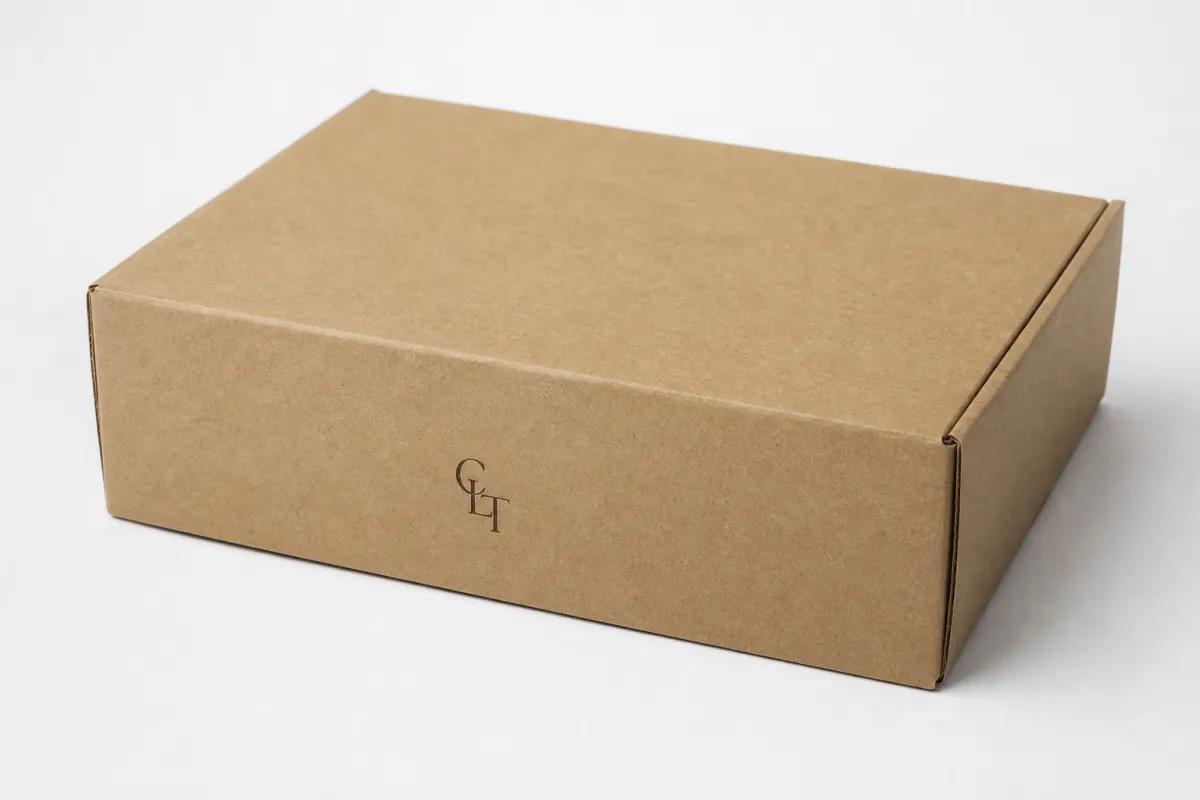
From a packaging buyer’s point of view, printed shipping Boxes with Logo are not just a decoration decision. They are a brand-handling decision, a cost decision, and a logistics decision all sitting inside the same carton. That is why the box matters so much. It is often the first physical brand asset a customer sees, not the insert, not the thank-you card, and not even the product itself. A box that arrives with clarity and intention tells the customer the business has thought through the full journey, not only the part that happens on a website.
Think about the sequence for a second. The website promises one experience. The carrier delivers another. The box is the bridge between them. If that bridge is generic, the brand can feel thinner than the marketing copy suggested. If the box is aligned with the brand, the promise feels real. That is a meaningful difference for ecommerce shipping, subscription programs, and retail replenishment alike, because the carton becomes part of the product story instead of a neutral shell around it.
There is also a hard-nosed operational reason to care. One carton can work as package protection, moving media, and brand proof at once. That makes the design decision unusually efficient. A small print upgrade may improve the perceived value of the order without changing the product. It can also help fulfillment teams identify cartons at a glance in mixed inventory, especially in warehouses where several SKUs share similar dimensions and the box itself becomes the fastest visual cue.
In plain language, Printed Shipping Boxes with logo are corrugated mailers or shipping cartons printed with a logo, brand pattern, message, or full-color graphic. Some brands keep it simple with a one-color mark on kraft board. Others use a white-lined outer face and a full-bleed design. Both approaches can work. The right choice depends on brand goals, board grade, dimensional weight targets, and how the box will travel through transit packaging channels. A minimal mark can feel restrained and confident, while a more expressive graphic can carry campaign energy if the structure and budget can support it.
That last part matters more than people expect. A box that looks great on a design board can behave differently under pallet pressure, label application, moisture exposure, and repeated handling. A buyer who understands that tension usually gets better results. I have seen plenty of teams spend too much time on surface detail before they settle the structure, which is backwards. The structure should support the branding, not fight it, because the carton has to survive warehouses, delivery trucks, and the rough edges of daily handling before the logo ever becomes part of a customer’s memory.
A shipping box does not have to shout. It does have to be legible, durable, and consistent enough that the customer feels the brand made a deliberate choice.
For brands building a packaging system rather than a single hero SKU, Custom Packaging Products can help connect the carton to other formats such as inserts, mailers, and retail-ready packs. If the shipment mix includes smaller parcels, Custom Poly Mailers may be a useful comparison point, especially for lighter ecommerce shipping programs where corrugated is not always the most efficient option. Looking at those formats side by side often clarifies whether the shipping box should carry the primary brand message or whether a lighter format can do the job with less material and lower freight.
How Printed Shipping Boxes With Logo Are Produced
Production starts with the dieline. That flat template is the map that turns a printed sheet into a folded carton. For printed shipping boxes with logo, the logo placement has to respect folds, flaps, glue areas, score lines, and any zones that disappear once the carton is assembled. A good artwork file looks simple only because the structural work behind it was done correctly. The strongest versions are often the ones that look calm on screen because every structural conflict was already resolved before the file reached the press room.
The most common print methods each create a different result. Flexographic printing is widely used for corrugated boxes because it is efficient on longer runs and handles simple, bold graphics well. Digital printing is often the better fit for shorter runs, quick changes, variable artwork, or testing a new SKU. Litho-lamination combines a high-quality printed sheet with corrugated board and usually delivers the richest visual finish, although it tends to sit at a higher price point and longer lead time. The method you choose shapes the look of the box as much as the artwork itself, so the print process should be treated as part of the brand decision, not just a manufacturing detail.
Substrate choice changes everything. Kraft liners create a warmer, more natural feel, but they can mute certain colors. White-lined corrugated board gives brighter color and stronger contrast. Heavier board grades, such as 32 ECT or 44 ECT equivalents depending on the application, improve stacking strength and help with package protection during transit. For some brands, the material itself is the message. Natural kraft signals restraint and sustainability. White board feels sharper and more promotional. Neither is automatically better. Each tells a slightly different story about the brand, and the right one depends on how the box should feel in hand, on the shelf, and in the warehouse.
That is where printed shipping boxes with logo become more than a logo placement exercise. The board face, print process, and finishing all work together. A subtle matte varnish can calm down a busy design. A gloss varnish can add contrast but may also show scuffs more readily. An uncoated kraft face can support a premium minimalist look, but only if the logo has enough contrast to survive low-light warehouse handling. Small material choices become visible very quickly once the carton is packed, taped, stacked, and sent into the shipping stream.
Samples and proofs are not optional if the launch matters. A screen preview hides too much. A physical proof exposes practical issues such as color drift, barcode placement, fold interference, and how the logo behaves on the actual board texture. If the box is part of a launch campaign or seasonal promotion, this step pays for itself quickly. It is much cheaper to fix a print issue on one proof than on 10,000 cartons. A proof also reveals whether a logo that looked balanced on a monitor is still readable after scoring, trimming, and conversion.
For readers who want to cross-check transit performance standards, the International Safe Transit Association has useful testing guidance at ISTA. For fiber sourcing questions, the FSC framework remains one of the most recognized references in packaging procurement.
One detail that gets overlooked: the best-looking carton is not always the most efficient carton. A brand can choose a dramatic custom size and then pay for the extra air in every shipment through dimensional weight. In ecommerce shipping, those inches matter. A tighter structural fit can lower freight costs, reduce movement inside the carton, and improve the customer’s unboxing experience at the same time. It can also make the pack-out process easier, since the team is not trying to make an oversized box behave like a smaller one.
Cost, Pricing, and MOQ for Printed Shipping Boxes With Logo
Price is rarely just a print price. For printed shipping boxes with logo, the main cost drivers are box dimensions, board grade, print coverage, number of colors, order quantity, and the chosen production method. A small box with one-color flexo art is a very different project from a large full-color litho-laminated carton with a matte coating. The quote may look similar at first glance, but the production economics are not. Each decision adds or removes labor, setup, material use, and shipping weight, all of which show up in the final landed cost.
MOQ changes the math quickly. Smaller runs usually carry a higher unit cost because setup is spread over fewer boxes. That does not mean they are a bad idea. If the artwork is new, the product line is still being tested, or the order quantity is uncertain, a smaller MOQ can reduce inventory risk and cash tied up in shipping materials. A larger run makes more sense when the design is stable and demand is predictable. The right quantity is rarely the one that looks ideal on paper; it is usually the one that fits both demand patterns and storage space without leaving the warehouse overcommitted.
In practical terms, a plain corrugated carton might sit at the low end of the range, while branded cartons can carry a modest per-unit premium that grows with ink coverage and finishing. For many buyers, the print upgrade is not the expensive part. The expensive part is all the choices around it. Special coatings, extra plates, tighter tolerances, custom inserts, and freight to multiple fulfillment centers can change the total landed cost faster than people expect. That is why a quote should be read as a package of linked decisions rather than a single per-box number.
Here is a simple way to compare common options for printed shipping boxes with logo. These ranges are directional, not universal, because dimensions and freight zones change the final number.
| Option | Best Fit | Typical Run Size | Approx. Unit Range | Notes |
|---|---|---|---|---|
| Plain kraft corrugated | Utility-first shipments, internal boxes, low brand priority | Any | $0.45-$0.95 | Lowest visual impact; strong baseline package protection |
| Single-color flexo print | Bold logos, simple marks, cost-controlled branding | Mid to high | $0.60-$1.25 | Good balance for order fulfillment and repeat shipments |
| Digital full-color print | Short runs, launch tests, seasonal campaigns | Low to mid | $1.10-$2.40 | Useful when artwork changes often or several SKU variants are needed |
| Litho-laminated carton | Premium brand presentation, retail-ready shipping | Mid to high | $1.70-$3.75 | Sharp graphics, higher finish quality, usually more setup-heavy |
Those ranges are useful only if the quote is structured correctly. Ask for separate pricing on the box structure, the print method, the setup or plate charges, proofing, and freight. That way you can compare apples to apples instead of chasing the cheapest headline number. A quote that looks lower by 8% can become higher after freight, sampling, and color corrections are added. Clear pricing also makes it easier to explain the decision internally, especially when procurement, operations, and branding are each reviewing the carton from a different angle.
Printed shipping boxes with logo also interact with inventory strategy. If a brand expects design changes every quarter, a large print run can become stale fast. If the box design is stable for a year or longer, the unit economics of a larger order usually improve. The smartest buying decision is not always the cheapest carton. It is the carton that supports the sales cycle, the warehouse, and the cash plan at the same time. That balance matters when packaging is treated as a recurring operating expense rather than a one-time creative project.
For brands selling into multiple channels, the comparison should include Custom Shipping Boxes versus lighter pack-out formats. Sometimes a branded box makes sense for direct-to-consumer shipments but not for every wholesale replenishment order. That nuance matters more than most sample rooms admit. A business that ships one way to consumers and another way to retailers may need different carton strategies for each channel, even if the logo stays the same.
Step-by-Step Ordering Process and Turnaround Timeline
The ordering process for printed shipping boxes with logo usually moves in a predictable sequence: gather dimensions, choose structure, send artwork, review proof, approve sample if needed, and then move into production. The problem is not the sequence itself. The problem is when teams skip one of those steps and discover the mistake after the press run has already started. A missing measurement or a misread score line can set off a chain of revisions that costs more than the box itself.
A realistic timeline often looks like this: one to three business days for initial quoting and structure alignment, another two to five days for artwork adjustment and proofing, then production and shipping after approval. That puts many projects somewhere in the two- to four-week range depending on method, quantity, and facility capacity. Faster projects are possible, but speed usually narrows the available choices. You may lose some finishing options or need to accept a higher minimum. Planning early keeps the spec flexible, while waiting too long often forces the team to choose between speed and the exact finish they had in mind.
The most common delays are surprisingly ordinary. Missing dielines. Logos sent as low-resolution JPEGs. A brand color specified in Pantone on one sheet and in CMYK on another. Late approval from one stakeholder who was not in the original packaging review. None of that is dramatic, but each item pushes the calendar. For printed shipping boxes with logo, schedule risk usually comes from paperwork, not machinery. Once the files are clean and the sign-off process is clear, production tends to move much more predictably than the planning meetings that precede it.
There is also a production tradeoff tied to urgency. If a launch date is fixed and the boxes need to arrive before inventory lands, the team may need to simplify the print spec. That can mean fewer colors, a different board face, or a more standard structure. In practice, the best brands protect their timeline first and then make design choices that fit the schedule, not the other way around. A box that arrives on time and performs well is more valuable than a perfect-looking carton that misses the launch window.
Printed shipping boxes with logo should be backed into the launch calendar the same way any operational asset is. If product delivery, campaign mailers, or seasonal promotions depend on the box, set the deadline before the design team starts final artwork. A packaging calendar with three checkpoints usually works well:
- Structure approval: confirm dimensions, board grade, and shipping method.
- Print approval: verify logo scale, color targets, and artwork placement on the dieline.
- Production release: approve the proof, lock the schedule, and release the order.
If you are deciding between formats, it can help to compare the carton against other transit packaging options. A custom box may be right for premium ecommerce shipping, while a mailer or padded poly mailer may fit lower-weight products better. The right choice is the one that supports package protection without inflating freight or slowing order fulfillment. The carton should fit the business model, not just the mood board.
Common Mistakes That Hurt Print Quality and Margins
The biggest artwork mistake with printed shipping boxes with logo is trying to make a raster file behave like a vector file. If the logo is pixel-based and the print area is large, edges can look fuzzy or uneven. The same problem shows up with text that is too small, too thin, or too close to a fold. On a screen, it may look fine. On corrugated board, it can lose definition fast. Text that appears crisp in a PDF can suddenly feel faint once the board texture and print method get involved.
Another frequent error is ignoring bleed and safe zones. A box is not a poster. The cut line, score line, and glue flap all affect what the customer sees. Place critical copy too near an edge and the structure will punish the layout. That is especially true on cartons with heavy-use flaps or multiple panel graphics. A good dieline review catches these problems before ink hits board. The rule is simple: if the message matters, keep it away from the places where the box folds, trims, or locks together.
Color is a bigger issue than many teams expect. A logo that looks strong on white stock can become muddy on kraft, especially if the palette is light or low contrast. The same logo may also shift under different print methods. Flexo can read differently from digital, and litho-lamination has its own behavior. That is why a physical proof matters. Color consistency is one of the few places where the difference between a decent box and a polished one is immediately visible, and even a small shift can change how premium or intentional the carton feels.
Budget mistakes can be just as damaging as design mistakes. Underestimating freight is common, especially when cartons are shipping to multiple facilities. Over-ordering is another trap. If the brand refreshes often, a large run of old artwork turns into dead stock. Then there is the premium-finish problem: a team falls in love with soft-touch lamination or a special coating, but never tests customer response. The result is a box that looks expensive without earning back the cost. Packaging has a way of looking inexpensive or premium for reasons that have little to do with the quote alone.
There is also a coordination issue. Branding, operations, and procurement often review the box in separate conversations, which means each team sees only part of the picture. The designer wants visual impact. The warehouse wants efficient pack-out. Procurement wants a clean unit cost. If those three groups are not speaking early, the order can drift into a compromise nobody fully owns. That is a waste of time and material. A single review session with the right people usually prevents more trouble than several rounds of isolated comments.
The most expensive box is not always the one with the highest print quote. It is the one that creates rework, freight inefficiency, and inventory loss after launch.
Some of these issues are easy to prevent. Use vector artwork. Confirm the dieline. Check board color against the logo. Review the carton under actual warehouse lighting. And if the product is heavy or fragile, test the structure as transit packaging, not just as a branding surface. A well-branded carton still has to survive the route. Presentation matters, but the box has to do the unglamorous work first.
Expert Tips for Better Printed Shipping Boxes With Logo
Start with distance. For printed shipping boxes with logo, the mark should read clearly from arm’s length, in camera footage, and under the dull lighting of a packing station. That simple rule filters out a lot of weak ideas. If the logo only works when someone is standing six inches from the panel, it is too delicate for shipping. Boxes move too fast, stack too tightly, and collect too much wear for tiny details to carry the whole design.
Test contrast on the actual board color. This is the step that saves the most regret. A clean white mockup can make a logo seem bold and controlled, but kraft board changes the whole equation. Natural fibers absorb more visually. Fine lines can disappear. Lighter colors need help. A brand that wants a crisp result on corrugated often has to thicken strokes or simplify the layout. That adjustment is not a compromise so much as a correction for the material the design will actually live on.
Modular design systems help more than one-off artwork files. A smart packaging program lets the same box support seasonal campaigns, multiple SKUs, or special promotions without retooling the entire structure. That can mean a stable logo zone, a variable messaging panel, or a repeatable brand band that carries from box to insert to secondary packaging. It is a practical way to keep the packaging architecture consistent without making every carton identical. Brands with a stable system can move faster because the work of deciding where things belong has already been done once.
Minimal layouts often outperform crowded ones. In shipping, the box is handled, stacked, labeled, and sometimes scuffed before the customer sees it. Simple graphics hold up better under real conditions. A strong logo, one secondary brand message, and a clean finish can look more premium than a noisy design with too many claims. That is especially true for printed shipping boxes with logo used in order fulfillment, where speed and clarity matter as much as presentation. The more motion the carton sees, the more valuable it becomes to keep the design disciplined.
Ask for samples whenever possible. A physical sample tells you more than a PDF. You can feel the board stiffness, check how the closure behaves, and see whether the finish reflects too much light. You can also test how the box stacks, how labels adhere, and whether the print distracts from shipping data. Good packaging decisions are tactile decisions as much as visual ones. The sample table often reveals little problems that never show up in file review, like a logo too close to a seam or a coating that picks up fingerprints too easily.
For buyers balancing budget and brand lift, the best use of spend is usually not a more complicated print file. It is a better-structured box, a cleaner print plan, and a more realistic production spec. That combination keeps printed shipping boxes with logo aligned with the actual business, not just the design deck. The box should support how the company ships today and how it expects to ship six months from now.
- Use the logo like a signal: keep it visible, not oversized.
- Keep the print area disciplined: fewer elements usually age better in transit.
- Match the board to the brand story: kraft, white-lined, and premium-laminated boards each say something different.
- Choose the print method by run length: digital for flexibility, flexo for scale, litho for polish.
- Build the box around the product: dimensional weight, protection, and pack-out efficiency should guide the final spec.
Brands that already know their core shipping materials can move faster. Brands that are still defining the system can compare other formats in the same packaging family before locking the carton. That is usually the moment to decide whether the box should be the star, the support act, or part of a wider set of transit packaging components. Once that role is clear, the design conversation becomes cleaner and the order process gets easier to manage.
Actionable Next Steps for Your First Printed Box Run
If you are planning your first printed shipping boxes with logo order, start with the facts. Confirm the outer dimensions, product weight, shipping method, target quantity, and preferred board type. Those five inputs shape almost every other decision. Without them, the quote will be too loose to trust and the production team will spend time guessing. A box spec built on assumptions usually ends up needing revisions, and revisions slow everything down.
Next, gather the assets that make quoting faster. Send a vector logo file, brand color references, any required text, and a note about the expected print area. If you have dieline preferences or an existing carton that works, include that too. The fewer assumptions a supplier has to make, the better the quote and proof process usually goes. Clean files also reduce the risk of avoidable mistakes, especially when the logo needs to sit cleanly on a panel with folds, labels, and barcodes nearby.
Then set the decision order clearly. Structure first. Print method second. Artwork third. That sequence prevents expensive rework. It also helps the team avoid polishing a design that will later be forced to change because the carton size, weight rating, or shipping requirement was never settled. Once the structure is locked, the artwork can be tuned to the real board, the real dimensions, and the real production method instead of an imagined version of the box.
A useful buying tactic is to compare two scenarios: one lower-MOQ pilot run and one scaled order. The pilot run helps test customer response, warehouse handling, and color accuracy. The larger run shows the real unit economics if the design is approved for long-term use. For printed shipping boxes with logo, that comparison often reveals the point where the business stops paying for caution and starts paying for scale. It also gives operations a chance to see how the carton behaves before the brand commits to a larger inventory position.
Finally, treat the carton as an operational tool, not a decorative add-on. The best box supports package protection, speeds order fulfillment, survives transit packaging stress, and reinforces the brand all at once. That is why printed shipping boxes with logo deserve a seat in both the brand meeting and the operations meeting. If they are handled like a side project, the business pays twice: once in production waste and again in missed brand impact. A well-planned carton usually earns its place by making the shipment easier to ship and better to receive.
For teams building out a wider packaging lineup, the next conversation may include Custom Packaging Products alongside format-specific options like Custom Shipping Boxes and Custom Poly Mailers. The right mix depends on product weight, shipping distance, and how much visual presence the brand wants at the door. Those choices are easier when the packaging system is being shaped as a whole rather than one carton at a time.
The clearest takeaway is simple: decide the structure first, choose the print method second, and proof the box on real board before the run is released. That sequence keeps printed shipping boxes with logo useful in the warehouse, honest in transit, and strong enough to carry the brand message the moment the parcel lands on the doorstep.
What file format works best for printed shipping boxes with logo?
Vector files are the safest choice for printed shipping boxes with logo, especially AI, EPS, or a print-ready PDF. Those formats keep the artwork sharp at any size. Fonts should be outlined, and the logo should sit on the correct dieline so folds, flaps, and cut lines do not interfere with the design. If the printer needs linked images, send high-resolution assets and confirm the color mode before approval. That extra check saves time later, especially when the box includes small type, multiple panels, or artwork that needs to stay accurate across several sizes.
How much do printed shipping boxes with logo usually cost per unit?
Unit cost depends most on box size, board grade, print coverage, and order quantity. Smaller runs usually cost more per box because setup is spread across fewer units. If you are comparing quotes for printed shipping boxes with logo, ask for separate pricing on structure, printing, proofing, and freight. That makes the comparison much clearer and avoids surprises later. A quote that looks attractive at first can shift quickly once freight zones, board upgrades, and finishing details are added.
How long does it take to produce custom printed shipping boxes with logo?
Proofing can take a few business days if your artwork and dimensions are finalized quickly. Production usually follows approval and varies by print method, quantity, and finishing. For printed shipping boxes with logo, shipping time should be added separately, especially if the boxes must arrive before a launch or a seasonal shipment window. The safest timeline is the one that accounts for file review, proof approval, production, transit, and any recheck needed before the cartons go live.
Can I order a small MOQ for printed shipping boxes with logo?
Yes, many suppliers can support smaller quantities, but the per-box price is usually higher. A smaller MOQ is useful for testing demand, seasonal campaigns, or a new product line. If cost is tight, compare a pilot run against a larger order to see where the best unit economics begin for printed shipping boxes with logo. That side-by-side view often clarifies whether the design is ready for a larger release or whether the business should gather more data first.
How do I make the logo look better on corrugated shipping boxes?
Use strong contrast and avoid tiny details that can blur on textured board. Test the design on the actual box color, not just on a white digital mockup. Request a physical proof when possible so you can catch color shifts, alignment issues, and scale problems before full production. Those steps usually make a bigger difference than adding more ink to printed shipping boxes with logo. A simpler logo treatment often prints cleaner, reads faster, and survives transit better than a crowded layout.


