Buyer Fit Snapshot
| Best fit | Shipping Supplies Custom Printed projects where brand print, material claims, artwork control, MOQ, and repeat-order consistency need to be specified before quoting. |
|---|---|
| Quote inputs | Share finished size, material target, print colors, finish, packing count, annual reorder estimate, ship-to region, and any compliance wording. |
| Proofing check | Approve dieline scale, logo placement, barcode or warning zones, color tolerance, closure strength, and carton packing before bulk production. |
| Main risk | Vague material claims, crowded artwork, missing packing details, or unclear freight terms can make a low unit price expensive after revisions. |
Fast answer: Shipping Supplies Custom Printed: Branding That Ships should be specified like a repeatable production item. The safest quote records material, print method, finish, artwork proof, packing count, and reorder notes in one written spec.
Production checks before approval
Compare the actual filled-product size with the drawing, then confirm tolerance on folds, seals, hang holes, label areas, and retail display edges. Reserve space for logos, QR codes, warning copy, and material claims before decorative graphics fill the panel.
Quote comparison points
Review material grade, print process, finish, sampling route, tooling charges, carton quantity, and freight assumptions side by side. A quote is only useful when the supplier can repeat the same color, closure quality, and packing count on the next order.
Shipping Supplies Custom Printed: Branding That Ships
shipping supplies custom printed can do more than make a box look decent. The first few seconds after a customer grabs a mailer off the porch or cuts open a carton tell them a lot. A plain white mailer says, “it arrived.” shipping supplies custom printed says, “someone actually planned this.” That difference sounds minor until you watch how people handle the package. The shipment is often the first physical brand touchpoint, and sometimes the product does not even get the first word.
From a packaging buyer’s point of view, looks are only part of the story. Good shipping supplies custom printed can cut picking mistakes, make packing stations easier to read, and keep order fulfillment steady across shifts or locations. Boxes, mailers, tape, labels, and inserts each do a different job. The right mix depends on the product, the shipping lane, and how much brand presence you want to build into product packaging without turning the warehouse into a circus.
Shipping Supplies Custom Printed: The Small Change Customers Notice
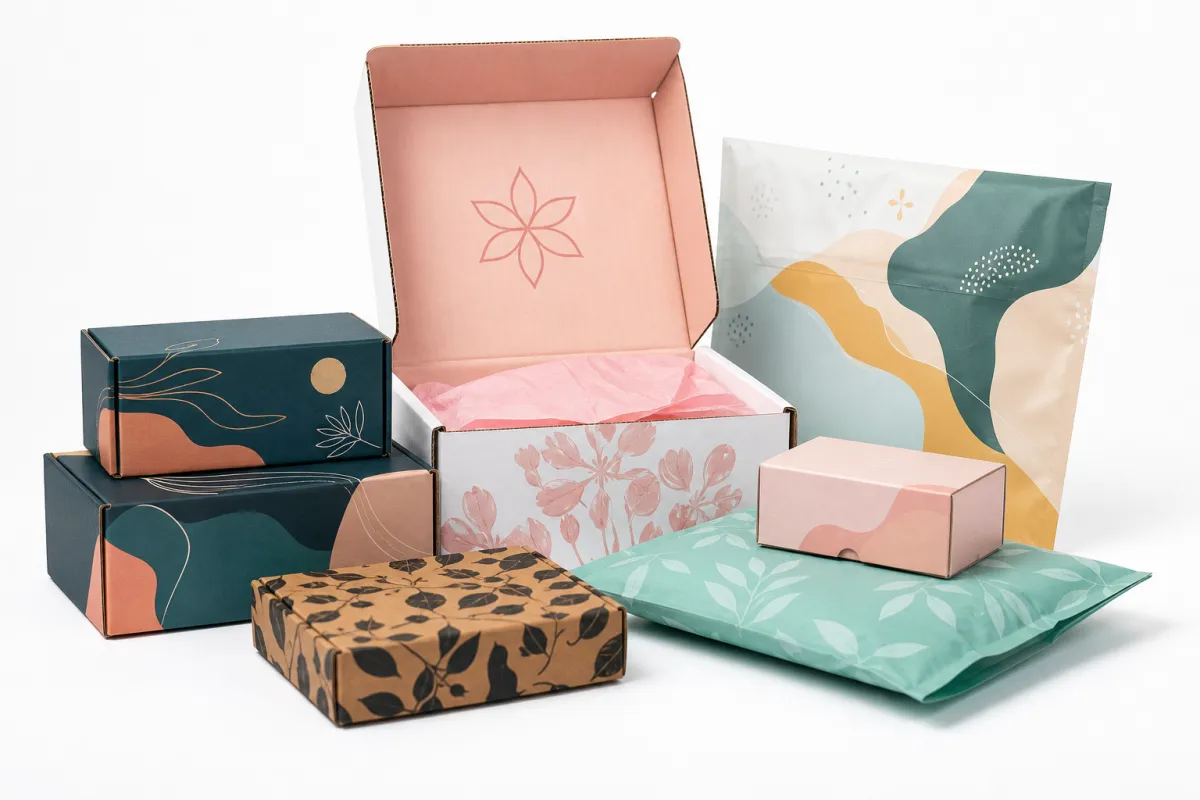
Picture two nearly identical orders leaving the dock. One goes out in a plain mailer with a generic packing slip. The other uses shipping supplies custom printed with a clear logo, a clean return address area, and a subtle instruction mark for the packer. They both protect the product, but they do not feel the same when they land on the customer’s doorstep. That first touch changes how the whole order is read. In retail packaging and ecommerce shipping, perception is part of the product experience. Pretending otherwise is how brands end up wondering why “premium” feels cheap.
A lot of brands underestimate how much a package can do. shipping supplies custom printed are not just marketing decoration. They are a repeatable brand signal. That signal shows up in the warehouse, in transit, and at the unboxing table. A logo on a corrugated shipper, a line of copy on a paper mailer, or a color-coded label on a master case can all reinforce package branding without adding much operational friction.
The operational side matters just as much. Well-planned shipping supplies custom printed can reduce confusion at the packing table because the right size, product family, or destination is easier to spot. A team packing three SKUs into similar cartons can use print placement to separate them visually, and that simple cue lowers the odds of mixing up an order. In that sense, custom print is not decoration; it is part of the workflow. The useful kind of branding always is.
“A package does not need to shout. It needs to look intentional, survive the trip, and make the customer trust what is inside.”
That is why shipping supplies custom printed can work for small brands and high-volume fulfillment alike. A startup may begin with printed labels on plain stock mailers, then move into Custom Poly Mailers once volumes settle. A larger operation may standardize on Custom Shipping Boxes for the outer shipper and use printed tape for a lighter-touch rollout. The format changes, but the goal stays the same: make the shipment look and function like it belongs to one brand, not a random pile of supplies.
If you are trying to decide where to start, the practical answer is simple. Look at the item your customer sees first, the one your warehouse touches most often, and the one most likely to cause grief if it is wrong. That is usually the best candidate for shipping supplies custom printed, because it gives you the most visible return with the least amount of guesswork.
How Shipping Supplies Custom Printed Are Made and Fulfilled
The production flow for shipping supplies custom printed usually starts with a clean brief: dimensions, artwork, quantity, finish, and the shipping environment it has to survive. From there, the vendor or converter prepares artwork, picks the substrate, and builds a proof so the buyer can check placement, color, and any technical details that matter at press. After approval, production moves into printing, finishing, packing, and freight. Straightforward on paper. Less charming in practice, because each step can change lead time and cost.
For direct printing on corrugated boxes, the design is often built around panel size, fold lines, and glue flaps. With shipping supplies custom printed in box form, the art has to respect the physical structure of the carton. A logo that looks perfect in a flat proof can disappear into a seam if it sits too close to a score line. Tape, labels, and liners are more forgiving because they can be applied after the structure is made, but they bring their own alignment and adhesive issues.
In fulfillment settings, shipping supplies custom printed can speed up sorting and reduce mix-ups because the package itself acts like a visual instruction set. A white label on a kraft mailer can indicate subscription shipments, while a colored band on a carton can flag wholesale orders or fragile goods. That matters in mixed-SKU programs where the packing table handles several order types at once. Good packaging design does not just look tidy; it helps people make faster, more accurate decisions under pressure.
The simplest way to think about the production choices is this: direct print is best when you want the whole structure to carry the brand, labels are best when you want flexibility, and tape or inserts are best when you want a lighter brand layer without changing the primary shipper. Many programs use a combination, because shipping supplies custom printed rarely live alone. A box can carry the identity, tape can reinforce it, and an insert can explain returns or cross-sell another item.
When brands ask why some orders move quickly and others drag, the answer is usually in the details. A one-color label on stocked material can move fast. A fully custom structural box with coated print, dielines, and tight color matching needs more time, especially if the team wants a physical sample before release. If you want to see how material sourcing, print setup, and sustainability standards connect, the Forest Stewardship Council is a useful reference point for fiber-based packaging choices.
Materials, Print Methods, and Order Volumes That Shape the Result
The material is where the strategy starts to become real. shipping supplies custom printed can be built from corrugated board, kraft paper mailers, poly mailers, folding cartons, tissue, paper tape, or labels. Each substrate behaves differently. Corrugated is sturdy and familiar. Kraft paper has a warm, natural look that fits many branded packaging programs. Poly mailers are light and efficient for soft goods. Labels and tape are flexible, which makes them useful for shorter runs and frequent artwork changes.
Print method matters just as much as the substrate. Digital printing usually makes the most sense for shorter runs, variable artwork, or programs that need quick turnaround and low setup complexity. Flexographic printing is often a better fit for larger runs of shipping supplies custom printed because the unit cost can improve once the press is set and the artwork is stable. Lithographic or offset methods are often chosen when image quality, color fidelity, and premium presentation matter more than speed. None of these methods is magically better. They just serve different production realities.
For most buyers, the key question is not “Which method is best?” It is “Which method fits my volume, budget, and warehouse reality?” If you need 300 pieces for a launch test, short-run digital print on labels or mailers may be the cleanest path. If you ship 10,000 units a month and the art will stay stable, shipping supplies custom printed in a flexo or litho format may bring better long-term economics.
| Format | Best use | Typical order profile | Cost behavior | Operational note |
|---|---|---|---|---|
| Custom shipping boxes | Outer shipper, premium unboxing, retail-style presentation | Mid to high volume, stable sizes | Higher setup, lower unit cost at scale | Great for durable shipping supplies custom printed, but storage takes space |
| Custom poly mailers | Apparel, soft goods, lightweight ecommerce shipping | Short to medium runs, high shipping efficiency | Usually lower than boxes on a per-unit basis | Lightweight and compact, but less rigid than corrugated |
| Printed labels | Branding plain stock mailers or cartons | Low to medium volume, frequent changes | Low setup, flexible reorders | Fastest way to add package branding without changing the box |
| Printed tape | Seal plus branding on plain shippers | Good for phased rollouts | Moderate cost, easy to manage | Useful when the warehouse wants simple application |
| Tissue and inserts | Unboxing detail, instructions, promotions | Usually a secondary layer | Varies by print coverage and paper grade | Supports product packaging story without changing the outer pack |
Ink coverage and color count also change the result. A one-color logo on kraft board can feel clean and intentional, and it often costs less than a full-bleed graphic with multiple spot colors. Heavy coverage on dark materials may need more ink, more drying time, or special handling to avoid scuffing. With shipping supplies custom printed, the more the artwork asks the press to do, the more you should expect the process to slow down or the cost to rise. The press does not care about your deadline. Annoying, but true.
Storage is another practical factor people forget. A warehouse may happily receive 500 pieces of a custom mailer, but 10,000 boxed units can eat floor space, especially if the cartons are bulky. That is why order volume needs to be judged alongside space, cash flow, and forecast confidence. The right shipping supplies custom printed program is not just affordable on paper; it is manageable in the building.
For larger rollouts, it helps to compare shipping supplies custom printed against a hybrid approach. A plain stock box with a custom label may be enough for internal shipments or test phases. A fully printed shipper may be worth it for direct-to-consumer channels where presentation and repeat ordering matter more. If you need a broader mix of options, Custom Packaging Products can help you map materials to the actual job instead of forcing every SKU into the same box.
Shipping Supplies Custom Printed Cost: What Drives Pricing
The cost of shipping supplies custom printed comes down to a handful of levers that move together: material grade, print method, size, quantity, finishing, and setup. Change one of them, and the price can move more than a buyer expects. A modest-sized mailer with one-color print and a simple finish may be inexpensive to launch, while a larger box with full coverage, precise color matching, and a premium coating can climb quickly.
As a loose planning range, short-run printed labels may land in the low cents per piece, while Custom Poly Mailers often fall into a middle band that can stay approachable for ecommerce shipping. Custom Shipping Boxes are usually the most expensive of the core shipper formats, especially when volume is low, because the board, structure, and print setup all contribute to the final quote. Once quantities rise, unit cost improves, but shipping supplies custom printed still require cash upfront and storage room afterward.
Here is the part that often gets missed: the quoted unit price is only one slice of the story. Plate charges, tooling, sampling, freight, and rush fees can change the actual budget by a meaningful amount. If you are comparing two vendors, one may look cheaper on the per-unit line but come with a higher setup or more expensive freight. A smart buyer looks at landed cost, not just the base print price.
There is also a real tradeoff between a lower-cost unprinted shipper plus a label and a fully custom printed package. The hybrid option often makes sense when budgets are tight or artwork changes often. The fully decorated option can be better when brand presence matters at the doorstep. In many programs, the best answer sits in the middle: a plain structural component paired with one or two visible shipping supplies custom printed elements that carry most of the brand load.
I always suggest looking at cost per shipment rather than cost per box. A cheap box that creates packing errors, customer confusion, or a weak presentation can cost more in rework and lost trust than a slightly pricier shipping supplies custom printed option. That is especially true for subscription boxes, premium direct-to-consumer orders, and products where the unboxing is part of the purchase story.
For brands that want to keep the conversation grounded, a few practical price questions help: How much print coverage do we really need? How many units will we consume in a normal quarter? Can the warehouse store a larger run without crowding out active stock? Do we need color accuracy tight enough to justify a sample round before launch? Those questions often save more money than haggling over a small difference in unit price for shipping supplies custom printed.
Shipping Supplies Custom Printed Process and Timeline: From Brief to Delivery
A realistic timeline for shipping supplies custom printed starts with the brief and ends with receiving, not with the press running. The first step is usually discovery: dimensions, shipping weight, product fragility, artwork files, target volume, and any sustainability or compliance requirements. After that comes proofing, and that is where many projects slow down because the team wants to adjust logo size, move a barcode, or tweak a color that looked fine on screen but not on paper.
For a straightforward program, a ballpark timeline can look like this: one to three business days for brief and quote alignment, a few more days for proofing and revisions, a production window that may run from several business days to a couple of weeks depending on method and quantity, and then transit time based on the shipping lane. More complex shipping supplies custom printed jobs, especially those involving custom structures or premium finishes, often need extra time for sample approval and color matching.
Delays usually happen in the same places. Artwork revisions take longer than planned. A stock material is temporarily unavailable. The buyer changes dimensions after proof approval. Or the team realizes, halfway through the process, that the shipping label area blocks the logo or hides the barcode. A little discipline at the front end prevents most of those problems, and disciplined planning is one of the biggest differences between a smooth launch and a stressful one.
When the launch date is fixed, it helps to work backward. If the first shipments need to leave on a specific day, the shipping supplies custom printed order should arrive early enough for inspection, counting, and test assembly. That buffer matters because even a good supplier can experience transit delays, and a warehouse should never be forced to receive packaging and use it the same day without a check. A few extra days on the front end can protect the whole campaign.
Samples are worth the effort when the order involves a new size, a premium finish, or a brand color that has to stay consistent across channels. A sample or pre-production proof gives the team a chance to test how the structure folds, how the print reads under warehouse lighting, and whether the shipping supplies custom printed piece still looks correct after real handling. If the pack will be drop tested, vibration tested, or subjected to stacking pressure, that is also the point to verify the performance standard.
For handling and transit expectations, I like to reference established testing frameworks instead of guessing. The ISTA testing standards are a solid starting point when a package needs to survive drops, vibration, and compression in the real shipping environment. That kind of discipline matters because a decorative shipper is not useful if it arrives crushed, scuffed, or unreadable.
Common Mistakes to Avoid When Ordering Custom Printed Shipping Supplies
The first mistake is sizing a shipper for the artwork instead of the product. A box that looks attractive on a mockup can waste void fill, drive up dimensional weight, or leave the contents loose enough to move in transit. With shipping supplies custom printed, the design should follow the product, not the other way around. If the fit is wrong, the package may look branded but still perform badly. Pretty and useless is not a business model.
The second mistake is making the artwork too busy or too small. Thin lines, tiny type, and dense detail often disappear on corrugated surfaces, especially if the board has texture or the ink coverage is uneven. Keep critical brand elements away from folds, seams, and glue flaps. In practical terms, the design should still read after assembly, when the shipper has been folded, taped, stacked, and handled by a few different people.
Skipping transit testing is another costly miss. shipping supplies custom printed can scuff, smear, fade, or crack if the substrate and finish are not matched to the route. A printed carton that looks perfect on a desk may not hold up in a cross-country shipment or in humid storage. That is where testing against a known method matters, and the industry reference point many teams use is the ISTA framework for transport packaging.
Buying too few units can also undermine the whole program. Short orders may seem safe, but they often raise the cost per unit, create more reorder cycles, and increase the odds that the brand is shipping with multiple packaging versions in circulation at once. If the run is too small to justify the setup, shipping supplies custom printed may be better deployed as printed labels or tape until volume grows enough to support a larger format.
Operational oversights are easy to miss when the focus is on aesthetics. Does the packing station need an internal label on every carton? Does the returns flow require a second adhesive strip? Will the barcode be visible after print? Are the staff using the same orientation every time? Those details sound minor, but they shape speed and accuracy. Good shipping supplies custom printed programs are built around the actual line process, not only the marketing concept.
Another common issue is forgetting that not every channel wants the same presentation. Direct-to-consumer orders may benefit from a more branded unboxing, while wholesale shipments may need clearer labeling and stronger palletization. A package that looks beautiful for one channel can be awkward for another. That is why the best shipping supplies custom printed plans stay flexible enough to support both brand value and practical handling.
Expert Tips for Shipping Supplies Custom Printed That Perform
If budget is limited, start with the one item that gets seen first. In many cases that is the outer shipper or the mailer, because it carries the brand from the dock to the doorstep. A single high-impact layer of shipping supplies custom printed often does more than spreading a small budget across too many surfaces. Once that first item is working, you can add tissue, inserts, or secondary labels later.
Build a packaging spec sheet before production starts. Include dimensions, acceptable tolerance, print zones, color targets, approved file types, barcode placement, carton counts, and the name of the person who can sign off on a proof. That one document saves time because it removes back-and-forth. In practice, the cleaner the spec sheet, the fewer surprises in shipping supplies custom printed production.
A short pilot run is worth the effort, especially if the package will travel through real shipping lanes. Test a few units through actual order fulfillment conditions, not just on a desk. See whether the print scuffs when stacked, whether the tape tears cleanly, and whether the customer can still read the branding after handling. A pilot lets you catch issues before the main run eats budget and shelf space.
Match the packaging approach to the sales channel. Direct-to-consumer sellers often benefit from stronger presentation and a more polished unboxing. Subscription brands may need repeatable, low-friction assembly. Wholesale and marketplace fulfillment may care more about pallet efficiency, case labeling, and durability than about elaborate decoration. The right shipping supplies custom printed choice is the one that fits the channel without slowing the warehouse down.
It also helps to think in layers. Outer box, inner wrap, tape, inserts, and labels each solve a different problem. A brand does not need to customize every layer on day one. Often the smartest move is to use shipping supplies custom printed on the layer that gives the most visibility, then keep the other layers plain until the numbers justify a broader rollout. That keeps the program focused and easier to manage.
When you are ready to compare formats, start with the practical range of options instead of forcing a single answer. Some teams begin with labels and tape, then move into custom mailers. Others start directly with a printed shipper because the product margin and customer expectations justify it. Either path can work. The main thing is to line up the packaging strategy with the real shipment, not the idealized version of it. If you want to narrow the field, Custom Shipping Boxes and Custom Poly Mailers are usually the two formats most buyers compare first.
For buyers who want a brand that feels intentional from the first scan to the final handoff, shipping supplies custom printed should be treated like an operating decision, not a garnish. The right material, the right print method, and the right volume all work together, and when they do, the package becomes part of the customer experience instead of just a container. The practical takeaway: pick the shipper your team touches most, test one version under real fulfillment conditions, and scale the format only after it proves it can survive the route and the workflow. That is where shipping supplies custom printed earns its place in the budget.
Frequently Asked Questions
What are shipping supplies custom printed best used for?
They work best for packaging that needs both protection and brand presentation, such as mailers, boxes, tape, and labels. They also help reduce mix-ups in fulfillment by making SKU, size, or destination cues easier to spot at the packing table, and they support a more polished unboxing experience for direct-to-consumer shipments.
How much do custom printed shipping supplies usually cost?
Pricing depends on material, print method, size, quantity, and finishing, so two items that look similar can have very different costs. Short runs usually carry a higher unit price, while larger runs lower the unit cost but require more storage and cash upfront. The most useful metric is cost per shipment, not just the price of one box or mailer.
How long does shipping supplies custom printed take to produce?
Timeline depends on proofing, artwork revisions, material availability, and whether the item is stock-based or fully custom. Simple printed labels or tape can move faster than custom boxes with special sizing or finish. Build in extra time for samples and approvals if the packaging needs exact color matching or a launch-date deadline.
What artwork works best for custom printed shipping supplies?
Bold logos, clear type, and simple marks usually reproduce better than thin lines or dense illustrations on corrugated surfaces. Artwork should stay away from folds, seams, and glue areas so the design reads cleanly after assembly. Vector files are often preferred because they scale cleanly and make color adjustments easier.
Which shipping supplies should I customize first?
Start with the item that sees the most customer-facing exposure, often the outer box, mailer, or tape. If budget is tight, prioritize a single visible surface before moving to inserts, tissue, or internal labels. For most teams, shipping supplies custom printed should begin with the outer shipper or mailer, because that is where the brand gets seen and the order gets protected at the same time.

