Skincare Brands Void Fill Paper Unit Cost: Get a Quote
A skincare brand can save pennies on filler and lose dollars on the shipment. I have watched that happen in audits where the spreadsheet looked tidy and the claims log looked messy. The real question behind skincare brands Void Fill Paper unit cost is not just what a sheet costs. It is what the box costs once labor, freight, breakage, and brand presentation are all pulled into the same frame. A carton that lands intact, with fewer touches and fewer complaints, usually beats a cheaper filler that ends up creating work downstream.
The math gets clearer if you think in monthly volume. If a brand ships 1,000 parcels and even 1.5% arrive damaged, that is 15 replacements, 15 customer service interactions, and 15 chances to frustrate someone who was ready to reorder. In cosmetics and skincare, that number is not abstract. It shows up in reviews, return rates, and the quiet erosion of margin. So the unit cost question is really a protection question disguised as a purchasing question.
There is also a presentation angle that brands sometimes underestimate. A serum boxed at $48 is not only a product; it is a small trust exercise. The unboxing has to look considered, not improvised. That is why paper void fill can matter more in skincare than in categories where the package is purely functional. It is doing two jobs at once: shielding the item and signaling care. That second job is a little harder to price, but it is real.
Skincare Brands Void Fill Paper Unit Cost: Why It Matters
Walk a packing line and the trade-offs show up fast. Operations wants speed. Finance wants a neat number. Marketing wants the carton to feel deliberate, not like it was stuffed five minutes before pickup. skincare brands Void Fill Paper unit cost only becomes useful when those three concerns are measured together. A cheaper sheet can slow pack-out by a few seconds per order, and that sounds tiny until it gets multiplied across thousands of shipments.
Loose fill is cheap on the invoice and noisy in the box. Tissue can look elegant in a sample, then compress once the carton is stacked or cross-docked. Paper void fill usually sits in the middle, which is often where the best economics live. The right paper format can keep droppers from knocking into jars, stop bottles from drifting into a corner, and reduce the surface scuffs that make a premium order feel less premium. One avoided replacement shipment can wipe out a long list of small material savings.
The other blind spot is workflow. skincare brands void fill paper unit cost is not the same thing as the price of a bundle of paper. If the material takes longer to place, the labor can erase the savings. If it is too soft, the product shifts and breakage climbs. If it is too heavy or too stiff, freight and dimensional weight go up, and the packer starts fighting the carton instead of closing it. The fair comparison is material plus labor plus damage rate, all in one view.
I once saw a brand switch to a cheaper filler that shaved less than a cent per pack. On paper, it looked like a win. In practice, the team spent more time rebuilding crushed kits, and the returns hotline became its own little fire drill. The lesson was simple, and kind of annoying: the “cheap” option had a hidden labor tax attached to it.
"The least expensive filler is often the most expensive shipment once claims, labor, and freight are counted."
For buyers who want a firmer decision, packaging tests help strip out guesswork. ISTA publishes widely used guidance at ISTA test standards. A drop test or vibration test will not predict every carrier mishap, but it does show whether the pack is stable or just optimistic. That distinction matters a lot when the product inside the carton is glass.
skincare brands void fill paper unit cost matters because it sits at the point where brand image meets shipping performance. If your line handles serum bottles, toner sets, and jar-based kits, the right fill can protect margins and preserve the unboxing experience at the same time. That is a better business case than buying filler by the pound and hoping the package survives the trip.
Skincare Brands Void Fill Paper Unit Cost, MOQ, and Quote Logic
A quote only becomes meaningful when the buyer knows what pushes it up or down. For skincare brands void fill paper unit cost, the main levers are paper grade, sheet size, print complexity, order volume, and whether the format is standard or custom. Plain kraft almost always lands lower than branded, dyed, or printed stock. Add special folding, a nonstandard width, or a custom core, and the number climbs. Reduce the order size, and the unit cost rises again because setup work is being spread over fewer pieces.
MOQ changes the price curve, not just the order size. A supplier may quote one number at 2,000 pieces and a better one at 10,000 because tooling, approval time, and waste are amortized across a larger run. That is why skincare brands void fill paper unit cost should be requested at several breakpoints. Ask for 2,000, 5,000, 10,000, and 20,000 pieces if the program has any chance of scaling. Then compare those figures against actual monthly shipment volume, not a vague long-term target that nobody has budgeted for yet.
Quote language creates another trap. Factory price, carton price, and landed cost are not interchangeable. Buyers who treat them as the same thing end up comparing apples to shipping crates. Factory price usually means the ex-works or FOB figure. Carton price includes packing the goods for shipment. Landed cost adds freight, duties where applicable, receiving fees, and sometimes repacking or storage. A quote that looks low on the first line can become expensive once it reaches the dock. Ask every supplier to quote on the same basis if you want a comparison that holds up.
| Option | Typical MOQ | Indicative Unit Cost | Best Fit | Notes |
|---|---|---|---|---|
| Unprinted kraft void fill sheets | 2,000-5,000 pieces | $0.05-$0.09 each | Starter e-commerce kits, subscription boxes, replenishment orders | Usually lowest setup charges; fastest to approve |
| White presentation sheets | 3,000-8,000 pieces | $0.06-$0.12 each | Retail shipments, premium skincare launches | Cleaner appearance; may increase bulk pricing slightly |
| Custom color or printed sheets | 5,000-10,000 pieces | $0.09-$0.18 each | Branded gifting, launch kits, influencer boxes | Can trigger tooling fees, setup charges, and longer approval cycles |
| Custom-sized or perforated format | 10,000+ pieces | $0.08-$0.16 each | High-volume pack lines, fixed carton sizes | Best when the same size ships every week |
The numbers above are working ranges, not guarantees. Freight, paper market movement, and conversion method can shift them either direction. Still, the table is useful because it helps buyers compare suppliers without mixing unrelated variables into the decision. If one quote is far below the others, check whether freight is excluded, whether setup charges are hidden elsewhere, and whether the quoted format actually matches your carton size.
The cleanest way to read skincare brands void fill paper unit cost is cost per protected shipment. If one sheet cushions two bottles and another format needs three sheets but cuts breakage sharply, the second option may be the better buy. Purchasing teams should be ready to defend that kind of judgment with numbers, not just preference.
For brands comparing options before they commit, order history helps. Our custom packaging Case Studies show how packaging choices behave after launch, and those examples often clarify MOQ decisions faster than a spreadsheet full of unit prices.
skincare brands void fill paper unit cost also changes depending on whether the order supports a one-time launch or a replenishment program. Launch kits can absorb a higher setup charge if the presentation matters. Recurring orders should be priced around stable volume, because consistency matters more than novelty once the product is in market.
Product Details: Paper Types, Density, and Presentation
Paper choice changes the outcome in ways that do not always show up in a quick quote review. A lightweight sheet can look fine in a sample room, then flatten once cartons are stacked, squeezed, and tossed by a carrier. A denser sheet holds its shape better and can improve stability even if skincare brands void fill paper unit cost rises by a fraction. That fraction can disappear quickly when damage claims go down.
Skincare buyers usually narrow the field to a few material options: kraft, white stock, recycled blend, and branded printed paper. Kraft has an earthy look and a little spring-back, which works well for DTC orders and brands that want a natural tone. White stock looks cleaner and more polished, which suits retail-ready cartons and subscription kits. Recycled blends can support sustainability claims, but the supplier should be able to document what the material actually is. If a brand wants to make a formal claim, ask for FSC chain-of-custody evidence through FSC guidance before the order is approved.
Density matters as much as color. A 60-70 gsm sheet can work for lighter items, while 80-100 gsm tends to perform better around glass jars or heavier pump bottles. Heavier is not automatically better, though. If the paper becomes too stiff, packers spend more time forcing it into the carton, and the box can bulge. The real question is whether the paper supports the product without adding avoidable minutes to the line. For a buying team, that labor cost belongs inside skincare brands void fill paper unit cost even when it never appears on the invoice.
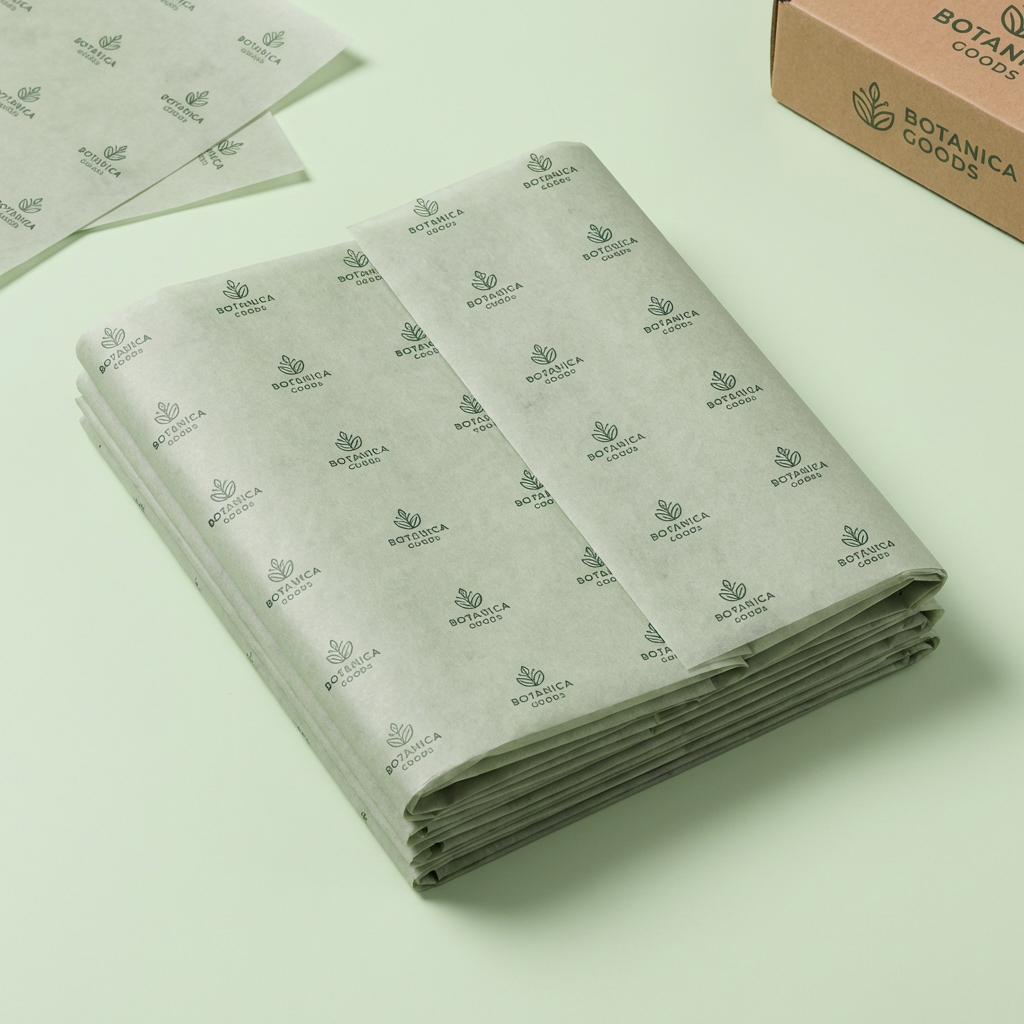
Presentation carries its own weight. A natural kraft tone tells a different story from a bright white insert. A custom color can reinforce brand memory, but it can also add setup charges and stretch lead times. If the goal is clean, reliable fill, unprinted paper usually wins on speed. If the unboxing moment is part of the brand promise, branded paper may justify a higher quote because it raises perceived value without touching the formula inside the bottle.
Channel also changes the spec. E-commerce shipments need void fill that nests well, stores flat, and can be counted quickly. Retail presentation boxes may need a cleaner look. Subscription kits sit between those two poles, since they need efficiency and visual polish at the same time. The better question is not which paper is best in general. It is which paper does the job for that specific channel.
A practical rule helps here: if the paper adds more than a few seconds to each pack, the aesthetic gain has to earn its place. On a limited launch, maybe it does. On a replenishment program shipping thousands of units, maybe not. That is why skincare brands void fill paper unit cost should always be read alongside labor minutes and damage rates.
Storage matters too. A denser paper may occupy a bit more warehouse space, but if it reduces crushed cartons and repack work, the footprint is usually worth it. Buyers who already track packaging fit across multiple SKUs can cross-check those lessons against the paper program in their packaging Case Studies.
Production Steps and Lead Time for Skincare Orders
Speed only helps when the quote is right. The production path for skincare brands void fill paper unit cost usually starts with an inquiry, then moves through specification review, sample confirmation, proof approval, production, quality check, packing, and shipment. That sequence is ordinary for a reason. Most delays come from missing dimensions, unclear artwork files, or a buyer who changes the carton size after sample approval. That last one happens more than people admit.
A useful spec sheet should list the paper type, target sheet or roll size, color, print requirements, intended carton dimensions, product weight, and whether the fill needs to support a single bottle or a mixed kit. If the paper is custom-sized, include exact tolerances. Even a few millimeters can alter how the fill sits inside the carton. That is also where tooling fees and setup charges appear, because the supplier may need a new cutting or printing setup.
Lead time depends on complexity, but a realistic range is often 12-15 business days from proof approval for a standard run, and 15-25 business days when the order needs custom print, unusual sizing, or special finishing. Freight sits on top of that. A local shipment may move quickly; a cross-border move adds more days. Buyers who want a trustworthy schedule should separate production time from shipping time. Blending them together is how launch dates slip.
Three moves protect the schedule more than most teams expect. First, approve one reference sample instead of requesting endless revisions. Second, confirm dimensions before artwork starts. Third, lock the order quantity before production begins, because last-minute changes can force a new run or a fresh setup charge. Each step keeps skincare brands void fill paper unit cost from drifting upward after the first quote.
- Inquiry and spec review: Same day to 1 business day if the details are complete.
- Sample and pricing confirmation: Usually 2-5 business days for standard materials.
- Proof approval: 1-3 business days if the artwork is ready.
- Production: Often 12-15 business days for standard custom runs, longer for printed or unusually sized paper.
- Quality check and packing: 2-4 business days depending on volume.
That sequence keeps the buyer honest. It also keeps the supplier honest. If a quote sounds fast but the sample process is vague, the project is not actually fast. If a supplier offers a low skincare brands void fill paper unit cost but cannot explain the production steps, that should raise a flag. Clear process usually beats loud promises.
For launch calendars with little room to spare, the safest approach is to request the quote early, approve the sample quickly, and avoid changes after production starts. That is the difference between a shipment that reaches the shelf on time and one that arrives after the campaign window has already closed.
Specifications for Glass Bottles, Jars, and Subscription Kits
Not every skincare SKU needs the same protection. A 30 mL dropper bottle behaves differently from a 120 mL face cream jar, and a mixed subscription kit behaves differently again. That is why skincare brands void fill paper unit cost should connect to the actual product profile instead of a generic carton size. A packer who knows the weight, shape, and fragility of the item can choose a fill format that protects the product without overspending on material.
For glass bottles, the main variables are weight, neck shape, and how much empty space remains after the item is seated in the shipper. The paper needs enough resilience to stop side-to-side movement. For jars, the challenge is often top-heaviness and scuff protection. Airless pumps can be tricky because they look compact, yet still need tight side support to prevent the actuator from shifting. In all three cases, the fill has to cushion impact and keep the product upright.
Subscription kits add a second layer of complexity. Mixed bundles often include a bottle, a jar, a sachet, and sometimes a promotional insert. The void fill paper has to lock the pieces in place while still allowing the packer to build the box quickly. If the fill takes too long to arrange, labor cost can erase the unit savings. A slightly higher skincare brands void fill paper unit cost can be the smarter choice when it saves thirty seconds per pack across a large run.
Buyers should test the paper against the actual carton, not against a drawing. A carton that looks ideal on screen may leave too much headspace in real life. A useful checklist includes carton size, fill depth, product weight, dispenser fit, storage footprint, and how fast the pack team can place the product and close the lid. If the insert works but slows pack-out, it only solves half the problem.
Run the test with the real product mix. Put the heaviest bottle in the box. Add the jar. Shake the carton lightly. Then simulate a common transit hit with a repeatable drop profile. For many buyers, that is enough to reveal whether the paper is doing the job. If formal validation is needed, use a standard such as an ISTA-based drop or vibration profile. That gives the team a common language when comparing one skincare brands void fill paper unit cost against another.
"A packer does not care about theory; they care whether a 180 g jar stays put after the carton moves."
If you are building a launch program, note the difference between single-SKU shipments and seasonal sets. A holiday kit may need denser void fill because the contents are heavier and the presentation is more visible. A refill pouch shipment may need less protection but faster pack-out. That is another reason to quote by use case rather than assume one paper spec fits every order.
Brands that have already compared other packaging choices should fold those findings into the paper decision before signing off. Our recent Case Studies are useful for that sort of side-by-side review, especially when a product line ships across more than one channel.
skincare brands void fill paper unit cost becomes more predictable when the spec starts with the product weight and carton geometry. That is the cleanest way to buy packaging: begin with the item, choose the fill, then ask for the quote.
Why Choose Us for Skincare Brands Void Fill Paper
Buyers usually return to the same three needs: repeatability, transparent pricing, and support when the order size changes. That is where skincare brands void fill paper unit cost should be easy to understand. A good supplier separates the material, the setup charges, and the freight. A better supplier gives you multiple breakpoints so you can see how the unit cost shifts at 5,000, 10,000, and 20,000 pieces.
Consistency matters more than most teams admit. If the first run is white and the second run is off-white, the brand team notices. If the sheet size drifts by a few millimeters, the pack line notices. If the paperwork changes and the quote does not explain why, finance notices. Clear specs and predictable production are not glamorous, but they keep packaging programs from wobbling.
Smaller launches usually work best with a simple format that avoids unnecessary tooling fees. Ongoing replenishment works best when the size, color, and packaging method stay fixed so the order can repeat without a fresh round of approvals every time. That keeps operational noise down and stabilizes skincare brands void fill paper unit cost across the life of the program.
We also help buyers compare a branded fill against a generic option. That comparison rarely stops at appearance. It extends to shipment quality, line speed, and the reorder cycle. If the branded version adds only a modest amount to the unit cost but improves the unboxing experience enough to support a higher price point, the math can work. If the premium detail does not move the business, it should stay out.
Teams that want to see how those trade-offs play out can study our packaging Case Studies, then apply the same logic to their own launch. That keeps the discussion tied to what actually shipped, not to what looked polished in a mockup.
There is also a real advantage to working with a supplier that handles both small runs and ongoing replenishment. A brand can test a format with a smaller quantity, then scale it once the product proves itself in transit. That reduces risk and prevents overbuying. In packaging, overbuying is a kind of waste that hides in plain sight.
skincare brands void fill paper unit cost should feel like a decision, not a mystery. If the quote is clear, the sample is accurate, and the production timeline is realistic, the buyer can move forward with confidence instead of guessing.
Next Steps: Request Your Quote and Unit Cost Breakdown
If you are ready to compare options, send the details that matter most: product dimensions, target order quantity, preferred paper style, shipping destination, and whether you need printed or unprinted material. That is enough to start a useful quote for skincare brands void fill paper unit cost. Without those inputs, any number is just a placeholder with better branding.
Ask for three things at the same time. First, a sample. Second, a pricing breakdown at multiple volumes. Third, a production timeline that separates manufacturing from freight. Those three items usually reveal whether the supplier understands the job or is only selling paper by weight. If you want a fast internal decision, compare the current packaging cost with the projected skincare brands void fill paper unit cost side by side. The answer tends to surface quickly once the numbers sit next to each other.
Good buyers also ask one follow-up question: what changes the price? If the answer includes size, print, core, order volume, freight basis, and approval speed, you are speaking with someone who understands the process. If the answer stays vague, expect surprises later. No brand needs that on a launch schedule.
For custom logo things, the cleanest next step is direct: request the spec review, confirm the sample, and ask for a quote that shows the unit cost at more than one volume. That gives you a real purchasing framework, not a guess. If your team already has a packaging benchmark, compare it directly against skincare brands void fill paper unit cost before you sign off on the order.
The actionable takeaway is simple: do not judge void fill paper by material price alone. Compare sample performance, labor time, freight basis, and breakage risk in the same sheet of paper, then choose the option with the lowest cost per protected shipment. That is the number that actually protects the margin.
How do you calculate skincare brands void fill paper unit cost?
Start with the paper grade, sheet size, and whether the order is custom printed or unprinted. Then add setup charges, MOQ effects, freight, and any repacking or receiving fees to get the real landed cost. The cleanest comparison is cost per protected shipment, not just the price per carton, because a slightly higher quote can still win if it lowers damage and speeds pack-out.
What MOQ affects void fill paper pricing for skincare brands?
MOQ changes the price curve because fixed prep work gets spread across more pieces. Higher quantities usually improve bulk pricing, especially if the size and print stay the same. Ask for quotes at several breakpoints and confirm whether the MOQ applies per color, per SKU, or per design, since that detail can change the actual skincare brands void fill paper unit cost more than the headline number.
Which paper spec works best for glass serum bottles and jars?
Use a denser paper that holds shape and limits movement inside the shipper. For many skincare packs, that means a range around 70-100 gsm depending on bottle weight and carton geometry. Test the insert with the actual product before scaling, because a spec that looks fine on a sample table can behave differently once the carton is filled and handled by a carrier.
How long is lead time after artwork and sample approval?
Lead time depends on stock availability, custom sizing, and print complexity. Standard custom runs often move in about 12-15 business days after approval, while printed or highly customized orders can take longer. Separate production time from shipping time so the schedule is realistic, and keep in mind that the better the approval process, the more stable the skincare brands void fill paper unit cost tends to be.
Can void fill paper be customized for a skincare brand launch?
Yes, many orders can be customized for color, size, finish, and presentation. The main questions are whether customization adds tooling fees, whether it requires extra setup charges, and how much it extends turnaround. Request a pre-production sample before committing to full volume so the brand team can confirm both the look and the pack-out performance.