Skincare brands ask for Clear Zipper Bags for practical reasons: the pack needs to protect small products, show what is inside, and look orderly on a shelf or in a shipping box. That sounds straightforward until the quotes arrive. Then the differences start showing up in the details, and the details are usually what separate a workable pouch from an expensive mistake.
A buyer may ask for a simple transparent zipper bag and get three very different numbers back. One supplier is pricing a thin press-to-close pouch. Another is quoting a heavier EVA bag with a cleaner surface. A third is building in print, a slider, extra seal strength, and a tighter inspection standard. The outside size may match, but the product does not.
That is why a good quote request matters. A clean brief gives you a fair comparison, shortens the back-and-forth, and exposes where a low price is being achieved through thinner film, looser tolerances, or hidden add-ons. For packaging that sits close to the brand, those tradeoffs should be visible before production starts.
Why skincare brands request clear zipper bags before a launch
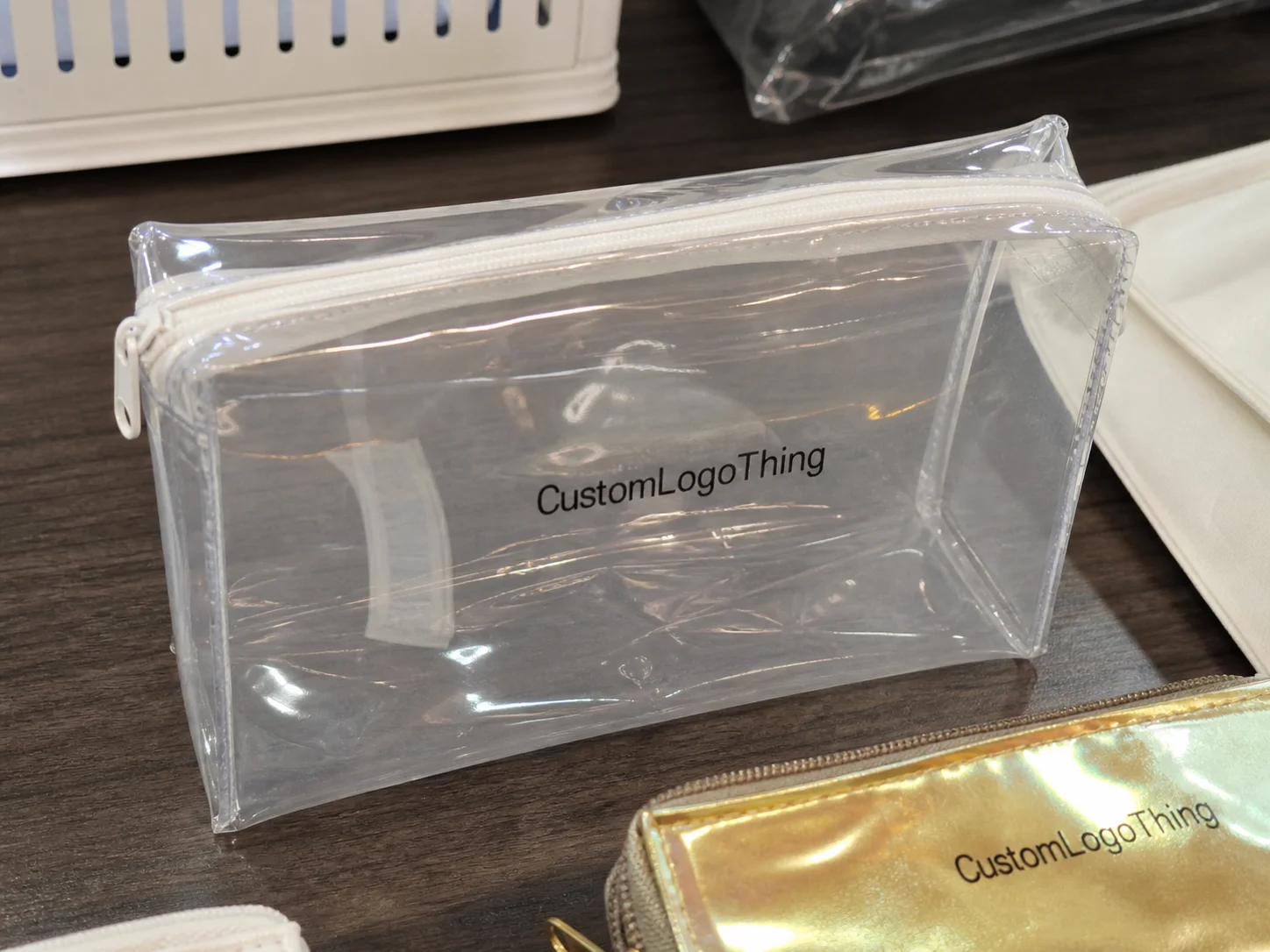
Clear Zipper Bags serve several jobs at once. They keep minis, masks, samples, and travel kits together. They make picking and packing easier. They let customers see the contents without opening the package, which helps in fulfillment and reduces handling damage.
The packaging also does brand work. A transparent pouch with a straight zipper line, good clarity, and controlled print can make a set feel more intentional. A cloudy film or a crooked seal does the opposite. The product inside may be excellent, yet the first impression still suffers because the package looks rushed.
For launch planning, clear bags also help with assortment visibility. Teams can sort by shade, formula, or set contents without opening every unit. That matters in sample programs and promotional bundles where speed is part of the economics. If a pack is hard to identify, labor cost rises even if the unit price looks attractive on paper.
Product construction and material options that affect the quote
Material choice is the first big price driver. LDPE is common for softer-feel pouches and light-duty use. It tends to be practical, predictable, and relatively economical. EVA usually feels smoother and can present better visually, which is why it often shows up in retail-facing skincare kits. Multilayer laminated film costs more, but it can give the bag extra stiffness, a cleaner look, and better protection for contents that need more structure.
The zipper changes the economics too. A standard press-to-close closure is usually the easiest path and the least expensive. A slider adds convenience and perceived value, but it also adds parts, assembly steps, and more opportunities for variation. If the zipper has to line up tightly across every unit, the factory has less room to absorb process drift, which affects price.
Thickness should be specified in microns or mils rather than described vaguely as “thick” or “strong.” That avoids confusion during sampling. A lighter promotional pouch may be fine around 80-100 microns. Bags that will be reused, packed tightly, or filled with heavier items often move closer to 120-180 microns.
Finish matters more than many buyers expect. A crystal-clear surface shows the product better, but it also shows fingerprints, scuffs, and dust more readily. A frosted finish softens the look and hides handling marks, though it changes the visual effect and can dull the see-through benefit. Neither choice is universally better.
Structural features also change the quote. A gusseted bag stands better and holds more shape for kits and bundles. A flat pouch may be enough for sheet masks or slim sets. A hang hole adds retail flexibility. A tear notch improves opening. A writable panel can be useful for batch notes or internal handling. Every one of those options adds some combination of material, labor, or setup cost.
Print introduces another layer of complexity. A no-print clear bag is the simplest and usually the cheapest. One-color logo print is still manageable. Full coverage printing, white underprint, metallic ink, or tight registration around a transparent window all require more control. If the product needs to remain visible, the artwork should be planned around that constraint instead of fighting it.
| Option | Typical use | Cost impact | Buyer note |
|---|---|---|---|
| LDPE press-to-close pouch | Samples, minis, light kits | Lower | Usually the easiest format to quote and the fastest to produce |
| EVA zipper bag | Retail-facing gift sets, travel assortments | Moderate | Cleaner visual finish and softer hand feel, often worth the added cost |
| Multilayer laminated pouch | Higher-end kits, heavier contents | Higher | Better stiffness and more build options, but more complex to make consistently |
| Slider closure pouch | Reusable kits, consumer-friendly packaging | Higher | Convenient in use, yet more expensive because of extra components and assembly |
Specifications to confirm before you request samples
The fastest way to slow a project down is to send a vague request and hope the supplier fills in the gaps correctly. Start with the basic dimensions, and define them clearly. Width, height, and gusset depth should be stated in the same unit system. If the bag is measured flat, say so. If the quoted size should reflect usable internal space, say that too.
Thickness belongs in the brief. So does the target feel and use case. A lightweight promotional pack does not need the same structure as a reusable retail pouch. Once a supplier knows the load and handling pattern, they can recommend a thickness that is realistic rather than merely familiar.
Ask for a clear statement on seal strength, clarity level, puncture resistance, and odor control. For skincare products, smell matters more than many buyers expect. A resin that carries a strong plastic odor can make even a good package feel cheap. Clarity matters too, because cloudy film can interfere with the product view, the logo, and barcode scanning.
Artwork details should be locked down early. Specify the print file format, the number of print colors, whether the brand mark should be centered or offset, and whether any regulatory copy needs to remain readable through the transparent panel. If batch codes, ingredient notes, or warning text will be applied later, leave enough quiet space for them.
Sample approval is where you confirm closure feel, film clarity, fit, zipper alignment, and visual balance. A good sample can prevent an expensive production run that misses the mark by a small but visible amount. With packaging, small mistakes do not stay small once multiplied by thousands of units.
If transit performance matters, ask about packaging tests and shipping readiness early. Standards from ISTA are useful when evaluating drop, vibration, or compression risk. If the broader packaging system includes paper inserts or cartons, FSC certification can be relevant for sourcing discipline, though it does not apply to the plastic pouch itself.
Cost, pricing, MOQ, and the skincare clear zipper bags quote checklist
A useful quote comparison starts with one simple rule: every supplier should be pricing the same product. If one quote includes print and another does not, if one uses a slider and another uses a basic zipper, or if the bag thickness differs, the numbers are not directly comparable. The cheapest line item can hide the most expensive assumption.
For a rough planning range, a simple clear press-to-close pouch at modest volume may fall around $0.10 to $0.20 per unit, depending on size, film thickness, and overall spec. An EVA bag or a heavier, cleaner-looking pouch may move into the $0.18 to $0.35 range. A laminated pouch with a slider, added print work, or tighter finishing requirements can run above that, especially in shorter runs.
MOQ, or minimum order quantity, usually rises with complexity. A plain pouch is easier to schedule in small lots. Once the job includes special print, multiple materials, custom closures, or stricter quality checks, the factory needs more volume to absorb setup and changeover costs. Short runs are possible, but the unit price often reflects the extra handling.
Buyers should ask exactly what is included in the quote. Does the number cover tooling or plates? Are setup charges included? Is freight part of the price or separate? How are the bags packed, and in what carton quantities? A low unit price can become less attractive once inner packing, master cartons, palletization, and shipping are added. Landed cost is the number that matters.
Tiered pricing is better than a single number. Ask for pricing at 3,000, 5,000, and 10,000 pieces, or at whatever quantities make sense for the line. That shows whether the project gains efficiency at scale or whether the current volume is already near the most sensible order size. If repeat orders are likely, say so. Reorder potential can change how a supplier approaches setup and material planning.
A quote only helps if the same spec is being priced on both sides. If the build is still fuzzy, the lowest number often belongs to the least complete answer.
- Exact dimensions and gusset depth
- Material preference and thickness target
- Zipper style and any added closure features
- Print colors, coverage, and artwork file format
- Quantity tiers and delivery destination
- Required delivery window and sample needs
Process and turnaround from inquiry to production
The quoting process is usually predictable on paper. The buyer sends a request. The supplier reviews the spec and flags missing information. Artwork is checked. A sample or proof is approved. Production starts. Inspection follows. Then the order ships. The delays come from unclear inputs.
Missing dimensions force rework. Low-resolution artwork slows proofing. Vague color references create a second round of questions. If the buyer takes too long to approve a sample, the schedule slips. These are ordinary production realities, and they matter more on custom packaging because each handoff depends on the previous one being clean.
Lead time varies by construction. A basic clear pouch can move faster than a laminated bag with a slider and printed surfaces. Material availability also changes the picture. For planning, many teams work with a sample window of about 5 to 7 business days and a production window of roughly 12 to 20 business days after proof approval, then add shipping time on top.
The point of defining the timeline early is to stop the project from drifting. Buyers Should Know when a quote is still conditional, when artwork becomes fixed, and which approval stage is the last chance to change the build without affecting price or schedule. A small change after tooling or print approval can create unnecessary cost very quickly.
Outer packaging deserves attention too. A strong pouch can still arrive wrinkled or crushed if the carton fit is poor or the shipper is too weak for the route. Many complaints blamed on the bag are really problems in secondary packaging.
Quality control and buyer observations that change the final result
The best packaging buyers do not only read the quote. They look at the bag as a finished object and ask how it will behave after the factory box, the pallet, the truck, and the warehouse. That means checking seal consistency, zipper action, film clarity, print placement, and carton packing before the shipment leaves.
Quality control should look for variation, not just defects. One pouch with a weak zipper is a problem. A batch where the zipper line drifts a few millimeters across units is a different problem, and it is often more expensive to fix because it points to process instability. Likewise, a bag can pass a visual check and still feel wrong if the film thickness varies or the closure is inconsistent.
Scuff resistance is another practical issue. A film can be clear and still look tired after light handling if it marks easily. For skincare, that matters because the customer sees the pouch before they use the product. A bag that looks worn in transit can make the contents seem less fresh or less premium, even if the formula inside is fine.
Packaging buyers also pay attention to odor, stiffness, and tactile quality. Those details do not show up well in a specification sheet, but they affect customer perception and return to shelf. A bag that opens cleanly and stands up to ordinary handling feels more reliable. The market often notices that reliability before it notices a logo.
How to send a clean quote request
Before sending a request, gather the basics in one place: dimensions, material preference, zipper style, print file, quantity, delivery location, and the date the goods are actually needed. If you already have a reference bag, include a photo or a sample so the supplier can judge clarity, thickness, and closure feel more accurately than a written description alone can manage.
Ask for tiered pricing rather than one number. That gives a better view of the cost curve and makes it easier to decide whether the order should be sized up, held steady, or simplified. If repeat orders are likely, say that plainly. Reorders change the economics, especially when tooling, artwork, and setup are involved.
If the project is sensitive, request a sample before bulk production. That is the quickest way to verify fit, transparency, zipper action, and overall look. A sample also gives internal stakeholders something concrete to review against the brand palette, retail presentation, or e-commerce photography plan.
The strongest quote requests are usually the shortest ones that contain the right facts. For teams using the skincare clear zipper bags quote checklist, the goal is to keep the conversation anchored to manufacturable details so the final answer reflects the product you actually want, not the product the supplier had to infer.
What details do I need for a skincare clear zipper bags quote checklist?
Provide dimensions, material preference, zipper type, print details, quantity, and delivery location. Include any features such as a hang hole, gusset, tear notch, writable panel, or special finish.
How does material choice change the price of clear zipper bags?
Thicker film, higher-clarity materials, and laminated constructions usually cost more than basic single-layer options. Special finishes, tighter tolerances, and heavier print coverage can also raise the unit price.
What is a typical MOQ for custom skincare zipper bags?
MOQ depends on the material, printing method, and structure, so it is best confirmed in the quote. Smaller runs are possible in some cases, but they usually carry a higher unit price than larger production lots.
How long does production usually take after approval?
Lead time varies with order size, artwork complexity, material availability, and whether samples need approval first. Ask for a schedule that separates sample timing, production timing, and shipping time.
Can I get samples before placing a full order?
Yes. Samples are the best way to confirm clarity, zipper function, size fit, and overall presentation before approving bulk production.


