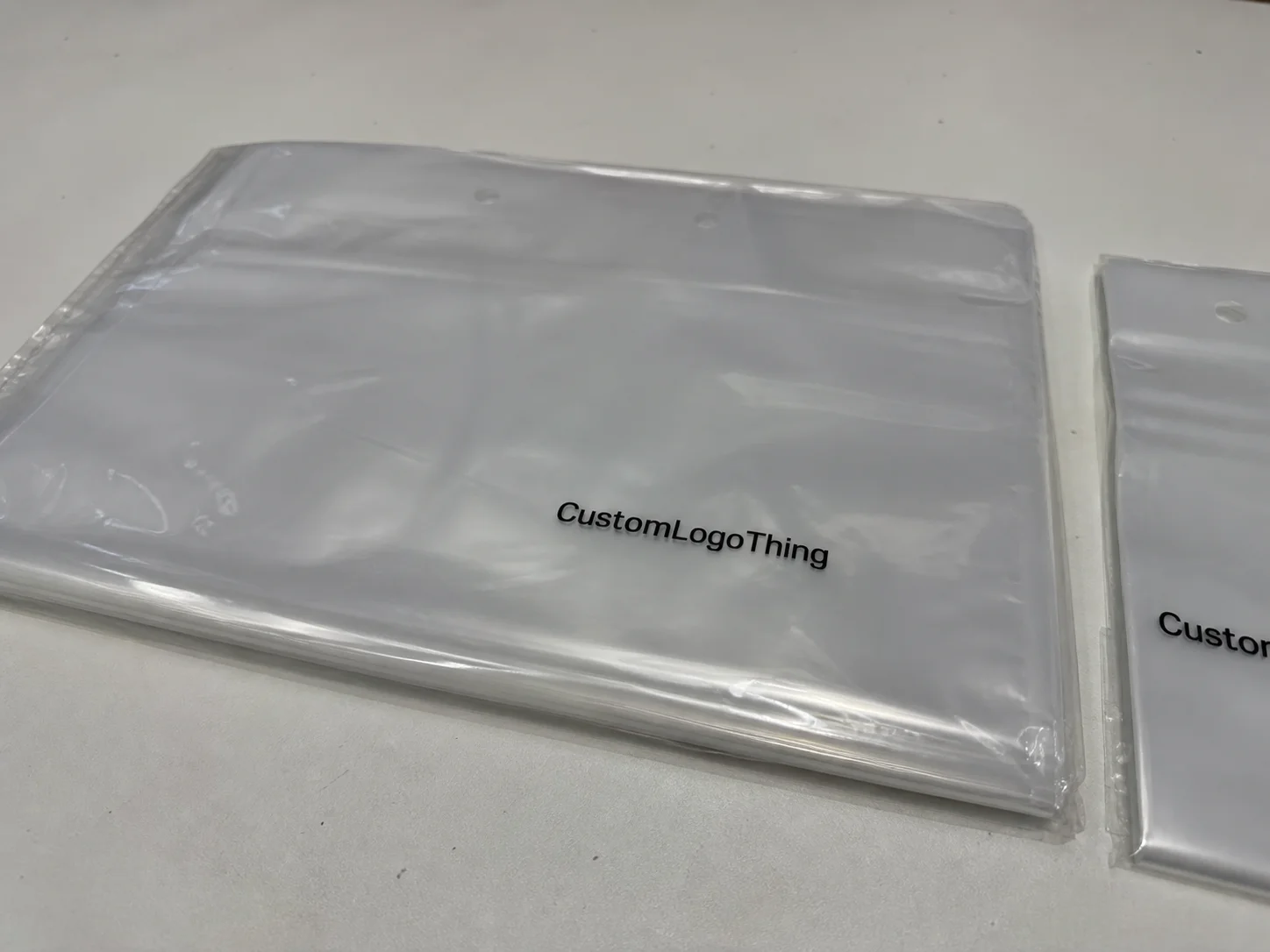
A cheap clear bag can make a polished serum set look like leftover samples. A skincare frosted plastic Bags Supplier Quote is where that problem gets caught early, before packaging spend turns into margin loss. It is not just a number on a page. It is the point where size, film, finish, print, MOQ, packing, and landed cost become specific enough to judge.
Frosted plastic bags sit in an awkward but important category for skincare brands. They are usually not the primary container, yet they shape the first impression at retail counters, trade shows, clinic displays, spa gift tables, sample campaigns, and ecommerce kit assembly. If the bag feels thin, tears at the handle, or hides the logo too well, the customer does not separate that failure from the product inside.
How a Skincare Frosted Plastic Bags Supplier Quote Protects Margin
Brands spend carefully on jars, labels, cartons, inserts, product photography, and shelf presentation, then sometimes place the finished set into a weak transparent bag and hope nobody notices. Customers notice. Retail buyers notice. So does the person packing 500 kits and watching handles stretch under real product weight.
A useful quote tells you whether the bag supports the product tier or drags it down. Frosted plastic often costs only a little more than basic clear film, but the small difference can soften the look of a facial kit, disguise minor scuffs, and make a sample bundle feel more intentional. That upgrade disappears quickly if the film is too thin, the seal is weak, or the printed logo looks muddy against the frosted surface.
These bags are used for facial mask bundles, travel kits, sample packs, spa gift sets, influencer mailers, clinic retail packaging, boutique counter sales, and seasonal skincare promotions. Each use carries a different requirement. A flat insert bag for sheet masks does not need the same strength as a Frosted Zipper Bag holding tubes, jars, and boxed miniatures.
“If the supplier quote does not show size, film, thickness, print method, packing, sample terms, and delivery timing, it is not a quote. It is a teaser.”
The first supplier conversation should feel practical. Ask for the bag build, handle or closure style, material, thickness, unit price at several quantities, setup costs, sample policy, carton packing, and shipping options. If those details are missing, send the request again through Contact Us and ask for the quote to be rebuilt around the actual packaging spec, not a loose description.
Frosted Bag Styles That Fit Skincare Packaging
Not every frosted bag belongs with every skincare set. Some are made for quick retail handoff. Others are meant to be kept, reused, or packed inside a mailer with other components. A buyer who defines the use case before requesting a quote usually gets better options because the supplier can match structure to function instead of offering a random menu of styles.
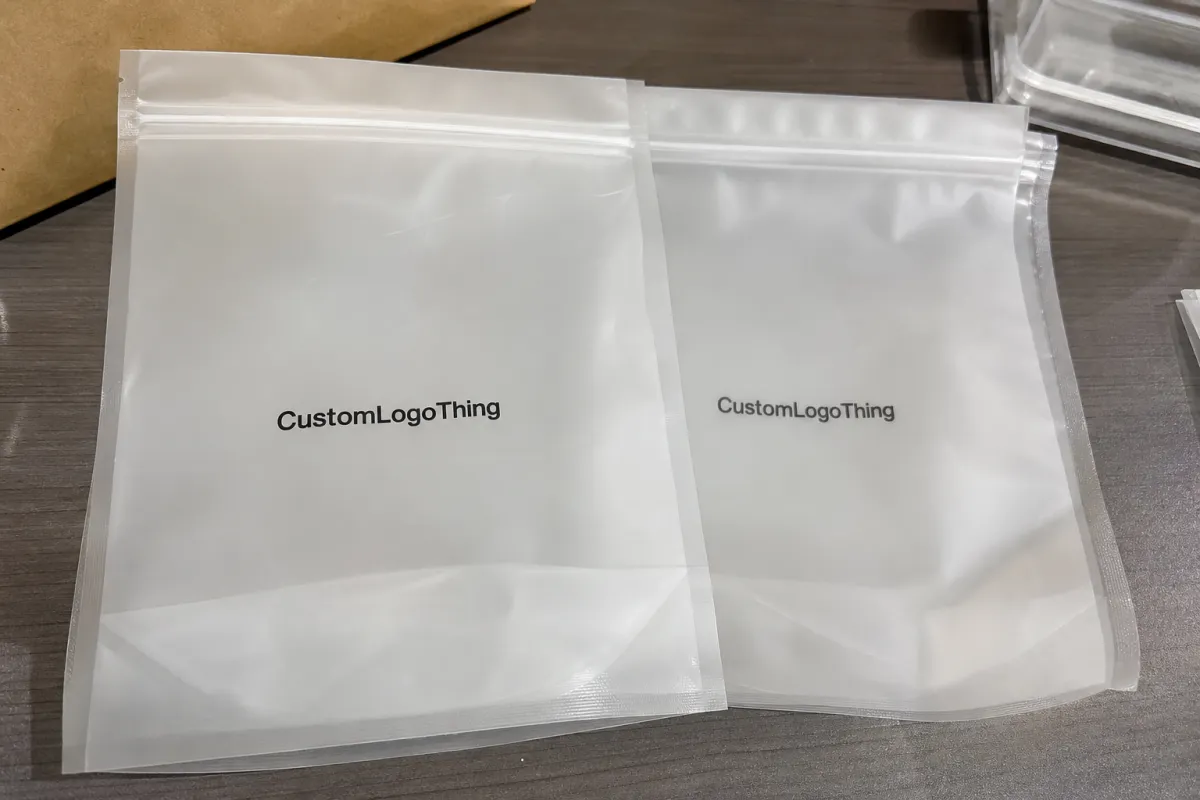
Die-cut handle bags are the classic retail choice. They are light, tidy, and efficient for boutiques, events, trade shows, and sample giveaways. Soft loop handle bags feel more substantial and can support a slightly heavier kit without looking flimsy. Zipper frosted bags work well for travel kits, facial mask assortments, reusable promotional packs, and sets that customers may open and close multiple times. Drawstring frosted bags suit spa kits and gift packaging when the brand wants a softer presentation. Flat merchandise bags fit counter sales, inserts, and simple sample distribution where volume matters more than structure.
Frosted film earns its place by blurring the contents just enough to feel clean and premium while hiding light scuffs better than clear plastic. It is not a cure for poor artwork, though. A pale logo on frosted film can disappear if nobody checks contrast, especially under bright store lighting or against a light-colored product inside the bag. Artwork approved on a backlit screen can behave very differently once printed on flexible translucent material.
Weight is the other reality check. Heavy glass jars, sharp carton corners, and oily or rounded containers may require thicker film, a gusset, a reinforced handle, or an inner box. Pretty packaging that tears in the customer’s hand is not elevated branding; it is a preventable packaging failure.
Useful custom options include bottom gussets, side gussets, hang holes, adhesive flaps, zipper closures, drawstrings, matte ink, spot color printing, and recyclable PE film. The right choice depends on how the product is sold, how much weight the bag carries, how the kit will be packed, and whether the brand expects the customer to reuse the bag after purchase.
Material, Thickness, Size, and Print Specs to Confirm
A serious buyer should not request a skincare frosted plastic bags supplier quote with only a logo and a quantity. The supplier needs enough information to price the bag that will actually be produced. At minimum, prepare width, height, bottom gusset, side gusset if needed, film type, thickness, finish, handle style, closure style, print colors, logo placement, quantity, packing requirement, destination, and required delivery date.
Material changes the feel immediately. PE is flexible and widely used for frosted cosmetic bags. CPE has a softer, more premium hand feel and is often selected for reusable frosted bags. LDPE can be smooth, lightweight, and practical for simple retail or promotional formats. Thicker film adds body, but it also raises production cost and shipping weight. A sample pouch for sheet masks does not need the same build as a gift set holding glass jars.
As a working guide, lightweight sample bags can use thinner film, while retail frosted handle bags usually need a mid-range thickness that feels stable without becoming stiff or bulky. Reusable zipper and drawstring cosmetic bags generally need heavier film for durability. If the bag will carry multiple cartons, glass containers, or a kit assembled with inserts, do not cut thickness just to save a fraction per piece.
Print method deserves the same attention as film. Screen printing is useful for simple logos and strong opacity. Flexographic printing suits larger runs and repeat artwork. Gravure or other higher-volume methods may be used for detailed, full-coverage designs. Ask whether the quote includes plate fees, setup fees, ink matching, proofing, and any charge for printing on both sides. A low unit price that leaves out setup cost is not a clean comparison.
Size should be based on the packed product, not a rough guess from the outer carton dimensions alone. Send product dimensions, the intended arrangement, and total packed weight. A bag can technically fit the product and still look cramped, wrinkled, or unbalanced once filled. That difference is easy to miss on a spreadsheet and obvious in a customer’s hand.
Pricing, MOQ, and Unit Cost Drivers Buyers Should Expect
The price on a frosted skincare bag quote depends on more than length and width. Film material, thickness, dimensions, print coverage, ink count, closure type, order quantity, sampling, packing method, and freight all move the number. If a supplier quotes from a logo file alone, the price is only an estimate, even if it arrives quickly and looks confident.
MOQ is where many buyers get surprised. Simple frosted handle bags often allow lower minimums than zipper or drawstring styles. Custom printed bags need production minimums because film setup, printing plates, ink preparation, cutting, sealing, packing, and quality checks carry fixed costs. Larger quantities usually reduce the unit price, but that only helps if the brand can use the stock before artwork, product format, or regulatory copy changes.
| Style | Typical MOQ | Usual Unit Cost Range | Best Use | Main Cost Drivers |
|---|---|---|---|---|
| Frosted die-cut handle bag | 3,000-5,000 pcs | $0.12-$0.28 | Retail checkout, samples, events | Size, print colors, film thickness |
| Frosted zipper bag | 2,000-3,000 pcs | $0.30-$0.65 | Travel kits, reusable sets | Zipper style, film weight, artwork coverage |
| Frosted drawstring bag | 2,000-3,000 pcs | $0.28-$0.70 | Spa kits, gift packaging | Cord type, bag size, print method |
| Flat merchandise bag | 5,000-10,000 pcs | $0.08-$0.18 | Counter packaging, insert packs | Film gauge, seal style, volume |
These ranges are general planning numbers, not fixed pricing. Resin costs, exchange rates, print complexity, freight markets, and seasonal production pressure can shift the final quote. Rush work may also change the cost if the order disrupts normal scheduling or requires faster freight.
Ask for two or three quantity breaks: one for the immediate order, one for a realistic replenishment level, and one for a larger wholesale or launch quantity. Compare total landed cost, not only the per-bag price. The cheapest unit price can become expensive if it requires more inventory than the brand can store, finance, or use before the next packaging update.
Common quote line items include sample fee, tooling or plate fee, unit production cost, carton packing, export carton dimensions, freight estimate, and rush charge if applicable. If any of those are missing, treat the number as incomplete until the supplier confirms what is included.
Process and Timeline From Artwork to Finished Bags
The cleanest orders follow a predictable sequence: submit specs, review the quote, confirm material and size, send artwork, receive a digital proof, approve a sample if needed, start production, complete quality checks, pack cartons, arrange shipping, and receive goods. A skincare frosted plastic bags supplier quote should fit into that sequence without leaving the buyer to guess what happens next.
Timeline depends on construction and artwork. A simple one-color printed frosted handle bag normally moves faster than a zipper bag, drawstring bag, or multi-color design with heavy print coverage. New artwork, color matching, specialty film, sample approval, holiday demand, and freight congestion can all add time. Any supplier promising that every order ships on the same schedule is leaving out the production variables that matter.
Artwork needs to be clean before proofing begins. Vector files are preferred for logos because they scale cleanly and reduce edge problems. Pantone references help with color matching, though exact color behavior can still shift on frosted translucent film. The supplier should know whether the print is centered or offset, whether it appears on one side or both sides, and how far it sits from handles, seals, zippers, or drawstring channels. A low-resolution screenshot is not production artwork.
Sample choices should be clear. A digital proof checks layout, logo size, placement, and basic color direction, but it does not show hand feel. A stock material sample shows texture and frost level, though it may not include the final branding. A pre-production sample gives the strongest approval point because it combines material, size, print, and construction. For premium skincare kits, that extra step is often cheaper than correcting a full run after production.
Build buffer time for freight, customs, internal approvals, and kit assembly. Packaging that arrives one day after the launch is still packaging, but by then it is not useful. If the bags must be packed with products before a retail shipment or event, work backward from the assembly date rather than the public launch date.
For teams setting internal expectations around shipment handling, ISTA offers useful references on transit testing concepts. Packaging education resources from The Packaging School and related industry organizations can also help buyers, designers, and operations teams use the same language when discussing structure and performance.
Quality Checks That Separate Clean Packaging From Cheap Bags
Before production ships, the supplier should check film consistency, frost level, bag dimensions, seal strength, handle strength, zipper or drawstring function, print registration, ink opacity, logo placement, carton packing, and random inspection results. These are basic controls, but weak bags still reach buyers because the approval process focused on price and ignored performance.
Frosted film needs visual control. Haze, softness, and transparency can vary by material and batch. If the brand expects a milky luxury look and receives a nearly clear film, the entire presentation changes. Ask for material references, stock samples, or clear sample photos before approval. The bag should not be quoted from a vague “similar frosted finish” description unless the buyer is comfortable with variation.
Ink needs its own review. White, beige, pale pink, soft green, and metallic-style tones behave differently on frosted film than they do on white cartons or digital mockups. Some logos need an underbase or heavier ink deposit to remain readable. Fine lines can fill in, and tiny type can lose sharpness on flexible plastic. The design may look refined on screen while becoming weak on the finished bag.
Functional testing matters when the bag carries several boxed products, glass jars, sheet mask bundles, or travel tubes. Seals and handles should be tested with real packed weight, not optimistic assumptions. If the supplier uses transit testing or carton drop checks, ask how those checks relate to ISTA procedures and whether the export cartons suit the way your warehouse or fulfillment partner receives goods.
There is also a sustainability detail buyers often confuse. FSC applies to paper-based components such as inserts, hangtags, sleeves, or outer cartons, not to plastic film itself. If the order includes paper packaging, ask for FSC details separately and verify the claim against the relevant scope. The standard can be reviewed through FSC. For the plastic bag, ask instead about material type, recyclability claims, recycled content if offered, and any documentation available for the specific film.
Where Custom Logo Things Fits Skincare Bag Orders
Custom Logo Things is a practical source for skincare brands that need branded frosted plastic bags with clear specifications and quote structure. The useful work happens in the details: matching bag type to product weight, narrowing the right material, confirming print limits, and building a quote that shows how small changes affect cost.
The team can help compare retail checkout bags for boutiques, Frosted Zipper Bags for travel sets, drawstring bags for spa kits, and printed merchandise bags for promotional bundles. The goal is to avoid paying for features the order does not need while also avoiding underbuilt packaging that fails during packing, shipping, or customer use.
Quote transparency matters because small changes in thickness, color count, print coverage, closure style, and order quantity can shift pricing quickly. That movement is normal in custom packaging. What buyers should avoid is a quote that hides setup charges, leaves freight vague, or treats sample approval as an afterthought.
If the bag style is already chosen, send the artwork, packed product dimensions, target quantity, and delivery deadline through Contact Us. If the style is still open, use the same form to ask for options side by side. A focused request makes it easier to compare structure, unit price, MOQ, and timing without losing the practical differences between each bag type.
Custom Logo Things is best suited for buyers who already know they need branded packaging and want clean choices, not a lecture on why packaging matters. Skincare customers notice the bag. Retail teams notice how it displays. Procurement notices the invoice. A useful quote has to satisfy all three without pretending one priority solves the others.
What to Prepare Before You Request a Quote
Before requesting a skincare frosted plastic bags supplier quote, prepare a short spec pack: product dimensions, packed weight, preferred bag style, target quantity, thickness or durability target, logo file, print colors, launch date, shipping address, and any retail or sustainability requirements. That list saves several rounds of back-and-forth and reduces the chance of comparing mismatched quotes.
Send photos of the products that will go inside the bag. Photos help the supplier judge scale, shape, carton corners, product arrangement, and whether a gusset, zipper, drawstring, or stronger handle is needed. A product name alone rarely gives enough information. Bags that look fine empty can look strained, wrinkled, or undersized once filled.
Choose two target quantities before asking for pricing. One should match the immediate order need. The second should reflect a realistic reorder, retailer push, or seasonal campaign. This gives a clearer view of unit cost movement without committing to fantasy-volume purchasing that may create storage problems later.
Ask direct questions. Is the sample fee included? Are print setup charges separate? What is the production lead time after proof approval? What are the carton dimensions and carton weight? What shipping method is quoted? What artwork file format is required? Are duties, taxes, or final local delivery included in the landed estimate? These questions are not difficult for a prepared supplier to answer, and they keep the order grounded.
The best quote starts with good inputs. Send the specs, artwork, quantity target, packed weight, and deadline at the beginning. The faster the supplier can see the real use case, the faster the quote becomes useful instead of theoretical.
What details do I need for a skincare frosted plastic bag supplier quote?
Give the supplier bag size, style, material preference, thickness target, quantity, logo artwork, print colors, packed product weight, shipping destination, and deadline. If you are unsure about size or thickness, send product photos, product dimensions, and the way the items will be arranged inside the bag.
What MOQ should I expect for custom frosted plastic skincare bags?
MOQ depends on construction, size, material, print method, and closure type. Simple printed handle bags often have more flexible minimums than zipper, drawstring, or heavily customized bags. Ask for two or three quantity breaks so you can compare a test order against realistic replenishment pricing.
How much do frosted plastic bags for skincare packaging cost?
Cost is driven by film type, thickness, dimensions, print colors, closure style, order quantity, setup fees, sampling, and freight. Planning ranges may start around $0.08 for simple flat bags and rise above $0.60 for heavier zipper or drawstring formats, but final pricing depends on the confirmed specification and landed cost.
Can frosted plastic bags be printed with detailed skincare brand artwork?
Yes, but simple logos and clean color blocks usually print best on frosted film. Fine lines, tiny type, pale colors, and heavy coverage need extra review. Vector artwork and Pantone references help the supplier prepare a more accurate proof, though the final appearance still depends on film haze, ink opacity, and print method.
What is the lead time for custom frosted skincare plastic bags?
Lead time depends on artwork approval, sampling, material availability, print complexity, production schedule, quality checks, and shipping method. Build in time for proof review, possible pre-production sampling, freight, customs, and internal kit assembly so the bags arrive before they are needed, not just before the launch date.