For bakeries, packaging is not a finishing touch. It is part of the margin. A bag that holds freshness longer, survives repeated opening, and still looks clean on a shelf can do more for profit than a cheaper option that fails early. That is the real reason buyers keep circling back to Slider Lock Bags for bakeries unit cost. The bag price matters, but so does the waste it prevents.
In practice, the lowest-cost option is rarely the lowest-cost decision. A weak closure can mean stale cookies, crushed icing, repacking labor, and a product that no longer looks worth its price. Add in staff time at the counter and the picture changes again. One bag may cost a bit more per piece and still save money overall because it keeps product sellable for longer.
That is why packaging teams compare more than the quote total. They look at film thickness, closure quality, print clarity, and how the bag behaves after it has been opened and closed a few times. A good bakery bag should support the product, not force staff to work around it.
Why bakeries switch to slider locks when freshness loss becomes expensive
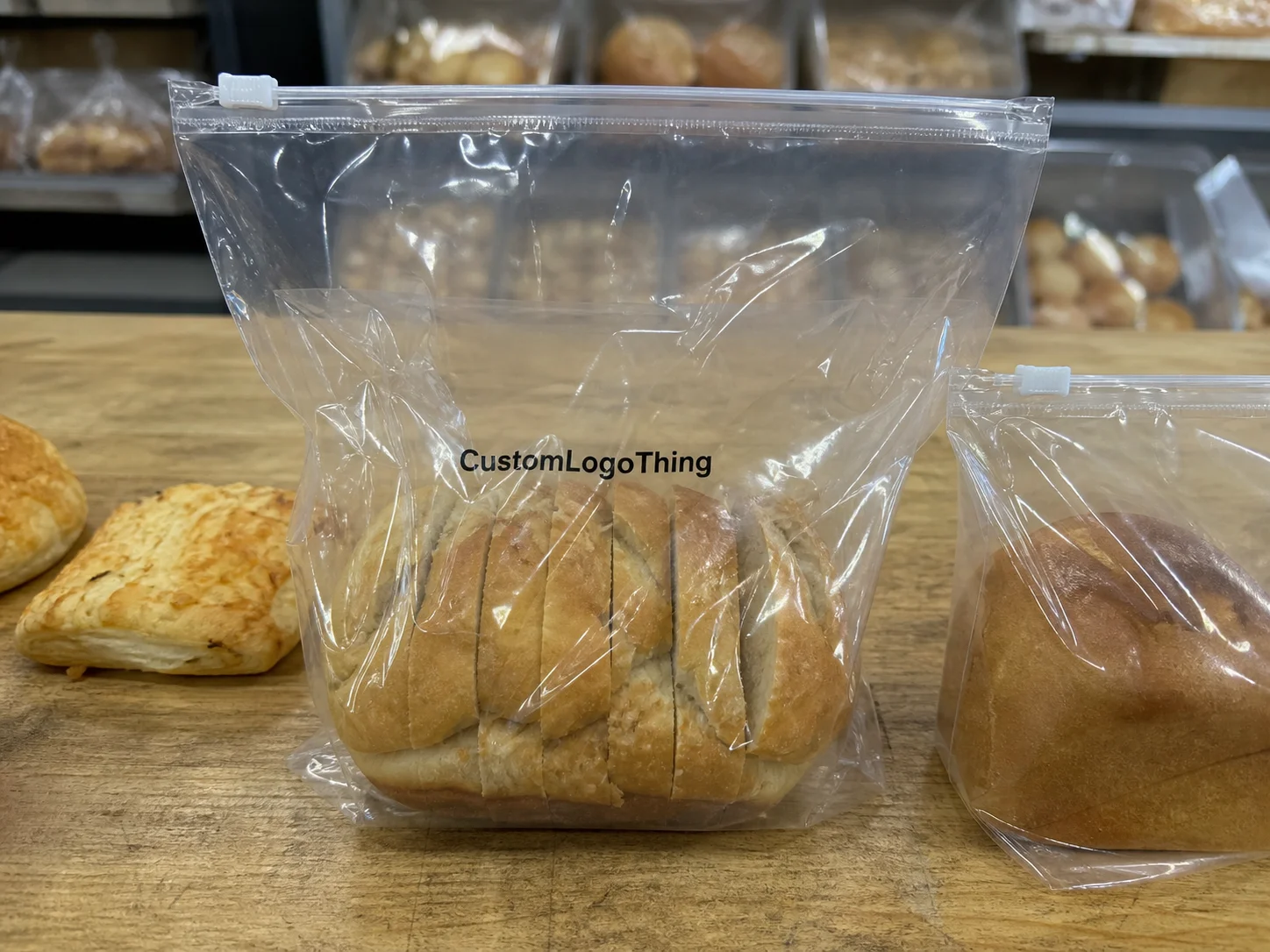
Bakeries usually make the move to slider closures after the hidden costs become visible. Returns start creeping up. Counter staff rebag items more often. Customers complain that an assortment went soft too quickly. None of those losses show up cleanly in a product sheet, but they show up in the register and the trash bin.
Slider closures help because they are easy to use and easy to trust. Customers can see when the bag is closed. That sounds small, but small details matter when you are selling decorated cookies, biscotti, mini loaves, or assorted pastries intended to be eaten over several days. A reseal that feels secure encourages the buyer to store the product properly instead of leaving it exposed on a counter.
There is also a presentation effect. Powdered sugar, glaze, crumb coatings, and soft finishes make packaging quality more obvious. A bag that wrinkles badly, lets in too much air, or opens awkwardly can make a fresh item look older than it is. For premium bakery lines, that is not cosmetic. It affects perceived value.
The buyer math is simple. If a better bag reduces spoilage by even a few percent, the incremental packaging spend can disappear quickly. The savings may come from fewer write-offs, fewer complaints, faster packing, or less repacking during busy service periods. For a bakery selling high-margin items, those differences compound faster than many procurement teams expect.
Practical rule: compare packaging against product loss and labor, not against carton price alone. A better-performing bag often wins on total cost even when its unit price is higher.
This is also why bakeries often reserve slider locks for products that travel further, sit longer, or are sold as gift-ready assortments. Standard zipper bags can be adequate for simple, same-day items. Once a product needs repeat resealing and a cleaner retail appearance, the slider format starts making more sense.
Material, closure, and size options that affect performance
Not all slider bags behave the same way. The film, the closure hardware, and the dimensions all affect how the package performs during filling, display, transport, and home use. A clear polyethylene bag may be fine for lightweight cookies. Heavier bakery items often need a thicker gauge or a structure that resists puncture and stretching.
Thickness is one of the first details buyers underestimate. Thin film reduces material cost, but it can feel flimsy and tear more easily around edges or sharp corners. That becomes a problem with stacked pastries, loaf slices, or items with rigid decorations. Thicker film usually improves durability, though it also increases cost and shipping weight. The right answer depends on the product, not a generic packaging preference.
Closure quality deserves just as much attention. A slider that tracks smoothly improves line speed and customer confidence. A slider that binds, skips, or feels loose creates the opposite effect. If staff have to fumble with the closure while packaging orders, the bag is costing more than it appears to. If customers cannot tell whether it has locked properly, the reseal advantage disappears.
Size is another source of waste. Oversized bags trap excess air and let products shift. Undersized bags crush delicate finishes or force the closure to sit under strain. A good fit keeps the contents stable and the package looking intentional. For bakeries, that matters because the package is often part of the product's visual value.
Common use cases usually fall into a few practical groups:
- Clear display bags for bakery items that need strong shelf appeal.
- Heavier storage bags for products that stay at home for several days and need repeated resealing.
- Multi-pack or sampler formats for gift sets, assortments, and seasonal items.
Branding adds another layer. Some bakeries want the product fully visible. Others want a branded panel, a writable area for flavor or date labels, or a tinted look that feels more premium. There is no universal answer. The best format depends on where the bag is sold, how long the product sits in it, and how much the packaging has to do before the customer opens it.
Food-contact suitability should be confirmed early. If a bag is going directly around food, the material and inks need to match the market and the compliance expectations of your operation. For bakeries selling into multiple regions, that question matters more than design polish. It is easier to solve before production than after a shipment has already moved through the line.
For broader food-packaging standards and industry context, the Institute of Packaging Professionals is a useful reference point.
Specifications buyers should verify before requesting quotes
Price comparisons are useless if the spec is fuzzy. One supplier may quote a 3 mil clear bag while another quotes a 4 mil bag with a better slider and more print coverage. The numbers look close until the products are placed side by side. Then the mismatch becomes obvious.
Buyers should define the bag before they ask for pricing. The minimum useful spec list usually includes:
- Material grade and whether it is suitable for direct food contact.
- Thickness, usually listed in mils or microns.
- Closure style and how the slider locks in use.
- Dimensions, including width, length, and gusset if present.
- Print area and whether artwork sits on one side or wraps the bag.
- Packing format, such as bulk-packed or retail-packed.
Each detail changes the economics. Thicker film raises material usage. More complex closures can improve usability while nudging the unit price upward. Custom artwork adds proofing time and usually introduces setup charges. Specialty finishes, metallic effects, and multi-color printing can add more steps before production starts.
Testing with actual bakery product is worth the extra time. A bag that looks fine with an empty sample may behave very differently once filled with sugar-dusted cookies, soft pastries, or sliced loaf cake. Powdered toppings can interfere with a closure. Sharp edges can stress seams. A good sample test reveals those failures early.
A practical checklist helps keep the conversation focused:
- Will the bag be used for shelf display, counter sales, delivery, or storage?
- Does the product need high visibility, branding, or a writable panel?
- Will it hold room-temperature product, chilled product, or frozen product?
- How often will the consumer reopen the bag?
- Is tamper resistance required, or is resealability the priority?
Short, exact requests get better quotes. A supplier can work much faster when the product size, expected use, and print requirement are clear. That also makes it easier to compare offers without giving one vendor an accidental advantage.
Slider lock bags for bakeries unit cost: what drives pricing and MOQ
This is where buyers usually focus first: Slider Lock Bags for bakeries unit cost. The unit price is influenced by several variables at once, and the quote only makes sense when those variables are visible. Size, thickness, closure design, artwork, and order volume all move the number.
Plain stock-style bags usually carry lower setup effort and a simpler quote structure. Custom-printed bags are different. Artwork prep, proofing, color checks, and any special finish add steps before the line starts running. That is where setup charges and tooling fees can appear. They are not unusual; they are part of the real Cost of Customization.
MOQ matters because short runs are less efficient. Small orders can push unit prices up, especially if the product requires printing or a nonstandard closure. Once quantities rise, the per-piece cost usually falls as material and production are spread across more bags. That said, bulk buying is only smart if the inventory will be used before the design or menu changes.
For seasonal bakeries, the wrong quantity is expensive in a different way. Holiday assortments, rotating flavors, and limited-time packaging can make a large overbuy more costly than paying a slightly higher unit price on a smaller order. The best order size depends on how stable the product line is.
Typical quote behavior often looks like this:
| Order profile | Pricing behavior | Buyer takeaway |
|---|---|---|
| Plain stock bags, lower quantity | Lower setup, higher unit cost | Useful for testing a product or covering a short promotion |
| Custom printed bags, mid-volume | Moderate setup, better unit economics | Often the most balanced option for branded bakery packaging |
| Higher-volume recurring orders | Best bulk pricing | Works best when SKUs and artwork stay stable |
The buyer mistake is to stop at the unit price. A bag that costs a few cents more can still be cheaper if it reduces waste, repacking, complaints, and merchandising problems. A 2% reduction in stale product on a profitable cookie line can outweigh a noticeable packaging premium surprisingly fast. That is the kind of calculation procurement should be making.
Request quotes in a way that exposes the real structure. Ask for the bag price separately from print costs, freight, and any special fees. If those items are bundled together, you cannot tell whether the bag is expensive or the logistics are expensive. Also ask about overrun and underrun tolerance. Without those terms, there is no clean purchasing basis.
Tiered pricing helps too. Ask for three levels: one close to your minimum need, one near your normal reorder volume, and one at a larger committed quantity. That usually reveals the break-even point and shows whether the supplier can actually support a stable program or only a one-time order.
Production steps and lead time from approval to delivery
Custom bakery bag orders usually move through a predictable sequence. First comes the specification review. Then artwork or a proof. After approval, the supplier produces the bags, checks quality, and ships. The process is straightforward on paper. The delays usually happen in proofing and sample approval, not during the actual run.
Artwork revisions are a common cause of delay. So are missing dieline details, last-minute copy changes, and color corrections that require a new proof. If the packaging includes ingredient notes, a seasonal message, or a logo lockup, those details need to be settled early. Every extra round of changes extends the timeline.
Lead time depends on how much customization is involved, how large the order is, and how the goods are shipped. Small stock orders are typically faster than printed runs. International freight adds more uncertainty because transit time and customs processing are not always linear. If the bags are tied to a seasonal launch or holiday peak, build in buffer time rather than assuming the first delivery estimate will hold exactly.
A useful production schedule should show specific milestones:
- Proof sent date
- Sample or approval deadline
- Production start date
- Estimated completion date
- Shipment booking date
That schedule gives procurement something real to manage. If the proof slips, the rest of the timeline is already at risk. Waiting for a vague "shipping soon" update does not help anyone plan production or retail launches.
Packaging also needs to survive transit, not just look good in a sample photo. The International Safe Transit Association provides useful context on shipping stress and distribution testing. That matters for bakeries supplying multiple retail points or shipping packaging long distances before it ever reaches a filling line.
How to choose a supplier that supports bakery operations, not just one-off orders
Once a bakery begins reordering, supplier consistency matters as much as price. The right partner should understand that packaging needs shift with the menu. Cookie sleeves may lead one season, mini loaf bags the next, and gift assortments during holiday peaks. The supplier should be able to support repeatability where the packaging is stable and flexibility where the line changes.
Start with quality control. Ask how the supplier checks incoming material, verifies print, and tests closure performance. If they cannot explain that process clearly, the risk rises. Bakeries need the same spec from one order to the next. A small drift in thickness, seal behavior, or print color can create problems in packing and brand presentation.
Communication matters too. Fast, specific answers save real money during procurement. You want a supplier that can confirm dimensions, clarify whether a requested change affects tooling fees, and explain how a closure or print choice changes the MOQ. A vague answer now usually becomes an expensive correction later.
Compare suppliers on practical capability, not on sales language:
- Sample policy and sample turnaround
- Food-packaging experience
- Artwork and proof support
- Repeat order consistency
- Shipping reliability
- Ability to manage multiple SKUs
Seasonality is another test. Bakeries often see demand spikes around holidays, school calendars, and promotional runs. If a supplier cannot reserve production time or handle a larger re-order when needed, packaging becomes the bottleneck. That is not a packaging issue alone; it is an operations issue.
There is also value in standardizing sizes. Too many bag formats increase inventory complexity, raise the chance of ordering mistakes, and make replenishment harder. A good supplier should be willing to help rationalize the pack list instead of encouraging unnecessary SKU sprawl.
If sustainability claims are part of the buying decision, ask for documentation instead of slogans. Paper-based packaging can fall under FSC certification, but polymer structures and recycled-content claims follow different rules depending on the material and application. Paperwork matters more than marketing language. The FSC site is a good starting point for understanding where certification applies and where it does not.
Next steps for ordering the right bakery bags at the right unit cost
If the goal is a cleaner quote and fewer surprises, start with three inputs: product dimensions, target quantity, and whether the package needs printing or labels. Those details narrow the field quickly and give suppliers a fair basis for pricing slider lock Bags for Bakeries unit cost.
Samples should be tested with real bakery items, not placeholder objects. A bag for powdered pastries needs closure testing after dusting. A bag for heavier slices or stacked cookies needs puncture and handling checks. A good sample tells you more about the bag than a polished spec sheet ever will.
Then ask for tiered pricing. Compare at least one standard option and one upgraded option so you can see how unit cost shifts against durability, shelf appeal, and ease of use. The cheapest bag is not always the least expensive once waste and labor are included. For many bakeries, the better-performing option wins because it handles more of the daily workload.
A formal quote should clearly state:
- Exact bag size and material
- MOQ and price breaks
- Printing or labeling details
- Setup charges or tooling fees
- Freight terms and estimated delivery
- Sample approval timeline
That is enough to compare suppliers fairly and keep the order repeatable. It also makes it easier to adjust later without rebuilding the brief from scratch.
For bakeries, the best packaging purchase is the one that keeps product fresh, speeds handling at the counter, and keeps the unit cost aligned with what the item can actually earn. That is the balance that holds up in real operations.
Frequently asked questions
What affects slider lock bags for bakeries unit cost the most?
Bag size, film thickness, closure design, print complexity, and order volume usually have the biggest effect on unit cost. A higher MOQ often lowers price per bag, while custom print and special materials raise the first-order total.
Are slider lock bags better than standard zipper bags for bakery packaging?
Slider bags are often easier to open and reseal repeatedly, which helps for products sold for storage or snacking over several days. They can also improve shelf presentation for premium bakery items.
What minimum order quantity should bakeries expect?
MOQ depends on the size, material, and whether the bag is printed. Plain stock bags usually allow smaller order sizes than custom-printed versions, so ask for tiered pricing before deciding.
How long does it take to produce custom bakery slider bags?
Lead time depends on proof approval, artwork changes, order size, and shipping method. Small stock orders move faster than fully printed runs, and international freight adds more time.
What details should I include when requesting a quote?
Include product dimensions, quantity, bag size preference, closure style, print needs, and delivery destination. Photos of the baked goods help the supplier recommend a better-fitting format.


