Slider Lock Bags for Subscription Brands Factory Pricing Guide
A subscription brand ordering 10,000 refill pouches for a monthly kit is not just buying plastic bags. It is buying repeatable presentation, faster packout, reseal performance, and enough inventory control to avoid missing the next billing cycle. That is why a Slider Lock Bags for subscription Brands Factory Pricing guide has to look past the lowest per-bag number and explain what actually moves the quote.
Small packaging changes can move cost more than buyers expect. Two bags may look nearly identical on a screen, yet one uses a thicker film, a different zipper track, heavier ink coverage, or a custom slider color that requires separate sourcing. On a short run, those details can add several cents per unit, which matters quickly when a brand ships every month and carries packaging as a recurring cost rather than a one-time launch expense.
Why These Bags Can Feel Cheap or Costly at First Glance
Picture a subscription box team preparing a shipment of grooming refills, snack portions, stationery items, or apparel accessories. The buyer asks for a quote on a branded resealable bag, sees one factory at $0.18 and another at $0.34, and wonders whether someone is overcharging. Sometimes the cheaper quote really is sharper. More often, the two quotes are not built on the same specification.
Film thickness is one of the first swing factors. A lightweight 2.5 mil LDPE or PE blend may be fine for a soft textile accessory or paper insert set, while a 4 mil or 5 mil structure may be needed for heavier refill items, sharper product corners, or repeated customer use. Extra thickness adds resin weight, affects machine settings, and increases freight weight per carton.
Size is just as sensitive. Moving from a 6 x 8 inch bag to an 8 x 10 inch bag may sound modest, but the material area increases substantially. Add a side gusset, bottom gusset, hang hole, or reinforced header, and the cost changes again. Print coverage adds another layer: a one-color logo in a small panel is very different from full-surface flood coating with tight brand color control.
Subscription brands also face a consistency problem that many one-off retail projects do not. If the first month’s bags are glossy and bright, but the reorder arrives with a duller film or a logo that sits slightly lower on the panel, customers may notice. Fulfillment teams notice even sooner when the new bag is a few millimeters narrower and the insert no longer drops in cleanly.
Factory-floor truth: the cheapest bag is not always the lowest-cost bag after mispacks, customer complaints, rejected cartons, and rushed replacement orders are counted.
The real buying problem is balance. A sound subscription packaging decision protects unit economics, gives the unboxing moment enough polish, and still lets the fulfillment line hit its daily packout target without fighting the closure.
How the Slider Lock Mechanism Changes the Buying Decision
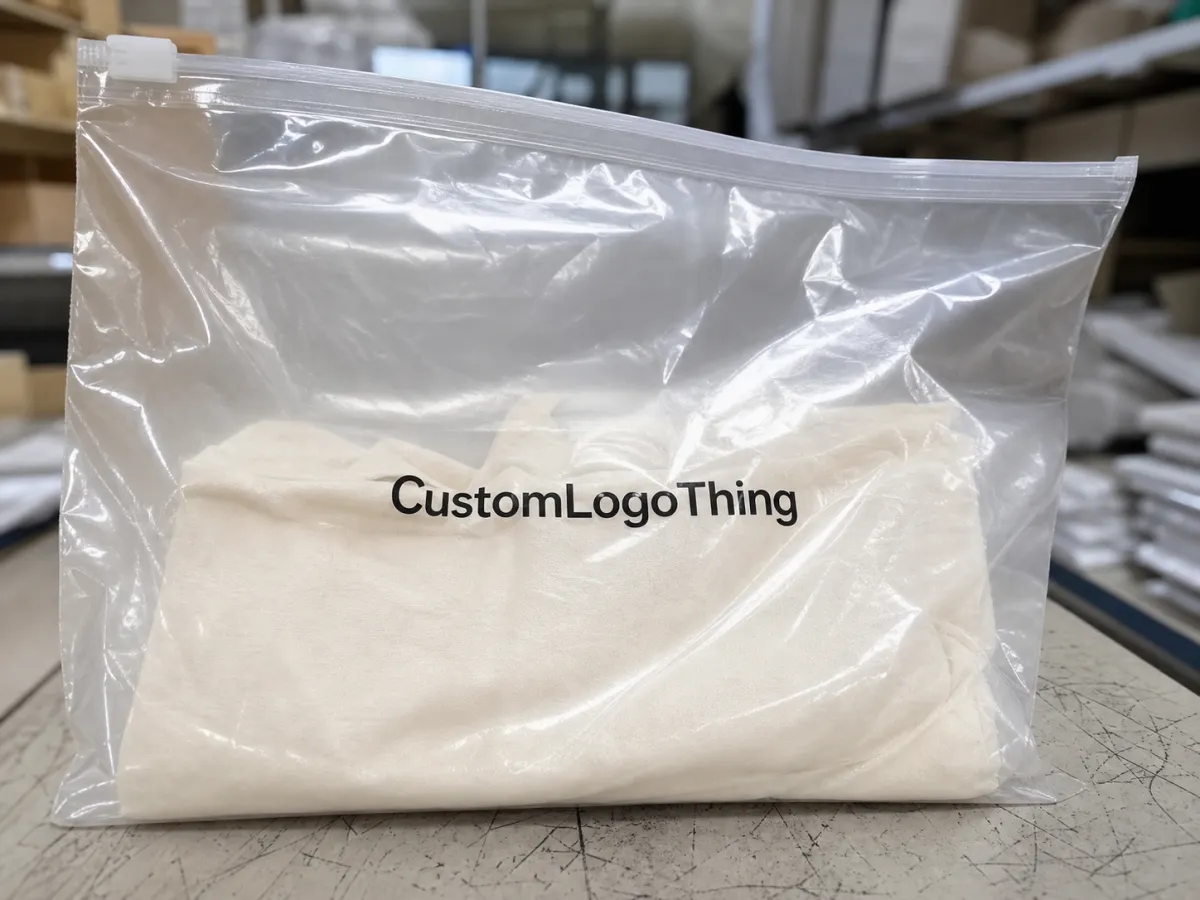
A slider lock changes the way a customer handles the package. Instead of pinching two zipper tracks together by feel, the customer pulls a small slider across the top rail. That action is easier for many people, especially with powder refill bags, sample kits, snack portions, craft supplies, wellness items, or multi-piece products that may be opened and closed several times.
The main benefit is confidence. A standard press-to-close zipper can work very well, but customers sometimes leave a small gap if they close it quickly or if product dust gets near the track. A slider gives a more visible open-close cue. It also feels more premium in the hand, which can help a subscription brand justify the extra cost if the bag remains useful after the box is opened.
There is a tradeoff. The slider adds hardware, and hardware adds cost, assembly checks, and compatibility concerns. The zipper profile, film gauge, top seal width, and slider body must work together. If the film is too flimsy for the closure, the top can wrinkle. If the slider is too tight, packers and customers both get frustrated. If it is too loose, the reseal may feel weak even before there is a measurable failure.
Products that benefit most tend to have repeat-use value: refill capsules, pet treats, accessories, sewing or craft kits, multi-piece sample sets, travel-size toiletries, small apparel components, educational activity parts, and similar items. A one-time promotional insert may not need a slider. A premium monthly refill system often does.
Fulfillment deserves the same attention as the customer experience. A slider lock bag can simplify use after delivery while adding a small handling step during packout. Teams need to orient the bag, load the product without catching the track, and confirm the closure before the bag goes into the subscription mailer or box. At high volume, even two extra seconds per pack can affect labor planning across 20,000 orders.
Slider Lock Bags for Subscription Brands Factory Pricing Guide: Cost Factors
The core of any Slider Lock Bags for subscription brands factory pricing guide is quote architecture. Factories price these bags around material, conversion time, print setup, closure components, waste allowance, packing, and freight. If a quote shows only one number with no detail, ask for a cleaner breakdown before comparing it against another supplier.
Material structure usually carries the biggest cost weight. Basic LDPE or PE films are common for soft goods and general-use packaging. Laminated films, metallized structures, or higher-barrier materials cost more but may be necessary for aroma control, moisture protection, puncture resistance, or shelf-life goals. For food-contact packaging, buyers should confirm compliance requirements and ask whether the supplier can provide the right documentation for the intended market and product category.
Bag dimensions drive film usage and machine setup. Wider bags, taller bags, gussets, reinforced headers, and wider seals all add material. For subscription brands, leaving at least 0.5 to 1 inch of headroom beyond the product’s natural fill height is often practical because packers need room to load quickly without stressing the closure or top seal.
Closure type changes cost more than many buyers expect. A standard press zipper is simpler. A slider closure requires a compatible zipper profile, slider insertion, and extra quality checks. Slider color can matter too. Standard white, black, or clear components are usually easier to source, while custom PMS-matched sliders may increase MOQ or require a longer lead time.
Print method depends on quantity and artwork. Digital print can help with short test runs or versioned subscription tiers, although per-unit cost may remain higher. Flexographic or gravure-style production can make more sense for larger runs, but setup, plates or cylinders, and color matching add upfront cost. A two-color logo print may price very differently from full-coverage artwork with matte varnish and tight registration.
| Specification Choice | Typical Pricing Effect | Practical Buyer Note |
|---|---|---|
| Standard PE film, 2.5-3 mil | Often lower cost; common for light goods | Good for apparel accessories, paper kits, and low-abrasion items |
| Heavier PE film, 4-5 mil | Can add several cents per bag depending on size | Better for repeated handling, heavier fills, or sharper product edges |
| Basic one-color logo print | Lower setup and ink cost | Strong choice for recurring programs with stable branding |
| Full-coverage custom print | Higher setup, ink, and inspection requirements | Useful for premium presentation, but color control must be managed on reorders |
| Standard slider color | Usually more economical | Black, white, or clear often keeps procurement simpler |
| Custom slider color or specialty finish | Higher MOQ or longer lead time possible | Request written confirmation before locking launch dates |
MOQ is where the math becomes real. If setup is $300 and the run is 2,000 bags, that setup alone adds $0.15 per bag before material and labor. Spread the same setup over 20,000 bags, and it drops to $0.015 per bag. Factory quotes can look painful during testing and much better once subscription volume becomes predictable.
For rough planning, a small custom printed slider bag may land around $0.22-$0.55 per unit at mid-level quantities. Larger, thicker, fully printed bags can move above that range. Low-MOQ tests are often higher, while large repeat programs may come in lower. Resin pricing, artwork, freight terms, compliance needs, and whether the bag is standard-size or fully custom all affect the final number.
A proper quote should separate unit cost, setup or tooling, sample charges, freight, carton fees, and delivery terms. Ask every supplier to price the same dimensions, material thickness, closure style, print coverage, quantity, and destination. That is the only fair way to compare factory pricing without being pulled off course by incomplete numbers.
Production Steps and Lead Time From Artwork to Shipment
Production starts with specification review. The factory checks size, film type, closure style, artwork files, print method, quantity, packing method, and target ship date. If artwork is supplied as a low-resolution PNG, expect delays. Vector files, usually AI, EPS, or print-ready PDF formats, reduce back-and-forth and help prepress catch issues before plates or digital setup begin.
Proofing comes next. A digital proof confirms logo placement, print area, safety margins, orientation, and any required white ink layers for clear or tinted film. For brand-critical colors, ask how color will be controlled. Flexible film can shift slightly during printing and conversion, so tolerances should be discussed in practical terms rather than ideal artwork dimensions alone.
Sampling may be simple or involved. If the factory already has a similar stock bag, a material sample can be sent quickly. A true custom pre-production sample with the exact size, slider, print, and film structure may take longer and may carry a fee. For a subscription launch, that sample is often worth the cost because it reveals fill behavior, closure feel, clarity, and carton fit before thousands of bags are produced.
Tooling and setup can add time before full production. Printing plates, custom dies, special zipper components, or nonstandard slider colors may require separate scheduling. Once production begins, the main stages are film preparation, printing, curing or drying as needed, zipper and slider application, bag forming, cutting, sealing, counting, and carton packing.
Inspection should not be treated as paperwork. A useful QC check looks at seal strength, zipper alignment, slider travel, print registration, bag dimensions, contamination, carton count, and barcode or label accuracy if cartons are being routed into a warehouse system. For shipments moving through parcel networks or heavy distribution handling, buyers may also review transit testing guidance from ISTA.
Lead time varies by complexity. A standard-size, one-color printed slider bag might be ready in roughly 12-20 business days after proof approval, depending on factory load and material availability. A custom-size, full-print, custom-slider project may need 25-45 business days or more before transit. Reorders are usually smoother because artwork, specs, and setup notes already exist, but peak production periods can still stretch schedules.
Shipping buffers matter. If your subscription box closes on the 20th and fulfillment begins on the 25th, bags arriving on the 24th are technically on time but operationally risky. Cartons need to be received, counted, inspected, and staged. For recurring programs, a buffer of at least 5-10 business days at the fulfillment center is a sensible target whenever cash flow and storage space allow.
Common Pricing Mistakes Subscription Brands Make
The first mistake is judging only by unit price. A $0.19 quote can become a $0.31 landed cost after freight, setup, carton fees, and a higher reject rate are included. Ask for landed cost to your warehouse or fulfillment center, not just ex-factory pricing. Delivery terms should be written clearly.
The second mistake is over-specifying the bag. Not every product needs 5 mil film, full flood print, a gusseted base, a custom slider, and a matte finish. If the item weighs 2 ounces and sits inside a protective subscription mailer, a moderate film with a clean logo print may perform perfectly. Spend where the customer can feel the difference or where the fulfillment operation needs the added strength.
SKU complexity is another quiet cost driver. A subscription brand may start with one bag and then add three tiers, two seasonal prints, and a special edition. Suddenly the order is split across six versions, and each version may need its own setup, minimum, inventory count, and warehouse slot. Versioning can be smart, but it needs discipline.
Closure performance deserves more respect than it gets. If the slider snags, pops off, or fails to close fully, customer complaints can erase the savings from a cheaper quote. For snacks, powders, supplements, or scent-sensitive products, poor closure can also affect freshness perception, even if the product itself remains safe.
Reorder inconsistency causes trouble as well. If the first purchase order says “clear PE slider bag” and the reorder says “same as before” with no controlled spec sheet, you are relying on memory. Create a simple packaging specification document that includes film gauge, exact outer dimensions, print colors, artwork version, slider color, carton pack count, and tolerance notes.
Practical rule: if a packaging component repeats monthly, treat it like a production part, not a casual supply item.
Brands comparing subscription packaging programs can also review broader examples of how packaging choices affect presentation and operations in the Custom Logo Things Case Studies section.
Spec Choices That Make Repeat Orders Easier
Start with size. A bag that is too tight slows packing and stresses the seal area. A bag that is too large looks loose and wastes film. For hand-packed subscription lines, a little working room is usually helpful. For automated or semi-automated filling, the opening width and top clearance become even more critical.
Finishes should support the brand message without hurting readability. Gloss film gives bright color and a crisp retail feel, but glare can make small text harder to read under warehouse lighting or customer kitchen lighting. Matte finishes feel softer and more premium, though they may show rub marks sooner depending on the coating and carton movement. Clear film displays the product; tinted or frosted film adds privacy and a more controlled brand mood.
For food, wellness, or personal-care products, material choice may touch regulatory and sustainability discussions. Do not guess. Ask whether the film is suitable for the product category and whether documentation is available. For paper-based secondary packaging or inserts paired with the bag, buyers sometimes reference sourcing programs such as FSC, although FSC applies to forest-based materials rather than plastic film itself.
Keep monthly reorders simple where possible. Standard zipper and slider colors reduce sourcing risk. Stable artwork placement reduces prepress surprises. Lower color counts can improve repeatability and cost control. If a brand needs seasonal artwork, consider keeping the bag structure identical and changing only the printed panel or a label element.
Test samples with real products, not empty air. Load the actual item, close the slider 10-20 times, drop the bag into the subscription box, stack a few cartons, and see how it behaves after a day or two. Check whether powder dust interferes with the closure. Check whether sharp product corners create white stress marks. Check whether the bag still looks good after warehouse handling.
Warehouse handling is not glamorous, but it is where many packaging decisions prove themselves. Cartons may be stacked five or six high, moved by pallet jack, opened by temporary labor, counted, staged, and touched again during kitting. A slightly stronger film or better carton pack can be cheaper than dealing with crushed, scuffed, or miscounted bags during the shipping rush.
For brands still deciding how much customization makes sense, reviewing real packaging outcomes in custom packaging case studies can help connect design decisions to fulfillment reality.
What to Request Before You Ask for a Quote
A factory can price faster and more accurately if you provide a tight request from the start. Vague language such as “medium clear bag with logo” usually creates vague pricing. Give the supplier enough detail to quote the bag you actually need, not the bag they assume you mean.
- Outer dimensions: width x height, plus gusset size if needed.
- Usable fill area: especially if the zipper and header reduce internal space.
- Product weight and shape: include sharp edges, powders, liquids, or fragrance concerns.
- Film preference: PE, laminated film, clear, frosted, tinted, matte, gloss, and target thickness.
- Closure style: slider lock, standard zipper, child-resistant requirement if applicable, and slider color.
- Artwork files: vector logo, print colors, print coverage, and placement notes.
- Quantity breaks: ask for pricing at 5,000, 10,000, 25,000, and 50,000 units if volume may grow.
- Destination: warehouse ZIP code or delivery location for freight estimates.
- Target ship date: separate factory completion date from warehouse arrival date.
- Carton requirements: pack count per carton, carton labels, palletization, or routing instructions.
Ask for side-by-side pricing using the same specification. If one supplier quotes 3 mil film and another quotes 4 mil, mark that clearly. If one includes freight and the other does not, do not compare the unit prices alone. For a recurring program, the fair comparison is landed cost plus lead time plus reorder reliability.
A simple checklist keeps the decision cleaner:
- Confirm the product fit with a physical sample.
- Test slider travel, reseal confidence, and top-seal strength.
- Review artwork proof against the actual bag size.
- Compare unit cost, setup, sample fees, freight, and MOQ.
- Check carton pack count against fulfillment storage space.
- Build a reorder calendar that protects the next subscription cycle.
The best subscription packaging buyers usually are not chasing the absolute lowest quote. They know which details affect customer experience, which details protect fulfillment speed, and which features only add cost. Use this Slider Lock Bags for subscription brands factory pricing guide as a working checklist, and factory quotes become much easier to compare without overbuying, under-specifying, or getting surprised by hidden costs.
FAQ
What should a slider lock bags for subscription brands quote include?
A proper quote should show unit price, setup or tooling charges, MOQ, freight, sample costs, and any custom print or finishing fees. It should also identify the exact material, bag dimensions, film thickness, closure style, slider color, carton pack count, and delivery terms so you can compare suppliers cleanly.
How does MOQ affect slider lock bags pricing for subscription brands?
A higher MOQ usually lowers the unit cost because setup expenses are spread across more bags. A low MOQ can be useful for testing a new subscription program, but it often raises the per-bag price and may limit options such as custom slider colors, specialty films, or full-coverage printing.
Which material choices change the price the most?
Film thickness, barrier structure, clarity, and specialty finishes tend to move pricing more than a simple logo color change. Custom shapes, gussets, reinforced headers, hang holes, and upgraded zipper hardware also add cost because they change material use, machine setup, and inspection steps.
How long does factory production usually take?
Lead time depends on artwork readiness, bag complexity, material availability, and how quickly samples or proofs are approved. A standard printed run may take a few business weeks after proof approval, while a fully custom structure with special printing or slider components can take longer, especially once transit and warehouse receiving time are included.
How can subscription brands compare factory quotes without missing hidden costs?
Ask every supplier to quote the same material, dimensions, print coverage, closure style, MOQ, freight terms, and carton assumptions. Then compare landed cost, not just unit price. Samples are also worth requesting because a cheap quote on paper can become expensive if the film feels weak, the slider performs poorly, or the bags slow down fulfillment.