If you sell at a farmers market, packaging does more than hold product. It affects whether basil stays upright, whether berry juice ends up on the tablecloth, and whether a customer thinks the item inside was packed with care or tossed into the nearest pouch. That is why a Slider Lock Bags material guide for farmers market sellers needs to focus on film, closure, and real handling conditions, not just a catalog photo and a unit price.
Packaging gets judged quickly, and usually by the wrong metric. A bag that costs a few cents more may reduce returns, protect fragile items through a hot morning, and keep a display looking fresher for hours longer. For small sellers, those small differences often decide whether a product sells through or sits half-picked over by noon.
What slider lock bags do at a farmers market stall
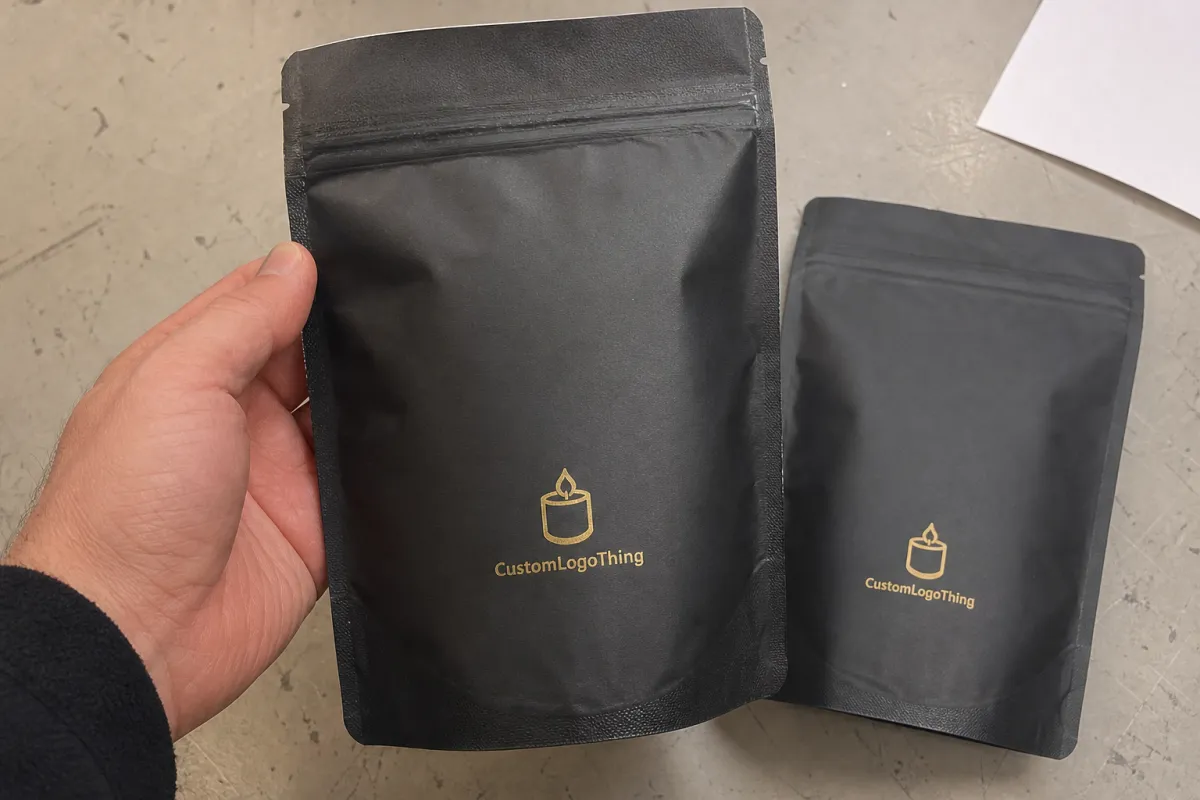
A Saturday market table is busy by design. You are weighing produce, answering questions, making change, and trying to keep the display from looking picked over before lunch. A slider lock bag helps because it sits between open display and rigid packaging: easy to access, easy to reclose, and good at keeping small-format products contained while customers handle them.
At the basic level, it is a resealable plastic bag with a sliding closure. That slider matters more than people expect. A package can look fine in a box and still frustrate buyers if the closure snags, drags, or takes two hands to shut. That matters at market speed, especially when hands are damp, cold, gloved, or sticky from fruit.
For farmers market sellers, the value is practical. Clear bags improve visibility for berries, herbs, cookies, soaps, or bright-colored specialty foods. A dependable reseal helps customers carry product home without worrying about spills. And because the bag opens and closes more than once, the film has to resist thinning, corner stress, and seal failures after repeated use.
There is also a visual effect that is easy to underestimate. A crisp bag with a clean closure keeps an item looking sellable longer, even when the product itself is still perfectly usable. Customers read that as freshness and care. In market settings, where shoppers compare several stalls in a few minutes, that impression can tip a sale.
Practical rule: if a customer can open the bag with one hand, reseal it once, and carry it without thinking about leaks, the packaging is doing its job.
How the closure and film material work together
The closure and the film are separate parts of the same system. The slider controls access and resealability. The film controls puncture resistance, stiffness, clarity, moisture behavior, and how the package holds its shape on a display table or inside a tote.
That distinction matters because a good closure cannot rescue weak film. A smooth slider on a flimsy pouch still leaves you with wrinkling, clouding, or splits near the corners. The reverse is just as frustrating: strong film with a poor closure can make a simple bag feel awkward every time it is opened. At a stall, awkward packaging slows down sales.
Two closure styles show up often. Slider closures usually feel easier and more premium, especially for customers with cold or wet hands. Press-to-close styles are simpler and often less expensive, but they can be less forgiving for repeated use. If you expect the bag to be opened and resealed several times, the slider format usually makes more sense.
Film thickness plays a real part in performance. Heavier gauges typically improve puncture resistance and shape retention, which helps with produce that has stems, edges, sharp corners, or irregular texture. Thinner films can reduce unit cost, but they may collapse around the product and make a good item look smaller or less abundant than it is.
If your products are kept near ice packs, refrigeration, or condensation, test the bag in those conditions before committing to volume. Cold can stiffen some films, while moisture can affect visibility and grip. A package that looks fine on a sample sheet may behave differently after a morning in a chilled display.
Material factors to compare before you buy
The most useful way to evaluate slider bags is to match the material to the product, the selling style, and the amount of handling the bag will see. Start with the core properties: clarity, stiffness, puncture resistance, odor barrier, and moisture protection. Those five factors tell you more than a glossy product page ever will.
Clear film is usually the right choice for berries, herbs, cookies, soap, and bright-colored Items That Sell Better when shoppers can see them. Semi-opaque or opaque bags can work for products where light protection matters or where the brand look is more subdued. The tradeoff is obvious: less visibility means less visual merchandising power.
For a market seller, product type is the first filter:
- Greens and herbs: need enough room to avoid crushing and some moisture management.
- Baked goods: benefit from clarity, crumb control, and a bag that does not look greasy after handling.
- Dried herbs and spices: need a dependable reseal and decent odor retention.
- Mushrooms: are sensitive to excess moisture and should not be packed into a tight pouch.
- Nuts, trail mix, and granola: need puncture resistance and a closure that stays shut after repeated use.
- Soap, sachets, and craft items: often prioritize appearance and a premium feel over barrier performance.
Food-contact suitability matters as well. Ask whether the bag is intended for direct food contact and whether it can handle freezer use if you sell chilled items or pre-packed market bundles. If you package warm product, check the upper temperature tolerance. “Food safe” is not the same as “good for every product state.”
Sustainability claims need a careful read. Recycled-content film, post-consumer waste content, and biodegradable packaging are not interchangeable. A recycled-content bag may be more practical than a compostable alternative if your goal is protecting delicate produce through a long market day. If a bag is going to fail early, the environmental story does not help much.
Paper components can still matter in the broader pack structure. Some sellers pair the slider bag with corrugated cardboard trays or cases for transport, and use kraft paper sleeves, labels, or wraps for secondary branding. That combination makes sense: the bag protects the unit, while the corrugated shipper protects multiples in transit.
If a supplier mentions FSC certified paper, check exactly what is certified. The claim may apply to an insert, hang tag, or outer carton rather than the bag film itself. That kind of detail matters because packaging claims should match the actual substrate, not the marketing copy.
For a quick comparison, the main material directions usually stack up like this:
| Material direction | Best for | Strengths | Tradeoffs |
|---|---|---|---|
| Clear standard film | Berries, herbs, bakery items | High visibility, clean presentation, usually lower cost | Less puncture resistance than heavier gauges |
| Thicker multi-layer film | Nuts, mixed snacks, irregular produce | Better durability, better shape retention, stronger feel | Higher cost, sometimes less flexible |
| Recycled-content film | Eco-positioned brands, non-fragile goods | Supports sustainability messaging, reduces virgin plastic use | Clarity and consistency may vary by supplier |
| Specialty barrier film | Odor-sensitive or moisture-sensitive items | Better protection, improved shelf performance | Usually higher price and longer lead times |
One caution is worth repeating in plain language: if a supplier promises perfect clarity, strong barrier performance, low price, and strong eco credentials all at once, ask for proof. Packaging has limits. Physics usually takes its share somewhere.
For technical and compliance reference points, the ISTA transport testing framework is useful for evaluating shipping resilience, and the EPA recycling guidance helps clarify claims around recyclability and recycled content. Neither source picks a bag for you, but both help you ask better questions.
Cost, pricing, and MOQ tradeoffs for small-batch sellers
Pricing depends on size, film thickness, closure style, printing, and order quantity. Small-batch sellers often compare only the unit price and miss the real number. Freight, sample fees, setup charges, and rush handling can change the total fast enough to make a cheap-looking quote more expensive than a better bag with cleaner terms.
As a rough market range, a plain stock bag in a common size may land around $0.12-$0.22 per unit at modest quantities. Custom printed or specialty material versions can move into the $0.18-$0.40 per unit range, depending on order size and print complexity. Those numbers are not universal, but they reflect how quickly pricing shifts with volume and customization.
MOQ creates another tradeoff. Lower minimums reduce upfront cash tied up in packaging inventory, which is useful if you only sell certain products seasonally. The downside is usually a higher per-bag price and fewer customization options. Larger runs improve unit economics, but they also lock you into stock that may not match next season’s crop mix, label revisions, or packaging preferences.
It helps to compare total value instead of chasing the lowest quote. A bag that costs two cents more can reduce crush damage, lower refund risk, and improve the way a product looks in a customer’s hand. That matters more than a spreadsheet difference when a bag is part of the selling experience, not just the container.
A simple way to frame the options:
- Low MOQ, plain stock: lower risk, faster to order, less brand control.
- Mid-range custom print: better shelf presence, more planning, better long-term identity.
- High-volume custom run: best unit economics, but only if demand is steady enough.
Freight deserves attention too. A quote can look attractive until shipping adds 18% to 30% to the total. Compare landed cost per thousand units, not just the base bag price. That gives a cleaner picture of whether a heavier film or better closure is worth the increase.
Storage is another hidden cost. If bags sit too long in a damp back room or a hot garage, the inventory can degrade before it ever reaches the stall. Packaging is not a product that improves with age. Heat, humidity, and dust can all shorten usable life.
Process and lead time: from sample request to market-ready stock
The buying process should be straightforward. Choose the size and material, request samples, confirm artwork or stock format, approve the proof, then move into production and shipping. For sellers planning around market dates, each stage matters because every delay pushes the order closer to peak season.
Lead time depends on stock availability, print complexity, order quantity, and shipping distance. Plain stock products may be available quickly if inventory is on hand. Custom printed or specialty-material bags usually take longer because proofing, tooling, and production scheduling add steps. A realistic production window for a simpler custom run is often 12-15 business days after proof approval, with freight added on top. More complex jobs can take longer.
Before placing a deposit, ask a few direct questions:
- How long does sample turnaround take?
- How long after proof approval does production begin?
- What is the estimated shipping time to your location?
- Can the same specification be reordered quickly if the first batch sells through?
- What is the cutoff if stock must arrive before a peak market weekend?
If you are introducing a new bag before a busy stretch of markets, build a buffer. Sellers who wait until the old packaging fails end up making rushed decisions and paying for it twice: once in price, and once in avoidable mistakes. A little extra lead time is cheaper than a full reprint or a stalled market weekend.
Sample testing should happen under real conditions, not just on a desk. Put produce inside. Chill it. Handle it with damp hands. Open and close the bag several times. Pack it into a crate with corrugated cardboard dividers if that is how you transport stock. If the bag only looks good in a clean sample photo, it is not ready.
Common sizing and packing mistakes sellers should avoid
Size mistakes show up more often than material mistakes, and they are easier to prevent. Buyers often choose by volume alone, but product shape matters just as much. A flat bunch of herbs, a stack of cookies, and a bag of loose mushrooms do not behave the same way inside the same pouch size.
Overfilling is the quickest way to stress the seal. If the slider has to fight against pressure every time the customer closes the bag, the package will wear out early. The same thing happens when contents push too tightly into the corners. The closure may seem fine on the first open and then start failing after a few uses.
Presentation problems are subtler but just as costly. Cloudy film dulls a bright product. An oversized bag can make a small batch look wasteful or low-density. An undersized bag wrinkles the contents, hides labels, and can make a seller look careless. None of that helps conversion at a table where shoppers are making quick decisions.
Operational testing is easy to skip and hard to fake. Check the bag with:
- gloved hands
- cold produce
- sticky foods
- repeated open-close cycles
- end-of-day packing and transport
If staff or family members need to use force, customers will feel that too. A closure that is hard to use can reduce repeat sales as much as a weak bag can. That sounds minor until it happens on a busy morning with a line at the table.
Another common mistake is hoping packaging will fix product quality. A nicer-looking bag will not rescue limp herbs or overripe berries. The right bag can buy time, keep the product presentable longer, and reduce spills, but it cannot correct a poor harvest or rough handling upstream. That limit needs to be acknowledged before the order goes in.
Expert buying tips and next steps for selecting the right bag
Start with a simple spec sheet. It does not need design polish; it just needs to be clear. List the product type, fill weight, closure style, thickness target, storage conditions, and whether branding is required. A written spec saves time and helps prevent vague quotes or mismatched samples.
Then order two or three samples, not one. Compare them side by side. Check the feel of the slider, the way the film looks under market lighting, how the bag stacks in a crate, and how it behaves after repeated opening. Small differences are easier to see when the bags are tested against each other, not separately.
A practical sequence for smaller sellers usually works best:
- Pick one hero SKU first.
- Choose the material that fits that product, not just the lowest quote.
- Run a stall test for one or two market days.
- Track handling, complaints, spill issues, and leftover stock quality.
- Expand into additional sizes only after the first bag proves itself.
That approach keeps risk under control and gives real field data. It also makes it easier to decide whether the next order should use a stronger film, a different closure, or a second format for other products. If your branding is shifting toward a more sustainability-focused story, you can also evaluate whether recycled-content film, FSC certified paper accessories, or post-consumer waste claims fit the packaging mix without weakening protection.
For most market sellers, a focused packaging system works better than a scattered one. One bag used well usually looks more professional than three different bags used inconsistently. It is also easier to reorder, easier to store, and easier to explain to customers who ask about packaging.
Before you place the order, compare materials, request pricing, confirm lead times, and test the bag before a peak market weekend. That is the practical path. If there is one takeaway from this Slider Lock Bags material guide for farmers market sellers, it is that the right bag is the one that matches the product, the pace of the stall, and the way customers actually handle it—not simply the one with the lowest unit price.
FAQ
What material is best for slider lock bags for farmers market sellers?
It depends on the product. Clear film works well for display items, while thicker film is better for fragile produce or items with sharp edges. If the bag will be opened repeatedly, prioritize puncture resistance and a reliable slider over the thinnest possible film.
Are slider lock bags better than zip bags for market packaging?
Usually, yes, if ease of use matters. Slider bags are generally easier to open and reseal when hands are cold, wet, or busy at the stall. They also tend to feel more premium, though they often cost more than basic zip bags.
How do I estimate the right cost per bag for my stand?
Use the landed unit cost, not just the quoted price. Include freight, setup, and sample fees, then compare that total against spoilage reduction, customer satisfaction, and any reuse value. A slightly higher bag price can still win if it reduces waste.
What lead time should farmers market sellers expect?
Stock bags are usually faster, while custom printed or specialty material bags take longer because of proofing and production. Ask for sample timing, production timing, and shipping time separately so you can plan around your market schedule.
How can I test slider lock bags before placing a larger order?
Request samples and test them with the actual product. Check sealing, clarity, handling, and how the bag performs after repeated opening. If possible, run a small stall trial to see whether customers like the feel and whether the product stays fresh through the day.


