A bakery bag looks simple until the first order arrives too narrow, too soft, or slightly off brand. In a Custom Bakery Paper Bags small batch custom order, those errors show up immediately at the counter and on the customer table, so the spec has to be more precise than a generic retail bag order.
Small runs are usually about testing a seasonal menu, a new pastry line, or a holiday launch without overcommitting cash. That only works if the bag size, paper stock, print method, and lead time fit the actual product and the actual service flow. The logo matters, but the structure carries the product.
If you are comparing other packaging formats, our Custom Packaging Products, Wholesale Programs, and FAQ pages can help you map the broader order.
For bakery buyers, the goal is not a pretty mockup. It is branded packaging that protects the product, looks consistent in service, and keeps inventory lean enough that you are not sitting on cartons of unused bags.
Why Small-Batch Bakery Bags Need a Different Spec
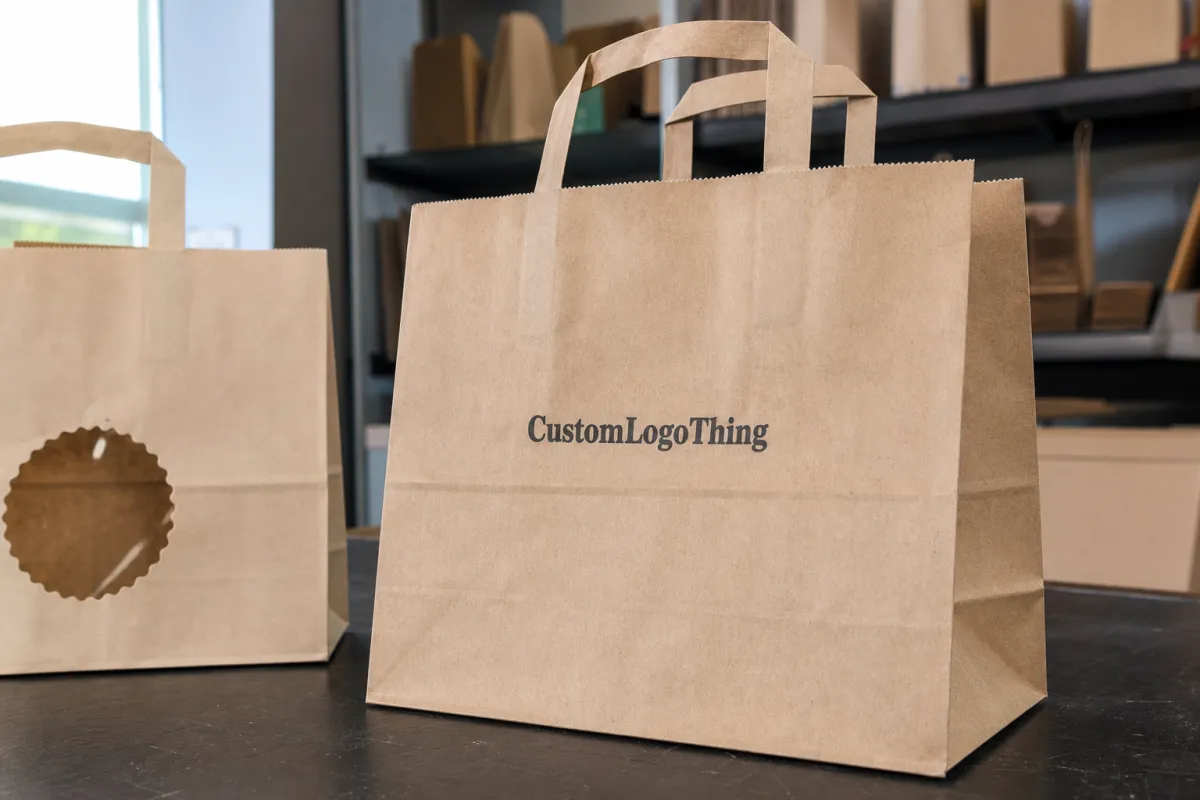
Small runs fail differently than large programs. A 5,000-piece order can absorb a minor sizing issue. A 300-piece seasonal run cannot. If the gusset is wrong, the handle is weak, or the print drifts, the mistake reaches the customer before you have time to correct it.
The spec should start with the product stack, not the supplier catalog. A pastry box, a cupcake clamshell, and a mixed dessert set all need different interior room, top clearance, and base support. The bag should fit the item comfortably without leaving so much slack that it slumps.
- Keep the product stable during carryout and delivery.
- Leave enough print area for the logo to stay readable after folding.
- Avoid oversizing that wastes material and storage space.
- Make repeat orders easy to match later.
In bakery use, structure matters as much as artwork. If the bag collapses, stains, or opens too wide, the brand feels less polished even when the print is strong. The bag is both a transport item and a presentation piece.
Paper Stocks, Coatings, and Print Choices That Work for Bakery Use
Paper choice affects appearance, durability, and cost. Kraft gives a warmer, more natural look and hides scuffs well. White stock creates sharper contrast for logos and fine text. Specialty papers can add texture, but they usually raise cost faster than first-time buyers expect.
- Kraft paper: good for artisanal branding and a matte surface that tolerates handling marks.
- White paper: better for crisp graphics and darker logos.
- Specialty stock: useful for gift sets or seasonal runs, but best used selectively.
For many small runs, 120-150 gsm kraft works for light carryout bags, while 150-200 gsm is safer for boxed pastries, mixed dessert assortments, or multiple items. Heavier paper is not always better, but too-light paper can wrinkle, bow, or weaken at the seams. If the bag needs more polish, a matte coating can reduce fingerprints, while gloss can sharpen graphics but show handling marks more quickly. Uncoated paper is useful when the bag needs a writable surface or a more tactile feel.
Print method matters too. Small-batch orders usually work best with one-color logos, limited spot colors, or a simple front-and-back layout. Full-wrap printing can look strong, but it increases setup work and the chance of visible variation across the run. For a small bakery program, restraint often keeps both cost and quality under control.
Bakery bags also sit close to food, so surface behavior matters. Aqueous coatings, light barrier treatments, and grease-resistant finishes help when warm pastries or frosted boxes sit in the bag for more than a few minutes. Ask how the paper behaves under stain and moisture stress, not just how it looks on a sample.
For fiber sourcing, the FSC standard is worth asking about if certified material matters to your brand. If the bags will move through boxes and trucks before they reach the customer, the ISTA distribution methods are a useful reference for thinking about handling and transit stress.
Sizing, Gussets, Handles, and Reinforcement Details
Bag size should come from the actual product stack, not a similar order. Measure width, depth, and height with the pastry box or item inside it, then add enough clearance for fingers, folding, and top room so the bag does not crush the print area. In many cases, 10-15 mm of added room is enough for a snug fit, though heavier bakery kits may need more.
The gusset is where many small orders go wrong. Too shallow and the bag pinches. Too deep and the bag fills with air instead of structure. Flat-bottom construction is usually the better choice for bakery use because it helps the bag stand upright and keeps a delicate box from tilting.
- Twisted paper handles work well for carryout and a more finished retail look.
- Flat paper tape handles suit lighter loads and create a softer profile.
- Die-cut handles work for slim formats and a cleaner front panel.
- No-handle bags can work for counter handoff if the load limit is clear.
Reinforcement details matter more than most buyers expect. Top-roll structure, bottom seam strength, glue line consistency, and handle anchoring decide whether the bag survives one trip or a full afternoon of pickups. If the bag will carry a dense dessert box, ask for a practical load rating rather than vague "heavy duty" language. As a rough working range, a well-made small bakery paper bag may handle about 1.5 to 3 kg depending on paper weight, handle style, and seam design.
Artwork tolerance is another hidden issue. A logo can look centered on a flat proof and still drift after folding if the dieline was not built around the actual bag geometry. The proof should show folds, glue flaps, and safe areas clearly so the final bag lands where the art was approved.
"Pick the bag around the product stack first. Pick the print second. If the structure misses, the branding never gets a fair read."
Cost, MOQ, and Quote Factors for Small Orders
Pricing for a custom bakery paper bags Small Batch Custom Order usually depends on six variables: bag size, paper weight, number of print colors, coating, handle type, and whether a custom dieline is required. Any one of those can move the unit cost. The key is comparing quotes that include the same scope.
MOQ affects price because setup costs are spread across fewer pieces. A 500-piece order will usually have a higher unit price than 1,000 pieces, and 2,500 pieces often lowers the unit cost further. The right question is not "What is the cheapest unit price?" It is "What quantity gives the best total spend for the period I need to cover?"
| Run Size | Typical Unit Range | Best Fit | Notes |
|---|---|---|---|
| 500 pieces | $0.55-$1.10 | Seasonal launch, pilot program, gift boxes | Higher setup burden per bag; useful for testing artwork and demand |
| 1,000 pieces | $0.34-$0.72 | Established counter program, limited menu refresh | Often the best balance between cash flow and unit cost |
| 2,500 pieces | $0.18-$0.42 | Stable bakery line, repeat order, multi-location use | Lower unit price, but storage and forecast accuracy matter more |
Those ranges assume a straightforward bakery bag with controlled print coverage. Add a custom handle, heavier coating, metallic ink, or a more complex size, and the cost rises quickly. Freight can change the final number just as much as the bag itself, so a quote that looks low until shipping is added is not really a low quote.
If you want a useful quote quickly, send the exact dimensions, quantity range, artwork files, target ship date, and any sample the new bag should resemble. Good buyers ask for the structure of the quote, not just the final number.
- What is included in setup and artwork preparation?
- Are proofing, plates, and tooling itemized?
- Does the price include inner packaging and freight?
- What changes if the order moves up one quantity tier?
- Is there a repeat-run price for the same art and size?
Planning a custom bakery paper bags small batch custom order
A clean workflow protects small-batch buyers from expensive corrections. The usual sequence is inquiry, spec review, artwork setup, digital proof, sample approval if needed, production, quality check, and shipment. If a supplier skips one of those stages, the risk does not disappear. It just moves to your receiving dock.
Lead time depends on complexity, but a straightforward order often takes 12-15 business days after proof approval. If the artwork needs several revisions, the structure is custom, or the paper has to be sourced separately, 18-25 business days is more realistic. Around holidays or menu launches, the schedule should be set earlier than that.
Proofing is where a small run earns its value. Digital proofing should confirm size, fold direction, logo placement, bleed, and color approximation. If the bag includes a corner logo, a gusset mark, or a back-panel message, those positions should be shown clearly on the dieline. That step catches most avoidable errors before they become printed inventory.
Proof the structure, not just the art. A logo that looks centered on a PDF can land awkwardly once the bag is folded and glued. A matte black can shift toward charcoal on certain papers, and a pale cream can disappear against kraft if the contrast is too soft.
If the bags will be used for delivery as well as counter pickup, ask whether the structure has been checked for transit stress. That may mean simple internal load testing or a more formal packaging test path based on the shipment profile.
What a Reliable Supplier Should Promise on Repeat Runs
Repeat runs are where supplier quality becomes obvious. The first order can be lucky. The second order tells the truth. A reliable partner should hold color consistency, seam strength, and print registration across the full run, then match the next order to the first one without forcing you to rebuild the art file from scratch.
That matters for bakeries because visual drift is easy to spot. A slightly different kraft tone, a handle that sits a few millimeters higher, or a logo printed one shade darker can make a counter display look mixed and unplanned. For package branding, consistency is what tells customers the bakery is organized and dependable.
A supplier should also be clear about records. Artwork archives, reorder notes, prior dielines, and approved proof versions all reduce the chance of a repeat mistake.
- What inspection steps happen before shipment?
- How is handle strength checked?
- How is color matched from one run to the next?
- What happens if the printed count is short or damaged?
- How fast can the supplier resolve a repeat-run issue?
Documentation matters too. FSC paperwork helps when a bakery wants to speak clearly about fiber origin. ASTM-style paper tests can define tear, burst, or tensile expectations for the substrate. If the bags move through boxes and trucks, ISTA-oriented thinking helps separate a pretty sample from a package that can survive actual handling.
What to Prepare Before Requesting a Quote
The fastest way to get a useful quote is to think like a production buyer. Gather the bag dimensions, approximate product weight, print goal, and a photo of the current packaging if you are replacing an existing format. A photo helps a supplier spot issues such as a box that is wider than the bag mouth or a handle that interferes with folding.
Then decide which constraint matters most. Are you optimizing for the lowest unit cost, the fastest turnaround, or the smallest workable MOQ? Those goals do not always point to the same spec. A higher quantity can lower the unit price, a simpler print can shorten the schedule, and a different handle may keep the order inside budget without changing the bag size.
- Exact bag dimensions and preferred tolerance.
- Quantity range and likely reorder frequency.
- Artwork files and brand colors.
- Handle style and reinforcement preference.
- Coating or grease-resistance needs.
- Shipping location and target in-hand date.
If you are comparing several options, ask for the price break at the next tier plus the difference between a basic and upgraded structure. That makes it easier to decide whether a more finished build is worth the extra spend, or whether the simpler bag is the smarter move for the first run.
For bakeries with multiple packaging needs, it also helps to map the bag order against the rest of the line. The same launch may need labels, custom printed boxes, or other branded packaging elements. Keeping those aligned saves time in design review and avoids a mismatch between the bag, the box, and the customer’s first impression.
Once the proof is approved, confirm the quantity, lock the production slot, and keep the timeline visible to the team handling the launch. For a Custom Bakery Paper Bags small batch custom order, that is the point where planning turns into inventory, and inventory turns into the customer experience.
FAQ
What is the MOQ for custom bakery paper bags in a small batch order?
MOQ usually depends on bag size, print complexity, and whether the bag needs custom handles or coatings. Simple one-color runs are often easier to keep low than full-color or specialty-finish jobs. Ask for the smallest workable run and the price break at the next tier so you can compare total spend, not just the lowest line price.
Which paper stock works best for bakery paper bags with greasy pastries?
Heavier kraft or coated stock usually handles grease and shape better than light paper. If the product is buttery or warm, ask about resistance to staining and seam weakening. Choose the stock based on the heaviest item the bag will carry, not the average item, because the weakest case is the one that usually causes returns.
Can I print my logo on a small-batch custom bakery paper bag run?
Yes, but simple logo placement and fewer colors usually work best for small runs. Ask for the dieline early so the logo lands in the right place after folding and filling. If color accuracy matters, request a digital proof before production starts so you can catch any shift before the bags are printed.
How long does production usually take for custom bakery paper bags small batch custom order requests?
Lead time starts after artwork approval, so the proof stage matters as much as the production stage. Simple runs can move faster than jobs with multiple revisions, custom structures, or imported materials. If you have a launch date, share it upfront so the schedule can be planned around it instead of being squeezed later.
What details do you need to quote custom bakery paper bags accurately?
Send size, quantity, artwork, print colors, handle style, and any coating or grease-resistance requirement. Include a sample photo or an existing bag if you want the new version to match a current format. Add the delivery location and target date so freight and production timing are quoted correctly, which is where many quote surprises come from.

