Custom Bakery Paper Bags Production Timeline for Buyers
The custom bakery paper Bags Production Timeline is usually set before a press ever starts. Most delays happen earlier, in the slow, annoying parts: file cleanup, stock confirmation, proof rounds, and one last change that turns into three. The printing itself is rarely the villain. The handoffs are.
Bakery bags sit in an awkward middle ground. They are simple enough to sound quick, but specific enough to cause problems if the spec is vague. They need to hold pastries without softening too fast, carry branding cleanly, and look decent at the counter. If the bag is greasy, poorly cut, or off-color, customers notice. So does the bakery staff trying to use it.
For buyers planning a launch, a good schedule starts with the bag format, paper grade, print method, and delivery window. If you are also coordinating cartons, labels, or inserts through Custom Packaging Products, get those approvals moving at the same time. Packaging programs drift when each item is treated like a separate project.
Most bakery bag delays are decision delays dressed up as production delays.
Custom Bakery Paper Bags Production Timeline: What Happens First
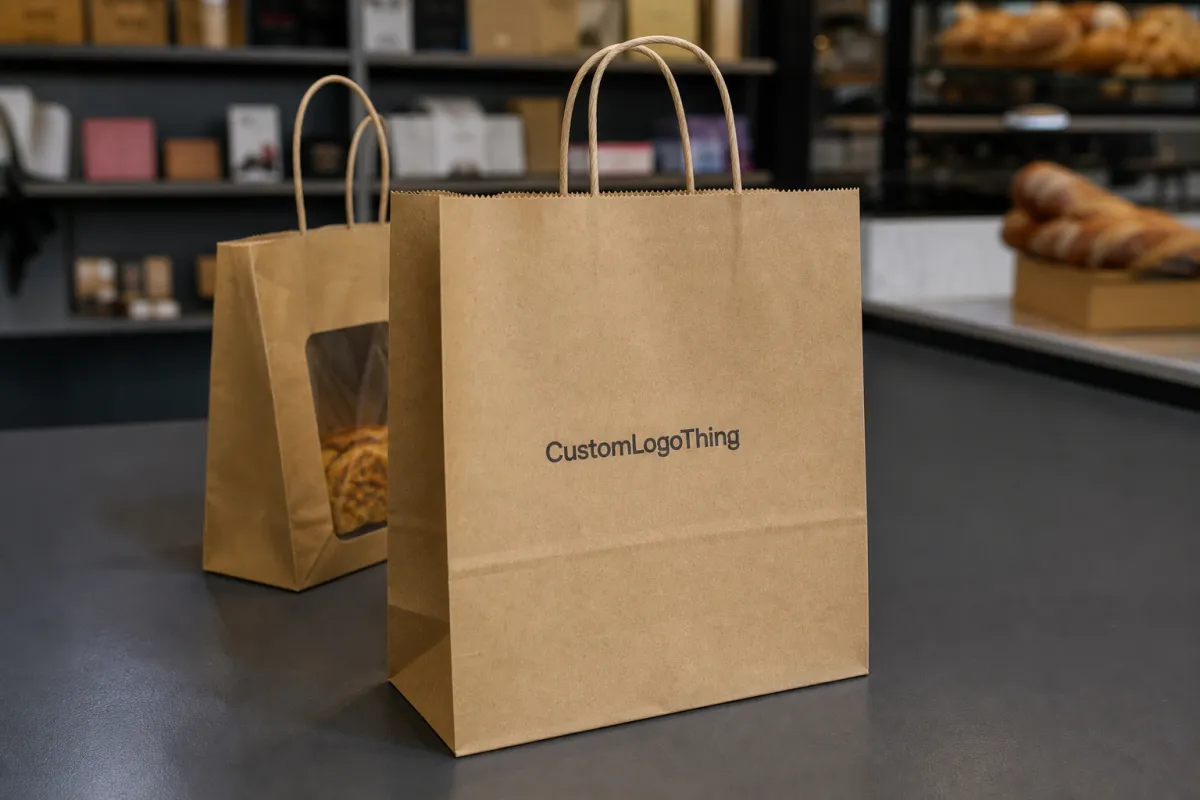
For a standard order, the process usually starts with a quote request, then moves through spec confirmation, artwork review, proof approval, production booking, printing, converting, inspection, packing, and freight. It sounds tidy on paper. Real life is messier. If the buyer is still choosing between a flat bag and a gusseted bag, the quote sits. If the logo file is low resolution, proofing stalls. If the paper needs to be FSC-certified or grease-resistant, sourcing can add days before production even begins.
A realistic production flow looks like this:
- Quote request: share dimensions, quantity, bag style, stock, print colors, and destination.
- Spec confirmation: lock the dieline, closure style, window details, handles, and food-contact requirements.
- Artwork proof: check copy, bleed, logo placement, PMS references, and barcode readability if needed.
- Material booking: reserve paper, inks, adhesive, handles, patches, or film.
- Printing and converting: run the job, then fold, glue, cut, patch, or attach handles.
- Quality control and packing: inspect count, seams, print registration, and carton condition.
- Freight dispatch: book shipment and match transit time to the opening date.
On a basic run, a simple one-color flat bakery bag can often move in about 10-15 business days after proof approval if paper is in stock. A more involved retail format, such as a gusseted or window bag, often lands closer to 15-25 business days because the converting steps are longer and inspection is stricter. Rush orders can be faster, but only if the art is final, materials are available, and approvals do not drag out.
The key thing buyers miss is that the press is one station in a longer chain. The job can be technically “in production” while still waiting on file fixes, paper allocation, or final sign-off. That is why the quote should spell out which step is the true gatekeeper. Otherwise, everyone thinks the order is moving when it is really parked.
Specs That Shape Lead Time for Bakery Bags
The biggest variable is the bag format. Flat bags are the easiest to convert and usually the quickest to source. SOS and gusseted bags need more folding accuracy, more glue control, and more checks around squareness. Handle bags add another layer because the handles, reinforcements, and stacking load have to hold up through packing and transit. Window bags are slower again. The patch or film has to line up cleanly, and that adds an extra inspection step.
Paper weight changes the pace too. A 60-80 gsm kraft bag is usually easier to source and simpler to run. It works well for lighter bakery items and short carry distances. A 90-120 gsm stock gives a firmer feel and better shelf presence, but it can be slower to cut, fold, and cure depending on the finish. More weight is not automatically better. It just solves a different problem.
Grease resistance can affect the calendar more than people expect. Aqueous or barrier coatings may need drying time before packing, and some food-safe inks require tighter process control to keep the printed surface clean. If the bag is meant for buttery pastries, rich bread, or warm items, ask for the coating spec early. Changing it after proof approval usually means another setup.
Multi-SKU orders stretch timelines fast. A single run can become three separate setups if you want a 4 lb bag, a 6 lb bag, and a window version in one order. That means separate checks, separate material staging, and sometimes separate carton plans. Buyers often call that “one order.” Production teams do not. They see three jobs with shared artwork.
Material documentation should also be handled early if sustainability claims matter. FSC requests are easy to support when they are part of the initial brief. They are harder to bolt on later. Chain-of-custody paperwork should be in the conversation from the start, not added after the order is already staged. The standard reference is here: FSC.
Pricing, MOQ, and Unit Cost: What Changes the Quote
The quote and the schedule are tied together more tightly than most buyers expect. Every feature that adds a setup step usually adds cost too. Paper grade, print coverage, finish, window patching, handle construction, carton strength, and freight distance all move the number. MOQ matters because fixed setup costs spread better across larger runs. That is why a bigger order often lowers unit cost even if the total invoice goes up.
Typical ranges help buyers sanity-check a quote:
- A 5,000-piece flat kraft run with one-color printing may land around $0.07-$0.12 per bag.
- A 5,000-piece gusseted bag with a grease barrier often lands around $0.11-$0.18.
- A window bag with a patch can move to $0.16-$0.26 because of the extra material and inspection.
- A handle bag usually sits around $0.24-$0.40 depending on paper weight and handle type.
- A small custom run of 1,000 pieces can jump to $0.18-$0.35 because setup has nowhere to spread.
Those numbers are only useful if the specs are matched properly. A quote that includes door delivery is not comparable to an ex-works quote. The lower number can easily be the more expensive one once freight, duty, and carton count are added. Match dimensions, stock, print method, and destination before deciding who is cheaper. That rule applies to bakery bags and to any other custom packaging products sitting in the same launch schedule.
| Order profile | Typical MOQ | Common build | Indicative unit cost | Timeline impact |
|---|---|---|---|---|
| Flat kraft bakery bag, one-color logo | 5,000 pcs | 60-80 gsm kraft, water-based ink | $0.07-$0.12 | Usually the fastest option |
| SOS gusseted bag with grease barrier | 5,000 pcs | 70-100 gsm kraft, aqueous coating | $0.11-$0.18 | Adds drying and QC time |
| Window bag with patch | 10,000 pcs | Kraft plus PET or PLA window | $0.16-$0.26 | Extra patching and inspection |
| Handle bakery bag | 10,000 pcs | Heavier paper with flat or rope handle | $0.24-$0.40 | More converting and packing weight |
| Small custom run | 1,000 pcs | Mixed stock or special print | $0.18-$0.35 | Setup cost drives the quote |
Production Steps From Approval to Shipment
The smoothest Custom Bakery Paper Bags production timeline depends on two things: fast approvals and disciplined handoffs. The buyer approves the spec, the supplier confirms the art, the shop books the material, and each station checks the work before the next one starts. Break that rhythm and the schedule slips. Not by magic. By paperwork, revision, and waiting.
- Final spec lock: dimensions, stock, print colors, coating, and bag style get fixed first.
- Artwork setup: the supplier maps the logo to the dieline and checks bleed, safe zones, and copy legibility.
- Proof approval: the buyer signs off on placement, spelling, color expectations, and any compliance notes.
- Material prep: paper, ink, handles, windows, adhesive, or reinforcements are staged for the run.
- Printing: flexographic, offset, or digital output is produced based on run size and finish.
- Converting: the bags are cut, folded, glued, patched, or handled according to the format.
- Quality control: inspectors check registration, seam strength, count accuracy, and carton condition.
- Packing and dispatch: the finished cartons are packed for transit and released for shipment.
Delays usually show up in proofing first. Then they show up again after printing if the buyer asks for a revision that forces a new plate, new cutter, or new setup. Late color changes are especially painful because the job may already be booked on the line. The same pattern exists in other packaging categories, but bakery bags are less forgiving because the print area is small and the folds sit close to logos, edges, and glue lines.
Quality control should be treated as a real production step, not a checkbox. A bag can pass print inspection and still fail in use if the seam opens too easily, the gusset sits crooked, or the coating feels tacky. For larger orders, ask how finished cartons are tested for transit. If the bags are traveling far, guidance from ISTA helps reduce crushed corners, scuffed print, and split cases before the product reaches the bakery floor.
Mistakes That Stretch Turnaround on Bakery Bag Orders
The fastest way to wreck a schedule is to change the spec after proofing has started. Switching from flat to gusseted, kraft to coated stock, or one print color to two can force a new setup and send the job back into the queue. Adding a window or changing the handle type does the same thing. The order might still go through, but the original timeline is gone.
Artwork problems are the second big offender. Low-resolution logos, missing bleed, incorrect PMS references, and messy file layers all create proof revisions. Every revision costs time. That is why experienced buyers send vector files and clean dielines before asking for a quote. It shortens the loop and protects the final print from looking rushed.
Seasonality causes trouble too. Bakeries tend to underestimate holiday volume, store openings, and menu changes. Freight gets forgotten as well, which is risky because a bag that leaves on time is not the same thing as a bag that arrives on time. A sample can also create false confidence if the buyer assumes it is automatically production-ready. Sometimes it is only a fit check or color reference.
If the bags are part of a broader retail packaging rollout, keep the whole program on one calendar. Bags, boxes, labels, and inserts should move through one approval path wherever possible. That reduces the split-decision problem that slows so many branded packaging launches. It also keeps the print tone and visual language consistent across the shelf and counter.
Expert Planning Tips for a Smoother Launch
A smoother launch usually comes down to fewer handoffs. One person should own artwork and spec approval. That does not mean they have to know everything about packaging. It means they need the authority to say yes or no quickly. Otherwise, the supplier waits for three different replies to one proof.
Standard components help more than most teams want to admit. A common size, a known paper stock, and a proven finish move faster than a fully custom build. That is not a rejection of customization. It is just a practical way to keep risk under control. If the bakery needs bags for a grand opening in six weeks, standard materials are usually the safer choice.
Build slack into the schedule. Not a heroic amount. Just enough to absorb a proof revision, a sourcing hiccup, or a freight delay without turning the launch into a panic. For overseas orders, add more cushion. For split deliveries, add more again. It is easier to have boxes waiting in the back room than to explain why the first weekend of service has no branded bags.
- Use one approver for art and spec changes.
- Choose standard sizes first, then customize only where it matters.
- Send vector logo files, not screenshots.
- Confirm delivery address, receiving hours, and unloading needs before production starts.
- Keep the bag design aligned with the rest of the packaging plan.
For buyers managing multiple SKUs, grouping the order is often better than splitting it into several small runs. That helps the supplier allocate paper more efficiently and can reduce per-bag cost. It also improves consistency across the line, which matters if the bags are part of package branding rather than just a carryout item.
What a Quote-Ready Bakery Bag Brief Needs
If you want a useful quote, send a brief that answers the questions a production team would ask anyway. That is the fastest path to a realistic budget and a believable schedule. A long email full of adjectives does not help much. A clean spec sheet does.
- Bag dimensions and style, including flat, SOS, window, gusseted, or handle format.
- Quantity by SKU, not just one total number if there are multiple versions.
- Paper stock, weight, coating, and any grease resistance requirement.
- Print colors, PMS references, and whether the logo is one-sided or two-sided.
- Finish details such as matte coating, gloss, foil, patching, or reinforced handles.
- Delivery location, receiving hours, and the date you need the bags in hand.
- Brand files, dieline approval, and any food-contact or fiber-certification notes.
Once you have several quotes, compare them against the same spec sheet. Then ask one simple question: which step carries the biggest risk? Sometimes it is stock availability. Sometimes it is proof approval. Sometimes it is freight. A good supplier should be able to tell you where the schedule is tight and where it has breathing room. That answer is often more useful than a tiny price difference.
If repeat orders are likely, set the first run up as the master spec. That makes reordering faster and reduces guesswork later. It also helps if the bakery wants the same visual language across bags, cartons, and labels through Custom Packaging Products. Consistency matters. Customers notice when the counter looks organized. They notice when it does not, too.
Handled properly, the custom bakery paper Bags Production Timeline stays predictable. The bags arrive on time, print correctly, and do the job without drama. That is the real goal: fewer surprises, fewer revisions, and a packaging program that supports the bakery instead of slowing it down.
How long is the bakery paper bag production timeline usually?
Most orders land somewhere between 10 and 25 business days after proof approval, depending on bag style, stock availability, print complexity, and freight. Simple flat bags are usually faster; window, handle, and coated bags take longer because they need more converting and inspection.
What usually slows custom bakery bag lead time the most?
Artwork revisions, late spec changes, and material shortages are the common culprits. A proof that bounces back and forth a few times can easily push an order back more than the press time itself.
How does MOQ affect custom bakery paper bags pricing?
Higher MOQs usually lower the unit price because setup costs spread across more bags. Small runs cost more per bag and can also take longer to fit into production because they are less efficient to schedule.
Can I speed up the production steps for bakery paper bags?
Yes. Send final artwork, approve a standard size, and choose a material that is already proven in production. One decision-maker on the buyer side also helps a lot because it cuts down the back-and-forth that usually slows approvals.
What should I send for the fastest quote on bakery paper bags?
Send dimensions, quantity, bag style, paper type, print colors, finish, delivery address, and the date you need the bags in hand. Add brand files and any food-contact or certification requirements so the quote does not have to be rebuilt later.

