snapback caps Print Method Comparison for hotel retail buyers usually starts with a practical question, not a design one: which decoration still looks clean after shelf handling, guest try-ons, packing, and reorder cycles? A cap can look excellent on a digital proof and still fail under warm display lighting, curved front panels, or repeated resales. Buyers who focus on durability, price architecture, and repeatability tend to make better choices than buyers chasing the most eye-catching sample.
The right answer is rarely the fanciest method on paper. It is the one that holds the logo shape, fits the cap construction, and lands at a shelf price the store can carry without squeezing margin. For hotel retail, that balance matters more than decoration novelty. A souvenir cap is still a product line, not just a branded object.
There is also a difference between a cap that looks premium in a photo and a cap that survives a season on the floor. Thread density, patch edge finish, print adhesion, and crown stability all affect the final result. If the cap will be reordered, the buyer should also think beyond the first purchase order and ask whether the same spec can be repeated six months later without a fresh round of setup problems.
The most reliable decoration method is the one that still reads the same after handling, try-ons, and restocking.
Snapback Caps Print Method Comparison: What Buyers Need
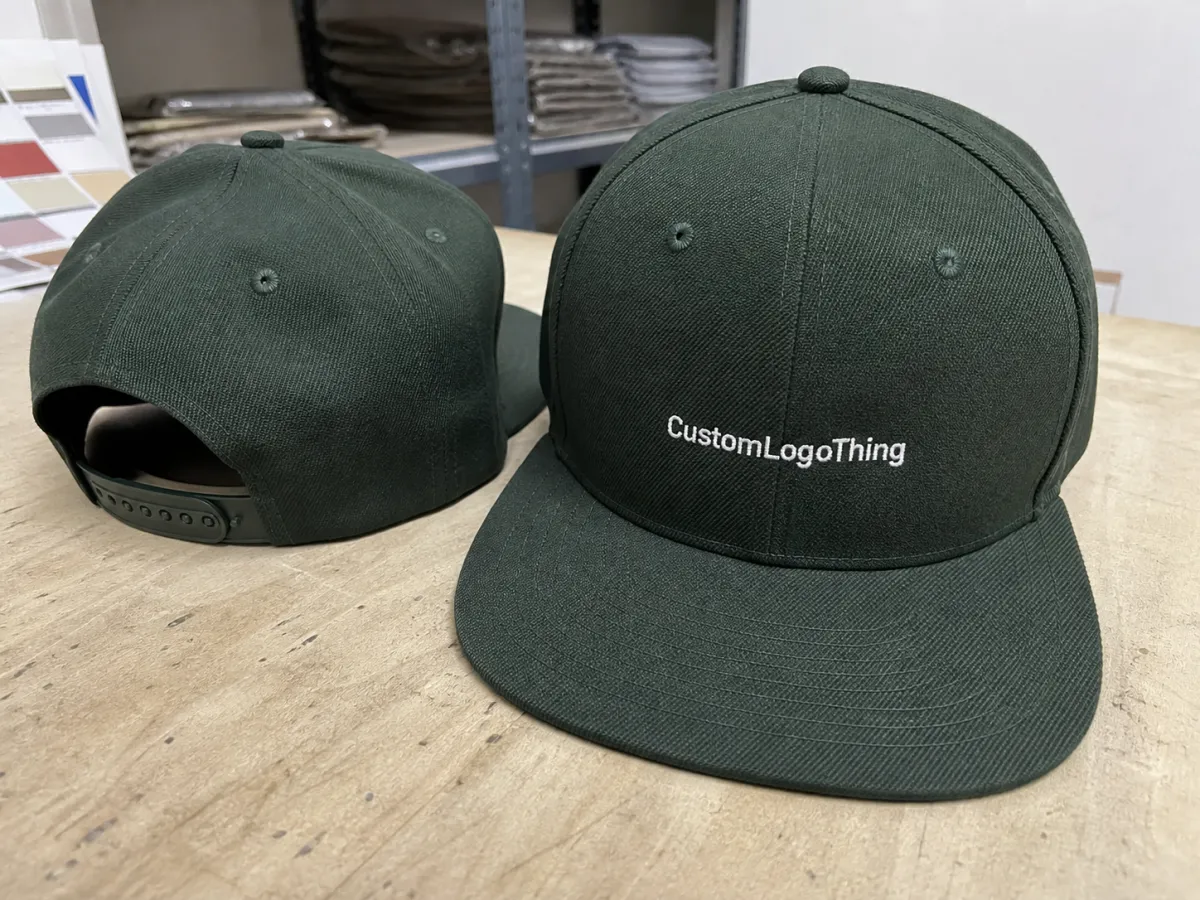
For hotel retail buyers, a snapback caps print method comparison for hotel retail buyers is less about decoration theory and more about what survives real use. The cap might sit under bright retail lighting, get bent in a display fixture, and be tried on dozens of times before it sells. That means the first buying question should be blunt: which method gives the clearest logo at the right cost without introducing cracking, thread pull, or color drift on the next reorder?
Program type changes the answer. A premium gift-shop cap can justify heavier decoration and a more tactile finish. A lower-ticket souvenir item needs a decoration method that keeps the logo legible, production efficient, and margin intact. Buyers often save time by starting with the retail target price, then filtering decoration options against that number instead of asking every factory for every possible method.
The cap body matters almost as much as the logo. Front panel shape, seam placement, panel count, and fabric weight all affect the final look. A structured crown gives the decoration a steadier base. A softer front panel can flex during wear and make a print edge look less precise than it did in approval photos. That is why the best comparison is not “which method is best?” but “which method fits this cap, this logo, and this shelf price?”
Buyers should also separate first-run appeal from repeat-run reliability. A decoration method that is simple to approve but difficult to rerun can create hidden costs later. For retail programs that replenish by season, that inconsistency can be more expensive than a slightly higher upfront unit cost.
Which Decoration Method Fits Each Retail Price Point
In a snapback caps print method comparison for hotel retail buyers, the decoration method should match the retail price point, not the most expensive sample in the vendor folder. If a cap is meant to sell for $20 to $28, buyers can afford a more refined finish. If the shelf price is closer to $10 to $15, the decoration needs to stay efficient and repeatable or the margin disappears quickly.
Embroidery gives a raised, durable look and usually delivers the strongest premium signal. It works well for bold logos, thick letterforms, and marks that should feel substantial in hand. Fine text can be a problem, though. Very small lines may fill in or lose clarity once stitch density is set. Woven patches are useful when the logo has tighter detail than embroidery can hold cleanly. They handle sharper edges well, but they are not the right answer for gradients or photographic art.
Printed patches support more color variation and can preserve detail better than embroidery on compact artwork. They are often a practical middle ground for retail programs that want a polished look without a highly raised finish. Screen print is usually the most cost-effective option for flat, structured front panels and simple spot-color graphics. Heat transfer works well for short runs and more complex color artwork, but buyers should ask how the transfer behaves after handling, heat, and edge wear.
The table below is a buyer-side comparison, not a factory quotation. The numbers are typical decoration adders on top of a blank cap, and they move with quantity, color count, artwork complexity, and finish requirements.
| Method | Look and feel | Typical MOQ | Typical decoration cost | Best fit | Main caution |
|---|---|---|---|---|---|
| Embroidery | Raised, premium, textured | 100-300 pcs | $0.70-$1.80/unit | Bold logos, premium hotel retail lines | Very fine text can fill in or simplify |
| Woven patch | Clean, detailed, flat to lightly raised | 100-250 pcs | $0.80-$2.20/unit | Small logos, sharp lines, layered artwork | Not ideal for gradients or photographic art |
| Printed patch | Flat, crisp, full-color capable | 100-250 pcs | $0.75-$1.75/unit | Multi-color logos, controlled detail | Surface wear depends on topcoat and handling |
| Screen print | Low profile, clean on flat panels | 200-500 pcs | $0.30-$0.85/unit | Simple spot-color art, value programs | Curved or soft fronts can reduce edge sharpness |
| Heat transfer | Smooth, flexible, full-color capable | 50-200 pcs | $0.45-$1.20/unit | Short runs, complex color art | Needs testing for crack resistance and edge lift |
Two rules help most buyers. First, protect logo readability. Second, match the decoration to the retail target rather than to the most polished sample. A beautiful sample that misses the shelf price is still a bad fit for hotel retail.
There is one more practical filter: handling. If a cap is going into a high-touch display, stitched or patch-based methods usually age better than thin printed graphics. If the item will sit in a packaged display and move quickly, a simpler print method may deliver better value.
Cap Construction Specs That Change the Final Print
A strong snapback caps print method comparison for hotel retail buyers always starts with construction, because the cap body can help or hurt the decoration result. Structured five-panel and six-panel snapbacks usually give a steadier front zone for logos. Lower-profile or unstructured crowns move more in the hand, and that movement can show up as slight distortion in print placement or stitch tension.
Fabric choice matters too. Cotton twill gives a familiar retail feel and tends to accept embroidery well. Polyester is often preferred when buyers want better shape retention and more predictable color consistency. Blends sit between the two. Buyers should also check whether the front panel has firm buckram support, because that backing affects how crisp the decoration sits after packing, shipping, and display setup.
Panel seams are not a minor detail. If a logo crosses a seam or sits too close to one, even a good decoration process can look slightly off. Ask for the actual decoration width and height, the distance from the front seam, and the clearance below the top button. A logo that looks fine at 3 inches wide can become cramped once the factory has to fit around structural limits. That is especially true for stacked lockups, secondary taglines, and marks with delicate spacing.
Retail durability belongs in the construction discussion, not only in the decoration discussion. Strong stitching at the sweatband, stable closure hardware, and clean edge finishing all affect the customer’s impression. If the cap feels flimsy in the hand, the decoration has to work harder to justify the price. That is a poor trade for a retail buyer.
Simple physical checks help. Bend the crown lightly. Look for puckering near the center seam. Check whether the visor holds its curve after unpacking. Inspect the closure for sharp edges or rough finish. These are small details, but they tell you whether the cap will still look good after transport and shelf handling.
Artwork, Color Matching, and Logo Rules for Reorders
For snapback caps print method comparison for hotel retail buyers, artwork quality can decide whether the chosen method succeeds or struggles. Send vector files whenever possible, ideally in AI, EPS, or a clean PDF format, so embroidery, patch tooling, or print setup can scale without losing edge definition. Raster files can work as reference, but they are not a strong production starting point.
Simple logos usually perform best on caps. Bold type, clean outlines, and strong contrast tend to hold up better than thin serif fonts or crowded lockups. If a mark has a small tagline, ask whether that line truly belongs on the front panel. Fine text may blur in embroidery or disappear after print finishing. A practical rule helps here: if the detail cannot be read from arm’s length, it is probably too small for the cap.
Color matching should be discussed in plain terms. Pantone or PMS matching is useful, but the result depends on the method. Thread has a different surface sheen than ink. Woven patch yarns shift slightly under light. CMYK artwork can reproduce many colors in digital printing or printed patches, but it will not always match a spot color exactly. That is normal, as long as the buyer approves the tolerance before production instead of discovering it after shipment.
Reorders are where disciplined artwork control pays off. Keep one master artwork file locked for all locations and future runs. That reduces accidental logo drift, saves setup time, and makes pricing more stable. If the program uses multiple hotel properties or regional versions, the brand team should define which elements are fixed and which can change. Without that guardrail, a small revision in one order can quietly become a different product line.
For packaging inserts, hang tags, or shelf cards, ask how the print run will be produced, because the method affects cost and lead time just as much as the cap decoration itself. Offset printing, digital printing, and flexographic printing each have different strengths. A small paper insert with clean print finishing often lifts the retail presentation more effectively than an expensive card stock that does not match the brand tone. The package should feel intentional, not decorative for its own sake.
Cost, Pricing, MOQ, and Quote Drivers to Watch
The fastest way to get a quote that actually compares is to separate the costs. Blank cap cost, decoration cost, sample cost, retail packaging, freight, and any custom labeling should each appear on the estimate. A low headline number can hide a more expensive landed cost once carton counts, insert cards, and shipping method are included.
In a snapback caps print method comparison for hotel retail buyers, the biggest price drivers are usually decoration complexity, number of colors, stitch count, cap body quality, and whether the order needs special packaging. A simple one-color screen print on a standard structured cap can land very differently from a patch-based design with Custom Woven Labels and individual polybags. Buyers should ask for the quote at the same quantity break every time, because price breaks at 100, 250, 500, and 1,000 pieces can change the answer quickly.
MOQ also depends on how repeatable the setup is. Embroidery and simple screen print often support lower minimums than specialty patches or multi-step print processes. If the program includes multiple colorways, ask whether each version has its own MOQ or whether the factory can combine all versions under one artwork family. That detail matters for hotel groups that sell across several properties with different regional branding.
Material choice affects price as much as decoration. A brushed cotton cap, higher-density twill, or premium closure hardware can push the base unit up before decoration starts. At the low end, a simple structured snapback may land in a very different cost band than a heavier fashion-style cap, even with the same logo. Buyers comparing suppliers should make sure they are looking at the same blank quality, not just the same decoration method.
Packaging can change the economics more than many buyers expect. A cap shipped with an FSC-certified paper insert and retail-ready sleeve may carry a little more cost, but it also improves shelf presentation and reduces the need for extra in-store handling. For shipper testing and transit protection, some programs use ISTA procedures so cartons and inner packing hold shape during distribution. If the program includes paper cards or carton wraps, FSC sourcing is often the cleanest way to support sustainability claims without sounding vague.
Production Steps, Lead Time, and Approval Timeline
A practical snapback caps print method comparison for hotel retail buyers is not complete until the timeline is clear. The usual sequence is straightforward: artwork review, method recommendation, digital proof, sample or pre-production approval, manufacturing, quality check, and shipment. The less back-and-forth there is between those steps, the easier it is to hit the target ship date.
What slows a cap order down? Complex embroidery with a high stitch count, patch tooling, PMS matching, new cap bodies, and extra approval rounds from brand or hotel operations teams. If the decoration method requires physical sampling, add time for sample production and transit. A buyer who approves a proof quickly can often protect several days in the schedule. A buyer who asks for three rounds of logo tweaking usually gives some of that time back.
Lead time should be quoted from approved artwork, not from the first email. That keeps everyone honest and prevents misunderstandings when the logo changes after the initial request. For seasonal retail launches, opening-week merchandise, or trade-show placement, build in a freight buffer. Sea freight can be economical, but it does not reward last-minute decisions. Air freight is faster, but it can change the economics of the whole program.
For buyers managing both caps and packaged retail collateral, lock the cap spec, swing-tag spec, and carton spec together. If those pieces move separately, the order can slip even when the decoration itself is ready. A tight approval timeline usually beats a perfect but delayed one.
Quality checkpoints should be tied to the process, not added at the end as a rescue step. A clean pre-production sample, a photo approval of logo placement, and a packing confirmation before shipment are often enough to catch the mistakes that matter most. Buyers do not need ten checkpoints. They need the right three.
What Makes a Retail Cap Program Repeatable
Repeatability is where many programs win or lose margin. In a snapback caps print method comparison for hotel retail buyers, the best method is the one that can be rerun with the same result on batch two, batch three, and the next seasonal reorder. That means the factory needs clear tolerance targets for stitch density, print alignment, patch placement, and color consistency.
Inspection should cover the whole cap, not just the logo. Buyers should look at the sweatband finish, the closure hardware, seam cleanliness, and the crown shape after packing. If the cap arrives with a slight lean or a tilted patch, that problem will show up again on the shelf. Hotel retail depends on confidence, and inconsistent merchandise weakens the brand story quickly.
Packaging protects repeatability too. Polybags keep dust off the finish. Inserts help preserve shape. Carton counts affect compression during transit. If the program is sold as a premium souvenir, a retail-ready label or barcode system can reduce handling at store level. These are small details, but they protect the cap from warehouse to shelf.
The best repeat programs also keep a record of what was approved, not just what was shipped. Save the master artwork, the production proof, the approved Pantone references, the cap body code, and the packaging spec in one place. When a reorder lands months later, that file trail is the difference between a one-day re-quote and a week of unnecessary reconstruction.
For buyers comparing suppliers, the real advantage is not only cost. It is clear spec control, clean proofing, and the ability to rerun the same decoration without redesigning the cap each time a property orders more stock.
What to Send First When You Are Ready to Quote
The fastest quote starts with a tight spec sheet. For hotel retail teams, that means the cap style, logo file, preferred decoration method, target quantity, color requirements, and delivery location. When those six items are clear, the factory can respond with a real comparison instead of a rough estimate.
In a snapback caps print method comparison for hotel retail buyers, the order of decisions matters. Start with the retail budget and shelf price, narrow the decoration method, then confirm the cap body and closure style. If the logo has fine detail, ask for a sample or pre-production proof before issuing the purchase order. That small step usually prevents the most expensive kind of mistake: approving a decoration method that looks good in concept but weak at actual scale.
Hotel retail buyers who manage multiple locations should also ask for one master spec sheet that can be reused across future orders. That keeps logo placement, crown shape, decoration size, and packaging consistent from one reorder to the next. If the cap will sit beside matching paper goods or branded collateral, keep the print method aligned there too, so the whole retail presentation feels deliberate rather than assembled piece by piece.
Send one clean spec sheet, ask for a method-by-method comparison, and compare Price, Lead Time, and durability on equal terms. That is the simplest way to move from inquiry to approved order without wasting rounds of revision.
Bottom line: the right snapback caps print method comparison for hotel retail buyers should end with a confirmed cap spec, an approved proof, and a clear reorder plan that protects both brand image and margin.
Frequently Asked Questions
Which snapback cap print method lasts longest for hotel retail use?
Embroidery and stitched patches usually hold up best when the cap will be handled often or sold as a premium retail item. Printed methods can still work well, but buyers should ask about crack resistance, edge wear, and surface finish before approving the order. The best choice depends on how the cap will be displayed and how often it will be touched.
Is embroidery better than printing for snapback caps with small logos?
Embroidery is strong for bold logos, but very small text or thin lines may read better as a patch or print method. Compare the artwork at actual decoration size, because stitch count can simplify fine details more than buyers expect. If the logo relies on tight spacing, a flat method may preserve it better.
What MOQ should hotel retail buyers expect for decorated snapback caps?
MOQ depends on the decoration method, the cap body, and whether the order needs custom colors or specialty packaging. Simpler repeatable specs often support smaller runs, while complex decoration or multiple logo versions usually increase the minimum. Buyers should confirm whether each colorway has its own minimum before comparing quotes.
How long does a snapback cap order usually take after proof approval?
Lead time usually starts after artwork is approved, not when the first inquiry is sent. Complex decoration, sampling, and shipping distance can all add days, so hotel buyers should confirm the timeline before issuing a deadline-driven PO. If a launch date is fixed, add freight buffer rather than assuming the fastest shipping option will always be available.
Can one snapback cap style support multiple hotel retail colors or logos?
Yes, but each colorway or logo change can affect setup, pricing, and MOQ, so it should be quoted as a separate line item. If you need multiple versions, ask for a master spec sheet so the decoration method stays consistent across all reorderable styles. That keeps the program easier to manage over time.


