Snapback caps look easy from a distance. A clean logo, a flat brim, a color that matches the resort palette, and the order feels solved. Then the caps hit a retail counter, where they are handled by sunburned tourists, packed into beach bags, and exposed to salt, sweat, sunscreen, and heat that would embarrass a showroom sample. That is the part buyers need to plan for. A strong snapback caps Print Method Comparison for Resort Retail Buyers is not about decoration trends. It is about which method survives the shelf, protects margin, and keeps the reorder path sane.
The difference between a cap that sells and a cap that gets marked down is often small: a logo that stays crisp, thread that does not snag, a patch edge that does not lift, or a finish that still looks intentional after a week of handling. Resort retail is harsh in a very specific way. The product has to read well from three feet away and still feel worth the price when someone tries it on under fluorescent light. That makes decoration choice a merchandising decision, not just an art decision.
Snapback caps print methods that hold up at resort retail
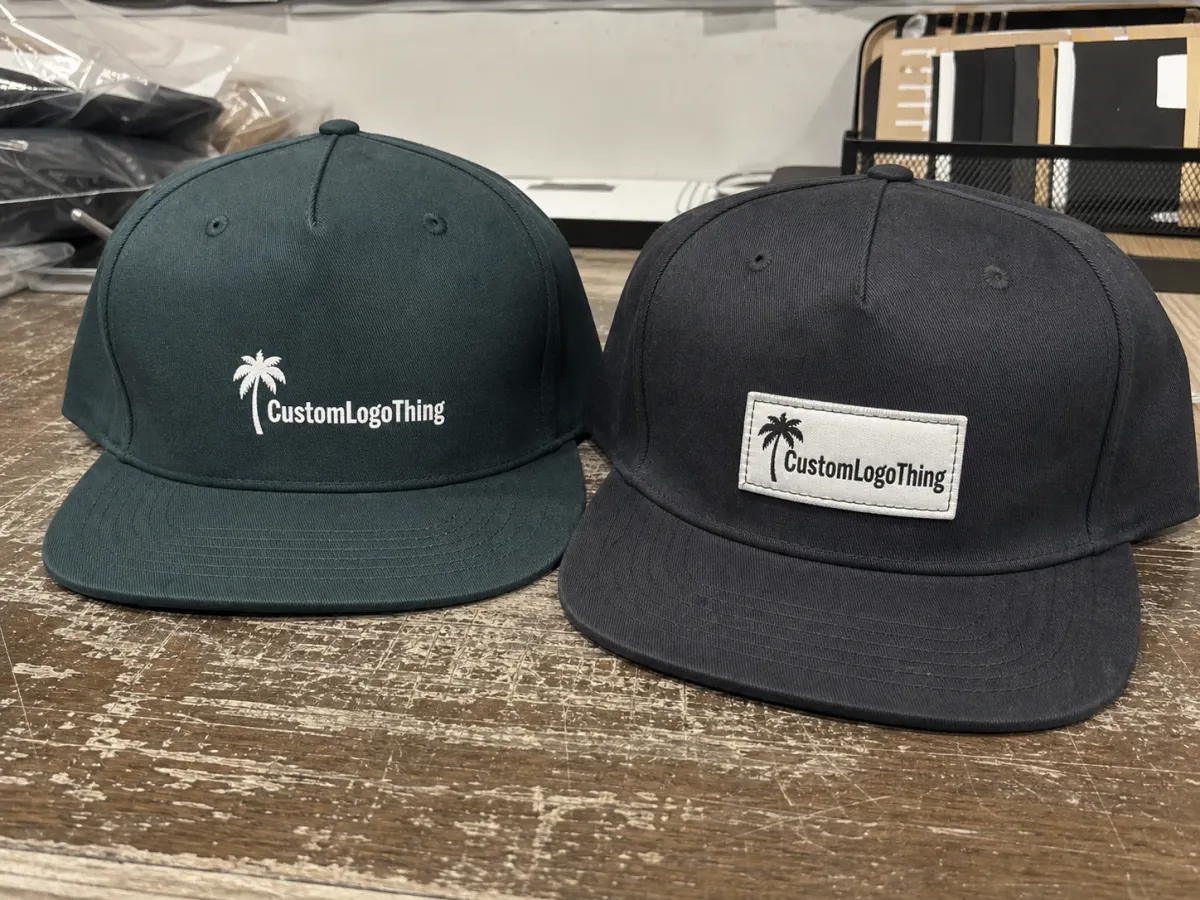
Resort retail compresses wear and tear into a short window. Sun fades weak inks faster than most buyers expect. Salt air is unforgiving to cheap adhesive. High touch volume exposes weak stitching, poor placement, and rushed packing within days. So the first pass of a Snapback Caps Print Method comparison for resort retail buyers should start with durability and presentation at the same time.
The cap body matters just as much as the decoration. A structured crown gives embroidery a cleaner stage. A softer five-panel or low-profile style can make a printed graphic look more relaxed and approachable. Flat bills tend to support larger front logos, while curved brims often push the design toward smaller, simpler marks. If the decoration and silhouette fight each other, the cap never fully settles into the right price point.
Buyers also need to think about how the cap will be sold. A souvenir shop wants something that reads fast and feels easy to grab. A boutique hotel store may want a quieter, more premium look. Marina counters and tour operators usually care about price band and repeatability before anything else. The same decoration method can work across all three, but only if the art and the body style match the channel.
A resort cap has two jobs: it has to sell quickly and keep looking right long enough to justify the retail price. If it misses either one, the margin gets thinner than the mockup suggested.
There is a practical reason seasoned buyers avoid overly clever decoration. The more complex the treatment, the more places there are for error. That might mean misaligned placement, inconsistent thread tension, or a transfer that looks perfect on approval but starts to crack after a few weeks in heat. Simple often wins because simple is easier to repeat, and repetition is what retail buyers actually buy.
Screen print vs embroidery on resort caps: the real tradeoffs
Screen print and embroidery are the two methods buyers compare most often, and they solve different problems. Screen print gives flat color, sharp edges, and a lighter hand. Embroidery gives texture, depth, and a more elevated read. One is not universally better. The right answer depends on the logo, quantity, and how the cap needs to behave on the rack. That is the core of any honest snapback caps print method comparison for resort retail buyers.
Embroidery usually works best when the logo is simple, the text is large enough to stitch cleanly, and the buyer wants a more premium souvenir feel. It adds presence without relying on glossy ink or heavy graphics. It also photographs well, which matters because many resort retail items are sold by how they look from a display hook, not by how they perform in a lab. The limitation is detail. Very thin lines, tiny lettering, and soft gradients can disappear or blur. Stitch count matters too. A clean 3,000-stitch logo and a dense 10,000-stitch front are not interchangeable, either in cost or in visual weight.
Screen print is often the better fit for bold graphics, short slogans, and logos with one or two strong colors. It keeps the cap lighter and can be more efficient on medium-to-larger runs. For a resort program that wants a crisp, graphic look, print can make sense immediately. The tradeoff is texture and perceived value. A printed logo can look sharp, but it usually does not give the same dimensional feel as embroidery. If the brand wants the cap to read as a souvenir rather than a promotional item, that distinction matters.
Pricing shifts with quantity. On a 300-piece order, setup charges can distort the picture. On a 1,000-piece order, the gap between print and embroidery often narrows because the cost of setup is spread over more units. That is why comparing only decoration line items is a mistake. A one-color print on a small run can be cheaper than embroidery, but a larger embroidered run with a simple logo may hold better perceived value at retail. Buyers who only chase the lowest decoration cost often miss the more expensive part: sell-through.
Artwork style matters as much as the method itself. Flat, high-contrast logos are naturally print-friendly. Logos with dimensional lettering or a strong badge shape tend to look better in embroidery. If the design depends on color fades or gradient detail, the factory may need to simplify it or rebuild it as a different decoration type. On caps, restraint usually beats ambition. The logo that survives production is usually the one that was designed with production in mind.
For planning purposes, the split often looks like this:
| Method | Best for | Typical cost range | Main risk |
|---|---|---|---|
| Screen print | Bold flat logos, simple text, budget-conscious resort programs | $0.35-$0.90 per cap at 300-1,000 pcs | Can look too plain if the art relies on texture or depth |
| Embroidery | Simple premium logos, textured branding, stronger shelf presence | $0.90-$2.25 per cap depending on stitch count | Small details may blur, fill in, or disappear |
Those numbers are not universal. They are useful because they are close enough to reality to keep a buyer from comparing a stitched front panel to a single-color print as if they were equivalent products. They are not.
Patches and heat transfer for sharper logos and faster approvals
Patches sit between print and embroidery, and that middle position is exactly why they are useful. They add shape and presence without forcing every detail through thread or ink. For resort buyers who want a cleaner logo treatment than a basic print but do not want the density or price jump of high-stitch embroidery, patches are often the practical answer.
Woven patches handle fine text better than embroidery because the weaving process can hold tighter detail. Embroidered patches give more texture and a stronger handmade feel. PVC patches work well for bold, durable branding that needs to survive rough handling. Leather patches can read premium or rustic, depending on the resort story. The fit depends on what the cap is supposed to communicate before anyone picks it up.
Attachment method matters. Sewn patches are usually safer in hot climates and in high-touch retail. Heat-applied patches can speed production, but weak adhesive is a risk when the product lives near beaches, pool decks, or outdoor kiosks. If the cap will be worn in heavy sun, buyers should ask for adhesion testing and a clear answer on whether the patch is stitched fully, partially, or only bonded. “Should hold” is not a specification.
Heat transfer is the fastest path when the artwork is detailed, the timeline is tight, or the buyer needs a quick approval loop. It handles smaller graphics and color variation better than embroidery, and it is useful for test drops or limited runs. If a resort buyer wants to trial a design before committing to a larger buy, heat transfer can keep the initial risk low.
The downside is wear. A crisp transfer can look excellent out of the box and still fail sooner than a stitched or sewn treatment if the cap is used hard. The failure usually starts at the edges, where heat, flexing, and handling stress the bond first. That is the kind of issue that shows up after launch, not during approval, which makes it expensive in a way that is hard to see on a quote sheet.
Packaging details matter more than people think. If the cap is going into retail, the tag, insert, polybag, and carton all shape the customer’s first impression. Offset printing is usually the right choice for larger hang tag runs. Digital printing is better for smaller reorder batches or variable copy. Flexographic printing makes sense for polybags and shipping labels. None of that is glamorous, but it can decide whether the order lands cleanly or arrives with mismatched collateral and a messy shelf presentation.
Specs resort buyers should confirm before quoting custom snapbacks
Most quote problems start with vague specs. A buyer asks for a “custom snapback” and gets prices that are technically correct but commercially useless. To compare methods properly, the cap itself has to be defined before decoration is discussed. Crown height, brim shape, panel count, closure type, sweatband finish, and fabric weight all affect how the cap wears and how the decoration sits on it.
For a snapback caps print method comparison for resort retail buyers, the logo requirements are just as important. Ask for minimum line thickness, maximum colors, stitch density, patch size, and exact placement. A logo that looks balanced at 55 mm wide can look cramped at 42 mm. A design that works in a digital proof can still fail as embroidery if the smallest lines are too fine. Production has very little patience for optimism.
It also helps to separate souvenir caps from staff caps. They are not the same product, even if they share a base style. A souvenir cap needs shelf appeal and a retail-friendly price band. A staff cap needs to survive repeated wear and still clearly identify the brand. Same category, different business logic. Buyers who treat them as one thing usually end up with a compromise that satisfies neither job fully.
- Confirm cap body: structured or unstructured, high crown or mid crown, flat bill or curved bill.
- Confirm closure: plastic snap, fabric strap, or adjustable buckle.
- Confirm fabric: cotton twill, polyester blend, mesh, or brushed nylon.
- Confirm artwork limits: line thickness, number of colors, and whether gradients are allowed.
- Confirm pack-out: individual bag, bulk pack, hang tag, barcode label, or shelf-ready carton.
If the order includes hang tags or retail cartons, specify paper grade and finish early. FSC-certified board is a sensible baseline when retail partners care about paper sourcing, and it avoids last-minute packaging disputes. For shipping, ask how the cartons are packed and what kind of transit protection is built in. If a supplier can reference ISTA-style testing or similar drop and compression expectations, that is a good sign. If they cannot explain basic carton protection, the risk is already showing.
Brand color control deserves the same attention. If the logo has to match an existing resort system, request a Pantone reference, a swatch, or an approved prior sample. A mockup is not enough for color-critical work. On paper it feels close. In production it rarely is.
Pricing, MOQ, and unit cost for custom snapback retail runs
Price is not just decoration, but decoration is usually the easiest place to overspend. In a snapback caps print method comparison for resort retail buyers, the cost stack tends to include the cap body, decoration method, setup, packaging, and artwork complexity. Buyers who only compare unit cost miss the sample fees, finishing charges, and special pack-out costs that often appear later.
MOQ ranges vary by factory and by method, but useful planning numbers usually sit between 50 and 300 pieces. Patches and embroidery often start lower because the front decoration is modular. Fully custom sewing, special fabrics, and private-label packaging push the minimum higher. If a supplier claims a tiny MOQ with no setup cost, ask what has been removed from the specification to make the number work.
| Decoration method | Common MOQ | Setup items | Best quantity tier |
|---|---|---|---|
| Screen print | 100-300 pcs | Screen setup, ink matching, proof | Mid to larger runs with simple art |
| Embroidery | 50-200 pcs | Digitizing, thread matching, sew sample | Small to mid runs with premium branding |
| Patches | 50-150 pcs | Patch artwork, edge finishing, attachment method | Short programs that need detail and texture |
| Heat transfer | 100-300 pcs | Artwork prep, transfer proof, adhesion review | Fast approvals and short-term test drops |
Setup fees are normal. Sample fees are normal. What is not normal is acting surprised when they appear on the invoice. On low quantities, those costs can dominate the landed price. On higher quantities, the unit cost usually drops quickly at first and then levels off. The jump from 100 to 300 pieces can meaningfully improve pricing. The jump from 1,000 to 1,500 often matters less unless packaging or freight is changing too.
For resort retail, the better choice is often the decoration that protects sell-through rather than the one that looks cheapest on the spreadsheet. A slightly higher unit cost can still improve margin if the cap sells faster, keeps a higher retail tag, or avoids returns and remakes. Cheap only stays cheap if the product actually moves.
Process, timeline, and production steps from artwork to shipment
The production sequence should be boring. Quote, mockup, sample, approval, bulk production, inspection, packing, shipment. Every extra loop adds days. Every unclear file adds more. The fastest orders are rarely the ones with the loudest promises. They are the ones with clean artwork, clear approvals, and a buyer who knows exactly what can and cannot change after sampling.
Sampling usually takes several business days to two weeks, depending on the decoration type and how much art cleanup is needed. Bulk production commonly runs about two to five weeks after approval. Peak season, color revisions, and shipping congestion can stretch that further. If the order is being placed for a summer reset or a new resort opening, the calendar needs a buffer. Not because the factory is always slow. Because production never happens in a vacuum.
Rush orders are possible, but the cost is not only in freight. Rush jobs compress correction time, shorten inspection windows, and increase the odds that a small defect passes through unnoticed. If the cap body is already in stock and the art is simple, a rush program can work. If the order requires custom fabric, custom patches, and retail packaging, the premium is usually better spent on earlier planning.
Inspection should be specific. Check placement tolerance. Check thread tension if embroidery is involved. Check print registration and edge sharpness. Check patch adhesion. Check color consistency against the approved sample. Check carton counts and pack ratios. The recurring problems are usually boring ones: wrong ratio, wrong color, off-center logo, crushed front panels. Those are the issues that move from minor annoyance to expensive cleanup because someone assumed the sample “looked close enough.”
Packaging should protect the bill shape and front structure. If the front panel gets flattened in transit, the product can arrive technically correct and still look wrong on the shelf. That is why carton design and inner packing are part of the decoration discussion, not an afterthought. A resort buyer who ships through a distributor or a multi-step retail network should ask how the cap will survive rehandling before it ever hits the store.
Why repeat resort buyers stick with suppliers that track every reorder detail
Repeat business is where suppliers become useful or irritating. The good ones keep reference samples, thread notes, color records, carton specs, barcode labels, and reorder history. That matters more than a slightly lower quote. A buyer managing multiple resort properties cannot afford a color drift from one shipment to the next, especially when the caps are part of a consistent brand wall or retail program.
Consistency is not just about the logo. It includes crown height, closure style, patch stock, thread shade, print placement, and the exact way the order was packed. If the first run shipped 12 caps per inner carton with left-side stickers and the reorder arrives in a different format because someone “optimized” the process, the store team notices immediately. So do customers who compare products across locations.
Good quality control is concrete. Placement tolerance. Color match. Stitch density. Edge lift. Adhesion. Carton count. Size ratio. Those checks are not glamorous, but they are the difference between a program that reorders smoothly and one that produces avoidable complaints. The first order establishes the standard. Every reorder tests whether the supplier actually wrote it down.
That is why a strong snapback caps print method comparison for resort retail buyers should include the question of repeatability. The best decoration method is not just the one that looks good once. It is the one the factory can duplicate without drifting into a different product every time the buyer sends the same art again.
Packaging components deserve the same discipline. If hang tags, inserts, or carton labels are part of the retail system, the paper grade, print method, and finish should be locked early. Small differences in paper stock or coating can change the feel of the product more than expected. For buyers who care about presentation, those details are not extras. They are part of the item.
Next steps for choosing the right snapback decoration method
The cleanest way to choose is to score the order on four points: logo detail, target margin, quantity, and selling environment. If the logo is simple and the buyer wants a premium read, embroidery is usually the starting point. If the art is bold and the budget is tight, screen print deserves serious attention. If the design needs sharper edges or a more dimensional finish, patches often sit in the middle with better visual control. If speed and detail matter most, heat transfer can be the practical answer.
Before requesting quotes, send the artwork, target quantities, cap color, pack-out needs, and ship date. Add a reference sample if there is one. The more clearly the buyer defines the cap, the less the supplier has to guess. Guessing is expensive, and not just in dollars.
For resort launches, I would still ask for a sample or a clean digital proof before bulk production. Fixing one cap is cheap. Fixing 500 caps that are already on the water is not. A careful snapback caps print method comparison for resort retail buyers should make the next move obvious instead of burying the buyer in decoration jargon.
The real decision is not which method sounds best in a catalog. It is which method fits the art, the calendar, the shelf, and the reorder plan. If those four line up, the cap tends to sell cleanly and reorder cleanly too. That is the standard. Anything less starts to look like an expensive compromise.
Which snapback caps print method is best for resort retail buyers?
Embroidery is usually best for simple premium logos. Screen print fits bold flat art and tighter budgets. Patches and heat transfer help when the artwork needs more detail or a faster approval cycle.
Is embroidery or screen print cheaper on custom snapback caps?
Screen print is often cheaper for simple one- to two-color art, especially on larger runs. Embroidery costs rise with stitch count, logo size, and thread changes. On smaller orders, setup and sample charges can matter more than the base decoration price.
What MOQ should I expect for resort snapback cap orders?
Common MOQs often range from 50 to 300 pieces depending on method and factory setup. Patches and embroidery can often start lower than fully custom sewn builds. Reorders may be easier if the cap body, decoration, and packaging stay the same.
How long does production take for snapback caps with print or embroidery?
Sampling often takes several days to two weeks, depending on the decoration and artwork complexity. Bulk production commonly runs about two to five weeks after approval. Peak season, color revisions, and shipping congestion are the usual delay points.
Can I mix decoration methods on one snapback cap order?
Yes, if the construction can handle it cleanly. Common combinations include embroidery with a woven patch or screen print with a woven label. Every added method can increase cost and lead time, so the design should justify the extra step.
If you are comparing decoration options for resort retail, start with the logo, the shelf, the customer, and the reorder plan. That is the shortest route to a cap that looks right, sells well, and does not create avoidable problems on the second order.


