Tea Brand Tissue Paper Cost: Buyer's Pricing Guide
Most buyers start with the wrong assumption: Tea Brand Tissue Paper cost is just paper plus print. That sounds tidy. It is not. The number changes with sheet size, color count, setup method, packing format, freight weight, and how exact the brand wants the final result to be. A small tweak in spec can move the quote more than people expect, which is why the first number out of a supplier's mouth is rarely the full story.
For tea brands, tissue paper does more than sit inside a box. It frames the unboxing experience, reinforces brand identity, and shapes customer perception before the pouch or tin is even opened. That makes tea Brand Tissue Paper cost a presentation decision, not only a materials decision. The lowest quote often turns into the priciest one once production starts asking for compromises. I have seen a "cheap" tissue order turn into a headache because the print repeat was wrong for the box size; the brand saved a few cents on paper and paid for it in rework.
The better question is not, "What is the cheapest tea Brand Tissue Paper cost?" It is, "Which mix of sheet size, print method, and order volume gives the cleanest unit price for how this packaging will actually be used?" That framing protects brand consistency and keeps buyers from paying for decoration that never earns its keep. It also cuts through the kind of pricing noise that can make two quotes look similar when they are built on very different assumptions.
Tea brands usually need one of three formats: a wrap for loose product, an insert for gift sets, or branded tissue for mailer and subscription orders. Each use case changes tea brand tissue paper cost because each one behaves differently in the box. A seasonal line that ships in bursts follows a different cost curve than a subscription brand that reorders on a steady schedule every month. That difference matters more than most teams realize until the cartons start moving.
A quote that looks cheap until shipping and setup appear is not a bargain. It is a bill with better timing.
Why Tea Brand Tissue Paper Cost Is Not What Most Buyers Expect
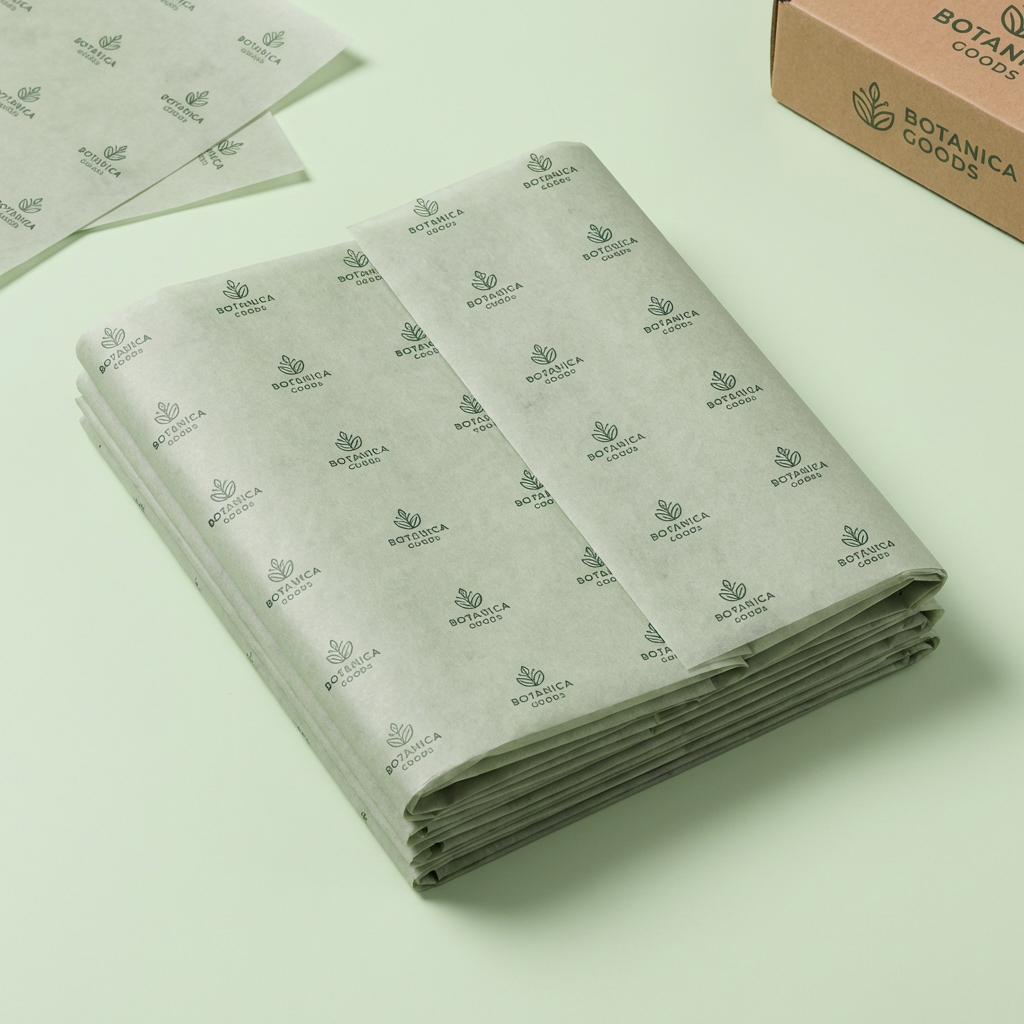
The paper itself is usually not the expensive part. That surprises people because tissue feels light, thin, and easy to produce. Tea brand tissue paper cost is really shaped by the work around the sheet: artwork prep, print plates or digital setup, color matching, cutting, packing, and freight. The sheet is only one line in the total.
Buyers often expect the price to move in a straight line. One sheet is cheap, so 5,000 sheets should be five times cheap. Production does not care about neat math. Fixed charges get spread across more sheets, and the unit cost can drop sharply once volume rises. The opposite is true as well. Small runs carry the same overhead, which is why low-MOQ quotes can look stubbornly high even before shipping enters the picture.
Tea brand tissue paper cost also reflects risk. Tight color control, logo alignment, delicate repeats, and special folding all add handling time. A simple one-color repeat on standard tissue is a different job from a full coverage pattern with fine linework and a custom green that has to match the brand's pouch, carton, and label. One job moves fast. The other asks the printer to behave like a color scientist, and that is not a casual request.
That detail matters in tea packaging. Tea is sold through calmness, ritual, and visual order. If the tissue clashes with the pouch or tin, the line feels off even when the product is excellent. So yes, tea brand tissue paper cost matters, but so does whether the finished sheet supports the shelf story. Cheap tissue that weakens the brand is not really cheap. The cost just moves into perception.
Smart buyers start with presentation targets, carton size, and reorder pattern. Only then do they ask for tea brand tissue paper cost based on those facts. That keeps the comparison useful and strips out quotes that look comparable but are built on different assumptions. Two numbers can seem close and still be worlds apart. I have watched procurement teams fixate on a unit price that ignored freight; once the cartons landed, the "better" quote was gone.
The channel matters too. Retail boxes, gift bundles, and direct-to-consumer orders rarely need the same tissue spec. A gift set can justify a thicker sheet and a richer print. A shipping insert may not. The right tea brand tissue paper cost is the one that fits the product role, not the fantasy version of the packaging.
One more thing: if the supplier cannot explain why the quote changed, ask again. A good vendor should be able to separate material cost, setup, printing, and packing without hiding behind jargon. That is where trust starts, and it is one of the simplest ways to avoid paying for confusion.
What Custom Tea Brand Tissue Paper Includes
Custom tissue is not just branded paper with a logo dropped on top. Tea brand tissue paper cost begins with a handful of decisions that define the whole job: sheet size, paper weight, print area, color count, fold style, and the way the finished packs ship. Get one of those wrong and the quote shifts quickly.
Most tea brands use sheets for wrapping individual products, lining gift kits, or adding a branded layer inside mailers and shopping bags. A subscription box may need one size. A retail tea pouch may need another. Tea brand tissue paper cost changes because a sheet that fits the pack cleanly wastes less material and packs more efficiently than one that has to be trimmed or folded awkwardly.
Paper weight, usually measured in gsm, is one of the first variables that changes both feel and price. Lighter tissue around 17-22 gsm tends to keep tea brand tissue paper cost down and works well for wrapping or layering. Heavier stock around 28 gsm feels more substantial, looks less transparent, and resists tearing better. That extra thickness costs more, yet it can be worth it for higher-end tea sets and gift assortments where presentation does the selling before the product does.
Print style matters as well. A one-color logo and a simple repeat usually keep tea brand tissue paper cost under control. Multi-color prints, dense full-coverage patterns, and tight registration requirements push the price up because they need more press time and more quality checks. A matte finish generally reads cleaner and more premium than glossy decoration. For tea packaging, restraint usually does the heavy lifting anyway.
Here is the practical breakdown most buyers need:
- Sheet size: Must fit the box or wrap pattern without waste.
- Paper weight: Affects opacity, hand feel, and tear resistance.
- Color count: One color is simpler; multiple colors raise tea brand tissue paper cost.
- Coverage: Small logo repeats cost less than full-bleed artwork.
- Packing format: Flat packed, reamed, or bundled sheets change handling and freight.
Those details matter because tea brand tissue paper cost is a system, not a single number. A clean logo repeat on a correctly sized sheet can do more for brand recognition than a loud sheet that looks expensive but never works in production. Good tissue supports the brand without competing with the product itself.
If the goal is to raise the premium feel of a tea line, custom tissue is one of the easier places to do it. It is tactile. It sits right at the point where the customer opens the package. And unlike some packaging upgrades, it does not need to shout to work. Subtle usually outperforms spectacle.
For buyers comparing suppliers, our Case Studies are useful because they show how paper size, print coverage, and order count change the final number in real packaging scenarios. That is the sort of context you need before treating a quote as meaningful.
Specs That Drive Tea Brand Tissue Paper Cost
Four specs move tea brand tissue paper cost faster than anything else: size, weight, print complexity, and packing format. Everything else usually sits behind those four. Buyers who understand them can read a quote in seconds and spot where the money is going.
Sheet size affects yield, packing efficiency, and freight. Larger sheets look generous, but they can waste budget if the box is small or the wrap pattern is simple. Oversized tissue also takes up more carton space and adds shipping weight. If a tea brand uses compact pouches or narrow mailers, matching the sheet to the pack can lower tea brand tissue paper cost without changing the visual result.
Paper grade and gsm determine feel and opacity. A lighter sheet lowers unit cost, but it may show through more easily and tear sooner at the fold. A thicker sheet gives a more premium feel, yet the printer pays for the extra fiber and the buyer pays for the extra material. For tea packaging, 17-22 gsm is a common working range for lighter presentation jobs, while thicker options often fit gift sets and retail gifting better.
Print complexity is the quiet budget killer. One spot color with a simple repeat is efficient. Two or three colors are still manageable if the artwork is clean. Full-coverage artwork, tight registration, gradients, and tiny details all raise tea brand tissue paper cost because they slow press speed and increase waste during setup. A clever design that cannot print cleanly is just expensive decoration.
Packing format changes labor and freight. Flat-packed tissue can be efficient for storage but may need more careful handling. Reamed or bundled tissue adds convenience but can raise fulfillment cost. Some buyers want sheets packed in counts that match their box assembly workflow. That makes sense, but it should be in the quote from the start because it changes tea brand tissue paper cost more than many people expect.
Ink coverage deserves its own mention. A tiny logo repeat on mostly white tissue is low impact. A dark, full-bleed pattern uses more ink and can affect drying time, which stretches production and sometimes changes the final price. More ink is not automatically better. It just burns margin faster and makes the run harder to control.
There is also a practical printing detail many buyers miss: tissue shows flaws quickly. If the repeat drifts, the eye catches it. If the paper is too thin, ink can telegraph. That is why experienced suppliers talk about registration tolerance and press behavior, not just the artwork file. They know the sheet is doing a lot of quiet work.
Buyer takeaway: choose each spec for the job it does. If the tissue only needs to create a neat reveal, do not pay for a design that tries to carry the entire brand narrative by itself. Tea brands usually get more value from disciplined brand consistency than from overworked artwork that asks for attention at every fold.
For outside references on packaging handling and material expectations, the ISTA site is useful for shipping and transport test context, and FSC is worth checking if raw paper sourcing and sustainability claims matter to your packaging line. FSC certification does not magically lower tea brand tissue paper cost, but it does help when a brand needs cleaner documentation for sourcing claims.
Tea Brand Tissue Paper Cost, Pricing, and MOQ Breakdown
MOQ is where tea brand tissue paper cost starts to make sense or fall apart. Small orders absorb setup charges badly. Larger orders spread those charges out and usually bring the unit price into a much better range. That is why a buyer comparing only one quote size is not really comparing options.
Here is a realistic planning range for custom printed tea tissue. These numbers vary by print coverage, sheet size, finish, and supplier location, but they are useful enough to build a budget around. Treat them as estimates, not promises; paper markets shift, ink prices move, and freight can swing quickly.
| Order Size | Typical Unit Cost | Setup Impact | Best Fit | What It Means for Tea Brand Tissue Paper Cost |
|---|---|---|---|---|
| 1,000 sheets | $0.30-$0.60 | High | Sampling, launch tests, seasonal proof runs | Good for checking fit and print quality, but tea brand tissue paper cost stays high per unit. |
| 3,000 sheets | $0.16-$0.32 | Moderate | Small brands with steady demand | A much better balance between MOQ and unit cost for repeatable packaging. |
| 5,000 sheets | $0.10-$0.24 | Lower per sheet | Established tea lines and multi-SKU use | Usually the sweet spot where tea brand tissue paper cost starts looking rational. |
| 10,000+ sheets | $0.08-$0.18 | Spread thinly | Multi-channel or high-volume programs | Best unit economics, but only if the artwork and usage are stable enough to justify the volume. |
Those ranges are not arbitrary. Setup, proofs, color work, and press time are fixed costs. Once they are spread across more sheets, tea brand tissue paper cost improves. A brand planning three launches in the same season should think differently from a brand ordering tissue for a one-time campaign.
Low-MOQ orders are useful. No serious buyer should ignore that. They are smart for testing customer response, checking fit, and making sure the print supports the rest of the package. Still, low-MOQ tea brand tissue paper cost is rarely efficient for brands that already know the design works. If the tissue will be reordered several times, the smarter move is usually to lock a larger run and protect the unit cost.
There is another trap: setup fees are not the whole story. Shipping can erase a good-looking quote fast, especially if the tissue ships in bulky cartons or needs special protection from wrinkles. When comparing tea brand tissue paper cost, ask for the print cost, the packing cost, and the freight estimate together. Otherwise the quote is incomplete and slightly misleading by design.
Some suppliers will quote a low base price and then add extras for color matching, custom folding, or artwork changes. That is why buyers need to ask about plates, proofing, rework policy, and carton counts before signing off. If those items are not listed, tea brand tissue paper cost can climb after approval. That is a bad way to buy packaging.
For brands trying to control margin, the most practical strategy is usually this: get quotes at 1,000, 3,000, and 5,000 sheets using the exact same artwork and sheet size. That gives a clean view of the price curve. If the 5,000-sheet quote is only a little higher than the 3,000-sheet quote, the better unit cost may justify the larger run. If not, the brand can stay lean and avoid dead inventory. That is the kind of math that keeps finance from frowning later.
Our Case Studies show this pattern clearly: the best tea brand tissue paper cost is rarely the prettiest headline number. It is the number that matches actual usage, storage, and reorder rhythm.
Production Steps, Timeline, and Lead Time
Tea brand tissue paper cost only matters if the production schedule works. A low quote that misses a launch date is not a savings. It is a delay with paperwork attached.
The process usually starts with artwork review. Files need to be checked for repeat pattern size, color count, logo placement, bleed, and any fine details that may disappear in print. If the artwork is not clean, proofing drags and tea brand tissue paper cost can rise because of extra revisions. Buyers save time when they send print-ready files early and keep the design tight.
After artwork review comes proof approval. This is the point where many jobs slow down. Color on screen is not color on paper, and tissue can show differences more clearly than heavier stock. If the brand cares about exact shade matching, the proof step deserves attention. Rushing it is false economy. A second round of proofing costs less than a full reprint by a wide margin, and that is not theory; it is a very common save.
Then comes printing, drying, cutting, and packing. Depending on the print method and the number of colors, production often runs around 12-18 business days after proof approval. Simple jobs can move faster. Multi-color jobs, custom packing, and larger volumes take longer. Rush production is possible in some cases, but tea brand tissue paper cost usually rises because the plant has to compress scheduling and handling.
Quality control matters too. The right inspection checks alignment, color consistency, sheet count, edge condition, and packaging count. If the tissue is for retail or subscription use, buyers should ask for a sample or pre-production check before the full run clears. That is especially useful for seasonal launches where there is no room for a second round.
Packaging standards matter in shipping as well. For transit durability, many brands like to know whether cartons are packed to practical handling expectations and whether the supplier understands transport testing language used by organizations such as ISTA. If the paper is sourced with sustainability in mind, the FSC framework can help with chain-of-custody questions. That does not automatically lower tea brand tissue paper cost, but it can make compliance and marketing claims much cleaner.
Here is the timeline in plain terms:
- Artwork check: 1-2 business days if files are ready.
- Proofing: 2-5 business days depending on revisions.
- Production: Often 12-18 business days after approval.
- Packing and freight: Add transit time based on destination and shipping method.
Brands that lock specs early usually get the better result. Every change after proof approval tends to add cost or time. That is not drama. It is just how print production works. Clear specs, steady artwork, and a realistic launch window keep tea brand tissue paper cost under control and avoid rework headaches.
One practical note from the production floor: tissue is easy to underestimate because it is thin. Yet the thinness is exactly why handling, humidity, and carton compression matter. A sheet can look perfect in proof and arrive curled, scuffed, or off-register if the pack-out is sloppy. Good suppliers know this and build around it.
For brands that need more proof of how production timing affects packaging spend, the Case Studies page is worth reviewing before approving the next tissue order.
Why Tea Brands Choose Custom Tissue Over Generic Stock
Custom tissue earns its place because it does three jobs at once. It protects the product, reinforces the brand, and improves the reveal. Generic stock tissue only does the first job. That is a narrow return, especially for tea brands that rely on presentation to shape customer perception.
Tea is a tactile category. People open it, touch it, smell it, and often gift it. That means the packaging has to carry more than functional value. Custom tissue supports visual branding without forcing the brand to shout. A repeating logo, a soft tone, or a restrained pattern can make a product feel deliberate and premium. That usually helps brand recognition more than a loud printed box stuffed with random fill material.
Generic tissue is faster and sometimes acceptable for short-term use. It does nothing for brand consistency. One order can look one way, the next order another way, and the line starts to feel patched together. If a tea brand is trying to sell calm, quality, and consistency, mismatched tissue undercuts the story. That is why tea brand tissue paper cost should be read against branding goals, not just against a commodity sheet of paper.
There is also a margin argument, and it is practical. A small increase in tea brand tissue paper cost can support a stronger perceived value if the tissue is used well. For gift sets, subscription boxes, and premium loose-leaf lines, the visual lift can justify the spend because the packaging feels more intentional. The trick is not to overspend on artwork that customers will barely see. Subtle, coordinated, and repeatable usually wins.
Think about the use case like this:
- Retail tea line: Custom tissue supports shelf presentation and makes the line feel organized.
- Gift box: The paper becomes part of the reveal and adds to the unboxing experience.
- Subscription order: Brand repetition matters more because the customer sees it often.
- Seasonal bundle: The tissue can carry the theme without changing the primary packaging.
A common mistake is treating custom tissue as an optional flourish. It is not. For a brand that cares about detail, tissue is one of the cheapest places to reinforce the whole package system. If tea brand tissue paper cost is kept sensible through the right MOQ and a sane print spec, it can deliver a strong return on a small spend.
Premium tea brands pay attention to the first layer of packaging for a reason. That layer sets expectations. If the tissue looks thoughtful, the customer assumes the product inside received the same care. That assumption is valuable. It supports trust before the first cup is brewed. In retail terms, that is not fluff; it is part of the product story.
The point is simple: custom tissue is worth it when the brand needs more than plain protection. It is not decoration for decoration's sake. It is consistent presentation, stronger brand identity, and a better response at the point of opening. That is the real value behind tea brand tissue paper cost.
Next Steps to Get an Accurate Quote
If the goal is a clean number, send the supplier a clean brief. Tea brand tissue paper cost gets much more accurate when the quote request includes the actual sheet size, quantity, print colors, paper weight, finish, packing format, and delivery location. Vague requests lead to vague answers. That is one of those industry truths that keeps showing up because people keep sending half the information.
The fastest way to compare offers is to ask for three numbers together: sample cost, production cost, and freight estimate. Tea brand tissue paper cost becomes misleading when only the print price is shown. A low production price can be erased by freight, while a slightly higher production price can still be the better total deal if packing is efficient and shipping is lighter.
Before requesting quotes, gather this checklist:
- Exact sheet size in inches or mm
- Paper weight or gsm target
- Artwork file and repeat layout
- Number of print colors
- Finish preference, if any
- Quantity target and backup quantity
- Packaging format: flat, reamed, or bundled
- Ship-to location and deadline
Ask one more question while you are at it: what quantity breaks improve tea brand tissue paper cost the most? A supplier that can show tiered pricing makes it easier to decide whether to stay small or move to the next bracket. That answer is often more useful than the starting quote itself.
Also ask whether a sample or pre-production proof is available before the full run. For tea brands, a sample is worth the small extra spend because print clarity, paper feel, and fold behavior are hard to judge from photos. If the supplier charges for sampling, ask whether that fee applies toward the final order. That is a normal commercial question, not a special favor.
Most buyers should think in terms of reorder rhythm. If the design will be reused across several tea SKUs or seasonal promotions, larger tea brand tissue paper cost efficiency usually wins. If the artwork is likely to change every quarter, a smaller run may be safer. The right choice depends on the brand's launch cadence, not on some generic packaging rule.
For a practical buying decision, compare quotes only after the specs are matched. Same sheet size. Same print colors. Same paper weight. Same packing format. Otherwise tea brand tissue paper cost comparisons are noise dressed up as data. That is how buyers end up choosing the wrong supplier for the right-looking price.
Close the loop early, confirm approval timing, and lock the order window before launch or seasonal demand spikes. That is how you control tea brand tissue paper cost without compromising the visual branding that makes the package feel complete. If the sheet supports the tea, the tea brand tissue paper cost is doing its job. If it does not, the savings were never real.
FAQ
What affects tea brand tissue paper cost the most?
Quantity is the biggest driver because fixed setup costs get spread across more sheets. Print complexity, sheet size, and shipping weight usually change tea brand tissue paper cost more than paper grade alone. Low-MOQ orders almost always cost more per unit, even if the tissue itself looks inexpensive.
How do I lower tea brand tissue paper cost without losing quality?
Use a simpler print layout with fewer colors and less ink coverage. Choose a sheet size that fits the box instead of oversizing for visual drama. If the artwork will be reused across multiple product runs, increase the order quantity so tea brand tissue paper cost drops into a better bracket.
What MOQ should I expect for custom tea brand tissue paper?
MOQ depends on the printer, but small runs are usually priced higher because setup work is fixed. Mid-size orders often give the best balance between testing a design and keeping tea brand tissue paper cost under control. Ask for tiered pricing so you can see exactly where the better rate starts.
How long does tea brand tissue paper production usually take?
Production time depends on proof approval, print method, and order volume. Simple jobs move faster; complex colors, special sizing, or custom packing add days. If you have a launch date, ask for lead time and freight timing separately so tea brand tissue paper cost and delivery timing do not get mixed together.
Can I get a sample before ordering tea brand tissue paper in bulk?
Yes, and you should. Paper feel, print clarity, and color tone matter more in person than on screen. A sample helps confirm size fit, fold behavior, and whether the print looks premium or merely acceptable. If the supplier charges for sampling, ask whether the fee can be credited toward the full order and how that changes tea brand tissue paper cost overall.


