Soap Embroidered Baseball Caps Unit Cost review sounds narrow until the first quote lands and the numbers refuse to behave. A sample can look overpriced, then the same cap suddenly makes sense once digitizing, machine setup, and approval time are spread across a larger run. That swing is normal. It is also why a buyer who understands the cost structure usually makes better decisions than one chasing the lowest headline price.
The cap itself is not the whole product. A clean embroidery program depends on the blank, the crown shape, the stitch count, the thread match, and the way the cap is packed for shipping. If any one of those moves, the unit cost moves with it. For soap brands, private-label personal care lines, event kits, and retail bundles, that matters because the cap is often judged beside packaging that already looks deliberate. A mismatched logo, a weak brim, or a crushed crown can undermine a program that otherwise looks well planned.
Good quote reading is not about finding hidden magic. It is about separating fixed setup from real production cost and knowing which features genuinely improve the finished piece.
A usable cap quote should separate three numbers: blank cost, decoration cost, and first-run setup. If those are blended together, the comparison is already distorted.
Soap embroidered baseball caps unit cost review: why the price moves
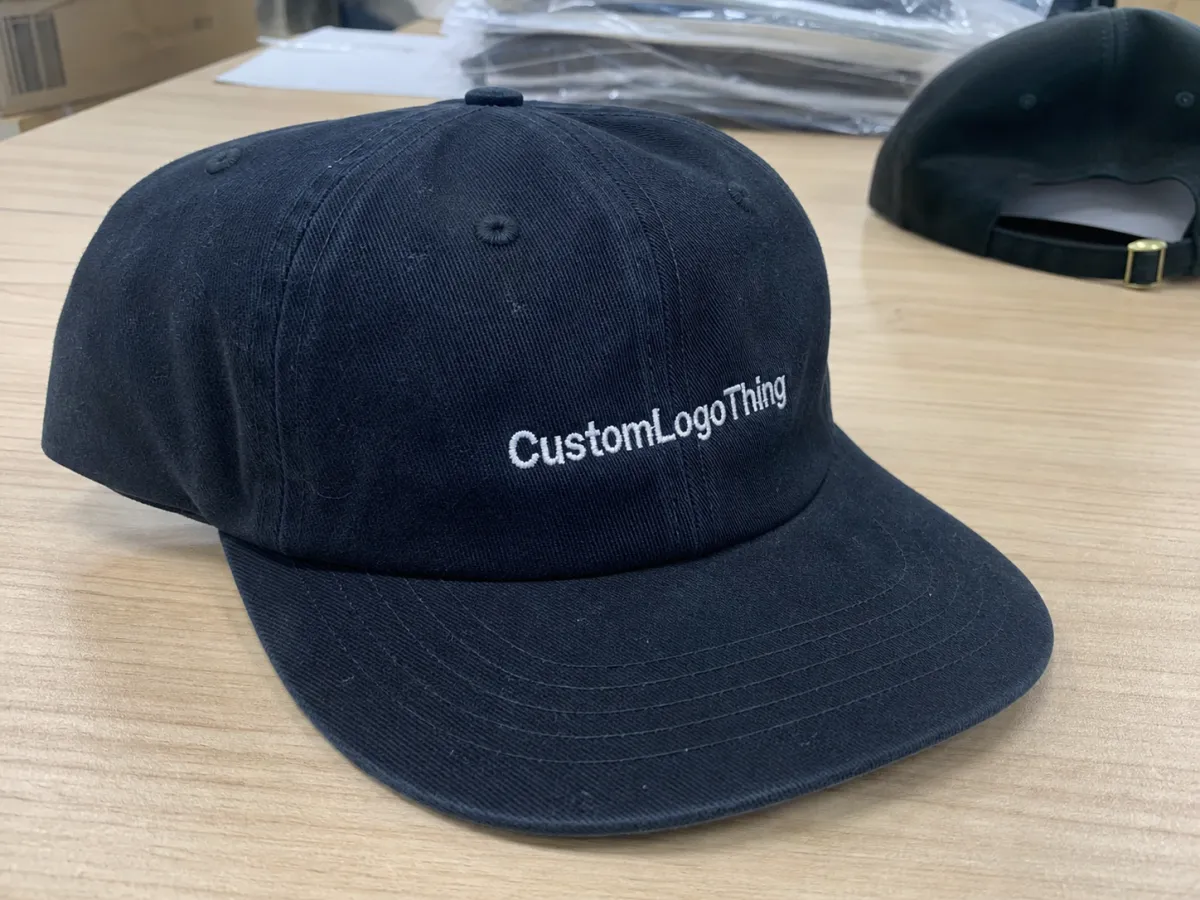
The first sample often carries the most expensive unit cost because it absorbs costs that never reappear at scale. Digitizing the logo, confirming stitch directions, preparing the machine, and handling the first proof all sit on top of the material price. On a one-piece sample, those fees are concentrated. On a 250-piece run, they are diluted. That is the basic arithmetic behind most pricing surprises.
Embroidery is far more sensitive to design complexity than screen printing or simple labeling. A one-color mark with modest stitch density may run cleanly with minimal machine time. A multicolor emblem with tight curves, tiny lettering, or filled areas demands slower stitching and more inspection. The cost difference is often larger than buyers expect. A logo that looks simple on a screen can turn into a dense, labor-heavy file once it is translated into stitches.
The blank cap matters too. A standard cotton twill cap behaves differently from a brushed canvas or polyester blend. Cotton twill is familiar and usually cost-efficient. Polyester blends hold shape well and can resist wrinkling, but they may need more careful testing if the embroidery is dense. A heavier crown, mid-profile fit, or structured front panel often gives the logo a sharper presentation, which can be worth the extra dollar or two if the cap is going to retail or sit inside a bundle.
For soap brands, the cap is usually not bought as a standalone fashion item. It functions as branded support material, staff wear, event merchandise, or a bundled add-on that needs to look more premium than a throwaway promo piece. That changes the value equation. A cap worn repeatedly in public has a much longer brand life than a paper insert or a low-cost handout, so a small increase in blank quality can pay back in visibility.
One practical comparison helps here: on a simple order, the embroidery may account for a modest share of total cost, but on a small run with a detailed logo, decoration can overtake the blank itself. Buyers often assume the cap body is the expensive part. In many cases, it is the stitch file that pushes the number upward.
Cap construction details that change the final look
Construction choices affect more than appearance. They influence how the embroidery sits, how the cap wears, and how predictable the reorder will be. A structured crown supports the front panels and keeps a logo upright. An unstructured crown feels softer and more relaxed, but the embroidery can sink slightly into the fabric if the knit or twill is too light. That is not a defect. It is a design consequence buyers should understand before they approve the spec.
Panel count changes the visual field. Six-panel caps are the most common because they create a balanced front and a familiar fit. Five-panel caps give a broader front panel, which can make a logo feel larger and cleaner. Flat brims have a sharper, more fashion-led look. Curved brims are more familiar to retail buyers and usually easier to merchandise in mixed programs. The choice is less about style preference than about what the cap needs to communicate when it is worn.
Closure style is a cost and fit decision at the same time. Snapbacks are easier for broad distribution because they reduce size risk. Strapbacks and buckle closures can feel slightly more refined, but they add a little more complexity to assembly. Fitted caps can look premium and compact, yet they require tighter size planning and usually make inventory management harder. A small mismatch in size curve can leave a buyer with stock that is technically fine but commercially awkward.
Fabric choice deserves more attention than it usually gets. A 100% cotton twill cap in the 260-320 gsm range is a common starting point because it gives the embroidery a stable base and a matte finish. Polyester-cotton blends can hold color well and may suit outdoor or higher-wear programs. Brushed canvas reads slightly more premium, while performance fabrics are useful when the wearer expects heat, sweat, or long service. The cheapest fabric is not always the cheapest outcome if the logo distorts or the cap loses shape after a short wear cycle.
Small construction details can be the difference between a clean retail-ready piece and a cap that feels generic. Visor stitching, seam alignment, eyelet placement, inner sweatband finish, and panel symmetry all show up in inspection. Buyers rarely ask about those details first, but they notice them immediately when they are wrong.
Embroidery specs buyers should lock before ordering
Before a supplier can give a reliable number, the logo needs a real production spec. That means size, placement, thread colors, stitch count, backing type, and whether the design needs flat embroidery or 3D puff. A clean mark with low stitch density is a different job from a raised emblem with layered fill stitches. If those are treated as the same thing, the quote will not hold.
Digitizing is the technical step that turns artwork into stitch instructions. It is also the part many buyers underestimate. Fine text, thin outlines, gradients, and tiny registration details can disappear if the logo is not simplified for embroidery. A good digitizing file balances readability with machine efficiency. Too loose, and the logo looks weak. Too dense, and the cap becomes stiff and slow to produce.
Pantone or thread-match discussions should happen early if the cap must sit beside soap packaging, cartons, hang tags, or a broader retail kit. Thread libraries are not infinite, and close matches may still read differently under store lighting or natural daylight. A thread color that looks right on screen can go cooler or warmer once stitched. That matters more when the cap is part of a coordinated product family.
Backing is another practical decision. Standard backing can support most logos, but denser embroidery may need additional stabilization to prevent puckering. If the front panel is lightweight, the supplier may recommend a firmer backing or a denser blank. The goal is not to add material for its own sake. It is to keep the crown flat enough that the stitches land cleanly.
Extra options look harmless on the quote sheet, then quietly raise the total. Woven labels, inside seam tags, printed sweatbands, retail hang tags, and custom cartons each add labor or sourcing work. Packaging can be especially deceptive. A cap shipped loose in a carton is cheaper than one packed in a polybag with insert protection, but the cheaper method may arrive with compressed brims or scuffed panels. For transport-sensitive programs, some buyers borrow testing ideas from ISTA methods to judge whether the packaging actually protects the product in transit.
If sustainable packaging is part of the brief, ask for the material claim in writing. For paper inserts or cartons, FSC certification is one clean way to separate real compliance from vague marketing language. That does not make the cap itself more expensive, but it can change the landed price and the approval timeline.
Pricing, MOQ breakpoints, and unit cost targets
The cleanest way to read a cap quote is by quantity tier. One sample price tells you what it costs to prove the project. A small run tells you what happens when fixed charges still weigh heavily on each unit. Bulk pricing shows where the program starts to behave like a repeatable supply item instead of a one-off order. In a soap embroidered baseball caps Unit Cost Review, that distinction matters more than the absolute dollar value on the first line.
MOQ is not just a supplier constraint. It is a cost-shaping mechanism. Lower minimums reduce inventory risk, but they keep setup charges concentrated in fewer pieces. Larger runs spread digitizing, machine prep, and proof handling over more caps, which lowers the unit cost but ties up more cash. Neither option is inherently better. The right choice depends on launch size, reorder confidence, and how long the cap will stay relevant.
| Order tier | Typical MOQ | Typical unit cost range | Best fit |
|---|---|---|---|
| Sample / preproduction | 1 to 3 pieces | $18-$45 per piece | Artwork approval, thread matching, fit check |
| Small run | 25 to 100 pieces | $7.50-$14.00 per piece | Launch tests, local events, limited retail drops |
| Bulk pricing | 250 to 1,000+ pieces | $3.75-$7.50 per piece | Ongoing promotion, reseller programs, staff issue |
Those ranges are directional. A simple one-color logo on a standard cotton twill cap sits at the lower end. Dense embroidery, 3D puff, premium blank fabric, or custom packaging pushes the price up. A low MOQ plus premium construction can easily price like a small run even if the order size looks generous. The supplier is not padding the quote in that case. The fixed work simply has fewer units over which to spread.
A useful way to think about cost drivers is this: embroidery complexity usually moves the number more than cap color, cap style, or brim shape. Blank quality comes next. Quantity affects the outcome, but only after the design and construction are settled. If a quote seems high, inspect the stitch count before assuming the cap body is the problem.
For buyers building internal targets, a simple breakdown helps. On smaller orders, setup and digitizing can consume a meaningful share of the total. On larger orders, blank cost and decoration usually dominate, while setup becomes almost invisible on a per-piece basis. That is why it is smart to ask for pricing at several breakpoints instead of one tidy number.
A practical quote checklist keeps the comparison grounded:
- Target quantity and any realistic reorder volume
- Cap style, structure, panel count, and closure type
- Logo size, placement, thread colors, and stitch complexity
- Need for 3D puff, woven labels, or retail packaging
- Delivery location, freight method, and required arrival date
- Approval deadline for sample or proof sign-off
If those fields are missing, the quote can look attractive while still being incomplete. That is how buyers end up paying later for rework, revised setup, or freight upgrades that were never visible in the first estimate.
Production steps and timeline from art file to delivery
A reliable order starts with the artwork file, not the purchase order. The supplier checks the logo for stitchability, cleans up any weak details, and converts it into a digitized embroidery file. After that comes a stitch proof or physical sample, which lets the buyer review scale, color, and placement before the full run begins. Only after approval does bulk production start.
That sequence looks short on paper. In practice, each step can shift the calendar. A clean file may move through digitizing in a few business days. Sample approval usually takes longer because someone on the buyer side has to inspect the actual cap, not just a mockup. Once bulk production begins, a typical window is often 10 to 15 business days for standard orders, though larger quantities, denser embroidery, or special packaging can extend that schedule. Freight is separate and can add several days to a week or more depending on route and method.
The delays tend to come from the same three places: unclear artwork, slow approvals, and late changes. A thread color change after sampling is not a tiny edit. It can reopen proofing, alter stock allocation, and shift the packing date. The cleaner the approval trail, the less the schedule gets dragged into avoidable revisions.
A useful production sequence is easy to remember:
- File intake and embroidery review
- Digitizing and technical correction
- Stitch proof or sample approval
- Bulk production and in-line inspection
- Final packing and freight booking
Packaging decisions should be locked early if the caps need retail presentation or better protection in transit. A cap packed loose is faster and cheaper to ship, but a cap with a rigid insert or structured polybag may arrive in better shape. That tradeoff is small until a shipment reaches the buyer with flattened brims and bent panels. Then it becomes the most expensive part of the order.
The safest scheduling rule is simple: count backward from the required delivery date, not from the day the order starts. That approach forces real lead time into the plan and makes impossible promises easier to spot before they become expensive.
Reorder economics and spec control
Repeat orders should be easier than the first run. Once the artwork is digitized and the cap spec is approved, the supplier should be able to reproduce the same file, same thread palette, and same construction with less friction. That does not mean every reorder is identical. It means the variables are known, which is the closest thing the production side has to certainty.
Spec control is what keeps reorders from drifting. The buyer should keep a record of the approved cap body, fabric, closure type, thread colors, logo dimensions, stitch count, and packaging method. If that record is vague, the next run can slowly drift away from the first one even if everyone believes they are ordering the same item. Small differences are easy to miss in a spreadsheet and obvious on a shelf.
Quality checks on repeat orders should stay practical. Confirm stitch alignment on the front panel. Check logo placement against the approved sample. Inspect the closure for clean operation and adequate tension. Compare thread color under the same lighting used for approval. If the cap is part of a soap bundle or retail set, compare it against the packaging rather than against memory. Memory is a poor inspection tool.
There is also a financial side to reorders. When the file, sample, and spec are already approved, the buyer can usually avoid paying for the early-stage work again. That can bring the repeat unit cost down materially, especially on modest quantities. The exact drop depends on how much setup is being reused, but the savings are real when the design does not change.
For ongoing supply, predictability is often more valuable than a slightly lower first quote. A reliable schedule prevents rush freight, reduces rework, and keeps stock from running out between campaigns. That matters more than most buyers expect, especially when the cap is tied to a seasonal launch or a product bundle that depends on consistent presentation.
How to request an accurate quote and sample plan
A quote only becomes useful when the request is specific enough to force meaningful numbers. Send the artwork file, target quantity, preferred cap style, required thread colors, and delivery window. If 3D puff, custom labels, or retail packaging are in play, include that too. Vague briefs usually produce vague prices. Specific briefs produce quotes that can be compared line by line.
Ask for both sample cost and production cost. They answer different questions. The sample cost tells you what it takes to prove the design. The production cost tells you what it takes to repeat it. Blending them together hides the setup burden and makes small-order economics look better than they really are.
A useful approval path looks like this:
- Lock the logo size and placement
- Review the digitized proof or sample
- Confirm the cap body, thread palette, and packaging
- Approve the final schedule in writing
- Plan the reorder before the first batch runs out
That process keeps the discussion anchored to cost, fit, finish, and timing instead of general impressions. It also reduces the chance that the final batch arrives with a slightly different shape, a different shade, or a deadline that no longer matches the launch plan.
Soap embroidered baseball caps Unit Cost Review works best when the buyer treats the cap as a controlled production item rather than a casual promo accessory. The economics become easier to read, the sample becomes more meaningful, and the final run is less likely to drift away from the approved spec.
What affects soap embroidered baseball caps unit cost the most?
Stitch count and logo complexity usually move the price more than the blank cap itself. Smaller quantities also keep setup charges concentrated in each unit, so the cost per cap rises quickly. Add-ons like 3D puff, woven labels, and custom packing can push the total higher than expected.
What is a typical MOQ for soap embroidered baseball caps?
MOQ depends on cap style, decoration size, and whether the logo needs fresh digitizing. Low minimums are possible, but the unit cost is usually higher because setup is spread across fewer pieces. Ask for pricing at several quantity levels so you can compare testing, launch, and bulk scenarios side by side.
How long does production usually take after approval?
Artwork review and digitizing may take only a few business days if the file is clean. Sample approval adds time because the buyer needs to review the physical cap, and bulk production often follows a 10 to 15 business day window for standard orders. Freight is separate and can shift the delivery date further.
Can I get a sample before a full order?
Yes, and the sample should be treated as a production checkpoint, not a formality. It verifies logo size, thread color, fit, and finish before the main run starts. If the sample needs revisions, build time for one more approval cycle so the final schedule stays realistic.
How do reorders change soap embroidered baseball caps unit cost?
Reorders often cost less because the digitized file, stitch settings, and core specs already exist. If the cap body and thread colors stay the same, the supplier can usually move faster and skip some setup work. Keeping a written spec on file helps future quotes stay tied to the same approved version.


