Subscription Twisted Handle Paper Bags Unit Cost Review
A subscription twisted handle paper bags Unit Cost Review looks simple until the bag has to repeat every month. A difference of 3 to 5 cents per bag can seem minor on one PO, but across recurring runs it adds up quickly. On 10,000 pieces, a 4-cent gap is $400. Over a year, that is $4,800 before rework, rush freight, or the labor cost of correcting a bag that missed the approved sample.
The mistake is treating the quote as the whole cost. Paper grade, handle material, printing method, carton pack-out, and freight all affect the landed number. Subscription programs magnify those differences because the same bag keeps coming back. A one-time retail order can absorb a little inconsistency. A recurring program cannot. If the color drifts, the handles feel weak, or the size shifts enough to disrupt packing, the cost moves into inventory loss, complaints, or emergency replenishment.
A low unit price only stays low if the bag arrives on time, fits the product, and repeats cleanly on the next run.
Why subscription orders expose hidden bag waste fast
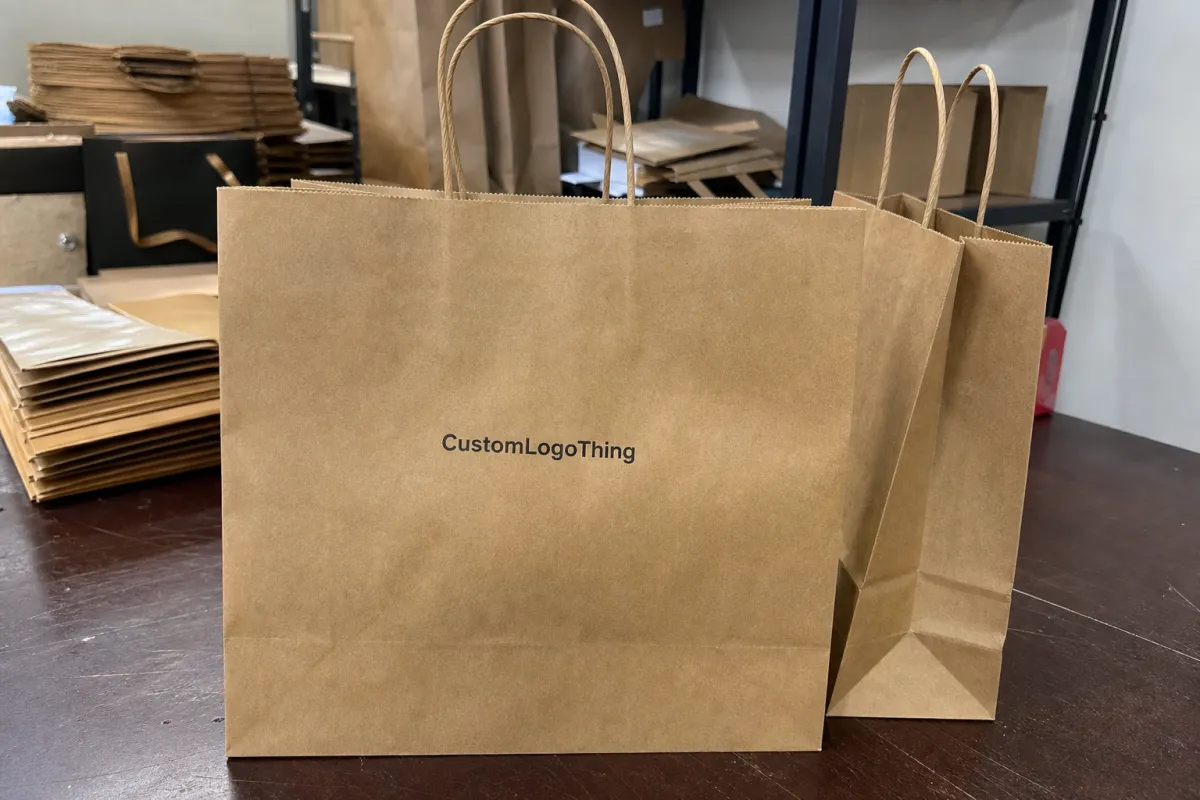
Recurring orders make waste visible. One shipment can hide problems because no one has a close comparison. Subscription fulfillment removes that cushion. The bag gets used repeatedly, so small variances become obvious and expensive.
Waste in paper bag programs is not only scrap from converting. It also shows up as overordering, reprints, and freight surprises when carton dimensions or pallet count were estimated instead of measured. A quote that starts at $0.18 per bag can land much closer to $0.24 once shipping, handling, and repacking are added.
Subscription buyers usually care about three things at once: how the bag looks, how much it costs, and how reliably it can be repeated. Those goals are connected. A thinner bag may save a cent or two but create damage during packing or transit. A bag that is overbuilt may look reassuring but quietly eats margin. The best choice sits in the narrow band where the structure supports the product without paying for strength the use case never needs.
For recurring orders, these controls matter most:
- Stable dimensions so pack lines and filling stations do not need constant adjustments.
- Predictable stiffness so the bag stands, folds, and stacks the same way every cycle.
- Repeatable print so logo color, registration, and coverage stay within tolerance.
- Defined carton pack-out so warehouse counts, pallet heights, and freight quotes remain accurate.
Once those factors are stable, the unit cost becomes easier to judge honestly. Without them, the quote is just a number with too many assumptions attached.
Subscription twisted handle paper bags unit cost review
A useful subscription twisted handle paper Bags Unit Cost review breaks the price into pieces that can actually be controlled. Start with the structure. Paper weight, bag size, gusset depth, bottom style, handle type, reinforcement, and print coverage all influence the final number. A plain kraft bag with a small one-color logo is not comparable to a fully printed bag with coated finish and reinforced handles.
Twisted handles are often a practical middle ground for subscription programs. They are familiar, widely available, and usually less expensive than rope handles. They also convert efficiently on standard equipment, which helps keep setup and labor in check. Rope handles look more premium, but that premium comes with a cost. Reinforced insert handles improve feel and strength, but extra board and labor push the price higher.
The most reliable way to compare quotes is to group the cost drivers:
- Paper: basis weight and fiber blend are usually the largest material drivers, especially when moving from 100gsm to 120gsm or above.
- Handles: twisted paper handles usually cost less than rope; reinforcement adds both material and labor.
- Print: one-color logo work is usually far cheaper than broad coverage, tight PMS matching, or inside print.
- Converting: die complexity, glue pattern, and bottom construction affect machine time and scrap rate.
- Packing and freight: carton count, pallet height, and shipping lane can alter landed cost more than buyers expect.
Typical recurring-order ranges, assuming comparable size and freight terms, often look like this:
| Build | Typical MOQ | Factory unit cost | Main cost drivers | Best fit |
|---|---|---|---|---|
| Plain kraft, 1-color logo, twisted handle | 5,000-10,000 | $0.16-$0.28 | Paper weight, print count, carton count, die reuse | Basic subscription fulfillment |
| Full-coverage print, twisted handle, coated finish | 10,000-20,000 | $0.24-$0.42 | Ink coverage, setup charges, finish, inspection time | Brand-forward monthly shipments |
| Premium paper, rope handle, reinforcement insert | 10,000+ | $0.32-$0.55 | Handle material, reinforcement board, converting labor, scrap rate | Heavier product or higher-end presentation |
These ranges are directional, not promises. A larger bag can use more paper but simplify packing. A smaller bag can look cheap if the paper weight is too low. Print coverage can raise the cost quickly, yet a clean one-color design may still be more expensive than expected if the supplier needs a special die or a tighter inspection process.
MOQ pricing deserves caution. Larger runs usually reduce unit cost, but only until storage, cash flow, and aging inventory start canceling the gain. Subscription volume is not always perfectly stable. If the reorder cycle is uncertain, overbuying a cheaper bag can be worse than buying a slightly higher-priced bag in smaller batches.
Compliance and testing also belong in the conversation. FSC-certified paper helps support sourcing claims, and shipping validation based on ISTA methods can reveal whether cartons survive compression, vibration, and handling without damage. Useful references are available at fsc.org and ista.org.
Specs to lock before sample approval
Samples should confirm a spec, not define it. That distinction saves time and avoids expensive confusion later. If the first sample is produced before the dimensions, paper weight, and handle style are fixed, the second sample often arrives with a higher price and a longer lead time.
Before asking for a sample, lock the essentials:
- Finished dimensions including width, gusset, and height.
- Load target or the actual product weight the bag must carry.
- Paper weight in gsm, plus any minimum stiffness requirement.
- Handle style and length so the bag carries comfortably and balances correctly.
- Reinforcement details at the mouth, base, or handle anchor, if needed.
- Print count and color targets, including whether inside print is required.
- Carton pack count, pallet limit, and shipping orientation.
The approval checklist should be specific enough to prevent interpretation later. Size tolerance should be written down in millimeters, not “close enough.” Color tolerance should be tied to a target rather than a general preference. Handle bond strength should have a clear pass-fail standard.
Shipping details should be part of the brief from the start. A change from 100 bags per carton to 200 may lower carton cost, but it can increase damage risk or make the warehouse process awkward. A pallet height that saves space in transit can create handling problems on site. The cheapest pack-out on paper is not always the cheapest one in practice.
One rule works better than most: if a spec affects fit, strength, or warehouse handling, it belongs in the first quote. If it is not in the first quote, it tends to show up later as a surcharge, a delay, or a compromise nobody wanted.
Production steps, lead time, and replenishment cadence
Paper bag production follows a familiar path: artwork intake, dieline review, proofing, prepress, converting, inspection, packing, and shipment release. Delays usually come from changing artwork after proof, unclear specs, or a material substitution that had not been approved. Subscription programs should map that sequence to the replenishment schedule before the first order ships.
Lead time depends on the complexity of the bag and whether tooling already exists. A repeat order with approved files and stable materials can often move in 10 to 15 business days after proof approval. A first custom run, especially one with new art or a revised handle structure, may take 15 to 25 business days, and longer if a paper grade needs to be sourced.
Replenishment cadence matters as much as initial lead time. If a monthly shipment uses 8,000 bags, the reorder point should allow enough time for proofing, production, and transit before stock reaches a dangerous level. For many programs, that means keeping 2 to 4 weeks of buffer inventory. Seasonal spikes and transit disruptions can justify more.
Faster turnaround is possible, but only under the right conditions: saved artwork, locked die lines, approved materials, and a repeat run. Where buyers run into trouble is assuming that a first-time custom bag can move like a reorder. It cannot. New artwork, special coating, or a different handle board can extend the schedule by days or weeks.
Quiet programs usually have the strongest operating discipline. The bag arrives on schedule, the carton count matches the packing list, the pallet height fits the warehouse, and the next order is already planned before the first one is gone.
How recurring orders stay consistent across reprints
Recurring orders stay consistent when the controls stay written down. Keep the approved master sample. Save the exact dieline, artwork files, and Pantone references. Do not replace a paper grade just because a mill has something “similar.” Similar is not the same as repeatable, and repeatability is the whole point of a subscription bag.
Quality control should be practical rather than theatrical. Check handle bond strength on every run. Check bottom adhesion. Check print registration and color match. Confirm the carton fit before the bags leave the line. If the bags are being shipped in outer mailers or subscription boxes, test how the paper bag behaves inside that larger system.
Vendor continuity matters more than buyers often admit. Changing plants or paper sources can alter texture, fold behavior, color tone, and glue performance even if the artwork stays the same. That does not automatically mean the new run is unacceptable. It does mean the new run should be treated as a controlled change, not a casual reorder. Traceability helps here: batch numbers, carton labels, written tolerances, and a record of what was approved last time.
A simple reorder control plan usually covers these points:
- Keep one approved master sample for reference.
- Store the exact dieline and final art files.
- Lock paper weight, handle style, and reinforcement in writing.
- Record acceptable variance for color, size, and bond strength.
- Keep pack count and carton size unchanged unless shipping math changes.
That last item matters more than it sounds. Reorder drift is often hidden in the logistics layer. Change the carton count and warehouse handling shifts. Change the pallet count and freight changes. Change the box size and storage density changes. A recurring bag program is only truly recurring if the production spec, pack-out, and distribution plan remain aligned.
The buyer’s job is not to chase the lowest possible unit price every month. It is to keep the bag usable, consistent, and predictable enough that the rest of the subscription system can run without improvisation.
Next steps to quote and schedule the first run
A useful quote starts with exact inputs, not a rough description. Send finished dimensions, paper weight, handle style, print colors, quantity, target ship date, delivery terms, and any finish or reinforcement requirement. Include pack count per carton and the delivery location. If the supplier does not know how the bags will be packed and shipped, the unit cost is incomplete from the start.
Ask for tiered pricing at more than one quantity level. A clean comparison at 5,000, 10,000, and 20,000 pieces makes the break points visible. That helps answer the question buyers often care about most: does the lower unit price actually offset the extra inventory? Sometimes the answer is yes. Sometimes the discount only looks attractive until storage, cash flow, and aging stock enter the calculation.
For a dependable approval sequence, the order usually works best in this order:
- Confirm the spec sheet.
- Review the proof.
- Lock the sample.
- Issue the purchase order.
- Set the replenishment window before the current stock runs low.
Ask for landed cost, not just factory price. Freight, cartons, duty exposure, and handling all belong in the same view if the goal is a real Unit Cost Review. A supplier who can show the full landed number gives you a basis for comparison that can survive scrutiny.
The fastest way to make a subscription twisted handle paper Bags Unit Cost Review useful is to price the exact recurring order, not a theoretical one. Lock the spec, measure the landed cost, and plan the next cycle while the current run is still in motion.
How do I calculate subscription twisted handle paper bags unit cost?
Start with landed cost rather than factory price. Add freight, cartons, duty or tax exposure where relevant, and any setup or tooling charge spread across the annual volume. Compare quotes only after size, paper weight, handle style, print coverage, and pack-out are identical.
What MOQ is normal for printed twisted handle paper bags?
MOQ depends on bag size, print complexity, and whether the supplier is using a standard die or a new tool. Smaller runs usually carry a higher unit cost because fixed setup charges are divided across fewer bags. Tiered pricing is the cleanest way to see where the break points really sit.
Which paper weight works best for recurring subscription orders?
Choose the lightest paper that still meets strength, appearance, and handling requirements. Many subscription programs perform well in the middle of the range rather than at the heaviest spec. Increase basis weight only when product load, presentation, or shipping abuse truly justify it.
How long does production take after artwork approval?
Repeat orders with approved files often ship in 10 to 15 business days after proof approval. First-time custom work or jobs with special finishes usually need 15 to 25 business days. Ask for proof, production, and ship dates separately so the schedule is clear enough to manage.
What details do you need for an accurate quote?
Send finished dimensions, paper weight, handle specification, print colors, quantity, delivery location, carton pack count, and any special finish or reinforcement requirement. The tighter the brief, the fewer surprises later in production or freight.

